DIY weight scale 4 corners, sprung weights

mrblaine

Crew Member
Original poster
Supporting Member
Joined
Nov 20, 2015
Messages
33,682
Location
Quail Valley, CA
I don't know just how little I know but probably not even close enough to get close on this one.

I want to take one of the DIY digital scale kits that are all over the place like the one below and build a sprung weight corner scale set up.
https://www.ebay.com/itm/1752783440...d=link&campid=5337789113&toolid=20001&mkevt=1
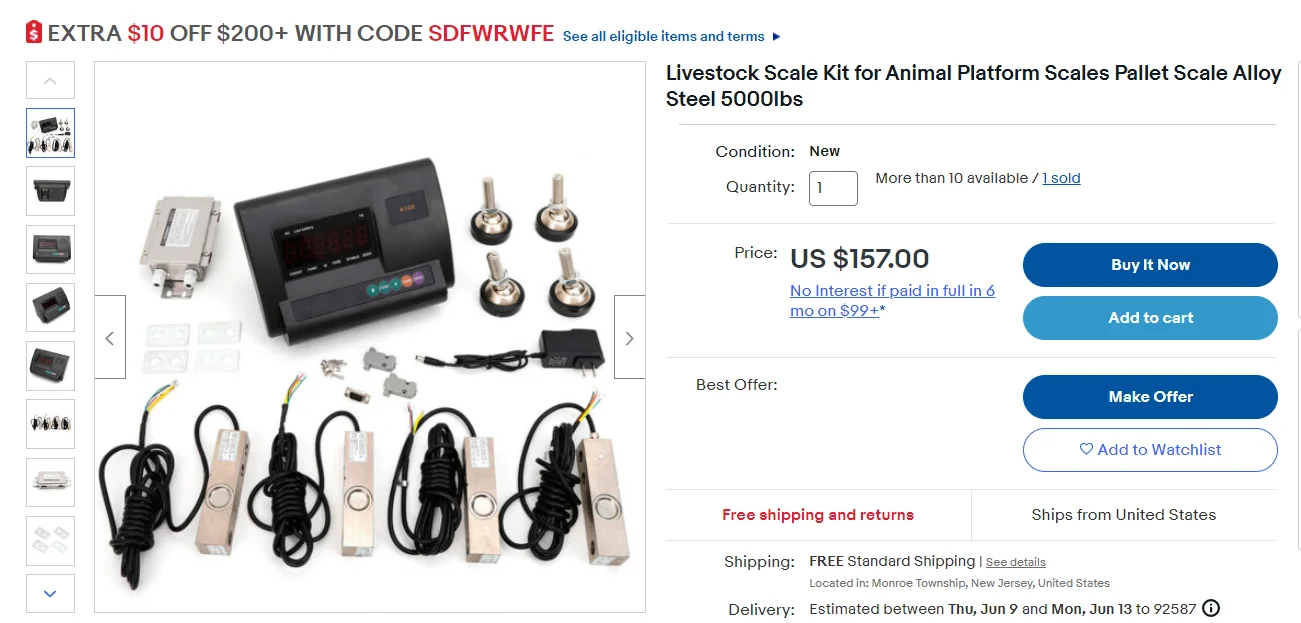
1654470876490.webp

The problem is that type of load cell won't work well for what I need it to do. Or at least I'm not smart enough to figure it out. I am smart enough to figure out how to use the load cells below that work in compression and are inline with the upper and lower shock mount points. That makes it real easy on the mechanical side or easy enough that I can do it.

https://www.ebay.com/itm/1853766136...d=link&campid=5337789113&toolid=20001&mkevt=1
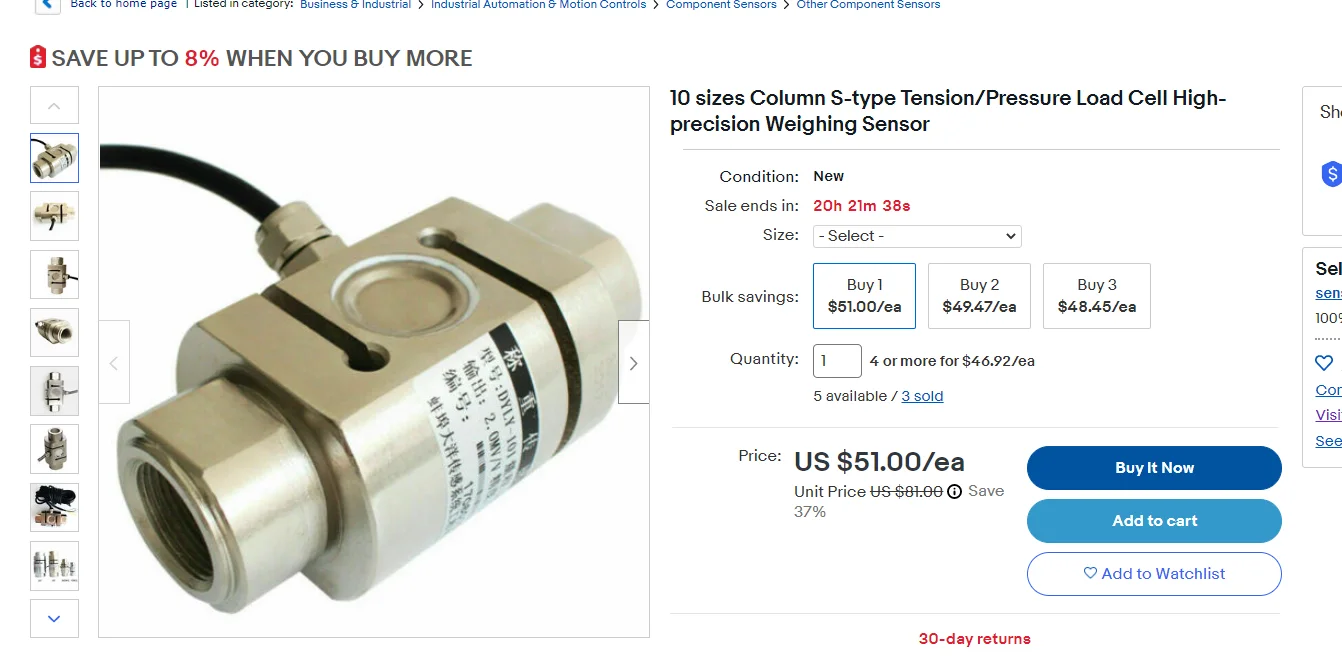
1654470911136.webp


I don't know what questions to ask to figure out how to swap load cells or if it is even possible. That's where I need some help.
 
  • Like
Reactions: toximus
The calibration is what is going to get ya. This is going back some time (like 20 years) but we played with load cells in college a bit. Typically, the readout instrument would be adjustable for gain and you would tune the load cell to match a given, known weight. Somthing is sticking in my mind about shunts....and you need to have the same shunt calibration value for the read out (I think...like I said, this is going way back).

Looking at the listings you posted...I'm not sure the two load cells would be compatible. They don't really give any units on the livestock scale page, so its hard to know if the load cell in the configuration you posted in the second link would work.

Here is some information to get you started...

https://www.omega.com/en-us/resources/load-cell-installation

And this little article...Didn't go too deep but you might be able to cobble something together from one of these maker sites

https://learn.sparkfun.com/tutorials/getting-started-with-load-cells/all
 
I’ll ask a couple of electrical engineers about this. One of them used to setup load cells on our cranes so he may have useful experience there.
 
  • Like
Reactions: mrblaine
@mrblaine I used small scale load cells for some force calibration in my experimental studies in school, but beyond that I don't know much that can be of use here.

I did want to ask if you (or @Mike_H) seen the clever method of weighing that uses hydraulics? I've attached a PDF here that explains the principle. It is cheap and effective and I can think of one way to build a corner weighing system with it.

I had friends in school in a different department that built something using this system for weighing some very odd shaped heavy things and I thought it was really clever when I learnt about it.

Just putting the idea out in the case your load cell idea poses complications in implementation.
 

Attachments

  • Like
Reactions: Mike_H
@mrblaine I used small scale load cells for some force calibration in my experimental studies in school, but beyond that I don't know much that can be of use here.

I did want to ask if you (or @Mike_H) seen the clever method of weighing that uses hydraulics? I've attached a PDF here that explains the principle. It is cheap and effective and I can think of one way to build a corner weighing system with it.

I had friends in school in a different department that built something using this system for weighing some very odd shaped heavy things and I thought it was really clever when I learnt about it.

Just putting the idea out in the case your load cell idea poses complications in implementation.

I haven't seen anything specific but I do have a tongue weight gauge for trailers that is simple hydraulics and a gauge. That was my original thought, take some air cylinders, plumb in some mechanical gauges to the upper ports which is pretty simple and cost effective.

They are using calculations to get the piston surface area less shaft area and mine would be easier with only the piston area needed since the shaft would be below the piston.

I didn't want to deal with bleeding the system and trying to figure out if air in the system would throw off the gauge reading.
 
I haven't seen anything specific but I do have a tongue weight gauge for trailers that is simple hydraulics and a gauge. That was my original thought, take some air cylinders, plumb in some mechanical gauges to the upper ports which is pretty simple and cost effective.

They are using calculations to get the piston surface area less shaft area and mine would be easier with only the piston area needed since the shaft would be below the piston.

I didn't want to deal with bleeding the system and trying to figure out if air in the system would throw off the gauge reading.

Just looked up those tongue weight gauges .. did not know they existed. Same principle in action. And you are right, compressible air in the system will mess up the readings.
 
Just looked up those tongue weight gauges .. did not know they existed. Same principle in action. And you are right, compressible air in the system will mess up the readings.

I've had one for at least 15 years. Now they incorporate them into the hitch.
 
That livestock kit is for 5k total and the way most of those scales work only display the combined total of the 4 cells so it won't give individual corner weights.
 
That livestock kit is for 5k total and the way most of those scales work only display the combined total of the 4 cells so it won't give individual corner weights.

You think I'm not smart enough to read each corner separately by unplugging one load cell and plugging in another? There are similar scale kits that go to 2000 lbs, or in fact most any range you need. I don't need all 4 at once, I just need to do it easier than I'm doing it now.
 
You think I'm not smart enough to read each corner separately by unplugging one load cell and plugging in another? There are similar scale kits that go to 2000 lbs, or in fact most any range you need. I don't need all 4 at once, I just need to do it easier than I'm doing it now.

:rolleyes:The load cells wire into the junction box like this. Just trying to be helpful...

1654529438738.webp


Something like this might be easier to adapt:

1654530365840.webp

https://www.amazon.com/dp/B078JHJV2V/?tag=wranglerorg-20
 
I talked with my engineer friend and he said that you'd need to find out what signal the load devices are being provided to the readout on the farm system, is it 4-20mA or mV/V. Then you'd need to match that signal on the load cell in the mockup coilover.

You'd have to be able to calibrate it with known loads.
 
I've had one for at least 15 years. Now they incorporate them into the hitch.

It looks like the aviation industry uses "top of the jack" load cell setups (both wired and wireless, working with digital reader) for weight measurements. If anyone makes calibrated load cells in the range useful for TJs this at a reasonable price this can be a nice setup for you, correct?

1654532251342.webp
 
It looks like the aviation industry uses "top of the jack" load cell setups (both wired and wireless, working with digital reader) for weight measurements. If anyone makes calibrated load cells in the range useful for TJs this at a reasonable price this can be a nice setup for you, correct?

View attachment 335252

Not exactly. I'm doing sprung weight and need something I can put in place of the shocks to measure the weight on the axles.
 
  • Like
Reactions: psrivats
  • Like
Reactions: srimes and mrblaine