In Moab back in May last year a group of us ran Rusty Nail, and all of us wound up winching up a particularly nasty ledge (someone help me with the name of that thing...  ). The winch situation required running the winch rope over a sharp ledge. Prepared as always, Big Mike ( @hosejockey61 ) pulls out a length of fire hose slit length wise down the middle (where he got fire hose, I have no idea
  ) to protect the winch rope as it crossed over that sharp ledge. It worked fairly well, and definitively protected the rope. I think six or eight of us wound up using this setup.
The problem was that every time the winch rope moved sideways one way or the other, it would roll out of that length of fire hose and have to be repositioned - and I think that happened every time.
So, I had an idea to improve on Mike's guard, and I spoke to him about it back before Christmas. Asking where he thought I could pick up some fire hose, Big Mike said, "No worries, I'll send you some." And then this shows up:
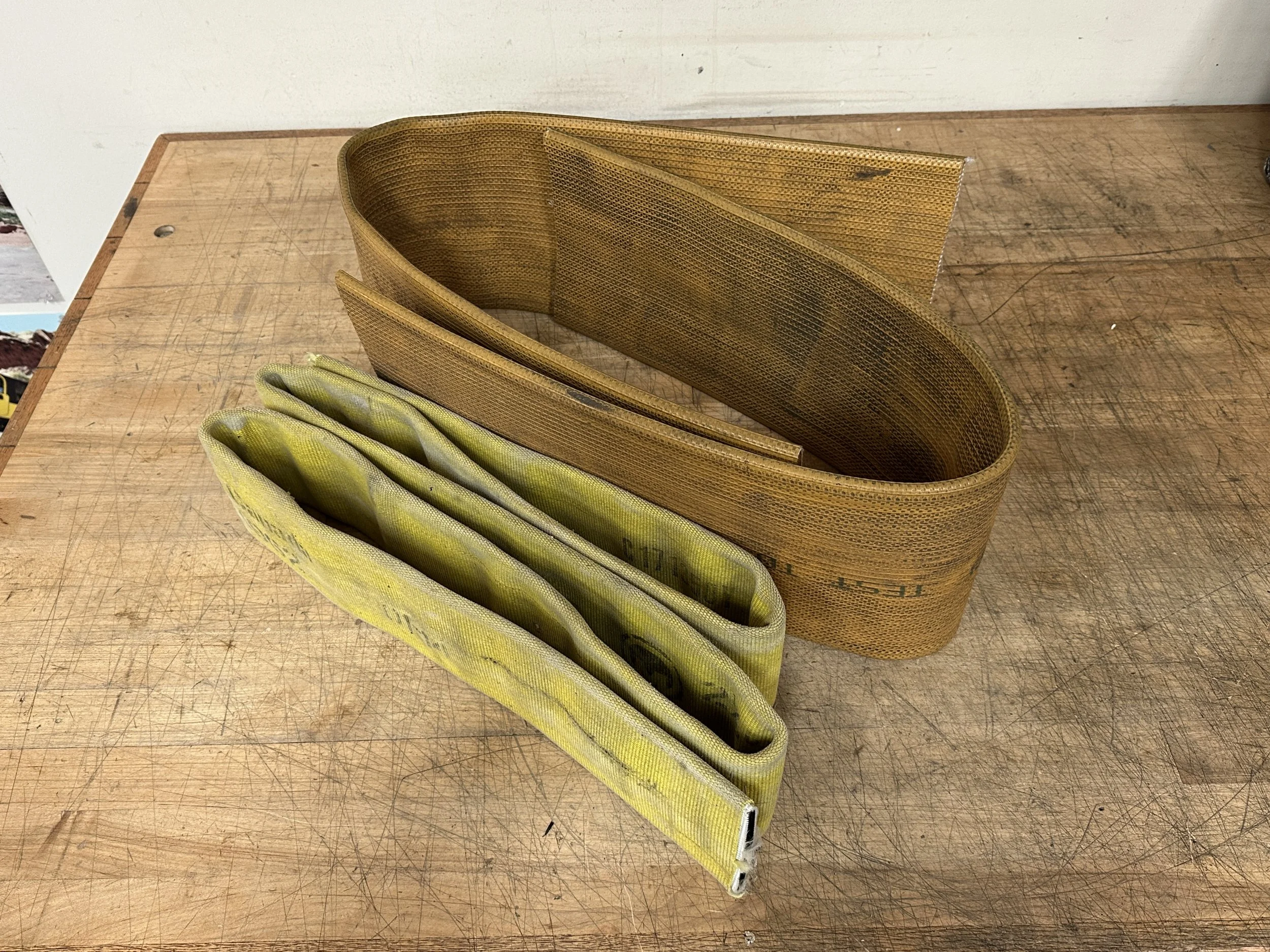
Good people on this forum.
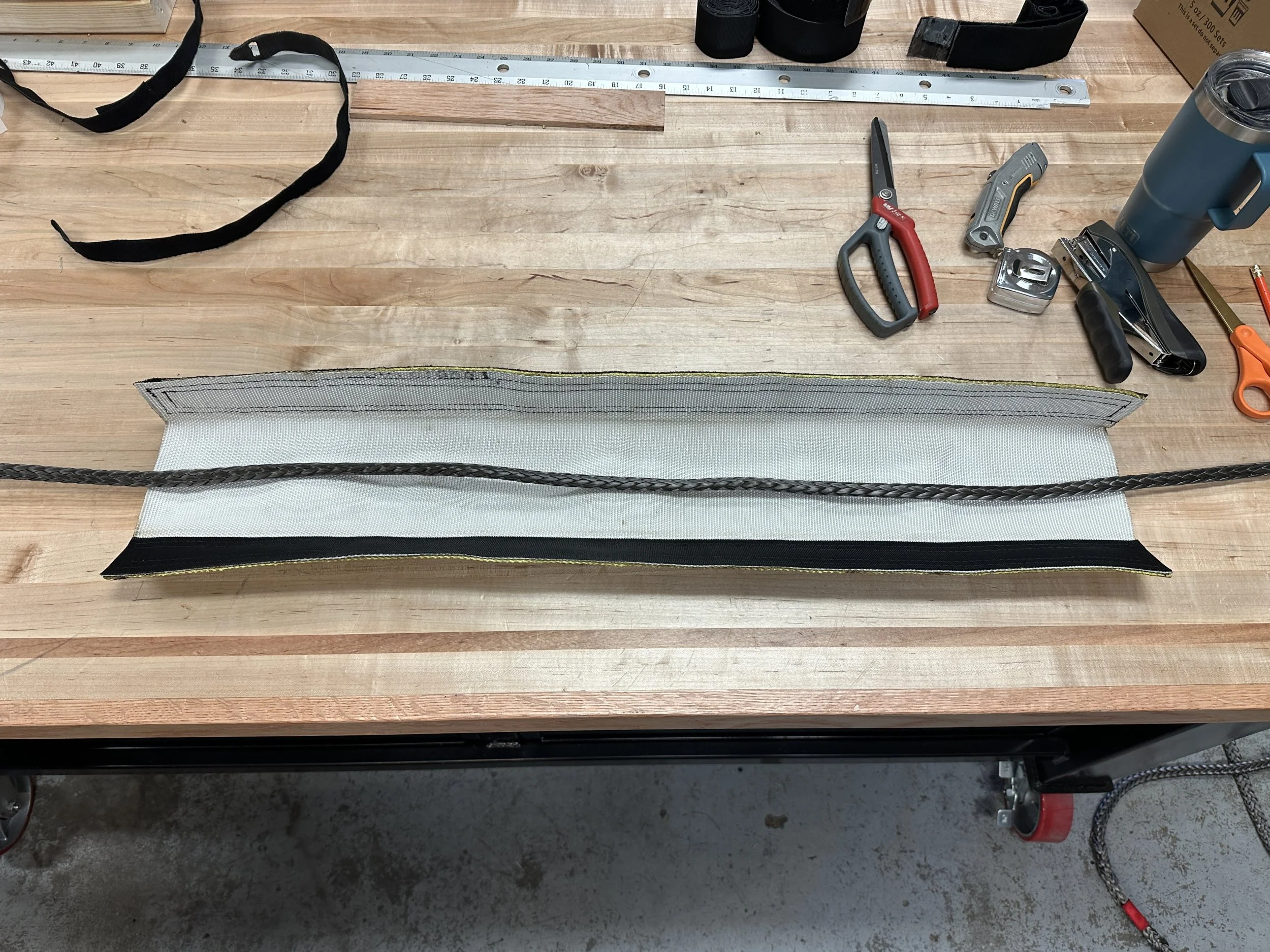
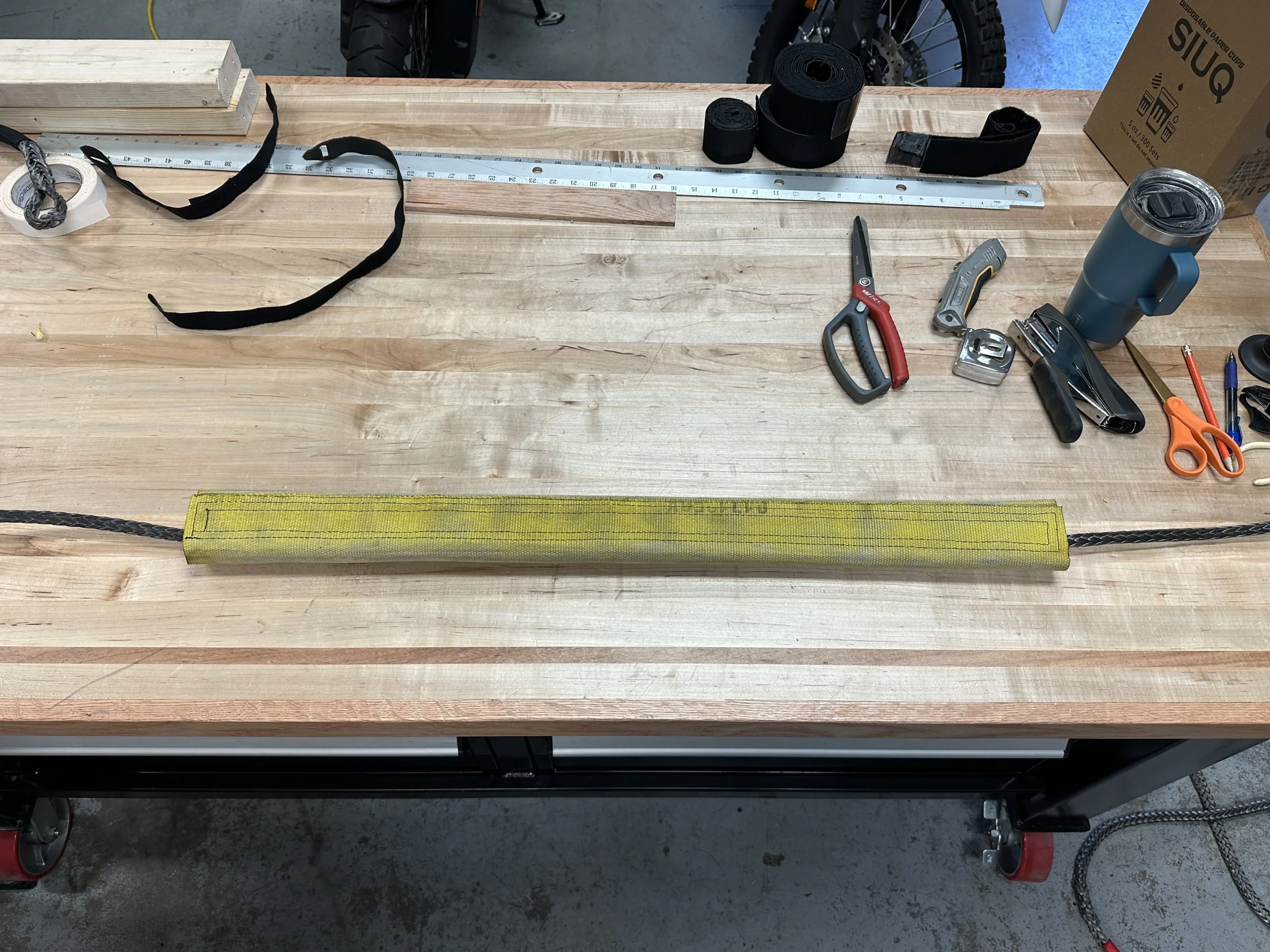
My idea was to create a guard that wrapped completely around the winch line, could be installed after the winch rope is in place (as is often the case), stay in place no matter the movement of the rope, grip the rocks to stay in place, and obviously protect the winch rope.
Oh yeah - and it had to be "Yellow."
But the big reason was this: I needed a project to use my big sewing machine.
Mike sent me a little less that 9 feet of the yellow, 4.5" hose, enough to make 3 prototypes of what I had in mind.
First up, cut to length - 32.5", and mark it to slice down the middle:
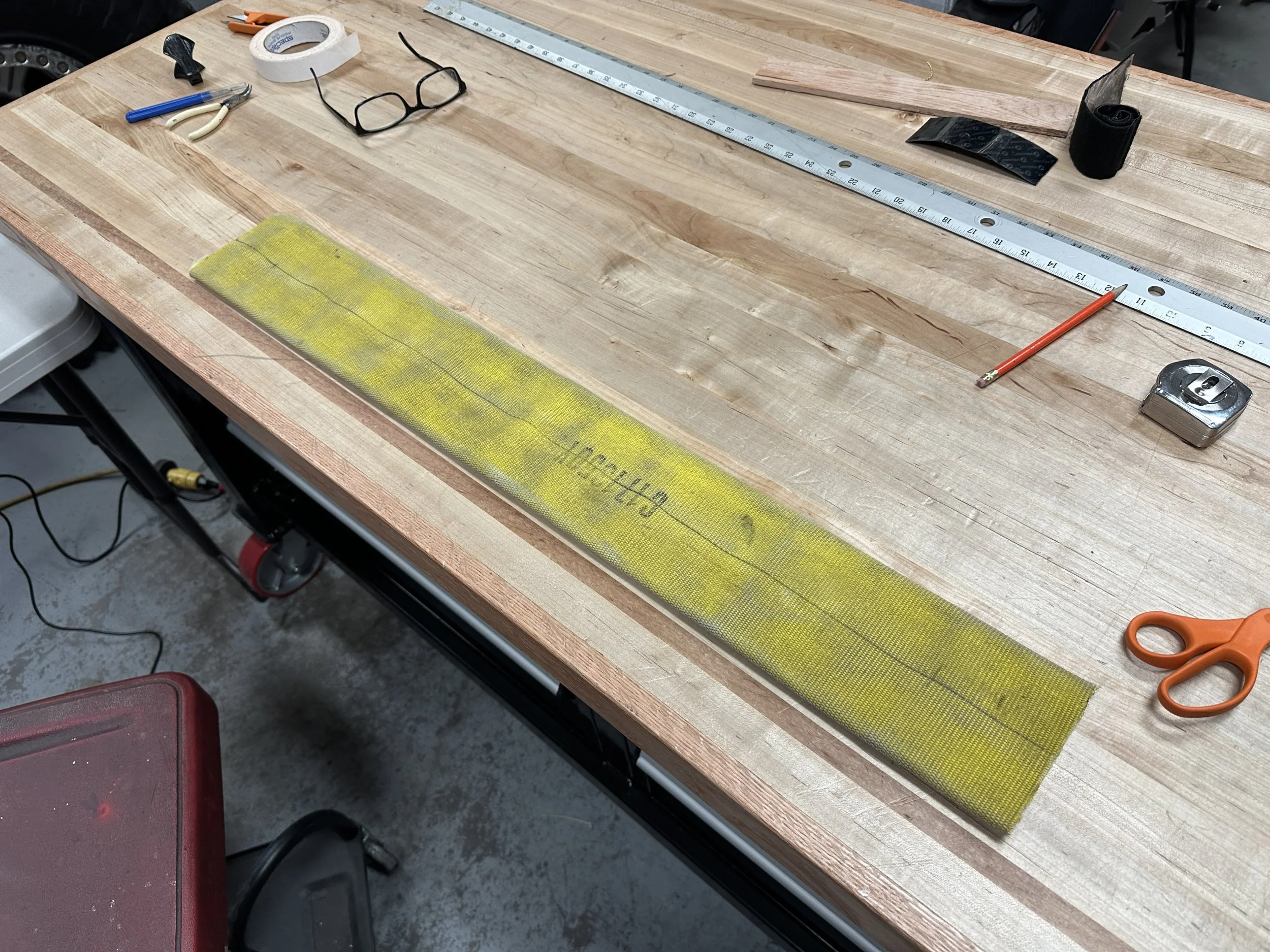
I then used a hot knife to cut the outer layer, and seal the edges of the nylon.
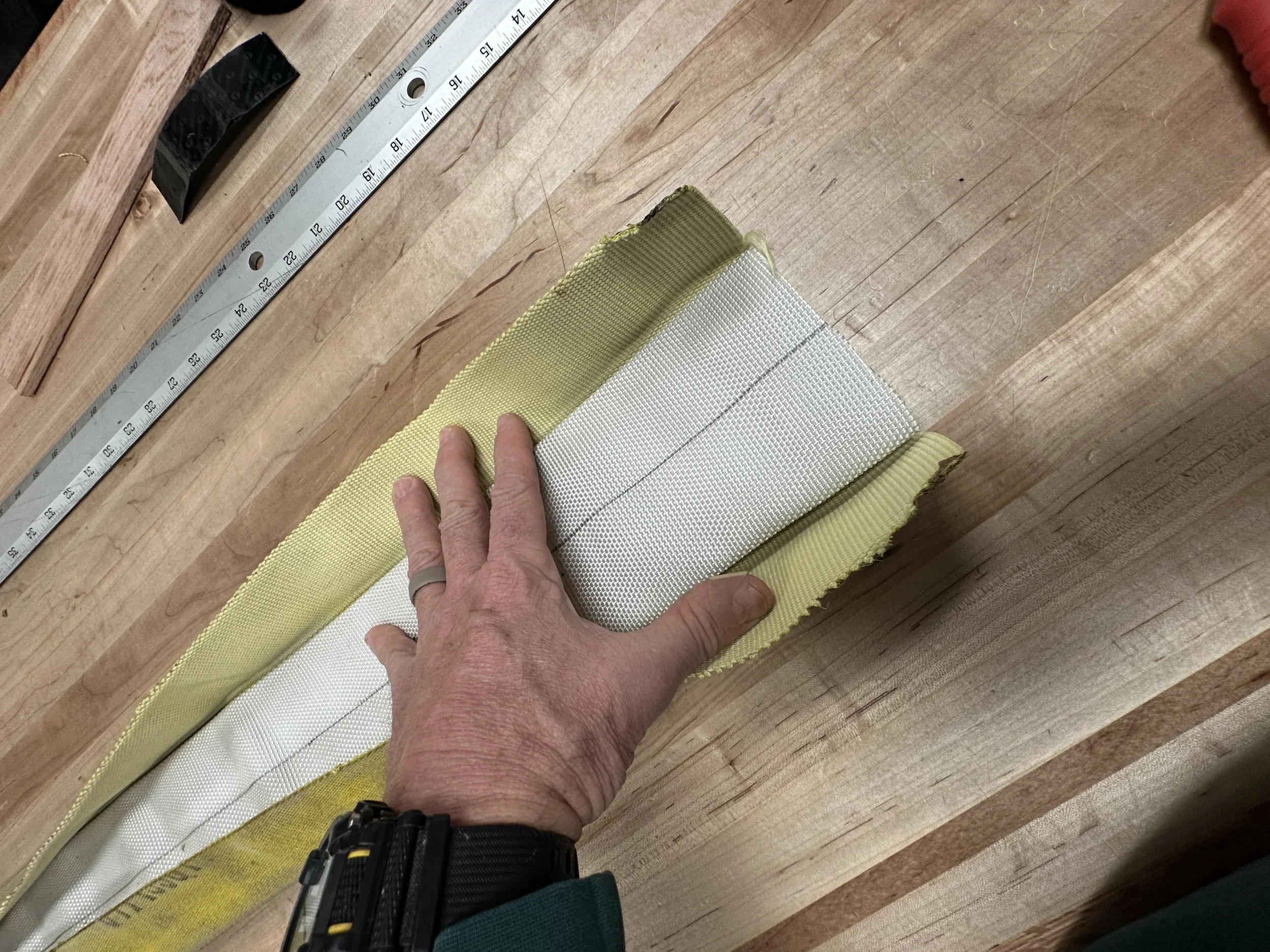
The hose is two separate layers. The outer, yellow layer is a heavy nylon (I think?), and the inner layer is a very smooth, silky nylon (again, a guess) on the outside bonded to a layer of heavy rubber - obviously since this thing carried water.
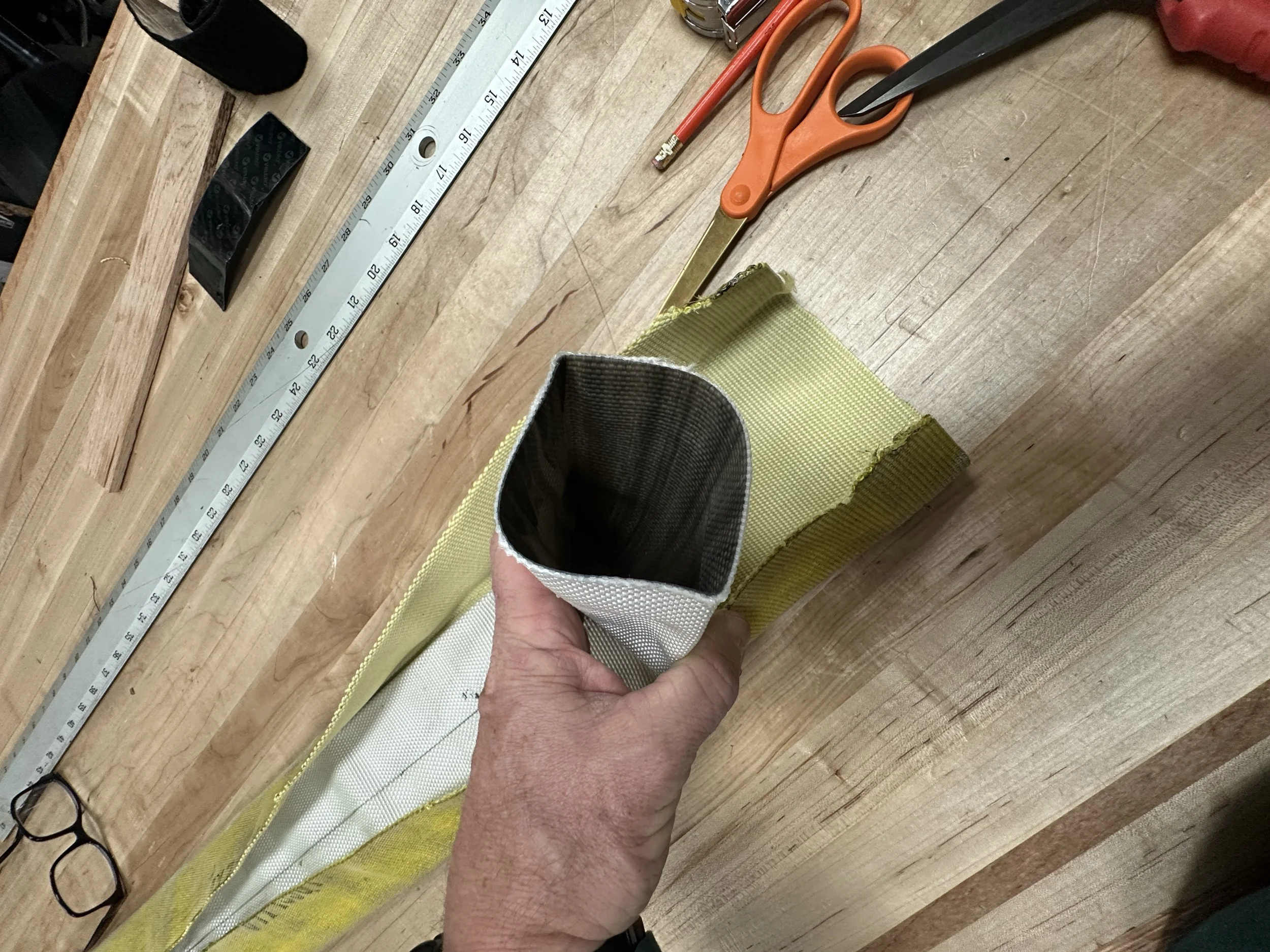
When working though my idea it was obvious that the silky outer layer would serve as a much better surface for the winch rope to pass through, rather than the rubber side, so my thought was to slit this layer and turn it inside out.
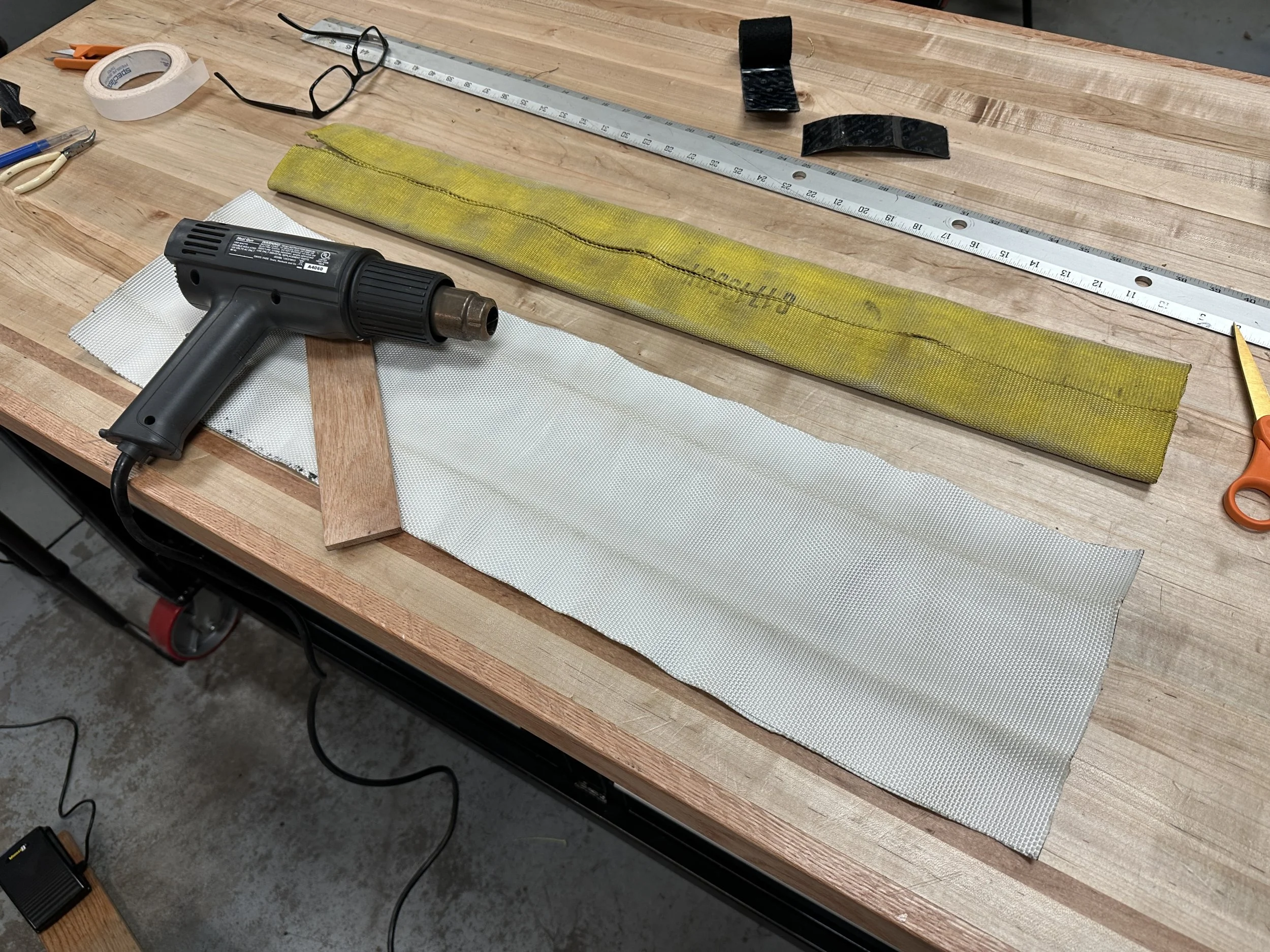
Now this hose is designed to lie flat when not in use, and both layers are fairly well formed with sharp folds. To turn the silky side out, I first had to heat the hose and press it flat:
Next, I assembled and aligned the layers in order to prep for sewing. To keep the edges aligned for the first sewing operation, I used double sided tape. This trick always works great, and makes the sewing process much easier and more accurate:
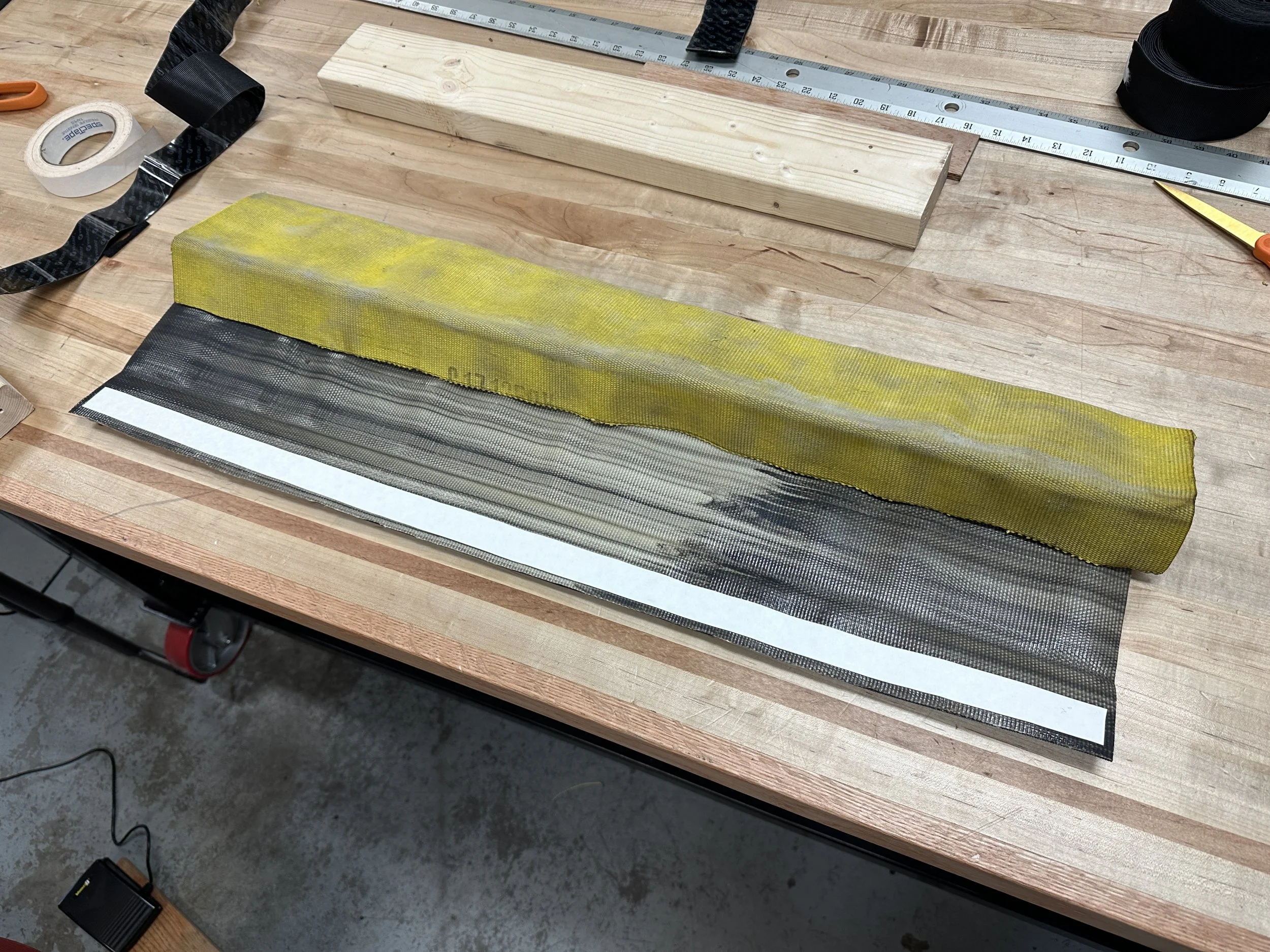
The Velcro I'm using is adhesive backed, which makes assembly and alignment very easy in preparation for sewing. First edge ready, I fired up this beast:
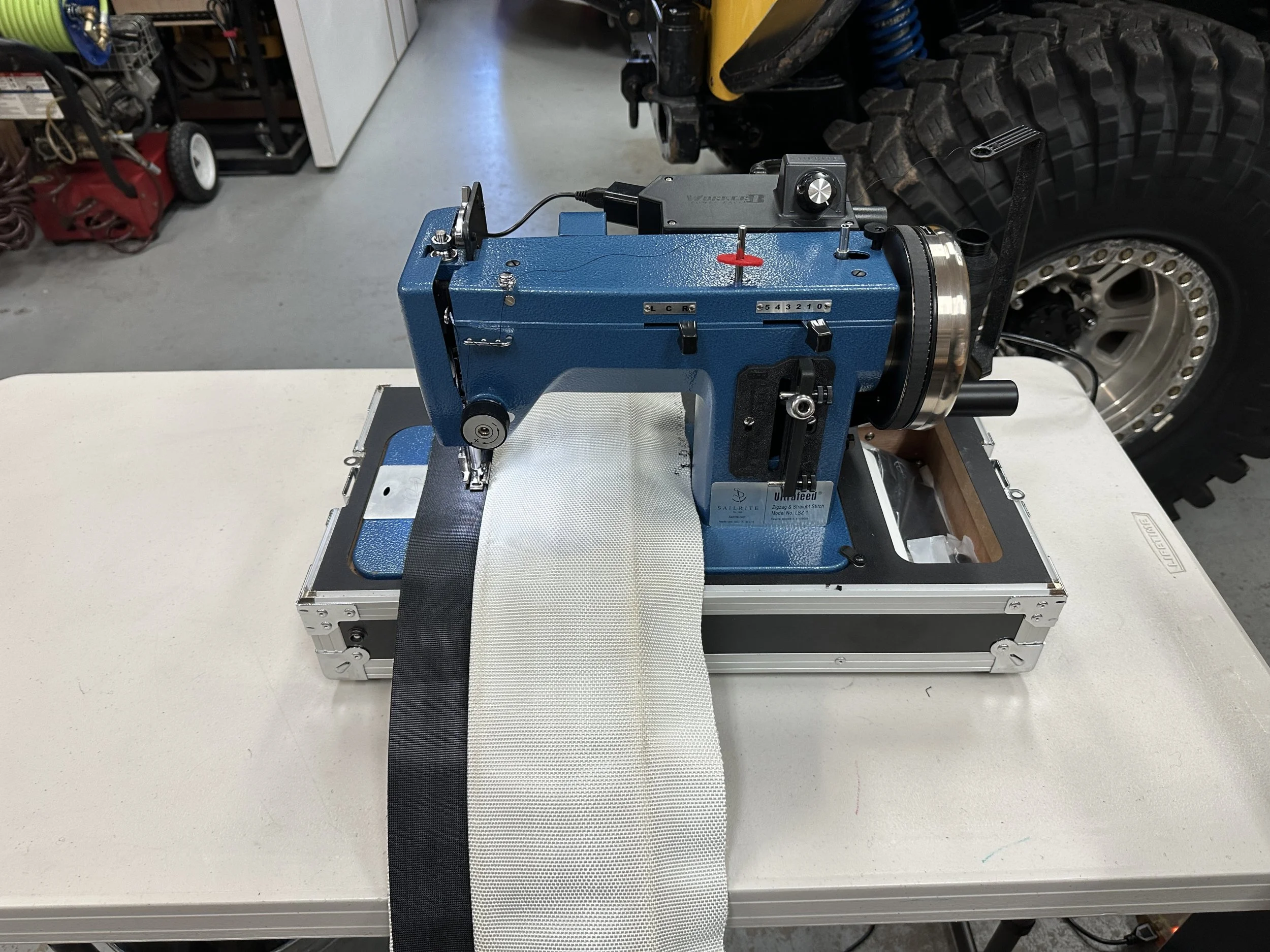
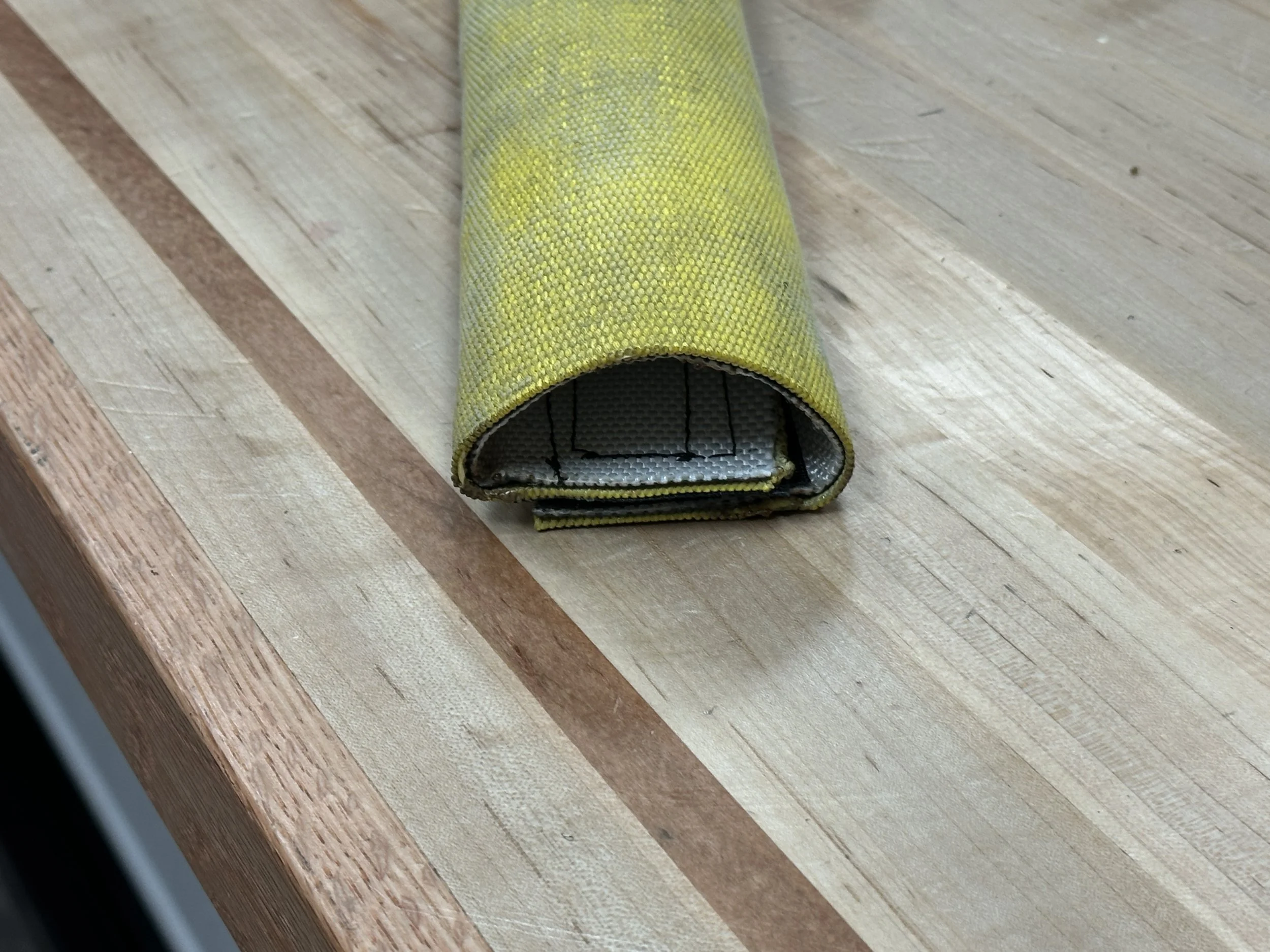
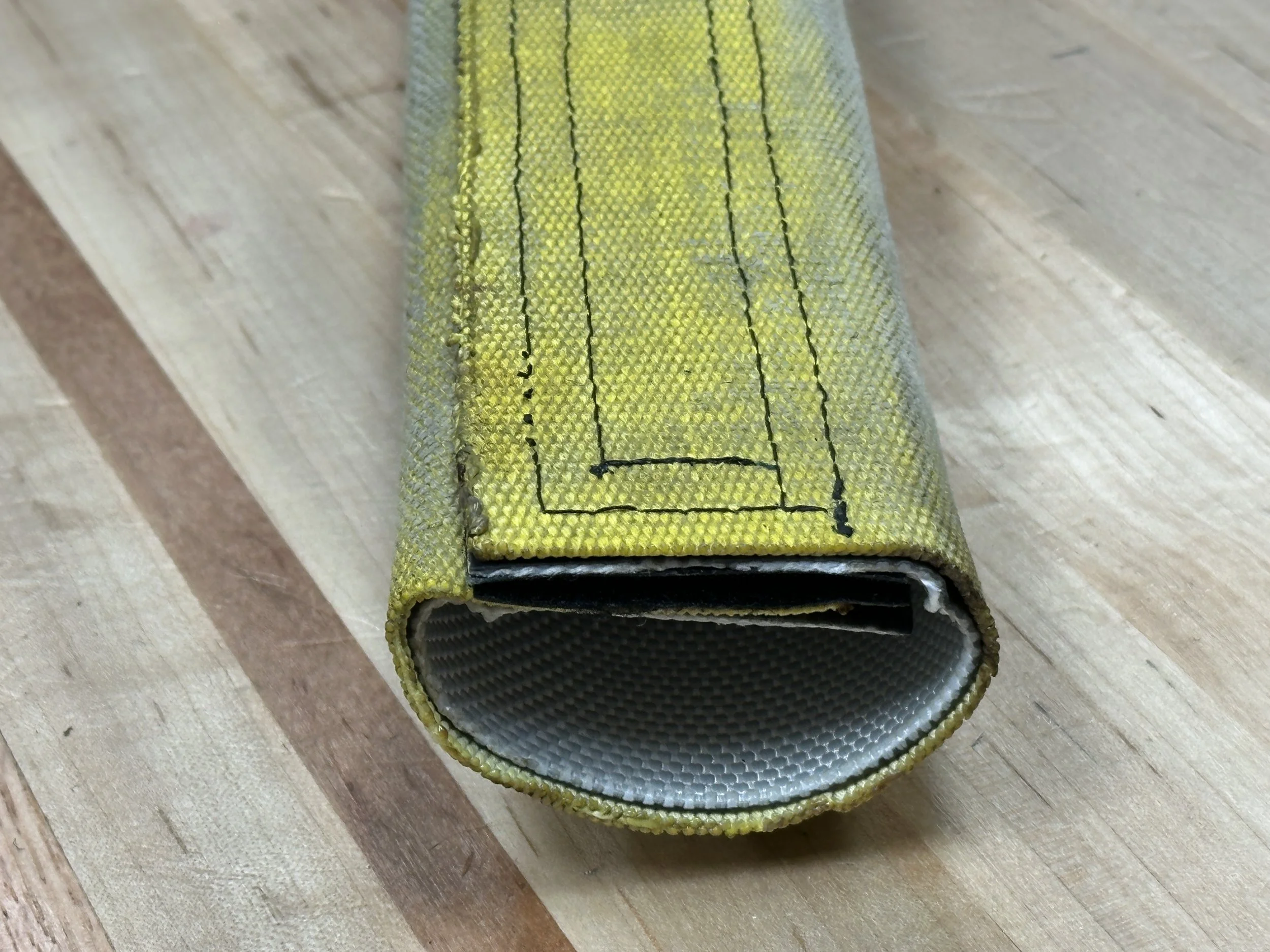
Obviously, the inner hose is a slightly smaller diameter than the outer hose. For my purposes, I had to take this into account to allow the final assembly to be wrapped around the winch rope. This makes for a challenging sewing operation, as the layers must be allowed to separate in the center. The tape by itself is not sufficient to keep the layers aligned, so I used staples to keep the second edge properly aligned during the sewing operation.
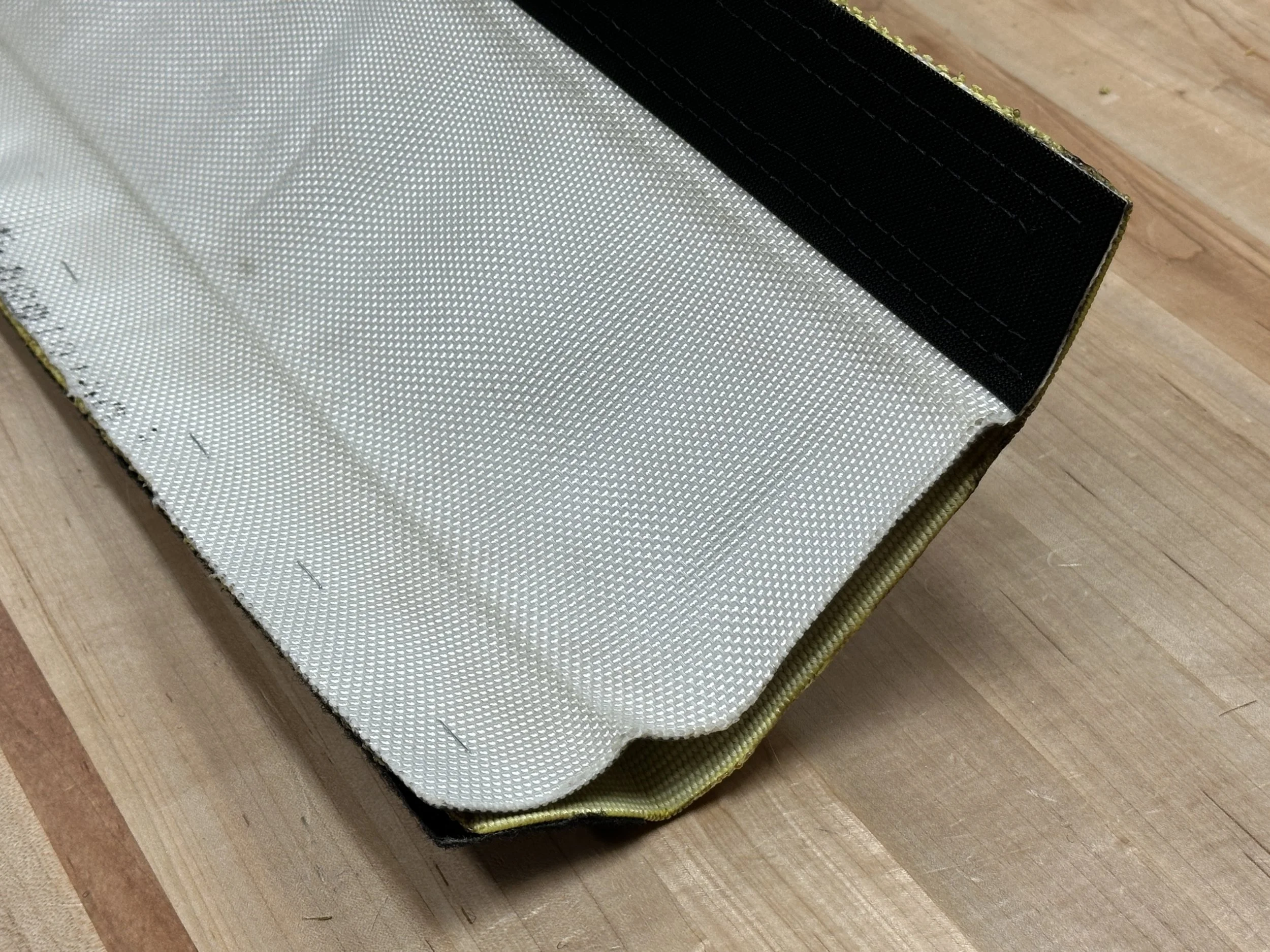
And here is the final result:
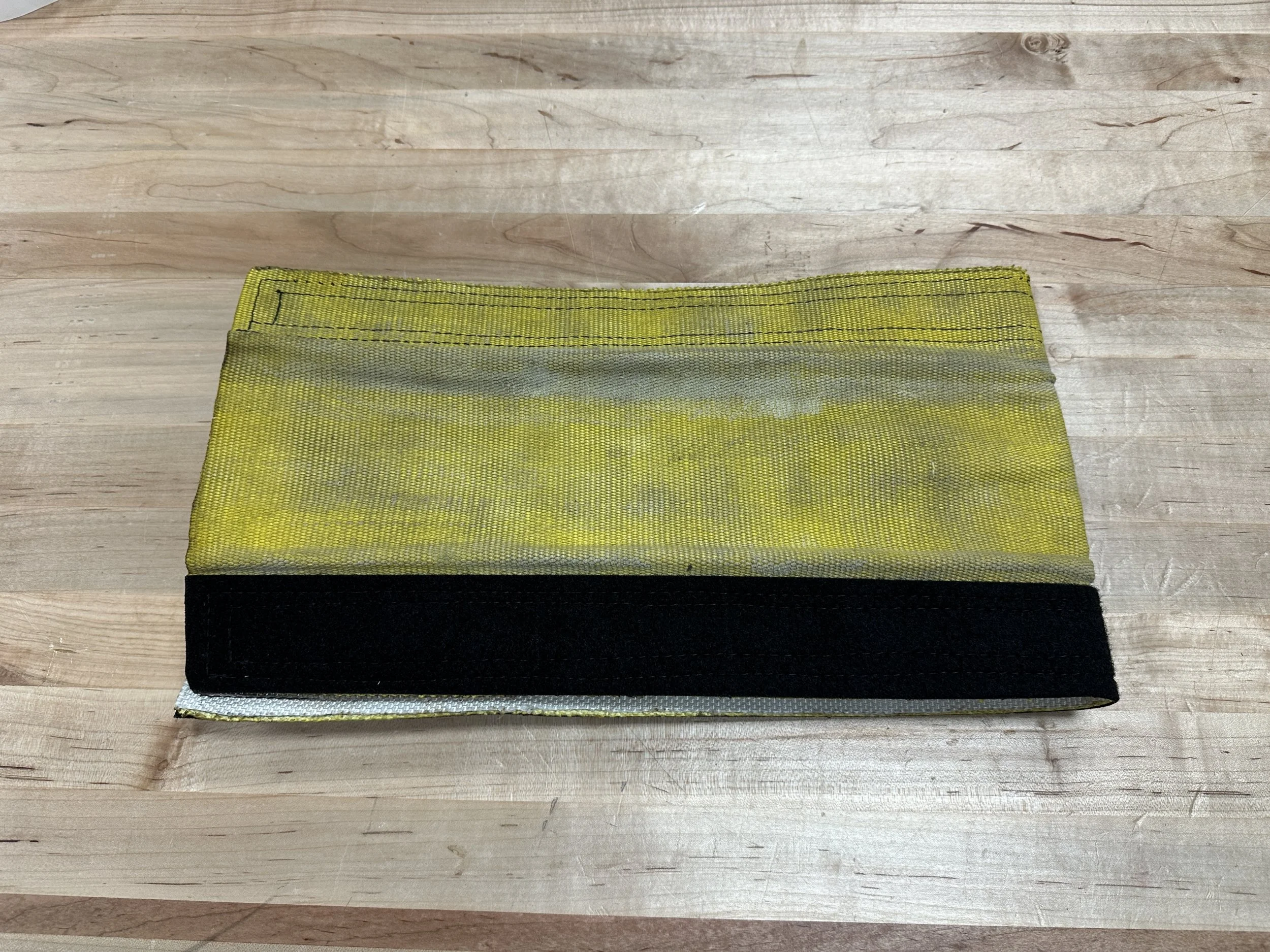
For storage, this thing can be folded flat, so it doesn't take up much room at all in the rig:
). The winch situation required running the winch rope over a sharp ledge. Prepared as always, Big Mike ( @hosejockey61 ) pulls out a length of fire hose slit length wise down the middle (where he got fire hose, I have no idea ) to protect the winch rope as it crossed over that sharp ledge. It worked fairly well, and definitively protected the rope. I think six or eight of us wound up using this setup.The problem was that every time the winch rope moved sideways one way or the other, it would roll out of that length of fire hose and have to be repositioned - and I think that happened every time.
So, I had an idea to improve on Mike's guard, and I spoke to him about it back before Christmas. Asking where he thought I could pick up some fire hose, Big Mike said, "No worries, I'll send you some." And then this shows up:
Good people on this forum.
My idea was to create a guard that wrapped completely around the winch line, could be installed after the winch rope is in place (as is often the case), stay in place no matter the movement of the rope, grip the rocks to stay in place, and obviously protect the winch rope.
Oh yeah - and it had to be "Yellow."
But the big reason was this: I needed a project to use my big sewing machine.
Mike sent me a little less that 9 feet of the yellow, 4.5" hose, enough to make 3 prototypes of what I had in mind.
First up, cut to length - 32.5", and mark it to slice down the middle:
I then used a hot knife to cut the outer layer, and seal the edges of the nylon.
The hose is two separate layers. The outer, yellow layer is a heavy nylon (I think?), and the inner layer is a very smooth, silky nylon (again, a guess) on the outside bonded to a layer of heavy rubber - obviously since this thing carried water.
When working though my idea it was obvious that the silky outer layer would serve as a much better surface for the winch rope to pass through, rather than the rubber side, so my thought was to slit this layer and turn it inside out.
Now this hose is designed to lie flat when not in use, and both layers are fairly well formed with sharp folds. To turn the silky side out, I first had to heat the hose and press it flat:
Next, I assembled and aligned the layers in order to prep for sewing. To keep the edges aligned for the first sewing operation, I used double sided tape. This trick always works great, and makes the sewing process much easier and more accurate:
The Velcro I'm using is adhesive backed, which makes assembly and alignment very easy in preparation for sewing. First edge ready, I fired up this beast:
Obviously, the inner hose is a slightly smaller diameter than the outer hose. For my purposes, I had to take this into account to allow the final assembly to be wrapped around the winch rope. This makes for a challenging sewing operation, as the layers must be allowed to separate in the center. The tape by itself is not sufficient to keep the layers aligned, so I used staples to keep the second edge properly aligned during the sewing operation.
And here is the final result:
For storage, this thing can be folded flat, so it doesn't take up much room at all in the rig:
Last edited: