Anyone run an adjustable brake proportioning valve?

Update....you have Wilwood combination valve...this one https://www.wilwood.com/MasterCylinders/MasterCylinderProd?itemno=260-11179

Pretty nice....how do your brakes feel? Did you or a PO install it?

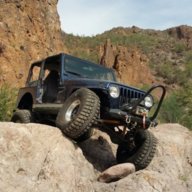
I bought the Jeep with it installed. I have not touched the adjustment. For the most part I think my brakes feel normal. I did have a pucker moment this year in Moab. I have had the Jeep in Moab two years in a row. This last trip I was on a VERY steep slide down a near vertical slick rock drop, probably about 30 feet in length. I was locked up and partially sliding when out of nowhere it felt like my rear brakes released. I have never felt anything like that before. The front brakes should have been doing the majority of the braking, so I don’t really know if they released or if something else happened. It only happened once but I didn’t like the rapid drop that resulted.


Sent from my iPhone using Tapatalk
 
I bought the Jeep with it installed. I have not touched the adjustment. For the most part I think my brakes feel normal. I did have a pucker moment this year in Moab. I have had the Jeep in Moab two years in a row. This last trip I was on a VERY steep slide down a near vertical slick rock drop, probably about 30 feet in length. I was locked up and partially sliding when out of nowhere it felt like my rear brakes released. I have never felt anything like that before. The front brakes should have been doing the majority of the braking, so I don’t really know if they released or if something else happened. It only happened once but I didn’t like the rapid drop that resulted.


Sent from my iPhone using Tapatalk

That would certainly be a pucker moment! Could be that going downhill on a very steep slick surface caused the rear to lose traction and lock up....once locked up it would just start sliding fast. Since there’s no abs, a slick surface has potential lock up the rear even with the stock proportion valve. Your weight transfer was most likely huge compared to normal driving, coupled with the slick surface, I could see the rear locking up pretty easily. What may have helped in that case is an adjustable valve that is weight transfer triggered so that as the weight moves forward making the rear more and more light the proportioning valve releases pressure off the rear so that they don’t lock up.
 
That would certainly be a pucker moment! Could be that going downhill on a very steep slick surface caused the rear to lose traction and lock up....once locked up it would just start sliding fast. Since there’s no abs, a slick surface has potential lock up the rear even with the stock proportion valve. Your weight transfer was most likely huge compared to normal driving, coupled with the slick surface, I could see the rear locking up pretty easily. What may have helped in that case is an adjustable valve that is weight transfer triggered so that as the weight moves forward making the rear more and more light the proportioning valve releases pressure off the rear so that they don’t lock up.

I don’t know if you have ever been to Moab and if you know what slick rock is. It’s actually not slick when dry, it’s like sandpaper. It was a dry day. I don’t know if it was a braking issue or because it was so steep the rear end actually lifted off the rock.


Sent from my iPhone using Tapatalk
 
My wife was at the bottom looking up trying to take a picture and she screamed when it dropped. The picture was sideways and blurry [emoji53]


Sent from my iPhone using Tapatalk
 
In doing a little research the Jeep has a combination valve. It has a metering section which manages how fast the front and rear see their pressure. In the middle is a pressure switch that alerts if there is unequal pressure throughout the valve (where the sensor is). Then out on front is the proportioning valve section where only the rear brakes are connected, lowering pressure to the rear. What I was thinking of doing is removing the proportioning valve stem and blocking off the hole with a bolt essentially disabling it. This way the metering side and pressure switch would still work correctly. Then I can install an adjustable proportioning valve in the line that goes to the rear, effectively replacing the oem porportining valve with my adjustable valve. It won’t have any affect on the front at all, it will only allow the rear to receive more pressure to compensate for the much heavier tires as compared to stock and since I now have rear disks they should be up to the task no problem. The tires are like a huge heavy flywheel, I’m sure they have allowed for a large amount of additional braking force to be able to be applied without issues of the rear tires locking up.
Here is a good read on combination valves if anyone wants to rear about how they operate. https://auto.howstuffworks.com/auto-parts/brakes/brake-types/master-brake2.htm
Older, but good posting. Yes, thats right with bigger wheels and the combi valve. Now, my wheels are 33s. The braking distance is longer! Everything is new at my brakes, front&rear. My mechanican test the brakes on the brake roll and the braking power rear is too weak for the 33s. Now he said...a little bit more pressure. I don´t know 80/20 or 75/25??? But how can I adjust this? It´s a 99 Wrangler and I think the valve is the same like from the YJ? Need help.
 
Why? The OE brake proportioning system works extremely well as is. This reminds me of those who think they can modify the OE cooling system to work better with electric fans, store brand 3-row radiators etc. and then wonder why their beloved Jeep now runs hotter, the fan stops working, etc. My personal opinion is you're screwing with a part of the braking system that should be left alone.

If you truly want better braking, upgrade your front brakes to something known to help dramatically... the dual piston Big Brake Kit from. www.blackmagicbrakes.com (AKA Vanco) designed by someone who knows Jeep brakes better than anyone. I've had that kit on both of my TJs and it works superbly. Bolt-on and makes use of the OE combination valve/proportioning valve.
Residual pressure from the combination valve uses 10 psi to hold the shoes against the drum on a 2 wheel disc system, the valve on 4 wheel disk only holds about 2psi, just enough to allow the calipers to retract but not retract too far when there is no foot on the pedal. It helps in giving you your pedal a solid feeling. If you swap to rear discs, you need a combination valve from a Grand Cherokee to keep the bias right. I have a waggy front, Rodeo Disc brake rear, the rodeo rear calipers were too small, so I went and made a bracket to fit a GM metric caliper, bias was better but rears were locking up. Went with CHEAP pads in the rear and a larger GM cop car pad for the waggy front. This was using a late 70's mercury Grand Marquis master cylinder. Tim
 
Borrowed from Feets at Moparts: http://board.moparts.org/ubbthreads...hat-you-never-wanted-to-know.html#Post1235219
Some folks liked the numbers that came up in the brake thread. I've thrown the most common stuff out in the open. Now, an engineer would be kicking and screaming about this stuff but it's good enough to get an idea what's going on.
I'll try to keep it simple for those who don't care much for math. These calculations build on one another. It's kind of a step by step thing.

Get a pencil, some paper, and a simple calculator. I use the calculator included in Windows.
Click your start button > All Programs > Accessories > Calculator.

It will be helpful if you write down what the numbers mean. Instead of 7 try writing "pedal ratio = 7" so you will remember what each of the numbers mean.

For this example I will use a common brake setup. Nothing exotic here. 11.75" Cordoba rotors, 2.75" slider calipers, manual 15/16" master cylinder, and a typical brake pedal.
Measure the stuff on your car. Don't use my measurements.


PEDAL RATIO

Before you start with crazy math, go find your brake pedal ratio. Measure from the middle of the pedal pivot to the middle of the pad on the brake pedal. Now measure from the middle of the pivot to the middle of the master cylinder push rod pin.

Divide the total length by the push rod distance. That is your pedal ratio.
14" pedal? 2" to the MC pin? Ratio is 14/2 = 7.
7:1 pedal ratio. Write that down. You will need it later.


AREA OF A CIRCLE (PISTON)

The very first thing you need to do is remember how to find the area of a circle. Your circle can be the master cylinder piston or the brake caliper piston.
It's pretty easy.

Pi R squared

Yes, the pies mom made were round but in physics Pi R squared.

Pi = 3.14 (number goes on forever but this is good enough)
R = radius of the circle (half the width of the piston)
squared = radius times the same radius.

Have a 2.75" piston? The radius is 1.375" (half of 2.75).
So, 3.14 times 1.375 times 1.375
The area of the piston is 5.93". Feel free to call it 5.9 inches.

Wanna cheat? Click here: http://www.calculateme.com/cArea/AreaOfCircle.htm

A note for people with multi-piston calipers: Only count the pistons on ONE side. Don't worry about why. Just count one side. It's the correct thing to do. Your numbers will be accurate and your headache will be smaller. Be sure to measure all the pistons on that side. They may be different sizes. Find the area of each piston on that one side. Once you do that, add the numbers together for a total area. Use that number for your caliper piston measurements.

Most master cylinders for our old cars are measured with fractions. Not good with fractions? Grab your calculator. Divide 1 by 16. Now you know 1/16 of an inch is .0625".
A 15/16 master cylinder is 15 times .0625 or .9375 of an inch. Plug that in to the above formula and the area of the master cylinder piston is .6902 square inches.


MASTER CYLINDER PRESSURE

Want to find the pressure made at the master cylinder?
You need the pedal ratio, the size of the master cylinder, and figure out how hard you want to push on the pedal.
I'm working with a MANUAL master cylinder. Throw a booster (vacuum or hydro) in the equation and you're on your own.

Multiply the pressure you push on the pedal times your pedal ratio. Divide your answer by the surface area of the master cylinder piston.
Using the numbers above, the pedal ratio was 7:1 and the master cylinder was .6902". Let's stomp on the pedal with 100 lbs of push.
100 times 7 equals 700. Divide that by .6902. You get 1014 pounds of force.


EFFECTIVE RADIUS OF A ROTOR

To work with the actual braking ability you really need to find what is called the effective radius of your brake rotor. To do that you need to know the caliper piston diameter (only the biggest one for calipers with more than one piston) and the diameter of your rotor.
Effective radius is the total diameter of the brake rotor plus that same diameter AFTER you subtract the diameter of the piston. Then, divide by 4.
Use a "big" Mopar 11.75" rotor and the 2.75" caliper we used above.
11.75" minus the 2.75" piston is 9 inches.
So, 11.75" plus 9" is 20.75".
Divide by 4 and you get a 5.18" effective radius.


BRAKE TORQUE

Now we're ready to find out what stomping on the pedal does for us.
To find the actual brake torque (stopping force of the brakes) we need the master cylinder pressure, the caliper area, and the effective radius.
Multiply the line pressure by the caliper area.
Take that number and multiply by the effective radius.
The result is your brake torque.
Since we were measuring in inches we need to divide by 12 to make it ft/lbs.
Our line pressure was 1014.
The caliper area was 5.9.
The effective radius was 5.18.
1014 * 5.9 * 5.18 = 30989 in/lbs
30989 in/lbs divided by 12 = 2582 ft/lbs.
Guess what? That's only one side of the rotor. The calipers press on both sides of each rotor so double that number.
You can have 5164 ft/lbs of braking on each front wheel with 100 pounds of pedal effort.
That's serious stuff! Think your tires can handle it?


BRAKE PEDAL MOVEMENT VS BRAKE PAD MOVEMENT

To find out how far your brake pads actually move when you push your brake pedal you need the pedal ratio, the master cylinder area and the caliper piston area. We're going to assume you've already taken up all the slack in the pedal and push rod.
Divide your master cylinder area by the caliper piston area.
Divide that number by the pedal ratio.
Divide that number by the 4 front brake pads (2 pads on the left and 2 pads on the right).

.6902" master cylinder divided by the 5.9" caliper piston area gives you .1169".
.1169" Divided by the pedal ratio of 7 gives you .0167".
Dividing by 4 front brake pads gives you a total of .0041" of movement.

So, every time you move that brake pedal one inch the brake pads each move 4.1 thousandths of an inch.
Brake pads are generally a couple thousandths of an inch off the rotor so they can't move far. If they did your pedal would fall to the floor.


Clear as mud?

 
  • Like
Reactions: Imapepper and KCsTJ
Residual pressure from the combination valve uses 10 psi to hold the shoes against the drum on a 2 wheel disc system, the valve on 4 wheel disk only holds about 2psi, just enough to allow the calipers to retract but not retract too far when there is no foot on the pedal. It helps in giving you your pedal a solid feeling. If you swap to rear discs, you need a combination valve from a Grand Cherokee to keep the bias right. I have a waggy front, Rodeo Disc brake rear, the rodeo rear calipers were too small, so I went and made a bracket to fit a GM metric caliper, bias was better but rears were locking up. Went with CHEAP pads in the rear and a larger GM cop car pad for the waggy front. This was using a late 70's mercury Grand Marquis master cylinder. Tim

I did a rear disc conversion from a 96 ZJ, I took the combo valve from the donor vehicle but never installed it. Could this residual 10psi of pressure cause brake drag? I still have the combo valve but kept reading mixed if it was actually necessary
 
If you swap to rear discs, you need a combination valve from a Grand Cherokee to keep the bias right.
The TJ comes with the same brake proportioning valve 52009115 p/n whether it has rear disk or drum brakes. The only time that p/n changes is for left-hand drive vs. right-hand drive TJs.
 
Last edited:
I did a rear disc conversion from a 96 ZJ, I took the combo valve from the donor vehicle but never installed it. Could this residual 10psi of pressure cause brake drag? I still have the combo valve but kept reading mixed if it was actually necessary
Yes...you will have brake drag in the rear only.
 
The TJ comes with the same brake proportioning valve 52009115 p/n whether it has rear disk or drum brakes. The only time that p/n changes is for left-hand drive vs. right-hand drive TJs.
There is something in the system that holds the pressure Jerry, you have to have it for the drum brakes, unless mopar did something different than all of the other drum brakes they made over the last 80 years. I also use the donor vehicle's master cylinder if only changing the rear...I went to a larger front caliper so I had to go with a larger master in that combination above. Tim
 
There is something in the system that holds the pressure Jerry, you have to have it for the drum brakes, unless mopar did something different than all of the other drum brakes they made over the last 80 years. I also use the donor vehicle's master cylinder if only changing the rear...I went to a larger front caliper so I had to go with a larger master in that combination above. Tim
Conjecture is just that, conjecture. Jeep's brake engineers use a lot of different versions of parts for lots of different configurations but where the proportioning valve is concerned, the single p/n for the proportioning valve they use works for both disk and drum. @mrblaine knows more about this than either of us though.
 
Well I smoked a set of rear discs because I used a drum combination valve, so I know it is there...
 
Well I smoked a set of rear discs because I used a drum combination valve, so I know it is there...
Funny how you say you had that problem but I did not have that or any other problems after converting my previous TJ from drum to disk. It was brake expert @mrblaine who confirmed to me that I did not need to change the proportioning valve (not a separate part, it's inside the combination block) when I was making the conversion.

There is something in the system that holds the pressure Jerry, you have to have it for the drum brakes, unless mopar did something different than all of the other drum brakes they made over the last 80 years. I also use the donor vehicle's master cylinder if only changing the rear...I went to a larger front caliper so I had to go with a larger master in that combination above. Tim
A knowledgeable individual by the forum name of Ftgiles describes it all better than I could...

"Don't take this the wrong way. I know the internet is full of what you're repeating here and it’s wrong. There is no residual valve and residual valves have not been used for many years.

The TJ uses a combination valve. It contains a metering check valve for the front brakes, a safety/pressure balance valve/switch and a proportioning valve for the rear brakes.

The front metering valve holds off the pressure going to the front calipers until pressure builds in the rear to move the rear shoes into contact with the drum. The front metering valve is needed for rear drums because the front pads don’t have to move very far and the rear shoes have to move a ways before braking starts. Applying the rear brakes at the same time or just before the front brakes adds to stability. The front metering valve has no effect on the rear calipers and can only aid in the stability department. But, the pressure to overcome the metering check valve is so small that it has no impact in a disc/disc setup except to maybe apply the rear slightly before the front which is of some benefit.

As far as the rear proportioning valve goes, it too is probably doing no harm. It is critical to have a front bias in a short wheel base vehicle with a high center of gravity. Those are the two biggest contributors to excessive weight transfer to the front during hard braking. If you remove the lip seal from the proportioning valve stem you are just removing any proportioning. That’s probably not a good idea and it will make your brakes a little mushy feeling because the piston will still move.

It’s also internet bunk that the proportioning valve limits pressure to the rear always. Under normal braking, the heavy spring keeps the proportioning valve open until a certain pressure has been met and then proportioning starts."
 
Last edited:
Residual pressure from the combination valve uses 10 psi to hold the shoes against the drum on a 2 wheel disc system, the valve on 4 wheel disk only holds about 2psi, just enough to allow the calipers to retract but not retract too far when there is no foot on the pedal. It helps in giving you your pedal a solid feeling. If you swap to rear discs, you need a combination valve from a Grand Cherokee to keep the bias right. I have a waggy front, Rodeo Disc brake rear, the rodeo rear calipers were too small, so I went and made a bracket to fit a GM metric caliper, bias was better but rears were locking up. Went with CHEAP pads in the rear and a larger GM cop car pad for the waggy front. This was using a late 70's mercury Grand Marquis master cylinder. Tim
Lots of mythology there but well earned since so many repeat it. First is RPV. Anyone that has worked on drum brakes understands that the return springs are very high force. The reason they are high force is we typically use a servo drum brake which is self applying once actuated and the high return force is needed to pull the shoes back to the anchor pin. So, with that much force, the wheel cylinder at the 10 psi and diameter of the piston can NOT and does NOT generate enough force to move the shoes off the anchor pin. Anyone with a TJ can figure that out as the shoes wear, the pedal drops and the parking brake sets higher in the travel. If that doesn't work, the math does.

2 psi RPV are for two things, one is of no consequence since we have better molding technology now. They are used when hot rods put the booster and master down low on the frame and there is not enough hydrostatic fluid pressure to sort of keep the pistons where they go. More realistically it is just to keep the fluid where it belongs. The other reason they used to be used is older seals needed a small bit of pressure to keep them from weeping but that hasn't been the case for decades.

The combo valve is the same part number for drum and disc until about 05 when they offer two versions. I've yet to determine if they are due to disc/drum options or ABS non ABS options. I suspect the latter.

A few other things in the TJ braking system. There is no metering other than a slight delay to apply the rears first. It is very slight. The front brakes have no proportioning whatsoever. The front line from the master goes into the combo block and it is open to two other ports which make it a tee when it is non ABS and then a 90 with one blocked off for ABS. In either scenario, they just connectors.
 
Last edited:
There is something in the system that holds the pressure Jerry, you have to have it for the drum brakes, unless mopar did something different than all of the other drum brakes they made over the last 80 years. I also use the donor vehicle's master cylinder if only changing the rear...I went to a larger front caliper so I had to go with a larger master in that combination above. Tim
What holds the pressure is the weight of the fluid in the lines, that's it.
 
  • Like
Reactions: DrDmoney
I found a good article explaining the residual valve...Tim
https://techtalk.mpbrakes.com/how-to-series/brake-valve-overview
And that explanation is why I said the mythology is well earned because it is repeated so often and most often by those who should be telling the truth. I glanced through some replies until I had a chance to go into them in further depth but I saw one with lots of math and shit.

So, do the math. Brake shoe return springs exert about 100 lbs of force to return the shoes to the anchor pin. Take the TJ wheel cylinder diameter, multiply the area of that piston size x 10 psi and it becomes evident very quickly that anyone that says a 10psi RPV holds the shoes closer to the drum is just wrong.
 
Funny how you say you had that problem but I did not have that or any other problems after converting my previous TJ from drum to disk. It was brake expert @mrblaine who confirmed to me that I did not need to change the proportioning valve (not a separate part, it's inside the combination block) when I was making the conversion.

A knowledgeable individual by the forum name of Ftgiles describes it all better than I could...

"Don't take this the wrong way. I know the internet is full of what you're repeating here and it’s wrong. There is no residual valve and residual valves have not been used for many years.

The TJ uses a combination valve. It contains a metering check valve for the front brakes, a safety/pressure balance valve/switch and a proportioning valve for the rear brakes.

The front metering valve holds off the pressure going to the front calipers until pressure builds in the rear to move the rear shoes into contact with the drum. The front metering valve is needed for rear drums because the front pads don’t have to move very far and the rear shoes have to move a ways before braking starts. Applying the rear brakes at the same time or just before the front brakes adds to stability. The front metering valve has no effect on the rear calipers and can only aid in the stability department. But, the pressure to overcome the metering check valve is so small that it has no impact in a disc/disc setup except to maybe apply the rear slightly before the front which is of some benefit.

As far as the rear proportioning valve goes, it too is probably doing no harm. It is critical to have a front bias in a short wheel base vehicle with a high center of gravity. Those are the two biggest contributors to excessive weight transfer to the front during hard braking. If you remove the lip seal from the proportioning valve stem you are just removing any proportioning. That’s probably not a good idea and it will make your brakes a little mushy feeling because the piston will still move.

It’s also internet bunk that the proportioning valve limits pressure to the rear always. Under normal braking, the heavy spring keeps the proportioning valve open until a certain pressure has been met and then proportioning starts."
You can change it Jerry but I see no need to swap one out when the one you are going to put in is the same part number.

Thanks for bringing Fletcher in. He is one of the few that knows as much about the TJ brakes as I do.
 
  • Like
Reactions: Jerry Bransford