
Bermudacat
TJ Enthusiast
- Joined
- Dec 28, 2015
- Messages
- 249
Climate change .
Are you sure that's what it's called this week?



Climate change .
Some, if not a majority of their concerns are valid at some level. No argument there. They are winning the access battle because of two, or possibly three reasons. 1) They have been getting in the faces of the mid level bureaucrat policy makers often enough and loudly enough that the rules are being made just to get them to go away. 2) They are becoming the mid level policy makers.
These folks are really starting to annoy me.

So, about those deer leases?I live in Texas. Most of our land out here is privately owned. We aren't like the Yankee liberals that let the government own everything so they can dictate how/when we can use it.
It is up to us to take care of our land. I'm pro-green but not like the environmental whack jobs that want people to buy "carbon credits".
So, about those deer leases?

Freedom for sale?Yep! I've got several buddies with abundant property that lease the land to several customers. Of course, I get a free pass and get to shoot their hogs for them.
Freedom for sale?
I grew up around BLM land. I like the access, the minimal restrictions and the lack of an entry fee.Freedom isn't free. I'd rather have the opportunity to buy land than play around on the governments land any day of the week.
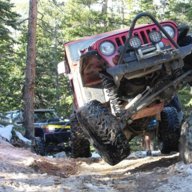

yep..I grew up around BLM land. I like the access, the minimal restrictions and the lack of an entry fee.
- Fracking. I live in Weld County, CO, and fracking is huge out here. Just Google for 'Weld County, CO Fracking Map'. They have to set up barriers now around the rigs, at least while they're initially drilling, because of the anti-fracking folks. I have one going up right outside of my sub-division right now. I'm relatively uninformed of the pros/cons and am sure there is merit on both sides.
yep..
and I prefer to stop at the municipal office to get access if a permit is required...
not some redneck who only lets his friends in.
Wish I had your faith. But explain how come people who live in fracking areas see such massive degradations in their water quality? I know they are just farm families living in remote sparsely populated rural areas but you have a blind faith in the industry hype.The media has done to fracking what it is doing and tried to do to firearms. Fracking has been part and parcel of oil and gas production for nearly as long as they have been drilling for gas and oil.
To help with some of the questions I asked above, oil and gas production zones are typically many thousands of feet below any aquifer we use for potable water. When a well is drilled, the last thing any production company wants is water in the well from an aquifer. Well drilling is expensive and way too expensive to use for potable water. Most potable water wells are above 1000 feet in depth. Almost all gas and oil is below that depth. So, when they drill for oil and gas, they go down with the surface casing with about a 24" bit and then they pull it and set surface casing. Surface casing is what they mount the BOP and other well related stuff to. In order to seal it off from the formation and keep it from moving, they centralize it in the bore hole and then pump cement down through it and up around the outside of it to make a permanent steel lined hole in the ground.
They drill through that cement plug with intermediate drill bits down to several thousand feet and then repeat the process with intermediate casing and it is cemented in place. After that, they start drilling the final size down to the depth of the well and they set well casing to that depth and cement it in place. Each set of casing is as sealed as they can get it into the formations for several reasons but mainly to keep water out, and oil and gas in. They don't want water, they don't like water, they want nothing to do with water.
When the zones logged and located, the well engineer lays out a perforation schedule, the wireline guys (me) drop down shaped charge perforating guns and shoot holes through the casing out into the formation. To start the well producing, they pump a mild acid and very coarse sand down the casing and out into the formation to fracture it (where fracking comes from) open it up and then the sand keeps it open so the oil and gas can go into the casing through the holes.
...but you have a blind faith in the industry hype.
Are you in the fracking business Blaine?
I'm certain that there are many opportunities for contamination of an aquifer from the surface. All I want folks to know and understand is the actual difference between oil and gas well drilling and the small part of that process that is hydraulic fracturing.Wish I had your faith. But explain how come people who live in fracking areas see such massive degradations in their water quality? I know they are just farm families living in remote sparsely populated rural areas but you have a blind faith in the industry hype.
Anyway we have definitely veered off topic. Most of the guys in the fracking industry are definitely pro 4x4.
No, but fracking is only a small part of oil and gas production and it's sad that the media has lumped the bigger portions of the process under that umbrella and then gave it that name.
That wouldn't surprise me. You can't really trust anything the media says these days.

