Thanks. I have new plugs arriving Tuesday. Will try the tips and tricks above with a top end clean prior to replacing the plugs. Is it worth spraying some CCC in the plug holes when fitting the new plugs? Thanks all for your help, I have learnt a lot.It's an old school mechanics trick for cleaning the top end. It works really well on older engines, not so much on newer direct port injection engines.

You are using an out of date browser. It may not display this or other websites correctly.
You should upgrade or use an alternative browser.
You should upgrade or use an alternative browser.

Misfiring is back again on 2004 TJ
- Thread starter Inky
- Start date
I wouldn't....Thanks. I have new plugs arriving Tuesday. Will try the tips and tricks above with a top end clean prior to replacing the plugs. Is it worth spraying some CCC in the plug holes when fitting the new plugs? Thanks all for your help, I have learnt a lot.
It will wash any lubrication off the cylinder walls and loose carbon off the piston top which will run down into the crankcase....

The old aircraft engines they discovered it on were fuel injected engines.It's an old school mechanics trick for cleaning the top end. It works really well on older engines, not so much on newer direct port injection engines.
Not true. Water injection is even still used today on some engines, both piston and jet.I wouldn't....
It will wash any lubrication off the cylinder walls and loose carbon off the piston top which will run down into the crankcase....


Thanks. I have new plugs arriving Tuesday. Will try the tips and tricks above with a top end clean prior to replacing the plugs. Is it worth spraying some CCC in the plug holes when fitting the new plugs? Thanks all for your help, I have learnt a lot.
I would replace the plugs and try the water method as a starting point.
There are several ways of using top engine cleaner, but it needs to be done correctly to prevent internal engine damage.
Yes I have seen people hydrolock an engine and bend a connecting rod trying to do a top engine clean.
My advice to you...... If you want to do the top engine clean..... go to your local GM dealership. yes Gm.
Buy a bottle of their top engine cleaner GM part # 19355198. you can also order it from Amazon.
https://www.amazon.com/dp/B07DC223XJ/?tag=wranglerorg-20
Run your jeep to operating temperature. Shut it off. remove the vacuum hose from the brake booster.
start the engine and get the idle to 2000-2500 rpm's. now insert the vacuum hose into the can of top engine cleaner.
make sure the rpm's stay between 2000-2500 by holding open the throttle body. Do not let your jeep stall.
Once you suck the can empty, shut the vehicle down.
Let your jeep sit for 1.5- 2 hours. This lets the engine heat and cleaner work together by softening the carbon.
Do not let it sit longer than 2.0 hours. Once the vehicle cools down the carbon deposits will start to harden up again.
Remove your spark plugs, and crank the vehicle over a couple times. This will ensure you do not hydrolock the engine.
Reinstall the spark plugs. and fire it up. Hold the rpms at 1200-1500 for about 30 seconds, then blip the throttle a few times.
Clean up your mess and go drive it. It will probably blow lots of smoke for the first few miles. and it will stink like hell.
Don't breath in the smoke.
Why do I recommend the GM top engine cleaner. I'm a GM tech and have used it numerous times and it works.
I'm not experienced with aircraft engines, but I believe it's different technology. Most of what happens on the newer engines with direct port injection, is build up on the intake valves. and it is more likea gummy tar as opposed to a hardened build up on the exhaust valves. The shit doesn't like to come off. Different vehicle manufacturers have different ways of dealing with it.The old aircraft engines they discovered it on were fuel injected engines.
BMW does a walnut shell blasting of the valves. GM you do a top engine clean, then remove the intake and clean off the valves with a specialty tool.
I have tried doing the water method on newer engines, but it is not as effective.
There are any number of things that can be done incorrectly to our engines, transmissions, axles, etc. that can ruin them. You can fuck anything up if you don't know what you're doing, don't pay attention to instructions, etc.. Dump a container of water in through the carburetor or throttle body and it can cause major problems like bending a rod. Which is why I gave the instructions on how to do it safely I did above. Done as described the process works well to decarbonize even a modern engine. The technique I described was taught to me by an old Chevrolet Corvette mechanic to decarbonize big Corvette engines like the 427 that would barely run due to carbon build-up from owners driving them too conservatively.I would replace the plugs and try the water method as a starting point.
There are several ways of using top engine cleaner, but it needs to be done correctly to prevent internal engine damage.
Yes I have seen people hydrolock an engine and bend a connecting rod trying to do a top engine clean.
Modern engines aren't as susceptible to carbon build-up but driven too conservatively even our Wrangler engines can develop carbon buildup issues that can cause issues like pinging and knocking.
Sorry, let me ask what would be suggested if I find the following.
1. Let’s assume , I remove the ignition bar and remove the current champion plugs.
2. Install Autolite XP985 plugs.
3. Reinstall the ignition bar.
4. Restart the engine and warm up the engine to verify the engine warmth.
5. Remove the tube air input to the filter.
6. Start engine
7. Slowly add can of water slow dribbles to the carb filter input.
8. Let engine run for a further 5 minutes.
9. Turn engine off.
10. Restart engine and warm up engine and go for ride.
What happens next if there is a repeat of P0304, probably the next steps are to test the compression of each chamber. What would be the next steps if there is still issues present?
1. Let’s assume , I remove the ignition bar and remove the current champion plugs.
2. Install Autolite XP985 plugs.
3. Reinstall the ignition bar.
4. Restart the engine and warm up the engine to verify the engine warmth.
5. Remove the tube air input to the filter.
6. Start engine
7. Slowly add can of water slow dribbles to the carb filter input.
8. Let engine run for a further 5 minutes.
9. Turn engine off.
10. Restart engine and warm up engine and go for ride.
What happens next if there is a repeat of P0304, probably the next steps are to test the compression of each chamber. What would be the next steps if there is still issues present?
Last edited:
Yes you definitely need to replace those 7034 plugs with something else like was recommended back on page one. I suspect doing so will get rid of your misfires.Sorry, I am starting to get confused, so, I think I can summarize my way forward.
1. Remove the current spark plugs.
2. Check consistent gaps on the new plugs.
3. Replace with the new plugs.
4. Replace these
Edit: @Inky My memory on the 7034 was/is faulty. That is indeed a double-tipped platinum plug, I was thinking of the 3034. My apologies for having fucked that up. Do check them to insure their electrodes are not shorting out from excessive antiseize and that the coil rail is/was properly seated over the top of them.
Last edited:
IF he uses water injection as CCC then no it wont wash away the lubrication, but IF he uses the chemical CCC; then yes it will....Not true. Water injection is even still used today on some engines, both piston and jet.
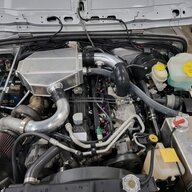
I've installed several kits for boosted applications. Normally you want to run 50/50 methanol and water, but some folks just run water.Not true. Water injection is even still used today on some engines, both piston and jet.
Well, I am back. I have now fitted a new ignition rail and new Autolite XP985 plugs. after 50 miles I have back P0300 that flips over to a P0302. Any more suggestions. The engine sounds cruddy (all over the place). HELP, I am getting desperate.
Plus, I was careful with spring soda can-sized tap water from a spray bottle in the intake.
Plus, I was careful with spring soda can-sized tap water from a spray bottle in the intake.
Last edited:
What comes to mind next would be a new Mopar Crankshaft Position sensor which is what provides the engine's master timing signal. It can definitely cause misfires. Avoid store brand sensors like the plague. And make sure it's the correct version for your manual transmission. There's a different version for an automatic transmission.
I also have an 04 that threw misfire CELs when RPMs were high. In my case, the oil pump drive shaft had some axial play which hosed the camshaft position sensor. Even after replacing both, I still got misfire CELs until I reset the computer's adaptive memory. No problems since.Well, I am back. I have now fitted a new ignition rail and new Autolite XP985 plugs. after 50 miles I have back P0300 that flips over to a P0302. Any more suggestions. The engine sounds cruddy (all over the place). HELP, I am getting desperate.
Plus, I was careful with spring soda can-sized tap water from a spray bottle in the intake.
isnt there an easy way with test equipment to test the system to know exactly what the root cause is? you are going to laugh at me arent you haha. \is there a good video to show the crankshaft sensor being fitted for us 70-year-old, amateurs?
I thought the documented crankshaft position sensor error code was P0320. This problem I have goes to P0300 then flips to P0302. I apologize all this is completely new to me and I am still learning.What comes to mind next would be a new Mopar Crankshaft Position sensor which is what provides the engine's master timing signal. It can definitely cause misfires. Avoid store brand sensors like the plague. And make sure it's the correct version for your manual transmission. There's a different version for an automatic transmission.
Last edited:
The computer is only so smart, it can't precisely pinpoint the sources for all issues. Just like bad pre-catalytic converters can set codes that errantly point to an O2 sensor. Misfire codes are generated when the computer notices erratic engine rpms which can be caused by a bad/erratic crankshaft position sensor and any of a dozen other potential causes of misfires. Misfires attributed to randomly different cylinders point me away from the engine and more to centralized sources which includes the CPS.I thought the crankshaft position sensor error code was P0320. This goes from P0300 to P0302. I apologize all this is completely new to me and I am still learning.
No guarantees it's a bad CPS but...
A volt meter won't indicate the quality or timing of its pulse signal.
It does provide you with the testing for the reference voltage and ground, averaging signal voltage for the ECU along with determining if the hall effect is not responding properly.A volt meter won't indicate the quality or timing of its pulse signal.
Testing the timing and quality of the pulse signal would require a factory dealership troubleshooting console.
The OP needs to do some testing to narrow down whether the CPS is going bad....
Similar threads

- Replies
- 4
- Views
- 4,820


- Replies
- 7
- Views
- 1,505

- Replies
- 2
- Views
- 398

- Replies
- 16
- Views
- 1,757
