Novak Conversions Jeep Wrangler TJ radiator

HAM Radio Is Dying — And It’s Our Fault?

The other good thing about GMRS is that you don't have to have a license to use the same frequencies with the FRS radios . So for trail riding , someone with the FRS portable has communication with all the GMRS radios .

Are these any good

Screenshot_20260213_112107_Amazon Shopping.jpg
 
  • Like
Reactions: tm dean

I have a set of those that we use around the house . They seem to work pretty good as long as we keep the volume low . At higher volume they get distorted , but overall they work fine up to about half a mile or so in our terrain which is heavily wooded and flat .
 
  • Like
Reactions: John Cooper
The other good thing about GMRS is that you don't have to have a license to use the same frequencies with the FRS radios . So for trail riding , someone with the FRS portable has communication with all the GMRS radios .
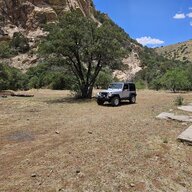
IIRC if you have a full power mounted radio you can't communicate on the low wattage FRS frequencies. If you are using a hand held then the GMRS can normally communicate with the FRS.
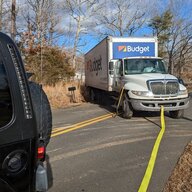
 
IIRC if you have a full power mounted radio you can't communicate on the low wattage FRS frequencies. If you are using a hand held then the GMRS can normally communicate with the FRS.


Correct , on high power a mobile can only use channels 15 - 22 and on low power you can add channels 1 - 7 . One problem that can cause distortion is that FRS radios have a 12.5 khz channel spacing on those channels and GMRS has a 20 khz channel spacing . They do communicate with each other , but the higher powered mobile may come in distorted on the FRS radio . On the trail I use a mobile and carry a Baofeng UV-82 portable as well . If I'm close to who I'm talking with I run my mobile on low power . I believe that some GMRS mobile radios don't have the option of low power . On the trail we usually use channels 15 - 22 .
 
Last edited:
  • Like
Reactions: John Cooper
There are different implementations of the channel restrictions. My Wouxan (sp?) 50w mobile works at described above; 1-7 on low power only, 8-14 RX only, 15-22 full send. The little bubble pack Amazon FRS walkies though are all over the place. I have seen some only do TX/RX on 1-14, but most go all the way to 22 so finding a channel that's compatible has never been an issue for me. Then of course there are the "ham" radios like the UV5R and it's ilk that will do whatever you program them to, but I don't think that's what we are talking about here.
 
I bought a Radioddity DB-20G GMRS radio at Christmas, then quickly found out nobody in mu area uses GMRS and there are no repeaters. So I unlocked my radio to the 2m and 440 bands along with GMRS, MURS, and FRS, and set it to high power on all channels.

Now I hear traffic every day and several weekly nets. I've been studying for my Tech license and should take my test next month. And yes I've transmitted on 2m without a license and the guys I was talking to didn't care.
 
  • Like
Reactions: DavidBT
That is the beauty of GMRS . No tests , just send the government money and they allow anyone to use the airwaves . For local and trail communication , GMRS is great .

On another note , studying for the entry level Ham license isn't too hard with all the information online and practice tests . Once you past the test , most of it you will never need to know .

Why on earth force people to memorize things that the vast majority will never need to know, instead of things like actual instructions on how to generally use the devices?

A drivers license does not require a test on knowledge of the chemical makeup of gasoline, how to time a cam shaft, and how to upgrade gear ratios. I get that safety and responsible use are important to know and follow with ham radio, but the test should not consist of the rest of the tedium.
 
Why on earth force people to memorize things that the vast majority will never need to know, instead of things like actual instructions on how to generally use the devices?

A drivers license does not require a test on knowledge of the chemical makeup of gasoline, how to time a cam shaft, and how to upgrade gear ratios. I get that safety and responsible use are important to know and follow with ham radio, but the test should not consist of the rest of the tedium.

Its the way it is due to historical precedence. It stays the way it is for one reason: CB Radio.

I can see both sides of the discussion. Hams fought bitterly to keep the Morse Code requirement to gate keep the idiots out. I can understand that what with what happened with CB Radio. OTOH, I went to a local hamfest. The emergency response hams had a big booth there - I was interested, but the 3 or 4 old men behind the table were more interested in bullshitting among themselves, so I eventually walked away. An ex-coworker, and life long ham I know, says "That's pretty typical.".

With all that said, any idiot and his cat can pass the tech exam with minimal study, maybe gate keeping idiots is a good thing. *SHRUG*
 
Since I began studying, I find all of the material to be essential knowledge about radio. Maybe it's because I like to know how things work. But so far about 90 percent of the study questions I find useful and see the need to know it. Im just glad we don't have to learn CW anymore. That's tough.
 
  • Like
Reactions: Harold&Cat
Since I began studying, I find all of the material to be essential knowledge about radio. Maybe it's because I like to know how things work. But so far about 90 percent of the study questions I find useful and see the need to know it. Im just glad we don't have to learn CW anymore. That's tough.

When you have the tech exam stuff down, go through the general material a few times. I aced the tech, and I squeaked by and passed the general because I'd eyeballed the material and taken exactly two practice tests (for the general). Yea, my electronics background helped and so did some common sense, but that little bit of attention to the general got me through it. The VE encouraged everyone to take the general after they passed their tech as the cost was the same either way. I may have been the only one to pass the general - not sure. "Extra" is where it gets hard.

Someone had marked the answers on my tech exam sheet - I actually raised my hand and turned it in for a fresh copy, I just didn't feel right about it. "I can respect that." from the VE.
 
Since I began studying, I find all of the material to be essential knowledge about radio. Maybe it's because I like to know how things work. But so far about 90 percent of the study questions I find useful and see the need to know it. Im just glad we don't have to learn CW anymore. That's tough.

"Essential" for what exactly? Trust me, I've looked over the practice exams quite a few times over the years and fail to see much of anything that would be of value to individuals who simply want to jump in with a new radio and begin communicating. It from my perspective is akin to requiring one to know how to write code and build a computer from scratch in order to use the internet.

The test should be (IMHO):
- Safety
- Rules
- How to utilize a basic radio

Much like getting a driver's license.

I understand the desire to know more, but that desire is not going to grow from the jumping off point, when there is a gatekeeping slew of information that one needs to memorize (which is the advice I see most often from those answering how to pass the tests, don't worry about understanding it, just memorize it) instead of just enough to get the individual on the air. If the desire to learn more about diodes and stuff, they can do so after they get their feet wet.
 
Last edited:
"Essential" for what exactly? Trust me, I've looked over the practice exams quite a few times over the years and fail to see much of anything that would be of value to individuals who simply want to jump in with a new radio and begin communicating. It from my perspective is akin to requiring one to know how to write code and build a computer from scratch in order to use the internet.

The test should be (IMHO):
- Safety
- Rules
- How to utilize a basic radio

Much like getting a driver's license.

I understand the desire to know more, but that desire is not going to grow from the jumping off point, when there is a gatekeeping slew of information that one needs to memorize (which is the advice I see most often from those answering how to pass the tests, don't worry about understanding it, just memorize it) instead of just enough to get the individual on the air. If the desire to learn more about diodes and stuff, they can do so after they get their feet wet.

One needs to know about propagation, the properties of VHF, UHF, and HF. The difference between AM and FM. Polarity of antenna and how RF and magnetic waves form and interact. Bandwidth of a carrier wave with both side bands and bumpers vs SSB or CW.

To me these are all needed to know if getting into amateur radio. Its not CB or walkie talkies.
 
One needs to know about propagation, the properties of VHF, UHF, and HF. The difference between AM and FM. Polarity of antenna and how RF and magnetic waves form and interact. Bandwidth of a carrier wave with both side bands and bumpers vs SSB or CW.

To me these are all needed to know if getting into amateur radio. Its not CB or walkie talkies.

Why would someone getting a plug and play setup need to know such things? Once again, when new folks are considering testing for HAM licensing (technician) and they are told "just memorize the published answers" without understanding what on earth the things mean, how is that at all helpful?
An advanced license I could see having such things on a test, but let's be real, if someone is just memorizing gibberish and then passes, what was the point of that gatekeeping? What does it teach beyond the value of just memorization without further understanding?

Do you honestly believe that the vast majority of those passing the test come away with a clue of what all those things you mentioned mean?

I would argue that those things are not necessary for someone just "getting into" the hobby, the advanced licenses, absolutely.
 
Last edited:
  • Like
Reactions: Harold&Cat
Why would someone getting a plug and play setup need to know such things? Once again, when new folks are considering testing for HAM licensing (technician) and they are told "just memorize the published answers" without understanding what on earth the things mean, how is that at all helpful?

I would reply don't memorize the answers. Instead actually learn the 400 questions from the test pool. I tried just memorizing the questions and found myself going down the rabbit hole and actually learning everything. Honestly the tests are useful gatekeeping.
 
Why would someone getting a plug and play setup need to know such things? Once again, when new folks are considering testing for HAM licensing (technician) and they are told "just memorize the published answers" without understanding what on earth the things mean, how is that at all helpful?

An advanced license I could see having such things on a test, but let's be real, if someone is just memorizing gibberish and then passes, what was the point of that gatekeeping? What does it teach beyond the value of just memorization without further understanding?

Because they're not all plug-and-play.

The license lets you use self-contained handhelds, right on up through high-wattage rigs with gigantic antennas. It gives you access to lots of frequency bands in between air traffic control, police, fire, military, public communications bands. Some of the bands let you talk all over the world (once you get your General license). Interference on any of these bands can cost you enormous fines. And possibly cost lives. You can design and build your own equipment: radio, antenna, everything. All of that with your initial license.

If you want something simpler, that's what the no-license-at-all CB band was made for. And FRS. Or the paid-for-license with no test for GMRS.

I agree, just memorizing enough questions/answers to get you through the test is pretty useless.
 
If you want something simpler, that's what the no-license-at-all CB band was made for.

And we all know what a shitshow THAT turned into. I remember when even CB had established operating protocols and call signs, but those were ignored en masse in favor of over-powered ratchet-jawers, and the FCC basically gave up.
 
Because they're not all plug-and-play.

The license lets you use self-contained handhelds, right on up through high-wattage rigs with gigantic antennas.

In truth one can do all of those things without even taking the test. "Let's you" is only as meaningful as the enforcement. Part of my point is that perhaps the technician license could cover things like handhelds, and be a lot less about the inner workings of the more elaborate setups, teaching one instead the rules and practical safe usage.

I agree, just memorizing enough questions/answers to get you through the test is pretty useless.
And yet I would argue that to be the only way the vast majority are tackling the tech test. Get folks using the handheld and such before throwing them deep into the weeds, forcing them to simply memorize that which they will likely never understand.

The topic of this thread is why less folks are getting into ham. This is a reason many won't/don't.
 
Last edited:
I agree, just memorizing enough questions/answers to get you through the test is pretty useless.
Depending on what you want to do because not everyone is a hobbyist and HAM will never be their way of life. Many just want reliable trail comms and if things go pear shaped be able to reach out and touch a repeater further for help. That is why we see the proliferation of Baofengs and unlocked HAM mobiles and that isn't going to stop. Wouldn't it be nice if there was a level of licensing and registration to bring them into the fold, get them educated, and actually prevent it from becoming like CB radio hell?
 
Novak Conversions Jeep Wrangler TJ radiator