
Yes, they don't cool as well as the OE Mopar radiator does.Are there any experiences with Omix, Crown, etc replacement radiators?


Yes, they don't cool as well as the OE Mopar radiator does.Are there any experiences with Omix, Crown, etc replacement radiators?

Are there any experiences with Omix, Crown, etc replacement radiators?

We used to do some crazy stuff when we were kids. One time my buddy shoved a half a tube of blue silicone into the fins to stop a leak. He drove that Electra 225 for a couple years like that.Hmm, curious. I'm in 62 degree weather and its about a 25 minute ride home. This couldn't cause any cooling problems can it?
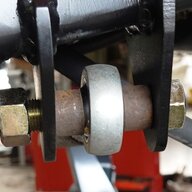
We were bopping around on the back roads a fair bit away from well travelled roads in the NM Hondo Valley in a 60's Dodge Pickup. We did not know that the owner was a rigger with limited skills who had tied down the battery with what was apparently an old set of shoelaces. A sharp bump finally sent it out of the tray and into the backside of the radiator fan blades which shoved them forward into the radiator. We peeled out the fins on the broken tubes, folded and crimped them over several times and tossed in several packets of ground pepper we found in the glove box. Borrowed some water from a stock tank, filled it up and made it back to town with no further issues.We used to do some crazy stuff when we were kids. One time my buddy shoved a half a tube of blue silicone into the fins to stop a leak. He drove that Electra 225 for a couple years like that.
If you tighten it and it blows it out again, you would loose more water and likely overheat.
I would try it loose and see what happens.

The problem with that is emissivity is not the only criteria that dictates the efficiency of a core. In order for the thermal transfer to take place out of the tube, there has to be good contact between the side of the fin and the side of the tube. Traditional construction of copper and brass styles used lead based solder to do that and lead is a very poor conductor of heat. So while the superior emissivity of copper is not in question, the use of lead solder kills the performance and lowers it to about the same level as the furnace brazed aluminum connection which uses aluminum for the connection and you don't get the dissimilar material heat transfer loss.
For those that care about such things, here is a fairly accurate discussion of the merits of both.Well you can get them from US radiators, see my link above, and they were OE back in the day, but most people wont pay for top quality. Besides, there is all of the sales bullshit about an aluminum radiator cooling better, well they dont. They can asorb the heat from the coolant better than copper but they cannot dissipate it, the emissivity of copper/brass radiators is way higher and that is what cools the coolant. https://www.engineeringtoolbox.com/emissivity-coefficients-d_447.html
I've added some stuff for your perusal.Blaine, I did a week long course on thermal imaging, part of the class was to calculate heat loss, they used a copper/brass and aluminum radiators, the CB still had a higher output than aluminum per square inch.
Also the US radiators are in the $6-800 range, so they do last and are built like they were 40 years ago...but with a little newer technology in fin design and tube placement. Tim
If we start a "How to McGyver your vehicle " thread, Mr. Blaine leads. That's awesome .We were bopping around on the back roads a fair bit away from well travelled roads in the NM Hondo Valley in a 60's Dodge Pickup. We did not know that the owner was a rigger with limited skills who had tied down the battery with what was apparently an old set of shoelaces. A sharp bump finally sent it out of the tray and into the backside of the radiator fan blades which shoved them forward into the radiator. We peeled out the fins on the broken tubes, folded and crimped them over several times and tossed in several packets of ground pepper we found in the glove box. Borrowed some water from a stock tank, filled it up and made it back to town with no further issues.
Back in the day when they gave you salt and pepper with your carry out.....and you would save it! "You never know"We were bopping around on the back roads a fair bit away from well travelled roads in the NM Hondo Valley in a 60's Dodge Pickup. We did not know that the owner was a rigger with limited skills who had tied down the battery with what was apparently an old set of shoelaces. A sharp bump finally sent it out of the tray and into the backside of the radiator fan blades which shoved them forward into the radiator. We peeled out the fins on the broken tubes, folded and crimped them over several times and tossed in several packets of ground pepper we found in the glove box. Borrowed some water from a stock tank, filled it up and made it back to town with no further issues.
Apparently they do well enough to last about 10-12 years and 100,000 miles give or take. I wouldn't expect different based on our experiences swapping out quite a few.My question for the polymer radiators would be how well they do with thermal cycling. Also this stuff is just designed so the failure curve is out from the OEM warranty.
I live 10 miles from Clint. I've ordered one of his new fangled core radiators for the TJ at least 3 times and to call me when it is done. Still haven't seen one.When I got my engine kit it came with a CBR radiator. I couldn't find the exact price of the TJ model but a JK custom model was $2k so I'm guessing I may have the most outrageously priced radiator and I'm hoping it lasts more than 15 years but in any case I'll be going with something cheaper and I'm saving the one I had with my 4.0.
Is Clint the one making the CBR stuff? I think my intercooler and radiator were from CBR. Seems to be good stuff. When I ordered my kit, the radiator/intercooler took about 2 months to get in I think. Those are typically a bit too rich for my blood, but with project creep and not wanting to be in a nasty spot in 4Lo with a trailer or something wishing I had a different cooling package, I went ahead and picked up the whole kit.Apparently they do well enough to last about 10-12 years and 100,000 miles give or take. I wouldn't expect different based on our experiences swapping out quite a few.
I live 10 miles from Clint. I've ordered one of his new fangled core radiators for the TJ at least 3 times and to call me when it is done. Still haven't seen one.

Well, I guess it was too good to be true...
"Your order has been updated as follows:
Hello I am sorry at this time this part is not available and I show no release date. I will cancel and refund your account as to not hold up your funds."
I guess I won't have a radiator to report on.


