Sweet thanks KC!Check the emissions sticker under your hood. That white sticker will have your gap. Probably 0.035

You are using an out of date browser. It may not display this or other websites correctly.
You should upgrade or use an alternative browser.
You should upgrade or use an alternative browser.

Can new spark plugs really make a difference?
- Thread starter Lilbomb
- Start date


Always, always check any spark plug gap prior to installing. It's a few seconds worth of 'work'.
Those plugs are pre gapped just like they say. Notice they dont guarantee they will stay at the pre set gap.
I'm sure spark plugs get thrown around during shipping like everything else so always check your gap man

Those plugs are pre gapped just like they say. Notice they dont guarantee they will stay at the pre set gap.
I'm sure spark plugs get thrown around during shipping like everything else so always check your gap man
Also I should mention. To this day I have never had a "pre-gap" plug actually have the correct gap it's suppose to. That includes these plugs. I use these same ones for my boat motor and everyone is a different gap every time and yes I'm aware you have to adjust this plug with the special tool that doesn't put pressure or touch the center.
What's the special tool? It's been decades since I changed a spark plug. I remember using gauges, a thin screwdriver and tapping them back down on my fender when I got them too loose. I'm not even sure I still have my gauges. These things seem to go in phases in my life. Back in the day I wrenched alot. Not so much in my 40's and early 50's. But going back to those old ways now. For sure. Brings back a sense of satisfaction. And keeps me moving. All of my business' require a desk. And I've spent far to long in one.

And why would anyone not go with the 200k mile Autolite XP-985? They're like $7 more than the other ones. Meaning a bit over a dollar more for each.

I had one of those. And just thought it was a cheaper version of the blade ones. I don't recall ever knowing to use that tool like that. Thanks.

I had one of those. And just thought it was a cheaper version of the blade ones. I don't recall ever knowing to use that tool like that. Thanks.
You can use the slotted keyway on the tool to open or close the gap. This does not put any stress on the center electrode. Bear in mind that the tiny center electrodes on platinum and iridium plugs are very fragile. "Keychain" gapping tools as shown in the bottom photo should not be used on platinum or iridium plugs.
Last edited:
WOW! I didn't know my engine was really running rough until I put these Autolite XP985's in. It runs like a brand new car. Before, the idle would bounce around a 300 rpm difference. I just figured it's an 18 year old jeep and that's why. It now holds perfectly still at idle. Nicer throttle response when reving. It feels slightly stronger but that could just be me. The fuel economy has definitely improved. Overall a great 30 bucks spent. Oh and the plugs were all under gapped out of the box. The sticker under the hood recommends .35. So they had to be opened up to .35 using the correct gap tool. Engine runs fantastic!. Thanks for starting this thread!
Oh and the plugs were all under gapped out of the box.
I just installed the same plugs this weekend and mine were actually all perfectly gapped at 0.35 (I double checked them all).
I will definitely echo the statement that it feels better, very noticeably smoother on the idle. If you asked me before I would have said it's fine, but I can certainly tell it's improved.
TJ2
TJ Expert
Autolite, for one, is not even exactly sure how long Iridiums last but over 200k miles is known so far. A friend of mine works in their training/education department and Autolite installed iridiums into his car and after they reached 200k miles they put them under an electron-scanning microscope and no wear was observable. Actually I can't say they still don't know, that was 5 years ago when he told me that.
So far as if new plugs can make a difference, yes but only when the old plugs are worn out. If the existing correct model plugs are in good condition, even installing one of the gimmicky "performance" spark plugs won't make any difference at all.
This is spot on, in typical everyday motors the "performance"plugs are a joke, proper gap is all that is needed. You won't see any perfomance gain until,you start getting into high compression, high HP or boosted applications, then plugs and plug indexing can have some benefits, same goes for race fuel, I see guys put that in engines and I usually ask " was it knocking or missing" they usually answer " no I just wanted a little HP" I usually walk away laughing, octane doesn't make horsepower, it makes horsepower possible though by retarding detonation in high performance engines, if its not knocking you don't need race fuel, although it does smell good LOL.
My buddy ran race gas in his dirt bike ... He said , "well ,I smell fast"This is spot on, in typical everyday motors the "performance"plugs are a joke, proper gap is all that is needed. You won't see any perfomance gain until,you start getting into high compression, high HP or boosted applications, then plugs and plug indexing can have some benefits, same goes for race fuel, I see guys put that in engines and I usually ask " was it knocking or missing" they usually answer " no I just wanted a little HP" I usually walk away laughing, octane doesn't make horsepower, it makes horsepower possible though by retarding detonation in high performance engines, if its not knocking you don't need race fuel, although it does smell good LOL.
That was funny.
I'm with you on the above post ..very accurate .
WOW! I didn't know my engine was really running rough until I put these Autolite XP985's in. It runs like a brand new car. Before, the idle would bounce around a 300 rpm difference. I just figured it's an 18 year old jeep and that's why. It now holds perfectly still at idle. Nicer throttle response when reving. It feels slightly stronger but that could just be me. The fuel economy has definitely improved. Overall a great 30 bucks spent. Oh and the plugs were all under gapped out of the box. The sticker under the hood recommends .35. So they had to be opened up to .35 using the correct gap tool. Engine runs fantastic!. Thanks for starting this thread!
Do you know how many miles were on your spark plugs? It some thing I have been thinking of changing but my 2005 has less than 55K on it. Engine runs just great but the idle does hunt around some.
As mentioned, the 4.0 with the coil rail or coil on plug instead of the distributor is a waste fire system in that there are only 3 coils. Each coil fires 2 plugs at a time one on an exhaust stroke and one on the compression stroke. Technically that means the plugs have to be changed twice as often as a single coil per plug or distributor system.Do you know how many miles were on your spark plugs? It some thing I have been thinking of changing but my 2005 has less than 55K on it. Engine runs just great but the idle does hunt around some.
I bought my Jeep 3 mths ago with 120k. I dont believe the ones I took out were the originals. Sorry dont know how long they were in there.Do you know how many miles were on your spark plugs? It some thing I have been thinking of changing but my 2005 has less than 55K on it. Engine runs just great but the idle does hunt around some.
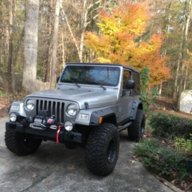
Dcook65
TJ Enthusiast
What special tool do you use?Also I should mention. To this day I have never had a "pre-gap" plug actually have the correct gap it's suppose to. That includes these plugs. I use these same ones for my boat motor and everyone is a different gap every time and yes I'm aware you have to adjust this plug with the special tool that doesn't put pressure or touch the center.
What special tool do you use?
Use a spark plug gapping tool like this:

This is the only style I'll use as it is less likely to damage protective coatings like platinum or iridium. Tapered tools encourage the user to slide the spark plug's gap along its surface to set the gap which is only satisfactory for conventional plugs without platinum or iridium coatings. The below tool has a pair of gaps used to grab the side of the electrode to bend it to the desired gap which is then measured by the wires. This design is far less likely to damage a platinum or iridium coating like many of us have shifted to.What special tool do you use?
Similar threads

- Replies
- 82
- Views
- 28,140

- Replies
- 7
- Views
- 3,178


- Replies
- 8
- Views
- 3,574


- Replies
- 14
- Views
- 3,240

- Replies
- 5
- Views
- 5,343

