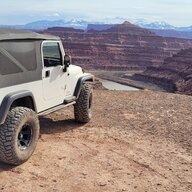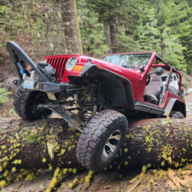
No more gas Wranglers to certain states

... What killed the original push for auto-electrification??? The same thing that is preventing widespread adoption now - a lack of infrastructure...

Well, that and the fact that gas needs far less infrastructure. Energy density matters.

Electric cars today are basically running around with a 3 gallon gas tank. Chemical batteries have improved tremendously, but compared to the simple gas tank they still suck.
 
Well, that and the fact that gas needs far less infrastructure. Energy density matters

Add in actual real world range the vehicle can or cannot travel, and the elevated expense of EVs...
 
Well, that and the fact that gas needs far less infrastructure.

You sure about that??

When we look at the drill sites, the tanker ships, the massive refineries near Houston, LA, Anacortes, Baton Rouge, Galveston, etc., the ports that support them, the thousands of miles of pipelines, the tens of thousands of trucks on the road to deliver fuel, or the ~65,000 gas stations currently operating in the U.S., I would be hard-pressed to say that the infrastructure for gasoline/diesel is "far less" than that of electrified vehicles.

Energy density matters.

So does population density, both of which are typically inversely proportional in their criticality to one another.

Electric cars today are basically running around with a 3 gallon gas tank.
Which is more than sufficient for a overwhelming majority of people in the U.S. (and even higher in other countries). The average number of daily miles driven per day is ~37. Even my LJ would be fine with a 3-gallon gas tank for the average daily commute.

To be clear, unless there is a remarkable advancement in technology (battery or otherwise), I don't believe we will ever get rid of some sort of truly "mobile" energy source for transportation for a number of different reasons (though I don't necessarily think it will be refined gasoline/diesel). That said, with sufficient infrastructure and modest advancements in current technological pathways, a significant portion of U.S. drivers would be able to convert to EV without any change in their daily habits.
 
I have several friends that work in the power industry. They are all saying the same thing. We are not ready for mass adoption of electric cars. The power grid cannot handle the extra load that would put on the grid in it's current build out. Increasing the output capacity would take longer than these aggressive pushes to electric vehicles will allow for.
 
You sure about that??

When we look at the drill sites, the tanker ships, the massive refineries near Houston, LA, Anacortes, Baton Rouge, Galveston, etc., the ports that support them, the thousands of miles of pipelines, the tens of thousands of trucks on the road to deliver fuel, or the ~65,000 gas stations currently operating in the U.S., I would be hard-pressed to say that the infrastructure for gasoline/diesel is "far less" than that of electrified vehicles.

How much of that is going to support production of electricity and maintenance of the electrical grid? (honest question, IDK the answer)
 
I have several friends that work in the power industry. They are all saying the same thing. We are not ready for mass adoption of electric cars. The power grid cannot handle the extra load that would put on the grid in it's current build out. Increasing the output capacity would take longer than these aggressive pushes to electric vehicles will allow for.

I've seen this multiple times as well. It may have been on here, but I saw where a trucking company wanted to open a hub and run electric trucks out of it and the electric demand for the hub was more than the surrounding city used as a whole.

By no means is electric the answer. At least not with where technology currently is. It's just another item on the lefts agenda to squeeze the middle class out of existence and create a society that's dependent on the government for everything.
 
  • Like
Reactions: Apparition
How much of that is going to support production of electricity and maintenance of the electrical grid? (honest question, IDK the answer)
That's a good question...

From what I can see on the internet from EIA, ~38% of electricity comes from natural gas, ~22% from coal. The portion that comes from petroleum/oil is <1% (which makes sense).

From a maintenance perspective, any guess I would have would just be a shot in the dark (don't mind the pun) :)

Out of curiosity, I looked at the current allocations for a barrel of crude:
  • 45% goes to gasoline for cars, small engines, etc.
  • 25% goes to Ultra-Low Sulfur Diesel for agriculture, heavy transport, etc.
  • 9% goes to kerosene and jet fuel (heaters, planes) <— this was lower than I would have guessed
  • 4% HGLs (hydrocarbon gas liquids) for used in detergents, paints, solvents, propane, etc.
  • 2% "Residual fuels" which are mostly used for steam-powered vessels, bunker fuels, and small powerplants

I have several friends that work in the power industry. They are all saying the same thing. We are not ready for mass adoption of electric cars. The power grid cannot handle the extra load that would put on the grid in it's current build out. Increasing the output capacity would take longer than these aggressive pushes to electric vehicles will allow for.

This is true as it currently stands. Much like when we made the transition away from the horse to the auto, or from candle light to incandescent bulbs, the infrastructure to support it didn't come immediately. With planning the U.S. grid is manageably transformed (we've done it before!). An estimated 26 million EVs will be in service by 2030, but it's not like that will be a "switch" that suddenly turns on, even with the current push for EV market growth.

Let's keep in mind that it's not like our current electrical grid and infrastructure (or any infrastructure really, but that's a different discussion) is currently in good shape and well-managed. The current "centralized grid" approach is over 100-years old and was never great to begin with. A dispersed-style grid, as well as the incorporation of local/regional and even community-wide power generation will eliminate many issues with EV charging (and other issues, such as a cold snap bringing down most of Texas for a few days). Throw in some technological advancements (such as ADR/smart charging) and possibly even V2G capabilities and the ability to manage a significant transition to EVs grows exponentially.
 
You sure about that??

When we look at the drill sites, the tanker ships, the massive refineries near Houston, LA, Anacortes, Baton Rouge, Galveston, etc., the ports that support them, the thousands of miles of pipelines, the tens of thousands of trucks on the road to deliver fuel, or the ~65,000 gas stations currently operating in the U.S., I would be hard-pressed to say that the infrastructure for gasoline/diesel is "far less" than that of electrified vehicles.

From the customer's perspective, absolutely. Why did gas win out? Electric had a lot of advantages. Easy to use, quiet, smooth. No risk of breaking your arm trying to start it. Yet people and industry overwhelmingly chose gas. Because it worked better.

Which is more than sufficient for a overwhelming majority of people in the U.S. (and even higher in other countries). The average number of daily miles driven per day is ~37. Even my LJ would be fine with a 3-gallon gas tank for the average daily commute.

And for the overwhelming majority of the time cars only need <40hp, 1-wheel drive, and 1 seat.
 
From the customer's perspective, absolutely. Why did gas win out? Electric had a lot of advantages. Easy to use, quiet, smooth. No risk of breaking your arm trying to start it. Yet people and industry overwhelmingly chose gas. Because it worked better.
Gasoline won for two reasons: lack of infrastructure (EV's dominated the market for almost 2 decades, but still by 1919, only 6% of homes had electricity) and the discovery of oil in West Texas. Had the automobile comes to market just 2 decades later, many analysts suspect that gasoline would never have won and our entire electric grid (and entire energy sector!) would have looked remarkably different.

And for the overwhelming majority of the time cars only need <40hp, 1-wheel drive, and 1 seat.
Which partially explains the reason for the growth of the "compact" car from the 1970's onward, as well as the ~9,000,000 motorcycles on US roads :)
 
To be fair, the push to replace (and in some cases ban) horses from almost every major metropolitan center in U.S. and Europe started long before the popularity rise of the automobile. Horses make about 30 lbs. of poop and 2 gallons of urine a day. I can't remember the actual year, but in the late 1880's, NYC had over 150,000 horses at its peak. That's 300,000 gallons of horse piss per day - or enough to fill over 160 Olympic Sized swimming pools per year - spread all over the city.

Electrification of cities began decades before the automobile, and even then, many original carriage makers converted to electric vehicles first. What killed the original push for auto-electrification??? The same thing that is preventing widespread adoption now - a lack of infrastructure...

The Great Horse Manure Crisis of 1894. Read all about it: https://www.historic-uk.com/HistoryUK/HistoryofBritain/Great-Horse-Manure-Crisis-of-1894/
 
My state is one of the states that will only be able to get 4xe wrangler in the future.
You will be able to buy and drive a new gasoline or diesel engine Jeep from your local dealer. They just may not have one on the lot for you to test drive.

Edit - I wrote "may not" because dealers in CARB states will probably do trades with dealers in neighboring states to have some gas and diesel inventory.
 
Last edited:
Short answer is initial estimates to handle EV cars is $7 trillion in upgrades to the grid. But with the change to wind and solar it will be over double, probably triple that, for renewable and reliable plants to generate the power,plus new high voltatw liines to every city,new higher voltage lines to every neighborhood, and new lines to every house.

Unless we don't allow EV charging at home. As noted it's an energy density issue. The average car commuter will double their typical daily home electrical use for one car charging. We have 4 with the kids. So I would need 4-5 times the electrical power coming to my house.

A car here or there doesn't affect anything. Everyone driving them will. The problems caused by political scaling of the tech faster than the system can adjust is eazy to see if you ignore feelings and politics and look at facts and reality.

No problem, they'll just raise taxes and print money to fix the brownouts and blackouts. Like how CA told people to conserve electricity by not charging EVs when they ran short. Or ERCOT's power system going to $5000/KWhr last week due to high temps and the wind turbines not meeting forecasted load due to wind speeds dropping.

It's only trillions of extra dollars off the press.

I'm adding a solar system with battery backup to my house. Sized to run my AC, freezer, fridge, and either the oven or clothes dryer at the same time. Because we are going to get to a point in the future where power will not always be there, or cost way more.
 
Last edited:
Solution is simple

Stop buying vehicles in Marxist states
Let the FREE states reap the tax rewards

Start a business license in Montana or Idaho
Register all vehicles to that business
Starve the Marxist regimes of tax revenue
 
  • Like
Reactions: tr21triton
How much of that is going to support production of electricity and maintenance of the electrical grid? (honest question, IDK the answer)

Im an Electrical worker in the largest nuclear powered state in America. The infrastructure isnt there, and we are FAR MORE ahead then most US states with redundancy and upgrades to infrastructure.

That upgrading plan with Billions all crashed and burned during COVID 2-3 years ago and the OT hasnt recovered

Do not buy into this unless you have a solar array, because the Marxist states are shutting down generating facilities all over because of “Green” horsecrap, and its a threat to our future of generation

They just TRIED to shutdown two of our reactors 2 years agoz the biggest threat to Americas future is right here at home

As for “compact car growth since the 70s” well that was the Oil Embargo and oil Crisis. Past 10 years SUvs and Pickups bave dominated us sales so much that Sedans are going out like station wagons. Compact cars of today are larger then Midsoze sedans of 20-25 years ago and monstrous compared to 70s compacts (i.e. Honda Civic)
 
Last edited:
...
As for “compact car growth since the 70s” well that was the Oil Embargo and oil Crisis. Past 10 years SUvs and Pickups bave dominated us sales so much that Sedans are going out like station wagons. Compact cars of today are larger then Midsoze sedans of 20-25 years ago and monstrous compared to 70s compacts (i.e. Honda Civic)

To be fair, people today are themselves monstrous compared to people in the 70s. Communism starves its people to death. Capitalism produces so much food and entertainment that its people become morbidly obese.
 
and do you see where it all starts !


This decision, prompted by emissions standards adopted by the California Air Resource Board (CARB), has created challenges for dealers who are already grappling with parts shortages. The move preempts upcoming emissions standards and requires dealers to convince customers that the Wrangler 4xe is the ideal choice.

we need to pull up the wall on our southern border and place it here !!!!!
 
I posted this on another forum, it explains it all !!! the same thing with the EV's....
It's all about the money ! think back when the power companies told us we needed to change to more efficient light bulbs and appliances to save electricity ? now changing to these more efficient and expensive appliances would actually save us money by reducing our electric bill 🤣. people went out and bought appliances that cost 2 or 3 times what the originals did to save electricity :rofl:now the companies making and selling the appliances were HAPPY HAPPY HAPPY :yeah::yeah::yeah:and the power company raised it's rates so it got more money for less product and that made them also HAPPY HAPPY HAPPY :yeah::yeah::yeah:. the consumer paid more for the products and electricity and they got the shaft and THEY WEREN'T SO HAPPY (HEY 2 OUTA 3 AINT BAD) :mad::mad::mad: