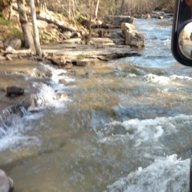
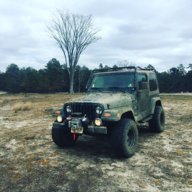
So this happened today

Jeep's back, guy said everything looked good. Transmission was flushed and had a new filter put in, coolant fluids were flushed as well.

Luckily it didn't flood the cabin, got up to the steps and stopped.


Hopefully buying a winch and getting it installed this afternoon!
Good deal. What kind of winch you going with?
 
How's the Jeep driving and shifting now?


From a stop it'll occasionally do this thing where the engine will rev when I hit the gas, but the car takes a a few seconds to actually get moving. I hasn't done it since yesterday though, I'm guessing either the transmission was just a little wonky after getting the flush, or my gf's dad said it could be the throttle position sensor, which would also make sense because that engine got a little muddy.
 
Last edited:
I'd go park myself in their office until they get the idea you need it done today. Seriously, Monday may be too late due to the glues used to hold the friction surfaces in place being water soluble.

Tell them you'll take it home and flush it yourself if they can't get to it today. Which is neither difficult nor demanding of any particular expertise.

Reply here for instructions on how to do the flush yourself if decide to do it on your own. Nope you don't need any special equipment.

EdIt: I may not be here so here's an abbreviated how-to...

Your 32RH transmission pumps ATF only in Neutral, not Park, so when you're ready to flush, shift to Neutral. To shut the pump off, shift back to Park.

You're going to have the transmission pump the contaminated ATF+4 into a large bucket or catch basin from the passenger-side port at the bottom of the radiator. That is the output side. Connect a rubber hose with a 3/8" inside diameter to the passenger side port and run that to your catch basin.

While the transmission is pumping the old fluid out into the catch basin, you'll be adding fresh ATF+4 from the top via the transmission's dipstick tube. Insert a small funnel into the tube to help. Just pour fresh ATF+4 (nothing else!) into the funnel in the dipstick tube at about the same rate as the old fluid is pumped out into the basin.

When the fluid pumping into the basin turns bright clear red, you're done, shift back into Park to shut the pump off. Maybe go another quart or two for good measure if you have more unopened bottles of ATF+4.

Check the fluid again once the output hose is reconnected back to the radiator port. Start the engine, shift to Neutral, and use the dipstick to verify it's full or add more ATF+4 until it is. It does not hurt it to be slightly overfilled.

Any brand of ATF+4 is fine, I personally use Valvoline but I wouldn't be afraid to use a store-brand ATF+4 if that's all I could find. Any major brand of ATF+4 will be fine.

this should be a sticky if not already
 
  • Like
Reactions: jeepXcore
From a stop it'll occasionally do this thing where the engine will rev when I hit the gas, but the car takes a a few seconds to actually get moving. I hasn't done it since yesterday though, I'm guessing either the transmission was just a little wonky after getting the flush, or my gf's dad said it could be the throttle position sensor, which would also make sense because that engine got a little muddy.
Check your ATF level since not all shops are conscientious about little things like that after doing a flush.

With the engine running and the parking brake on, shift to Neutral and check your ATF level using the dipstick to the rear of the engine on the passenger side. Make sure it's up to its full point. Low ATF can cause it to not engage properly.

Also, a leaky check-valve in the transmission's hard cooler line next to the rubber hose that connects to the radiator can go bad and allow ATF to drain down & out of the torque converter which would cause a similar problem for the first couple starts in the morning. If that check valve is leaking you can add an aftermarket check valve adjacent to the leaky check valve to fix the problem. That prevents having to find and replace the long expensive hard line the check valve is hidden inside of.
 
Last edited:
  • Like
Reactions: jeepXcore and StG58
Keep in mind you will need to rewind that new winch's wire rope under tension before its first use. It is too loose as shipped to use, the wire would be pulled down through its layers and damage the wire strands if you used it as was shipped.

Pull the wire rope out so nothing but the entire bottom layer is on the drum. Connect its hook to something like another Jeep's tow hook, a tree via a tree saver strap, etc. and then pull the parking brake up several clicks so it places a 250-300 lb. load against the Jeep as you winch it forward. Use the winch to pull the Jeep forward to what the hook is connected to, guiding the rope in as it winds with a gloved hand so its layers are even and each wind is against the previous wind. Do that between future pulls, you don't ever want to use the winch when its rope layers are loose. That can wreck a wire rope in one pull.
 
  • Like
Reactions: StG58
Check your ATF level since not all shops are conscientious about little things like that after doing a flush.

With the engine running and the parking brake on, shift to Neutral and check your ATF level using the dipstick to the rear of the engine on the passenger side. Make sure it's up to its full point. Low ATF can cause it to not engage properly.

Also, a leaky check-valve in the transmission's hard cooler line next to the rubber hose that connects to the radiator can go bad and allow ATF to drain down & out of the torque converter which would cause a similar problem for the first couple starts in the morning. If that check valve is leaking you can add an aftermarket check valve adjacent to the leaky check valve to fix the problem. That prevents having to find and replace the long expensive hard line the check valve is hidden inside of.
Good call. I'll look into that after work.