Help with flashing CEL and slightly rough idle

we decided to just swap throttle bodies/sensors and see if I continue to have the 0172/0175 and flashing cel. Planning to take a long drive tomorrow and we'll see how the Jeep does.
I predict it acts the same because your TPS voltage checked out fine with both. Unless, again, the problem is intermittent. Don't forget to look at the TPS voltage when the problem is occurring. Let it idle, check the voltage, and then give it a bit of throttle and see if it rises smoothly, followed by falling smoothly as you slowly let off. Once you do that, you can completely rule the TPS out.

Funny thing from today, we found out that if you install an o ring with the TPS, it will make the TPS stick. It looked like there should maybe be an o ring but there wasn't one when we took the sensors off. We tried installing one and apparently it squished the sensor body just enough to make it stick on whatever highest reading it came to. We tested this with both of the factory sensors I had and without the o rings, they both seemed to work fine but with o rings, the reading would stick.
I've never had my TPS off, so I have no idea if there's supposed to be an o-ring there. However, it making the throttle stick makes perfect sense if it wasn't supposed to be there. When you tighten it down, the o-ring's I.D. decreases as it is pinched, causing drag on the shaft. It doesn't take much to make a throttle stick. The friction in the system is carefully kept minimal and the return spring is purposely weak - so you're foot doesn't get tired holding the throttle open.

 
Interesting. I said I wasn't 100% sure because I couldn't check easily on my rig - the electrical system is all apart currently, so I couldn't power it up and check. My statement was based solely on scouring the Powertrain Diagnostic Procedures and Factory Service Manuals for any mention of it. Nothing was found.

All good man, I only know what I’ve seen from playing with my gauge.

Is your PCM the original, or is it a Wranglerfix PCM? If the latter, that could be because, as I understand it, Mark repurposes another Chrysler product's PCM for the TJ replacements. That feature may be a "leftover" from the other products' coding. Maybe? I don't know. I wish I could power mine up and see what the DRBIII shows...

The photo was taken when the original PCM was installed, but Mark’s PCM has since made it so misfires don’t occur often enough (in X time) to pop a misfire CEL. FWIW, this gauge will not work with earlier Wrangler PCMs.
 
I predict it acts the same because your TPS voltage checked out fine with both. Unless, again, the problem is intermittent. Don't forget to look at the TPS voltage when the problem is occurring. Let it idle, check the voltage, and then give it a bit of throttle and see if it rises smoothly, followed by falling smoothly as you slowly let off. Once you do that, you can completely rule the TPS out.


I've never had my TPS off, so I have no idea if there's supposed to be an o-ring there. However, it making the throttle stick makes perfect sense if it wasn't supposed to be there. When you tighten it down, the o-ring's I.D. decreases as it is pinched, causing drag on the shaft. It doesn't take much to make a throttle stick. The friction in the system is carefully kept minimal and the return spring is purposely weak - so you're foot doesn't get tired holding the throttle open.

Sorry I missed some info. Yes, the voltage rose steadily on both of the factory TPSs I have so I believe they are both good. I also believe both MAP sensors I have are good since they both matched my buddies readings.

You were also correct with your prediction that swapping to the factory throttle body and it's other sensors did not change the behavior. That night it ran fine but the next morning, after driving about 30 minutes, I stopped at a light and noticed the knocking sound from the transmission, 2 minutes later while driving through a parking lot, the cel started flashing and had a pending p0301 cylinder 1 misfire.

Went to my buddies and we pulled the CPS which looked fine, though a bit dirty. We pulled the starter as well and looked around with a borescope at the flywheel and the bigger teeth that the CPS reads and all looks good. No chunks in the bottom of the bell housing or anything.

We ended up cleaning the CPS and putting everything back together. We then drove 2 hours into the mountains to go wheeling and it ran fine, no cel or misfires but I did get a pending p0175 that cleared itself. Did low speed 4 wheeling with no symptoms for 2+ hours at 9000-11000 feet of elevation.

Wondering if bad throw out bearing could cause the intermittent knock in my transmission that the sensors and pcm interpret as a misfire. Also thinking maybe we should do a compression test next.

Thanks for your continued thoughts and advice on my Jeep saga.
 
  • Like
Reactions: sab
Wondering if bad throw out bearing could cause the intermittent knock in my transmission that the sensors and pcm interpret as a misfire. Also thinking maybe we should do a compression test next.
No. All the throw-out bearing does is engage the fingers on the pressure plate to disengage the clutch when you press the clutch pedal. It doesn't have a direct connection to the flywheel, crank, or crank pos'n sensor. Same with the pilot bearing. It just gives the front of the NSG's mainshaft some axial support. It could be completely gone, and the engine would run fine.
 
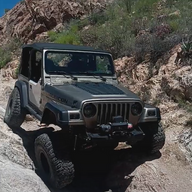
Sunday was another day of wheeling. Total offroad distance was 30 miles plus 2 hours driving to trails then 2 hours back home and no misfires. I do have a pending p0175. Do you think a dirty CPS could cause intermittent misfire codes?
 
Sunday was another day of wheeling. Total offroad distance was 30 miles plus 2 hours driving to trails then 2 hours back home and no misfires. I do have a pending p0175. Do you think a dirty CPS could cause intermittent misfire codes?
Yes, but I would also expect a code related to missing pulses from that sensor. The misfire codes are generated by the misfire monitor based on the amount of time between pulses. When a cylinder fails to fire, the engine RPM drops for just a few degrees of crank rotation, and the PCM can actually measure that. However, all the pulses are occurring if you're not getting another code (the PCM also checks to make sure that it's receiving all the pulses.)

So, could it cause that? Yes, but not likely. It would have to be a failure that intermittently delays the pulse from showing up at the PCM. I've never heard of that kind of error, myself, but I suppose it could happen. Usually, the sensor just drops a signal and triggers the other error.