Is it worth purchasing adjustable control arms to extend wheelbase?

rgarza_spi

New Member
Original poster
Joined
Apr 14, 2020
Messages
2
Location
South Texas
Hello, I am new to the forums and posting this question since this forum touched on wheelbase as a result of 4 inch lift.

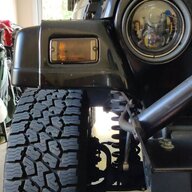
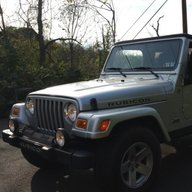
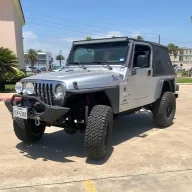
I have a 2005 TJ Wrangler Unlimited(LJ) with a 4 inch run of the mill skyjacker lift, w TC drop. I added BFG TKO’s 32.8 inch on 16 in wheels and RS5000x shocks for an improved ride, which it did improve ride comfort buy a factor of 10x compared to how I purchased it With low pro tires on larger wheels. i have no vibrations on street at any speed, luckily. All upper CA‘s are stock and lower are fixed(prob low-end skyjacker) w Poly bushings. TrackBar is aftermarket low-end RC adjustable.

It’s not my DD but more of weekend/hunting/beach vehicle so I will not be doing any rock climbing.

ISSUE: I just recently realized that my wheelbase measures 102 3/8 inches which is close to an inch shorter of stock @ 103.4 inches. Is it worth purchasing adjustable CA’s for the front?...Lower or both upper and lower in order to gain the inch of wheelbase back?
Additionally, would I Benefit from a higher-quality adj. trackbar?

I’m assuming the extra inch can be picked up in front based on how rear axle is centered in rear fender well.

Thanks for any feedback/comments.
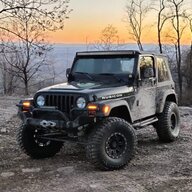
 
For a 4” lift you should always be running adjustable control arms.
 
The idea is to center the rear wheels within the arch at full bump, not at ride height. The travel arc of lifted control arm arms will necessarily reduce to the wheelbase.
 
The RC adjustable track bar is actually a decent piece. The rubber bushing at the axle end can get a little worn but that can be remedied by putting in a poly bushing and larger bolt.
 
  • Like
Reactions: BuildBreakRepeat
For a 4” lift you should always be running adjustable control arms.

I'm not sure why you need adjustables with 4" lift. 4" lift kits usually come with a longer fixed length LCA. I think they are .625" longer to correct pinion angle. I had no trouble with fixed length arms.
 
I'm not sure why you need adjustables with 4" lift. 4" lift kits usually come with a longer fixed length LCA. I think they are .625" longer to correct pinion angle. I had no trouble with fixed length arms.
The problem is that it's really not as easy as sending fixed arms. The tolerances at the factory weren't really strict enough to where a company can measure and make the perfect arm for X amount of lift. An annoyingly-vague but accurate quote from the knowledge people on here is that "Control arm length is a byproduct" of a correctly set up suspension. It makes sense once you think about the fact that you have to line up bumps, square the axle, etc etc.

Also the pinion angle should not be corrected on a Jeep that doesn't have a DC driveshaft.

Fixed arms are really just a band aid over generalization. If they work for you then by all means use them, but there is more to it.
 
Last edited:
The problem is that it's really not as easy as sending fixed arms. The tolerances at the factory weren't really strict enough to where a company can measure and make the perfect arm for X amount of lift. An annoyingly-vague but accurate quote many from the knowledge people on here is that "Control arm length is a byproduct" of a correctly set up suspension. It makes sense once you think about the fact that you have to line up bumps, square the axle, etc etc.

I don't understand why stock Jeeps with fixed length arms were OK by your reasoning. The tolerances exist whether it is at stock ride height or +4 inches.

Also the pinion angle should not be corrected on a Jeep that doesn't have a DC driveshaft.

Fixed arms are really just a band aid over generalization. If they work for you then by all means use them, but there is more to it.

The pinion rises as the Jeep is lifted with stock length arms. The pinion angle absolutely has to be corrected. I don't get the "band aid" reference. If a longer fixed length LCA is a band aid, then an adjustable LCA set to the same length as the LCA in the kit is also a band aid.

Entry level lift kits are what they are, an entry level kit. They are not state of the art by any means, but they aren't as bad as internet makes them out to be. All the entry level kits seem very similar. I have experience with a 4" RC kit and had no issues other than rubber bushings failing. If you stick to fire roads and don't spend a lot of time in the rocks you will probably not go through bushings very often.
 
I don't understand why stock Jeeps with fixed length arms were OK by your reasoning. The tolerances exist whether it is at stock ride height or +4 inches.


The pinion rises as the Jeep is lifted with stock length arms. The pinion angle absolutely has to be corrected. I don't get the "band aid" reference. If a longer fixed length LCA is a band aid, then an adjustable LCA set to the same length as the LCA in the kit is also a band aid.

Entry level lift kits are what they are, an entry level kit. They are not state of the art by any means, but they aren't as bad as internet makes them out to be. All the entry level kits seem very similar. I have experience with a 4" RC kit and had no issues other than rubber bushings failing. If you stick to fire roads and don't spend a lot of time in the rocks you will probably not go through bushings very often.
Pinion angle should stay relatively constant with a 5 link suspension like the TJ uses. As the axle travels, the upper and lower arms control the motion of the axle and prevent its rotation.

If you are thinking of a leaf spring suspension, like an XJ or YJ, then absolutely yes, the pinion angle changes as the suspension travels.
 
  • Like
Reactions: 2006TJ1
I don't understand why stock Jeeps with fixed length arms were OK by your reasoning. The tolerances exist whether it is at stock ride height or +4 inches.


The pinion rises as the Jeep is lifted with stock length arms. The pinion angle absolutely has to be corrected. I don't get the "band aid" reference. If a longer fixed length LCA is a band aid, then an adjustable LCA set to the same length as the LCA in the kit is also a band aid.

Entry level lift kits are what they are, an entry level kit. They are not state of the art by any means, but they aren't as bad as internet makes them out to be. All the entry level kits seem very similar. I have experience with a 4" RC kit and had no issues other than rubber bushings failing. If you stick to fire roads and don't spend a lot of time in the rocks you will probably not go through bushings very often.
Okay the axle tolerances are part of the story, and generally with stock arms there are no issues, but with adjustable control arms people generally end up with arms that are not the same length. That's not to say that they factory arms weren't "fine", but if you can improve, why not?

Also consider that when the Jeeps rolled off the assembly line, they were essentially all the same weight, had the same tires, along with various other factors that are controlled by being new (excluding trim differences). A fixed arm cannot account for any of these. A rig that has steel bumpers front and rear, body armor, fenders, etc, etc will net a significantly different lift height than a rig that is bone stock + lift. How can fixed arms account for that? The factory knew all of these; they were not variables.

The pinion arc changes when you mess around with the relationship of the arm lengths. I can't remember what the relationship is. Maybe someone else can chime in on that.
Edit: looks like @Mike_H explained that. Makes sense.

The band-aid part is the fact that fixed length arms for any size lift other than dead stock kind of help. A properly adjusted arm that winds up the same length as a fixed one is properly suited for that rig, whereas fixed lengths are sort of just a roll of the dice.
 
Last edited:
I know when I set my Curries up, I went through and set my lowers the same length as my factory ones. I did that by dropping a bolt through both the factory and the Currie arm, until the bolt passed through them both clean. I then installed the two lowers and started to take measurements of the axle position fore and aft, making sure it was square to the frame. Once that was achieved, I put the uppers in. I pulled both factory uppers, put on Currie upper in and set my pinion angle. I adjusted the last upper to fit the space it was allotted. After that, I pulled the springs and cycled the suspension to check my bumpstop position. Go through the process again...

It took me the better part of a day to put those control arms in. Lots of back and forth, cycling the suspension.
 
  • Like
Reactions: 2006TJ1
Very few lift kits of significant height (3.5"+) come with non-adjustable control arms. Realistically, any one of the below factors will or could change the ideal lower and upper arm lengths:
  • Factory variations in frame, bracketry
  • Actual (versus advertised) lift height
  • Sag due to extra weight
  • Sag due to spring age
  • Stock versus DC driveshafts
  • Required caster angle
  • Minor warping of axles, frame, or bracketry
  • Stiffness of joints or bushings
  • Motor mount lift versus stock motor mounts
  • Stock transfer case skid plates versus aftermarket
  • Brand of front trackbar
  • Stock versus aftermarket gas tank or skid
  • Shock interference on spring cup
  • Stock versus aftermarket axles
  • Body lift (may affect tire interference)
  • Fenders/flares (may affect tire interference)
  • Tire size and wheel backspacing (may affect tire interference)
  • Amount of bumpstop extension
  • Shock lengths
  • Aftermarket brackets
  • Size/type of transfer case
  • Automatic vs manual transmission
  • Size/length of driveshaft damper
  • Slip yoke or slip yoke eliminator length
  • Actual driveshaft length
  • Shock mount extensions
  • Shock mount outboarding or relocation
The reality is that there are so many factors that can change the ideal control arm lengths that very few kits will compromise and provide fixed length control arms because they will not work in all situations.

From the factory, everything is close enough to the same and the bushings are compliant enough that there really wasn't a need for adjustable control arms. And to keep prices lower and profits higher, inexpensive sheet metal control arms were used in place of the fancy aftermarket tubular or machined arms.
 
  • Like
Reactions: Woodrow and 2006TJ1
I don't know where you got that list, but a lot of it is irrelevant. It sounds like an advertisement to me.
 
I don't know where you got that list, but a lot of it is irrelevant. It sounds like an advertisement to me.
Willing to bet he made the list by process of observation. All of those are very relevant things that you have to take into account when setting up adjustable arms. Not sure what anyone here advocating for adjustable arms would be advertising.
 
Everything in that list, no matter how small, can add up to a significance where adjustable arms become valuable and beneficial.
 
  • Like
Reactions: Woodrow
My comments have been in reference to the thread starter. My jeeps weight varies quite a bit removing the back seat, hard top, doors and full tank vs 1/4 tank. I'm estimating close to 400 pounds difference. I don't adjust my arms when it is light in the summer and again when winter comes. Should I buy all adjustable arms?