Why is my radiator rusting after a Thermocure flush and fresh fill?

Viking Jeeper

2A Supporter
Original poster
Supporting Member
Joined
Jan 10, 2019
Messages
4,116
Location
Jacksonville FL
Two months and 1500 miles ago I flushed the cooling system because I found what looked like dirty chocolate milk in the overflow bottle. I followed directions of thermocure and drained the radiator then poured the thermocure in and topped off with distilled water. Ran it like that for a couple of days as the directions say. What I drained out was nasty black smelling shit. I flushed several times with distilled water until clear. Filled with 50/50 Mopar MS-9769 and distilled water. This morning I find the fluid in the overflow bottle is very dark then pop the radiator cap and find this. I drained a small amount of coolant into a bottle so I could check the color before I took the picture.
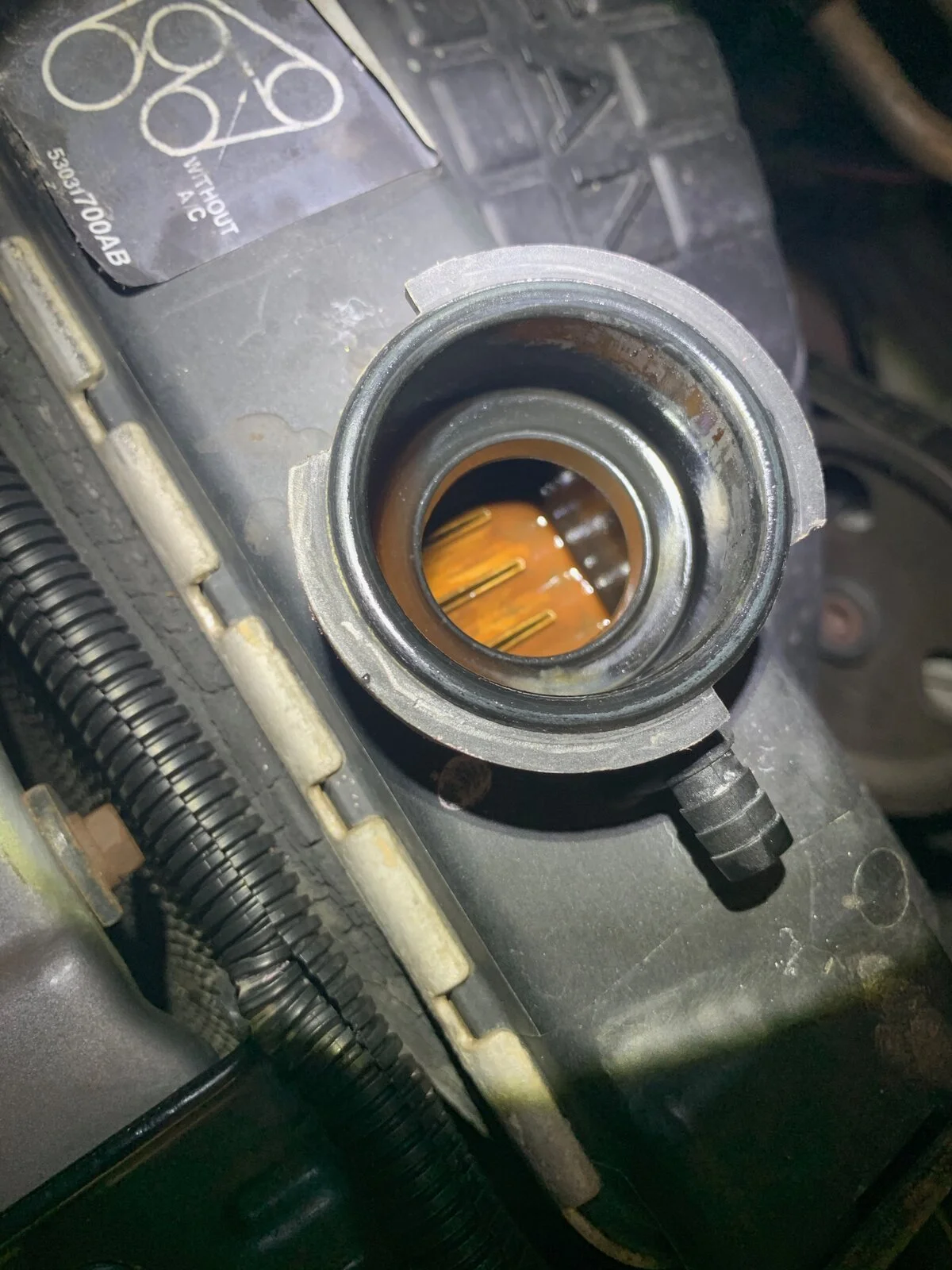

IMG_6314.webp
 
Looks like your system was really rusty. When I do mine, I drain the radiator and run water through the system a few times to get all antifreeze out, before adding the cleaner and running it for 6-8 hours of total driving. I use the green coolant so I can see rust more easily.

p.s. Did your heater core leak again from the Thermocure? ;)
 
Last edited:
Was it full when you removed the cap? Your top find are showing inside.
Could you have had enough shit in the puke tank that, through normal movement of coolant in and out of the overflow, enough junk got sucked back into the system? Dosen't take much of that hardened dried on crap to tint fluid.
 
I had drained some fluid before I took the picture. The radiator was full when I opened the cap. In November I cleaned everything. When I flushed everything I had it all looking really good the radiator and overflow tank looked great.
 
When is the last time you replaced the radiator and other cooling system components?
 
The radiator is stock on an 06. It looked good after the flush. I don't believe it will start to rust just because it is old, it may leak but should not rust after it looks good after a flush. I have a new radiator but wanted to get the system perfectly cleaned out before using the new radiator. If the radiator is rusting, what's happening in the block?
 
Did you drain the block? If you didn't, you left some crud in the system.
You don't have to drain the block. You just have to do a proper flush with the thermostat pulled so you can circulate after the Thermocure does its job until you get clean water out. Fill, run the engine, shut off, drain. Keep doing that until clear water comes out and there is nothing left in the block that needs draining.
 
You don't have to drain the block. You just have to do a proper flush with the thermostat pulled so you can circulate after the Thermocure does its job until you get clean water out. Fill, run the engine, shut off, drain. Keep doing that until clear water comes out and there is nothing left in the block that needs draining.
Really? I haven't done a flush on the 4.0 yet (110K - have all the parts for my overhaul ready to go for the spring), but I assumed that the engineers put the block plug there as a way to get more of the old coolant and scale out of the system. I would also think that the heavier particles would settle to the lowest part of the system.
 
I've never used Thermocure so I had to look up the SDS sheet to see what it was. It appears to be DAP (diammonium phosphate) and a small amount of sodium salts. If the system was sufficiently heated and drained - and then sufficiently flushed - it is possible that you had some carbonate build up, which depending on speciation, may not have been completely addressed by the Thermocure.

If this were my rig, I'd drain the system and flush/fill with clean water (allowing a few heat/cool cycles in between) a few times and potentially throw in some standard sodium-citrate based flush. (Tri)Sodium Citrate is a fantastic descaler and has some chelating properties, which makes it really handy to flush contaminants from the system.
 
  • Like
Reactions: freedom_in_4low
Is it OK to run just clean water temporarily? I completely understand why we use coolant for colder temps but not sure of the ability of water to cool as efficiently as a 50/50 mix or how plain water will affect the metals.
 
Water has good heat capacity and is more than fine to run temporarily. I usually run pure water for a day or two after my final "flush" to ensure that all residual salts and any soluble precipitates have dissolved. With a pressurized system, you're far away from the boiling point for around-the-block driving (roughly 240ºF). I would refrain from long stretches at high speeds but doing some small trips in the neighborhood would be a good way to ensure sufficient heat energy to help with dissolution.

As you noted, the only time when pure water wouldn't be appropriate would be during those times when the threat of freezing is a problem.
 
I've never used Thermocure so I had to look up the SDS sheet to see what it was. It appears to be DAP (diammonium phosphate) and a small amount of sodium salts. If the system was sufficiently heated and drained - and then sufficiently flushed - it is possible that you had some carbonate build up, which depending on speciation, may not have been completely addressed by the Thermocure.

If this were my rig, I'd drain the system and flush/fill with clean water (allowing a few heat/cool cycles in between) a few times and potentially throw in some standard sodium-citrate based flush. (Tri)Sodium Citrate is a fantastic descaler and has some chelating properties, which makes it really handy to flush contaminants from the system.
The Prestone drive around flush handles the scaling and then we do the Thermocure to handle the rust.
 
Is it OK to run just clean water temporarily? I completely understand why we use coolant for colder temps but not sure of the ability of water to cool as efficiently as a 50/50 mix or how plain water will affect the metals.
Plain water is definitely harder on the cooling system, block, etc. but plain water actually cools better than a mix of coolant and water.
 
  • Like
Reactions: Viking Jeeper
I've never used Thermocure so I had to look up the SDS sheet to see what it was. It appears to be DAP (diammonium phosphate) and a small amount of sodium salts. If the system was sufficiently heated and drained - and then sufficiently flushed - it is possible that you had some carbonate build up, which depending on speciation, may not have been completely addressed by the Thermocure.

If this were my rig, I'd drain the system and flush/fill with clean water (allowing a few heat/cool cycles in between) a few times and potentially throw in some standard sodium-citrate based flush. (Tri)Sodium Citrate is a fantastic descaler and has some chelating properties, which makes it really handy to flush contaminants from the system.
Are you a chemist or something? That is profoundly specific!
 
You don't have to drain the block. You just have to do a proper flush with the thermostat pulled so you can circulate after the Thermocure does its job until you get clean water out. Fill, run the engine, shut off, drain. Keep doing that until clear water comes out and there is nothing left in the block that needs draining.
Why is it better to run without the thermostat? On each flush cycle when I ran the engine I made sure it was up to temperature so the thermostat would open.
 
Why is it better to run without the thermostat? On each flush cycle when I ran the engine I made sure it was up to temperature so the thermostat would open.
Takes way too long plus on some, they want to burp a big bubble of coolant out right before the thermostat opens. If you pull the thermostat, you can fill, circulate, and drain in about 10-15 minute cycles. Gets a lot more work done in less time.
 
The Prestone drive around flush handles the scaling and then we do the Thermocure to handle the rust.
Exactly my thinking - if the OP didn't descale sufficiently (DAP is not so great at this), it's possible that what he is seeing now is rust that has been lifted due to additional scale solubility. Basically scale covered up rust and wasn't dissolved with Thermocure, the scale then slowly dissolved with new antifreeze, which then allowed the rust behind scale to be exposed, which then dissolved/lifted off of block.