
You are using an out of date browser. It may not display this or other websites correctly.
You should upgrade or use an alternative browser.
You should upgrade or use an alternative browser.

A 30th Anniversary Gift to the Forum: The Epic Unboxing of the Exported Queen
- Thread starter Liberos
- Start date

this storyteller is reminding me of Vex, if anyone remembers him on the other CJ forum...

Chapter 3: The Queen's Heavy-Duty Luggage – Unboxing a Time-Capsule Candy Shop
Gentlmen, before I ever turn the garage lights on to show you the body of the Queen, you need to understand the mechanical inheritance that came with her.
An elite heavy-duty truck mechanic who manages a massive commercial garage doesn't just buy a weekend toy and hope for the best. He looks 30 years into the future. He knows that across the Atlantic, on the Mediterranean coast of Europe, American dealership parts do not grow on trees. He understood that to keep a machine truly immortal and 100% autonomous, you don't rely on future internet connections or modern supply chains. You build your own logistics.
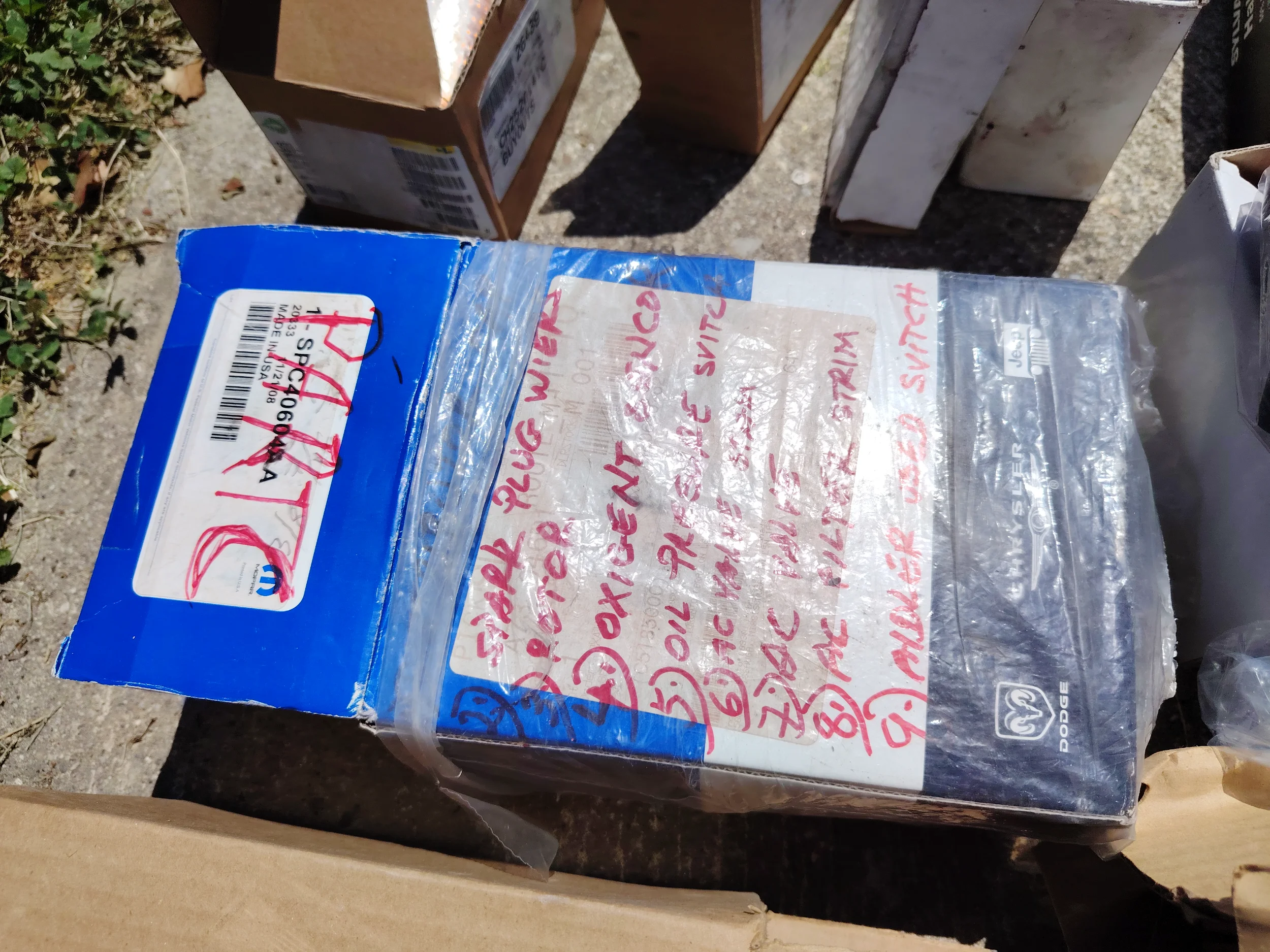
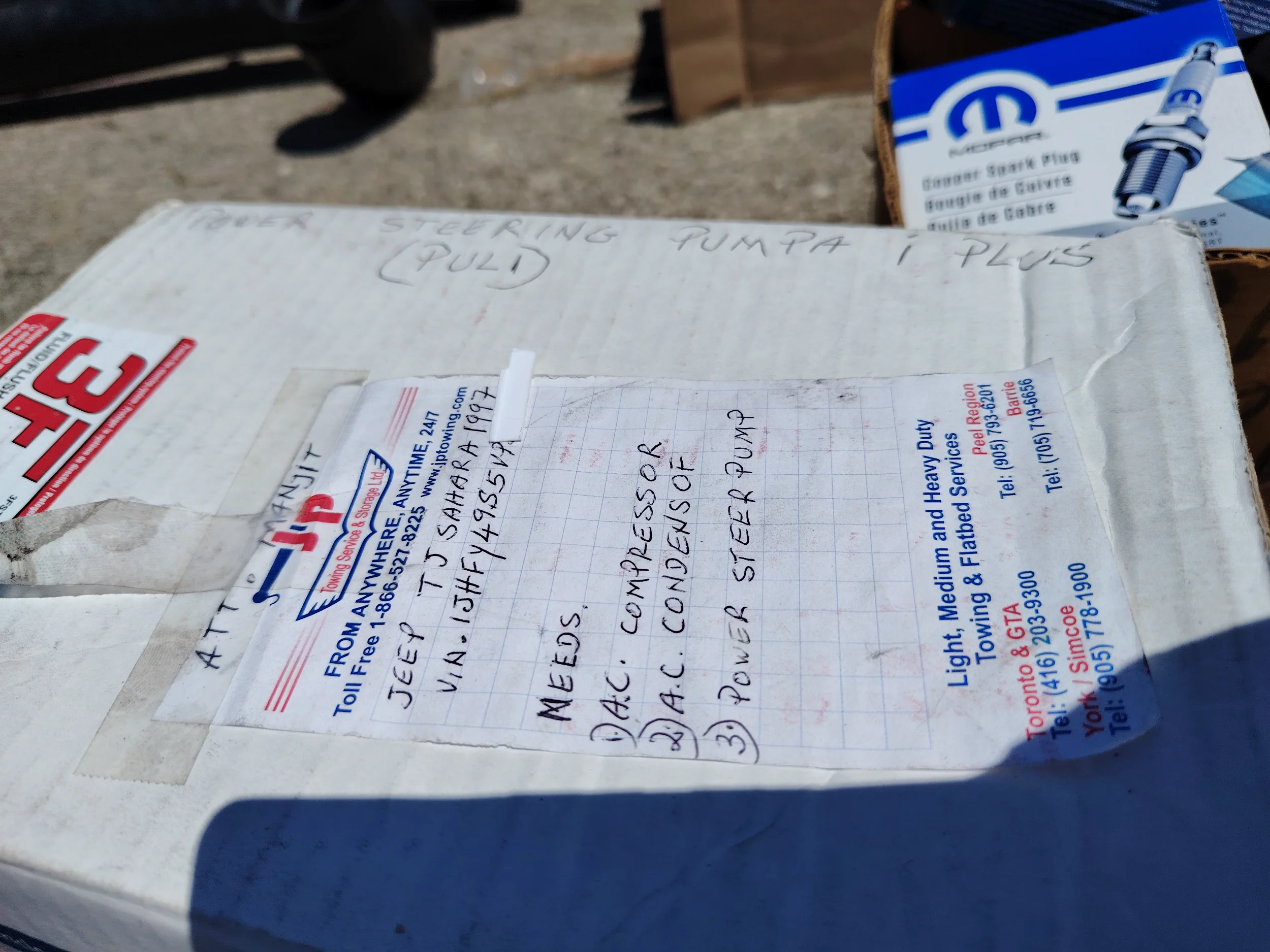
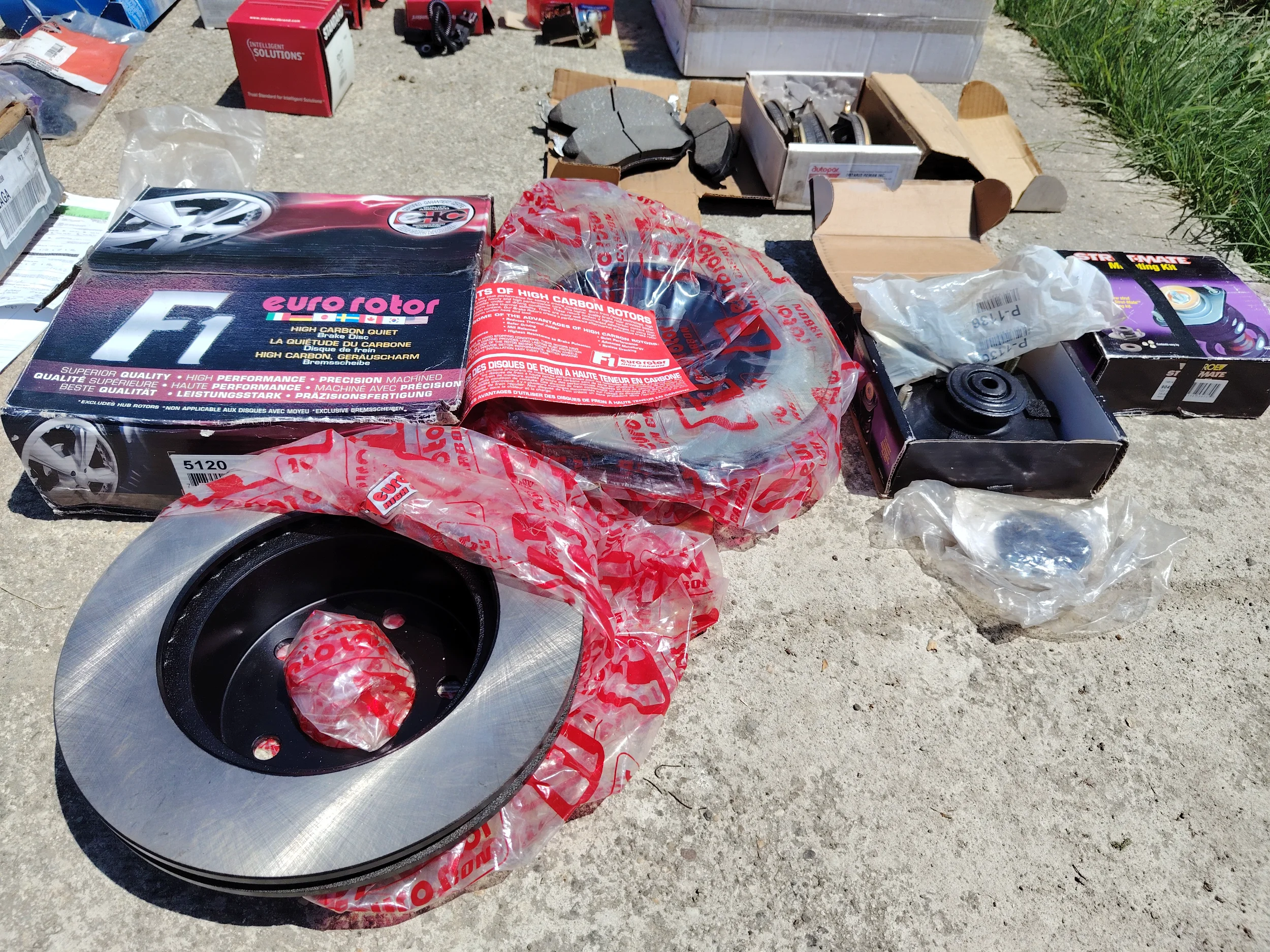
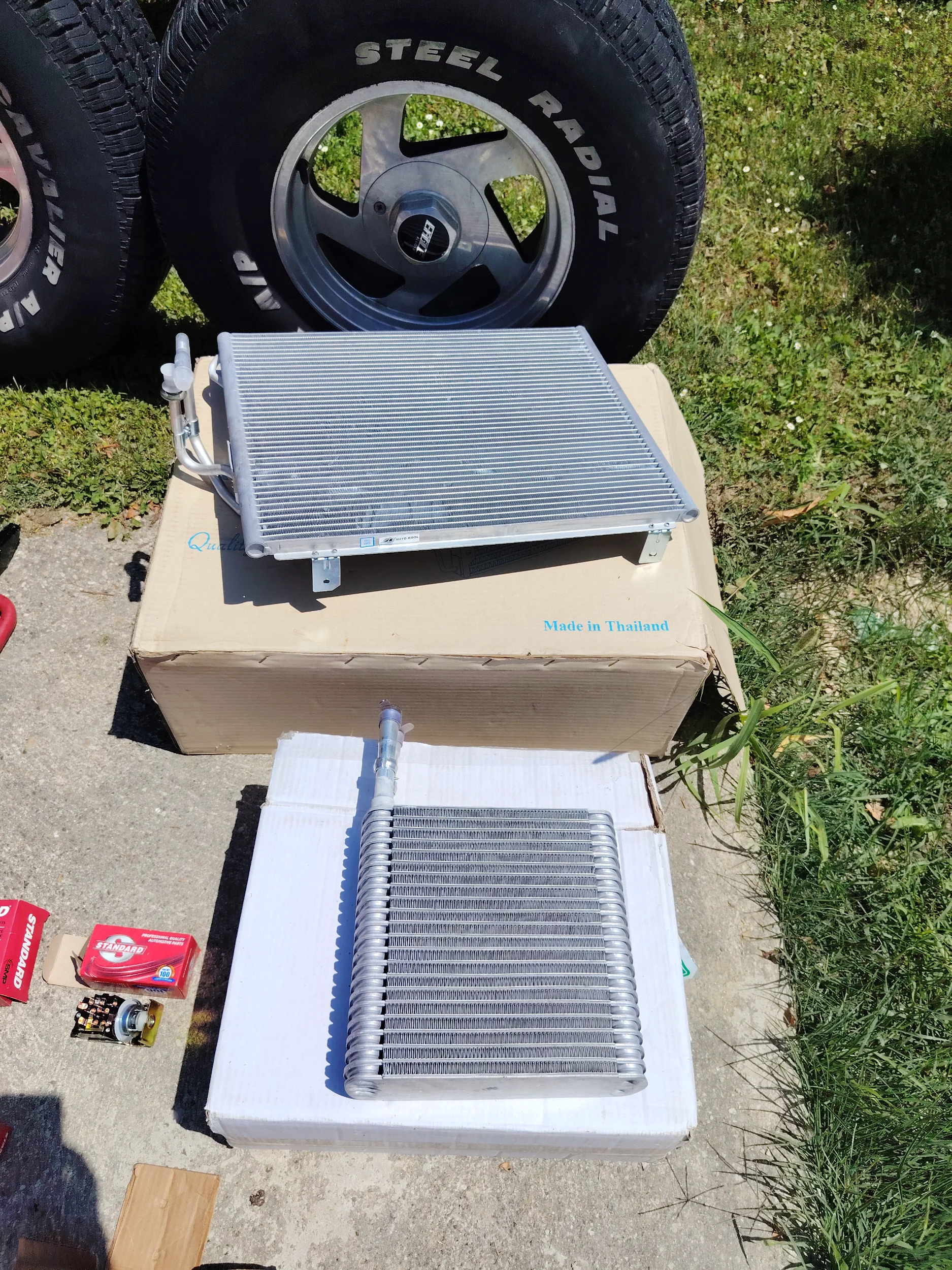
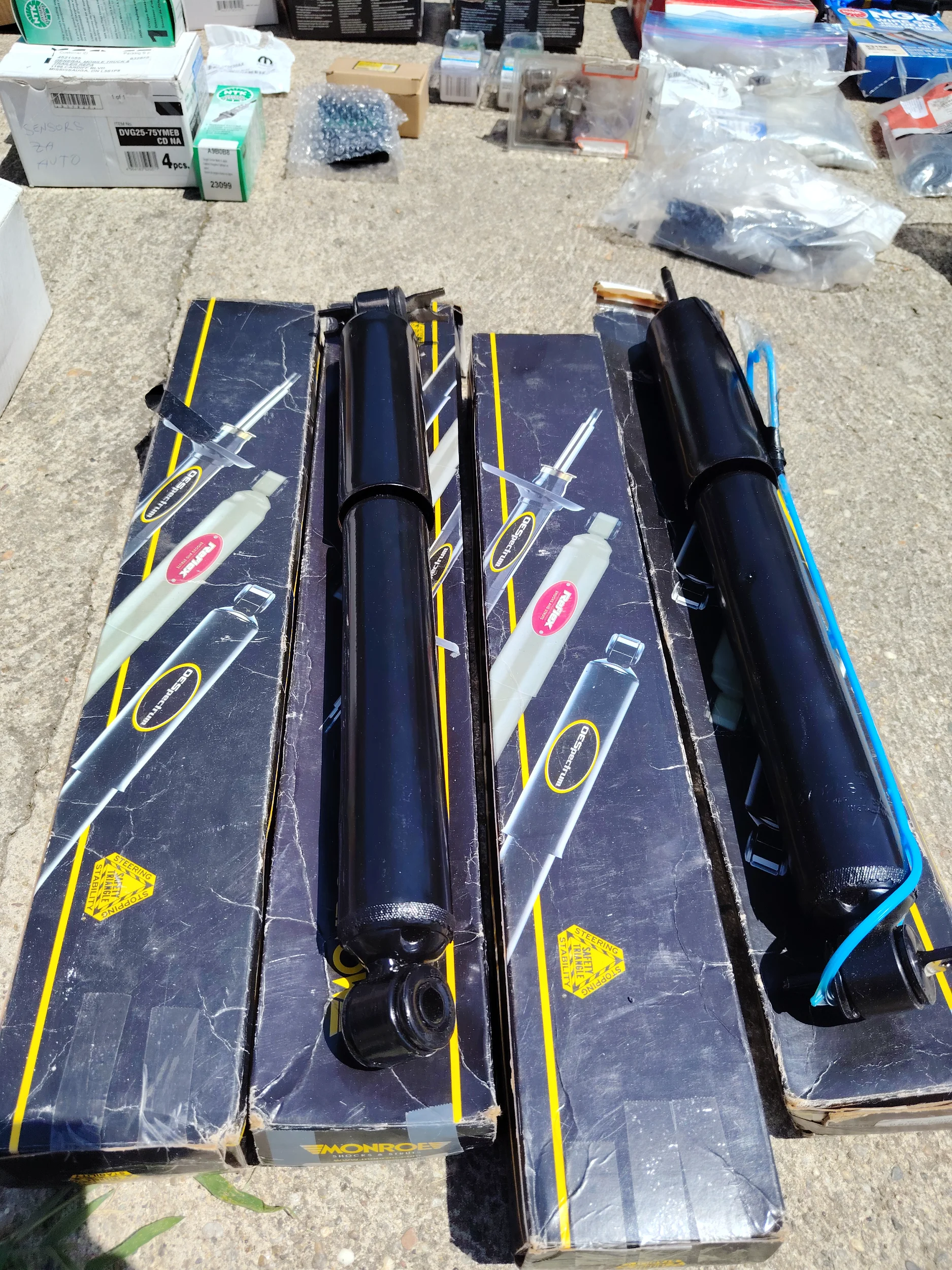
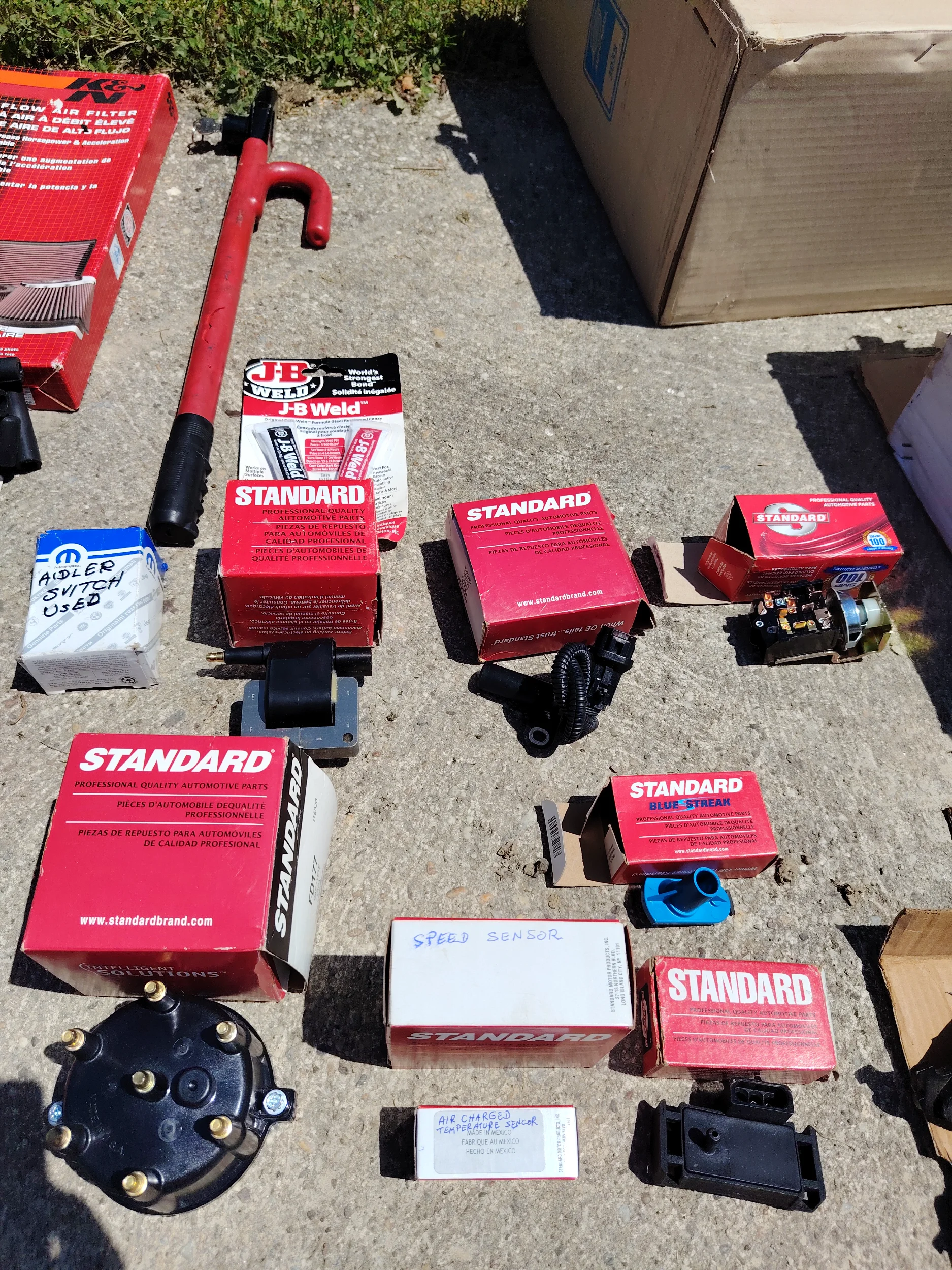
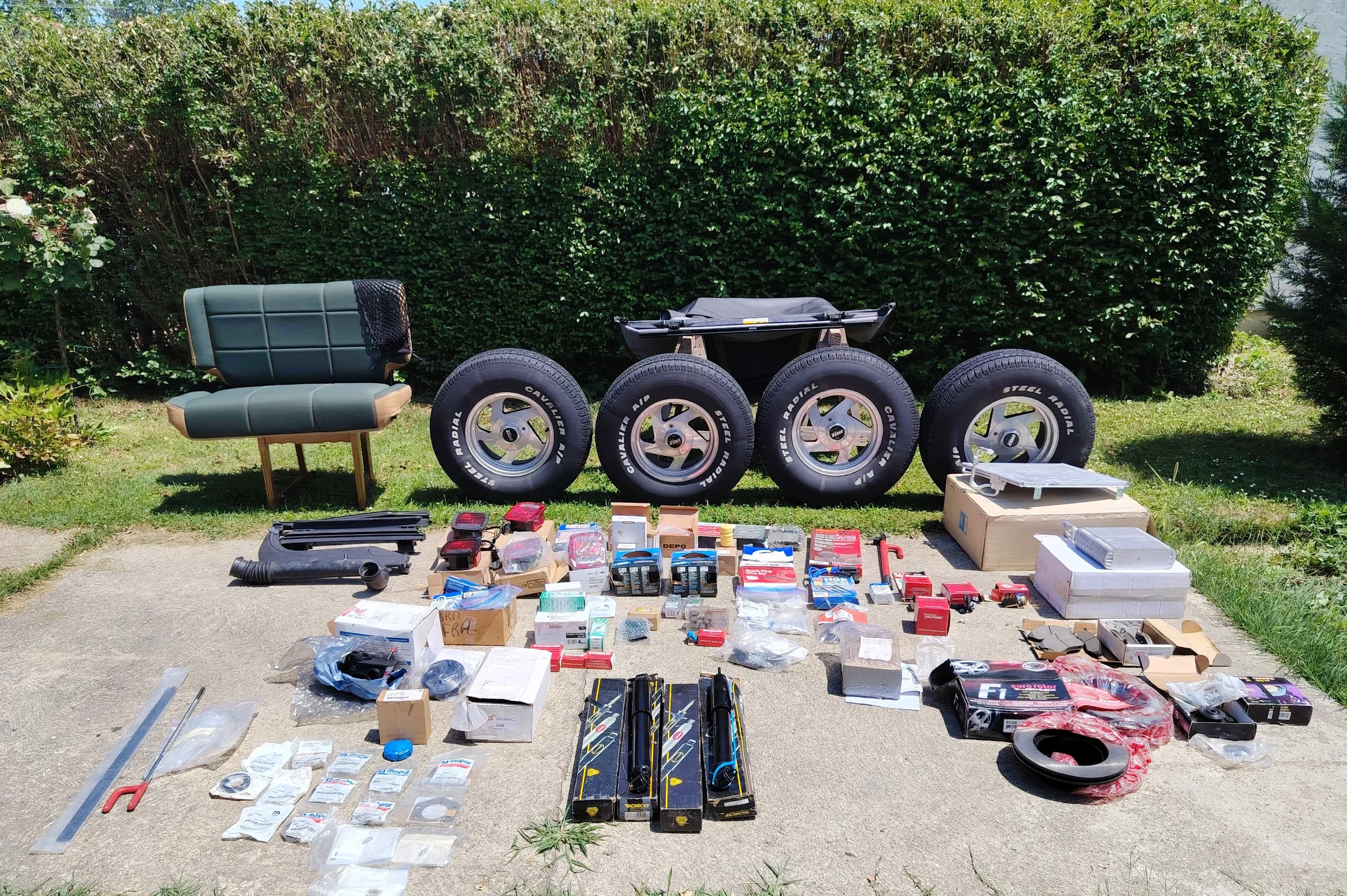
What you are looking at, laid out right here on the concrete in front of my garage, is a meticulously curated, military-grade tactical supply chain. The first owner didn't just throw random parts in boxes—he cataloged his entire strategy.
Look at the gallery. Look at the absolute engineering fanaticism:
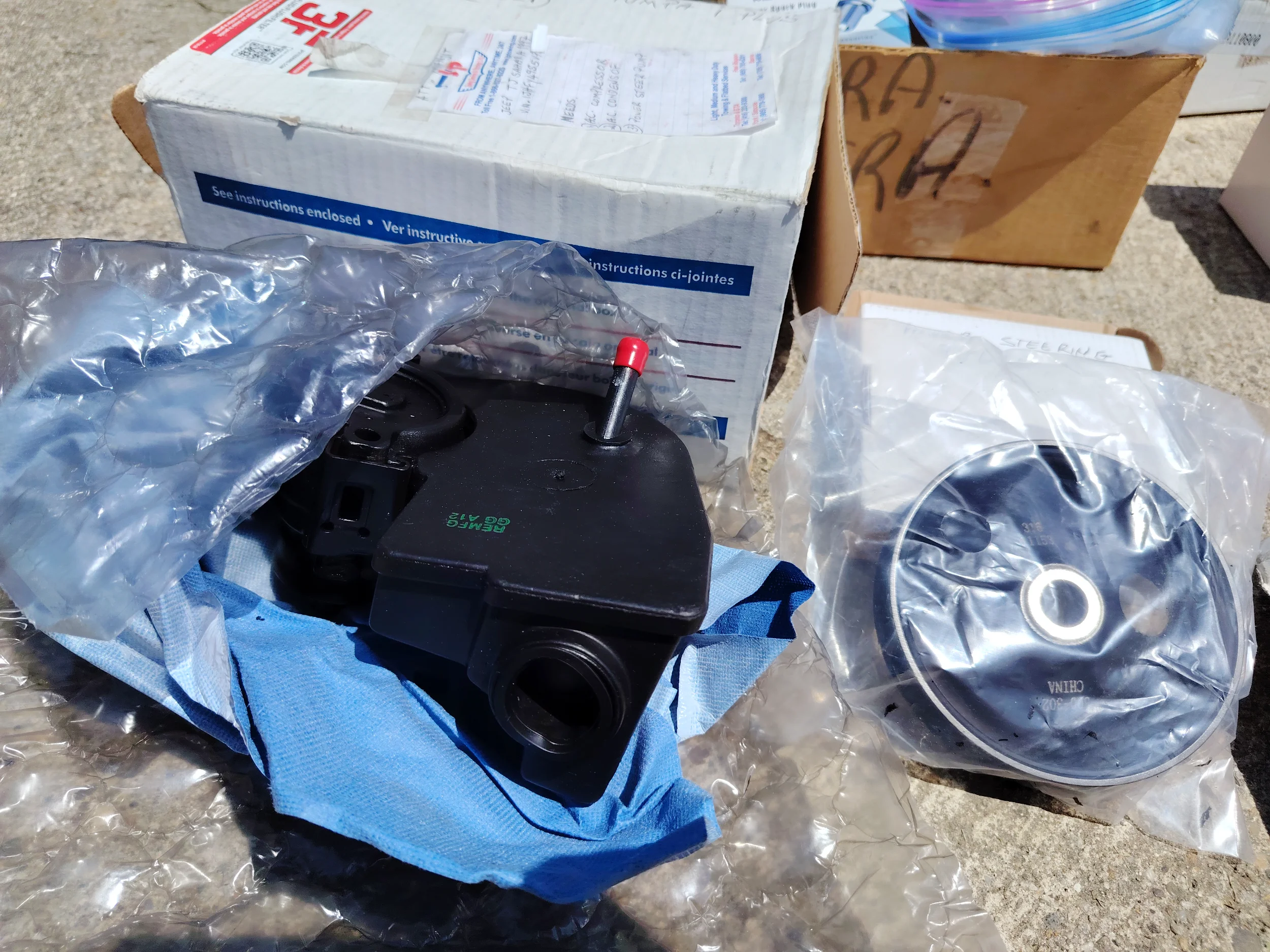

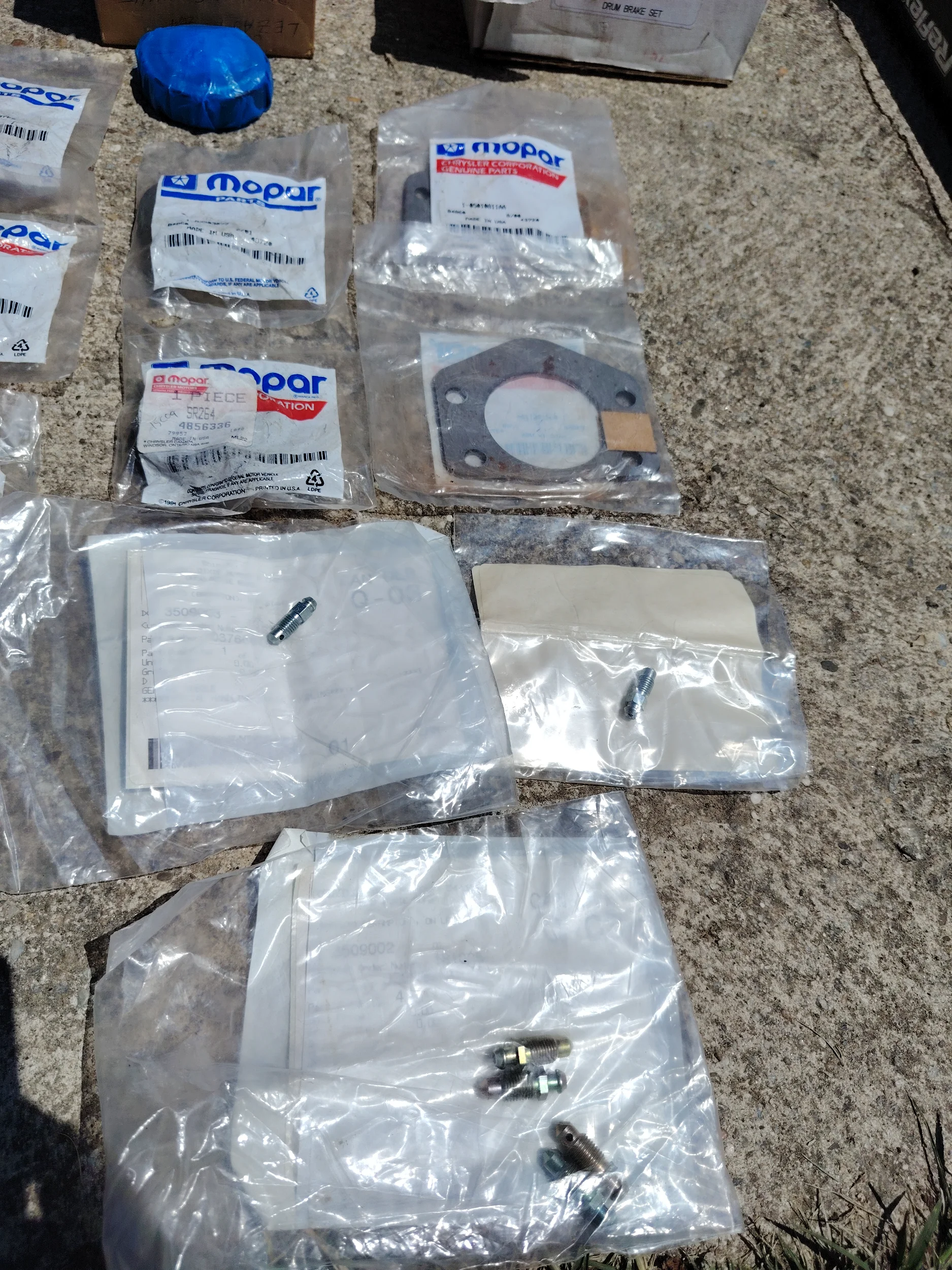

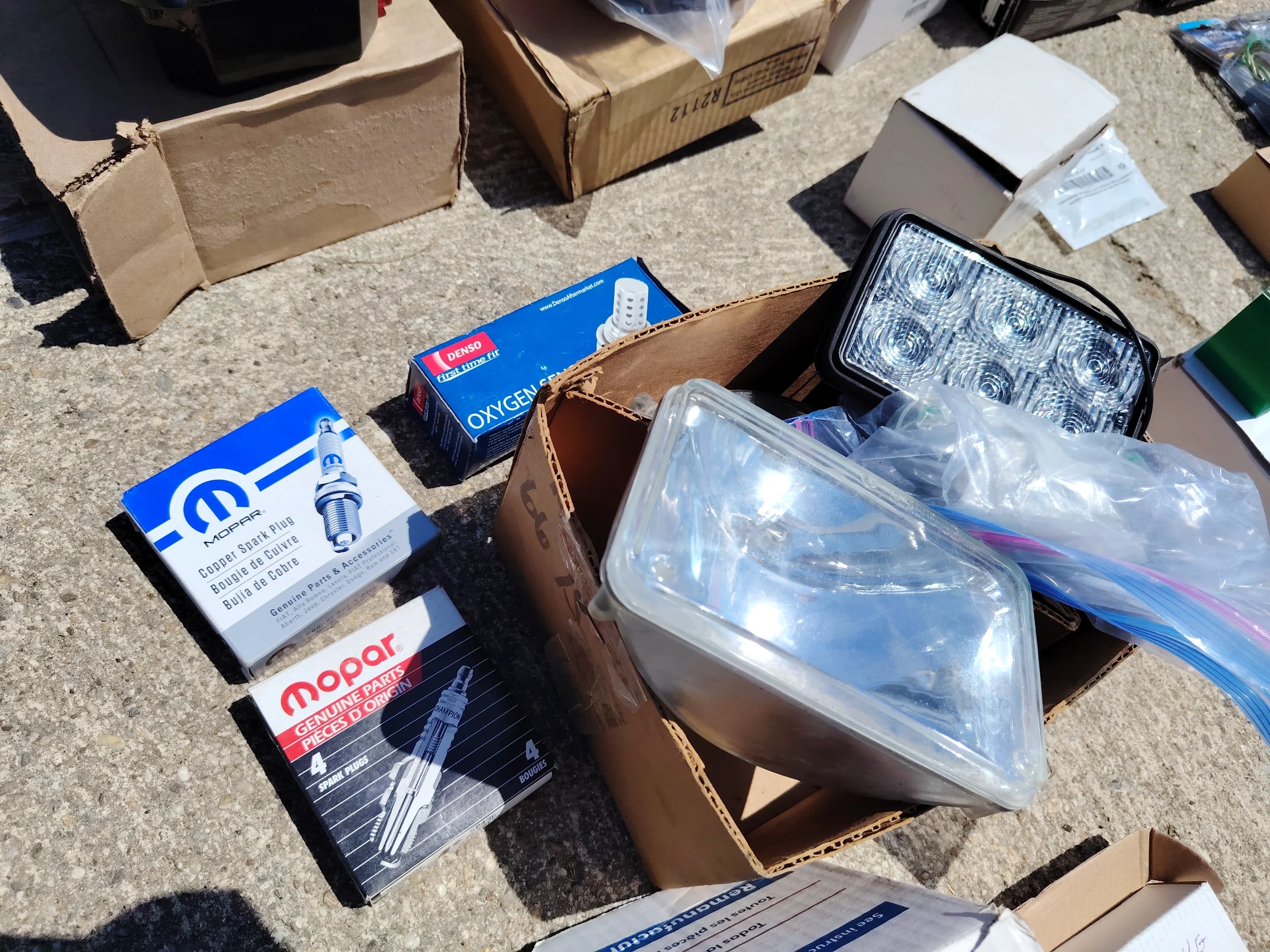
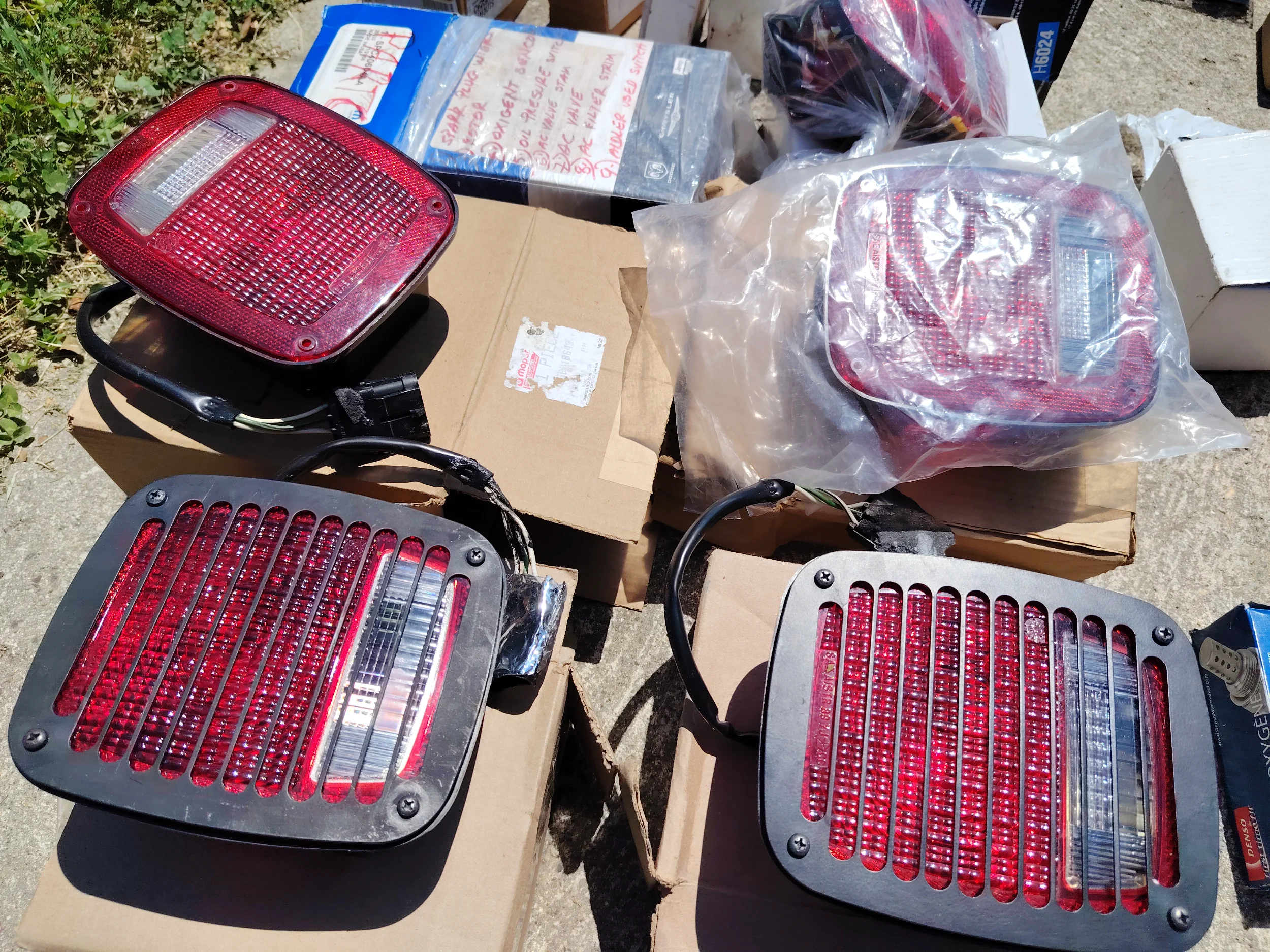
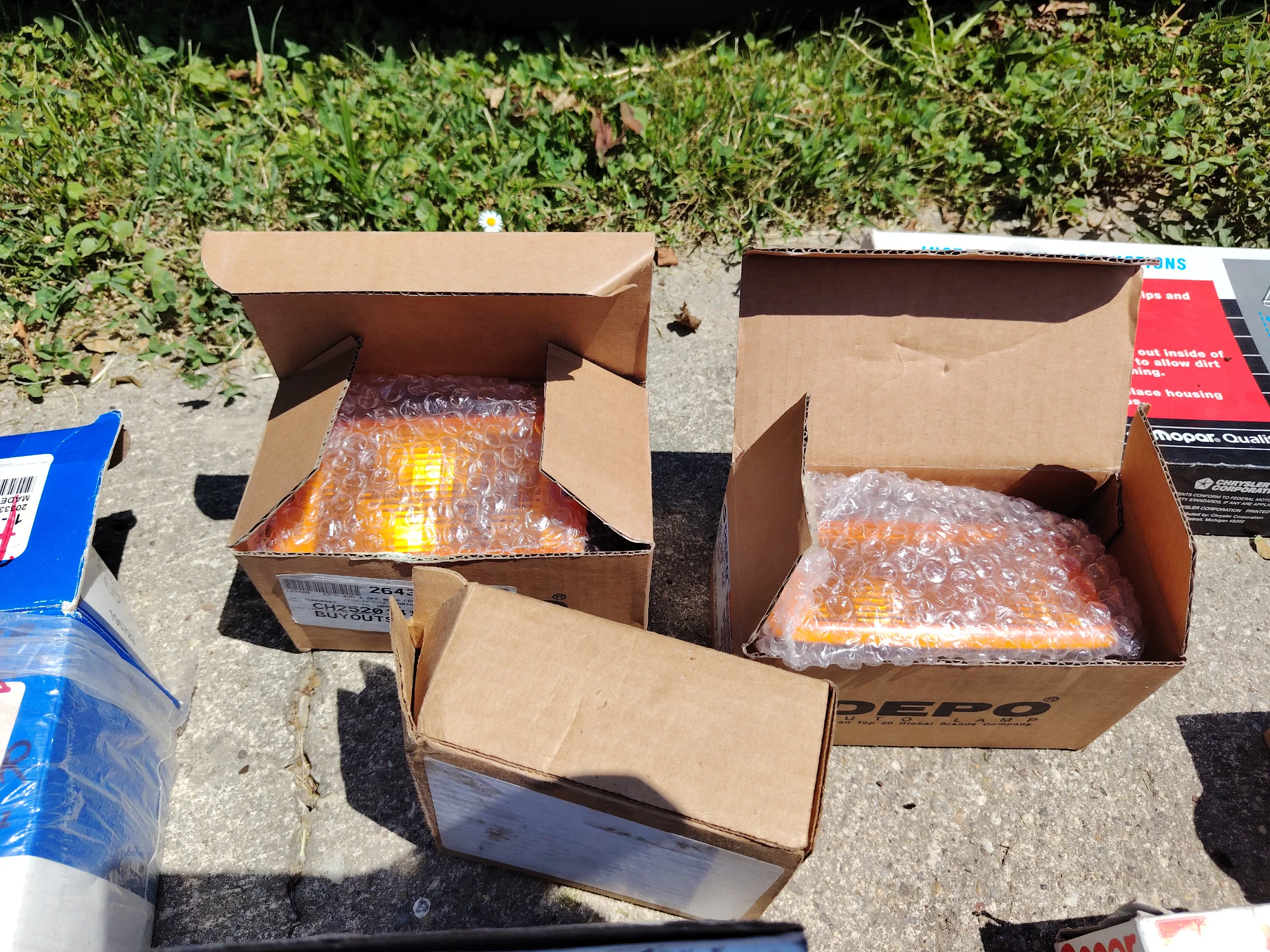
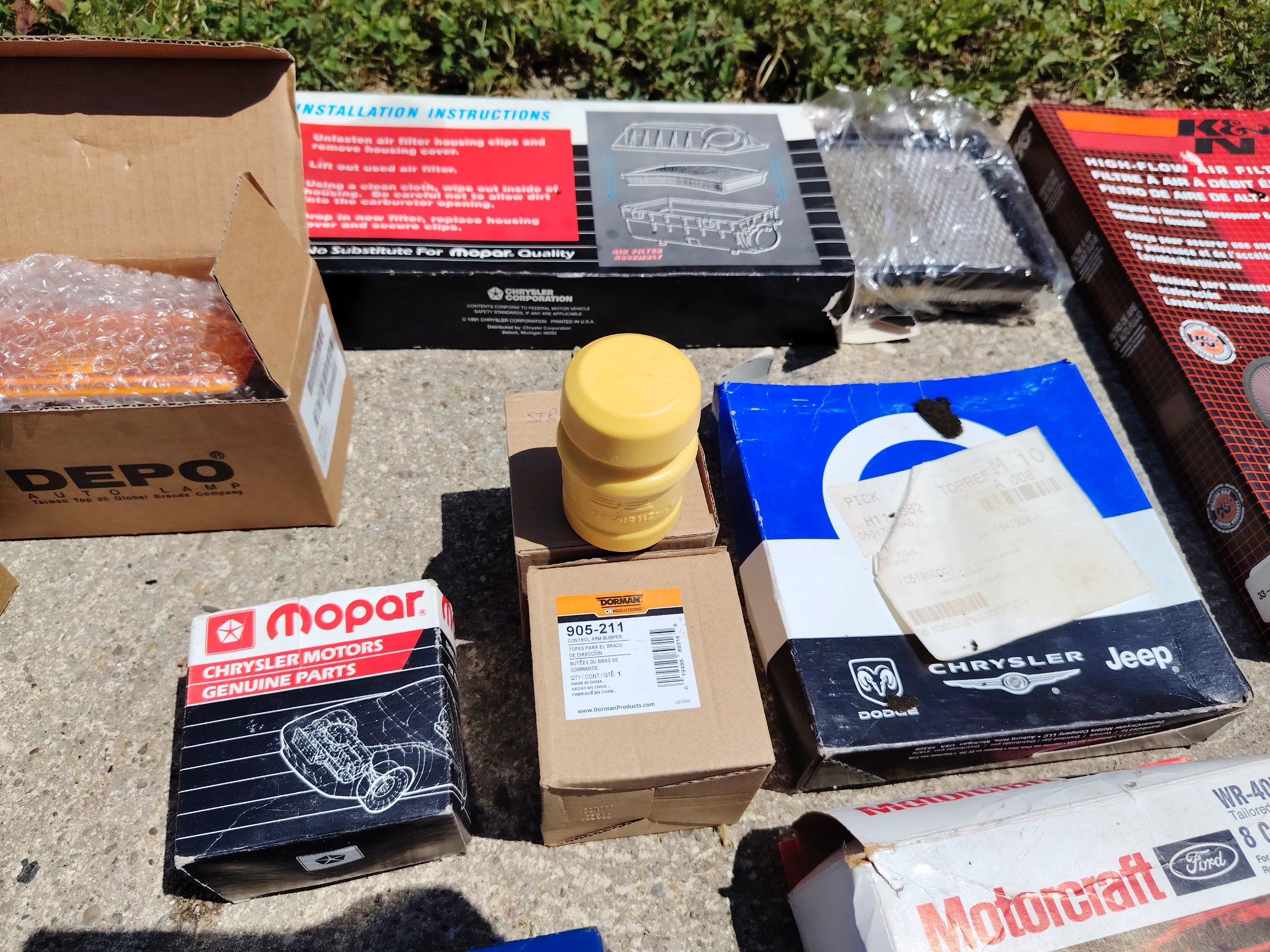
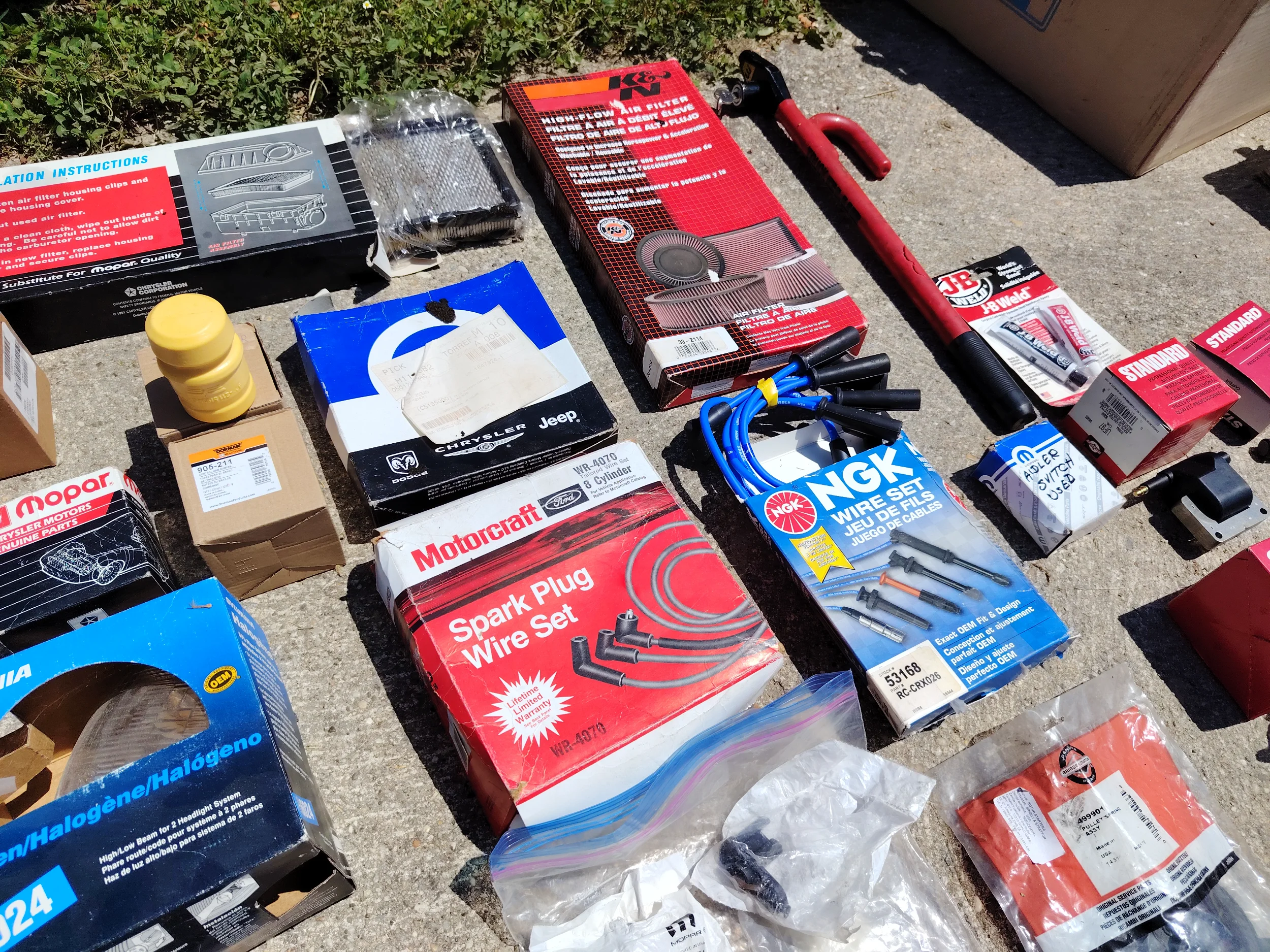
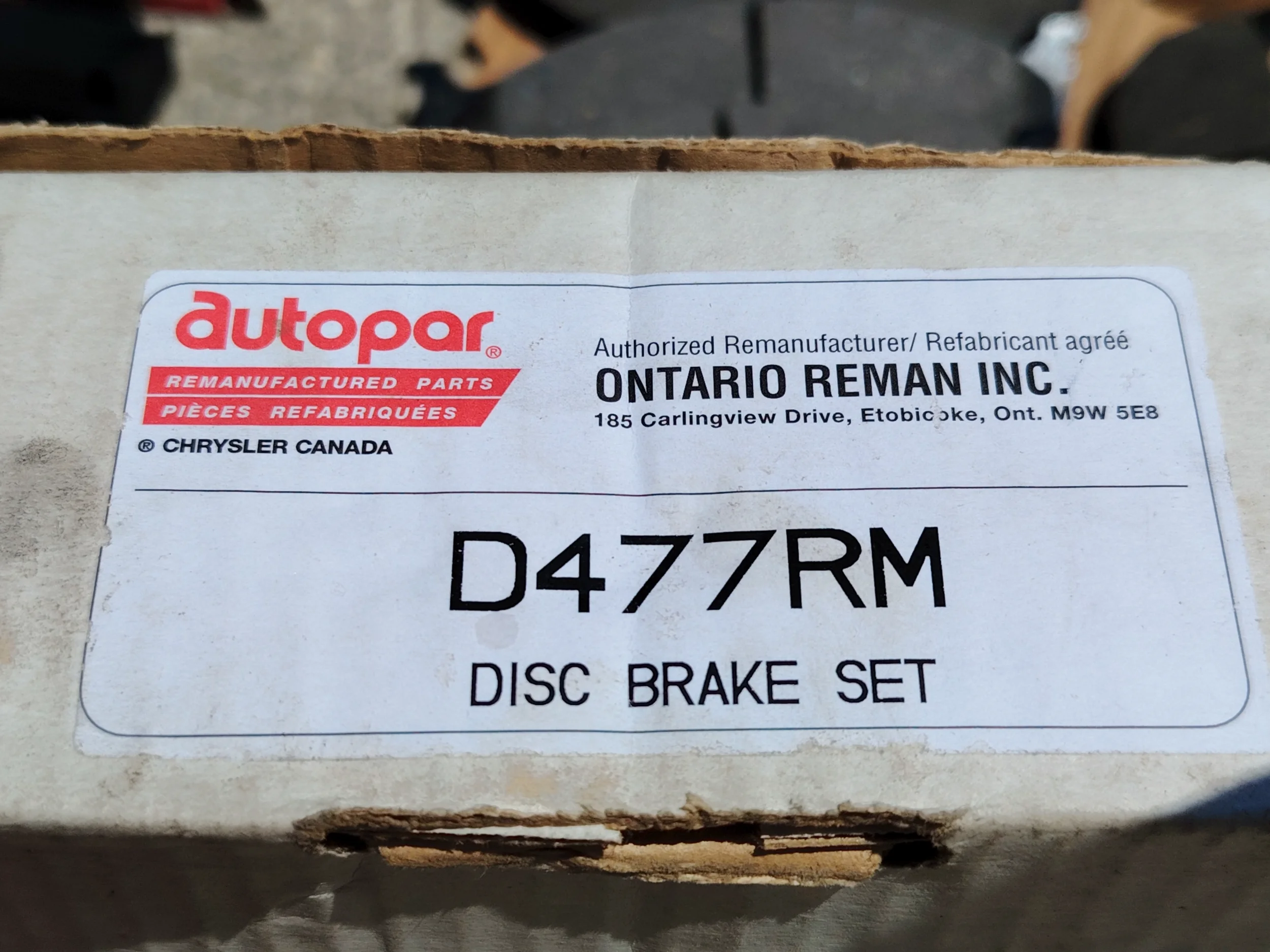
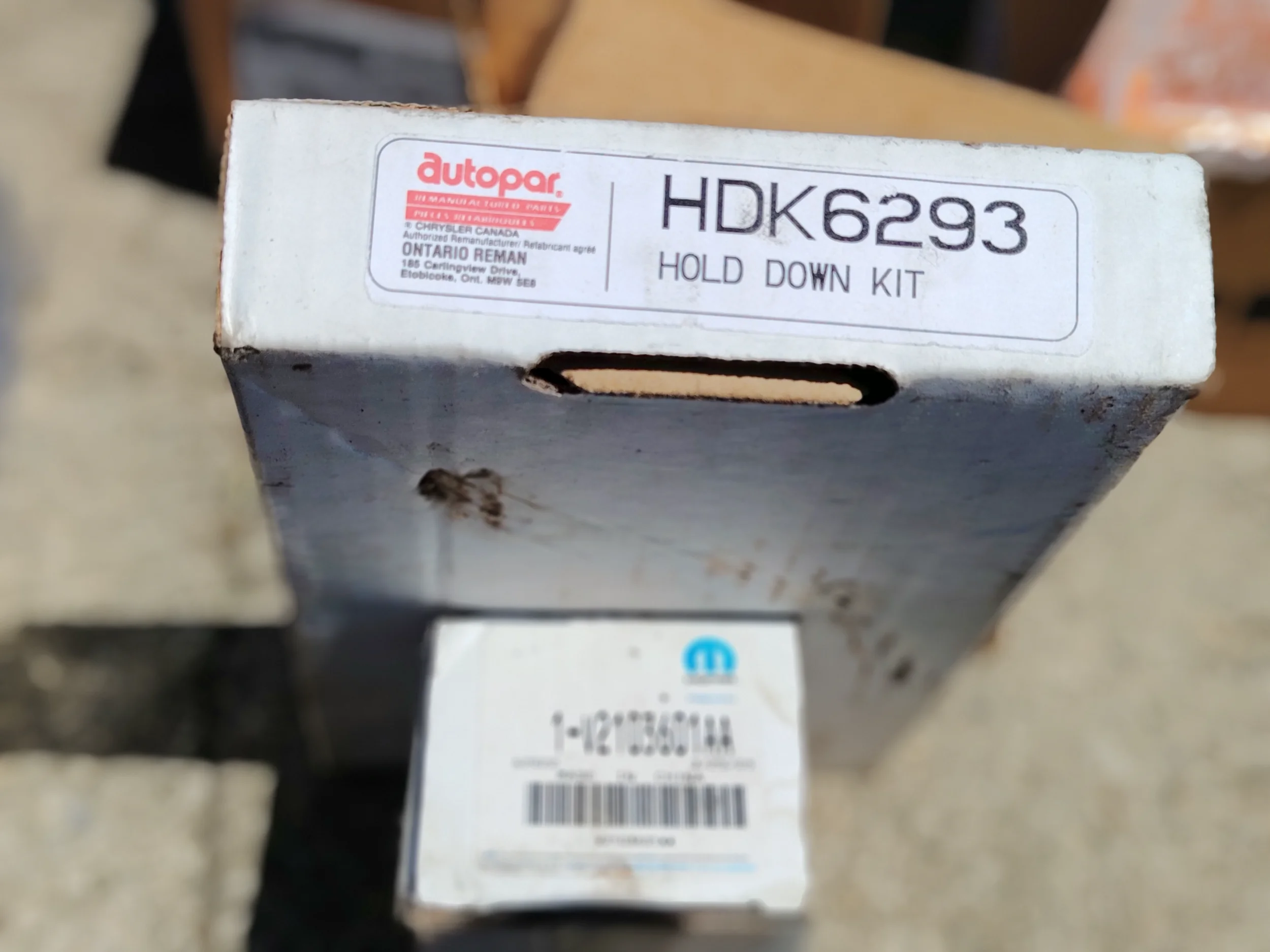
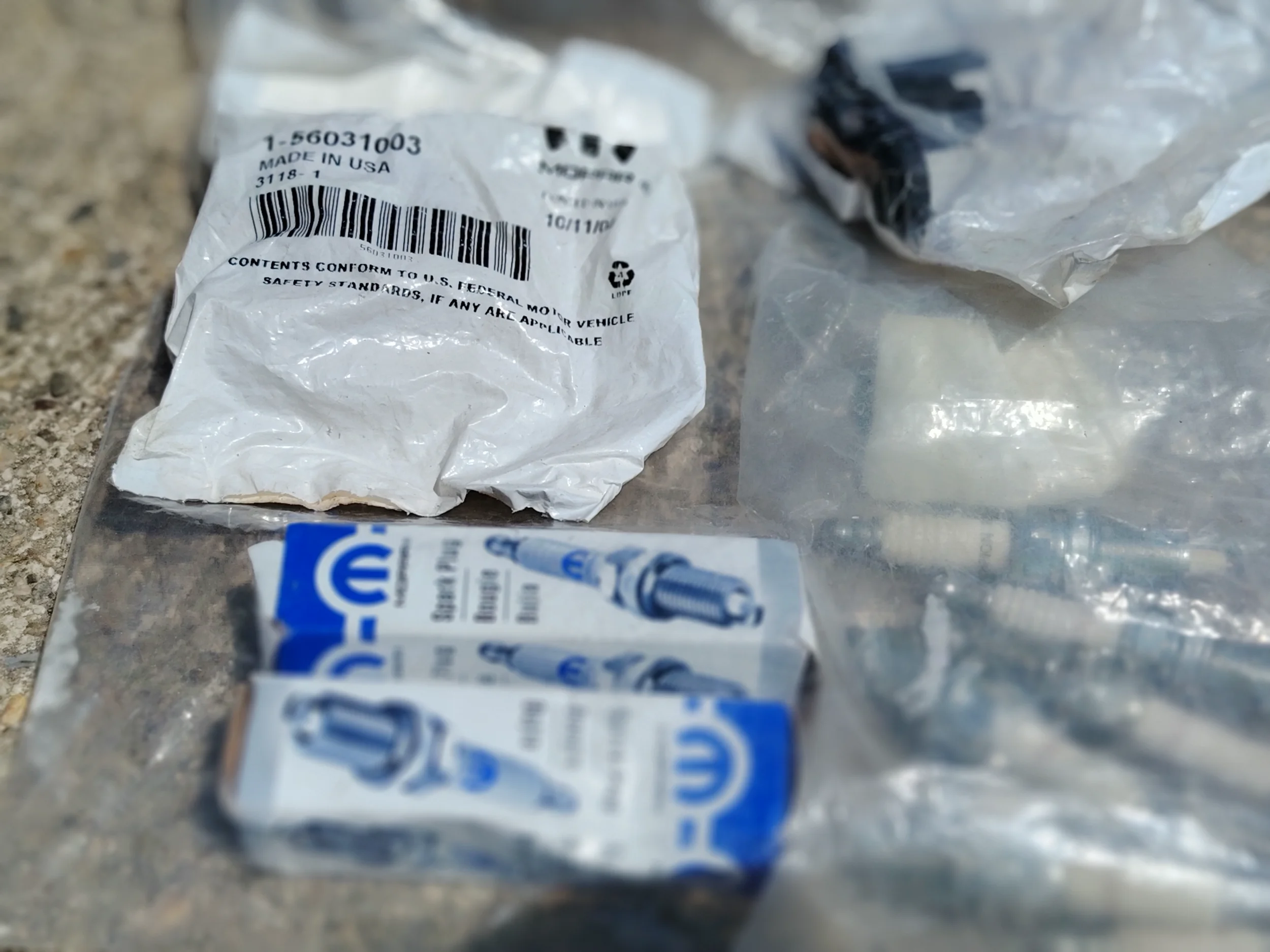
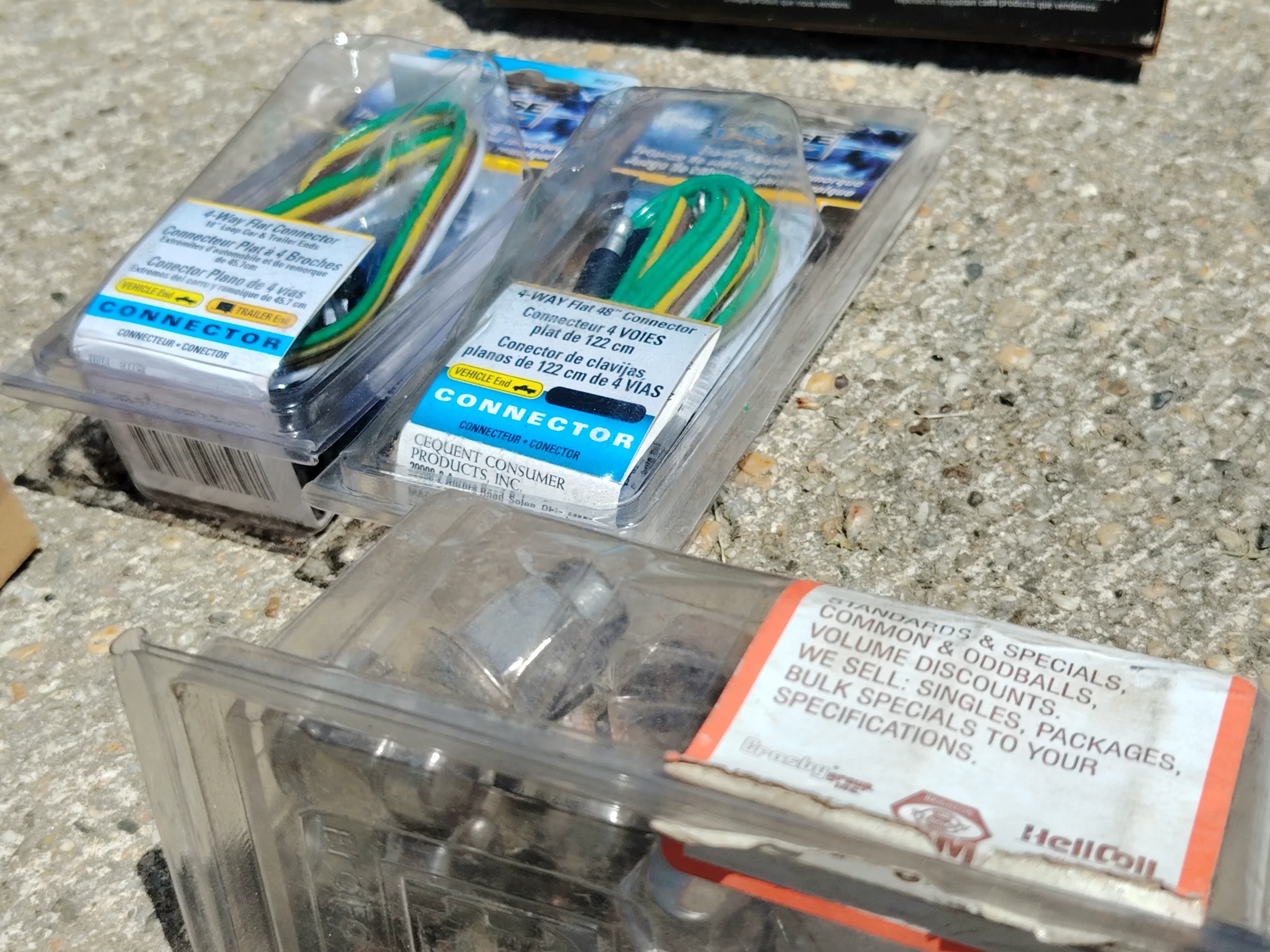


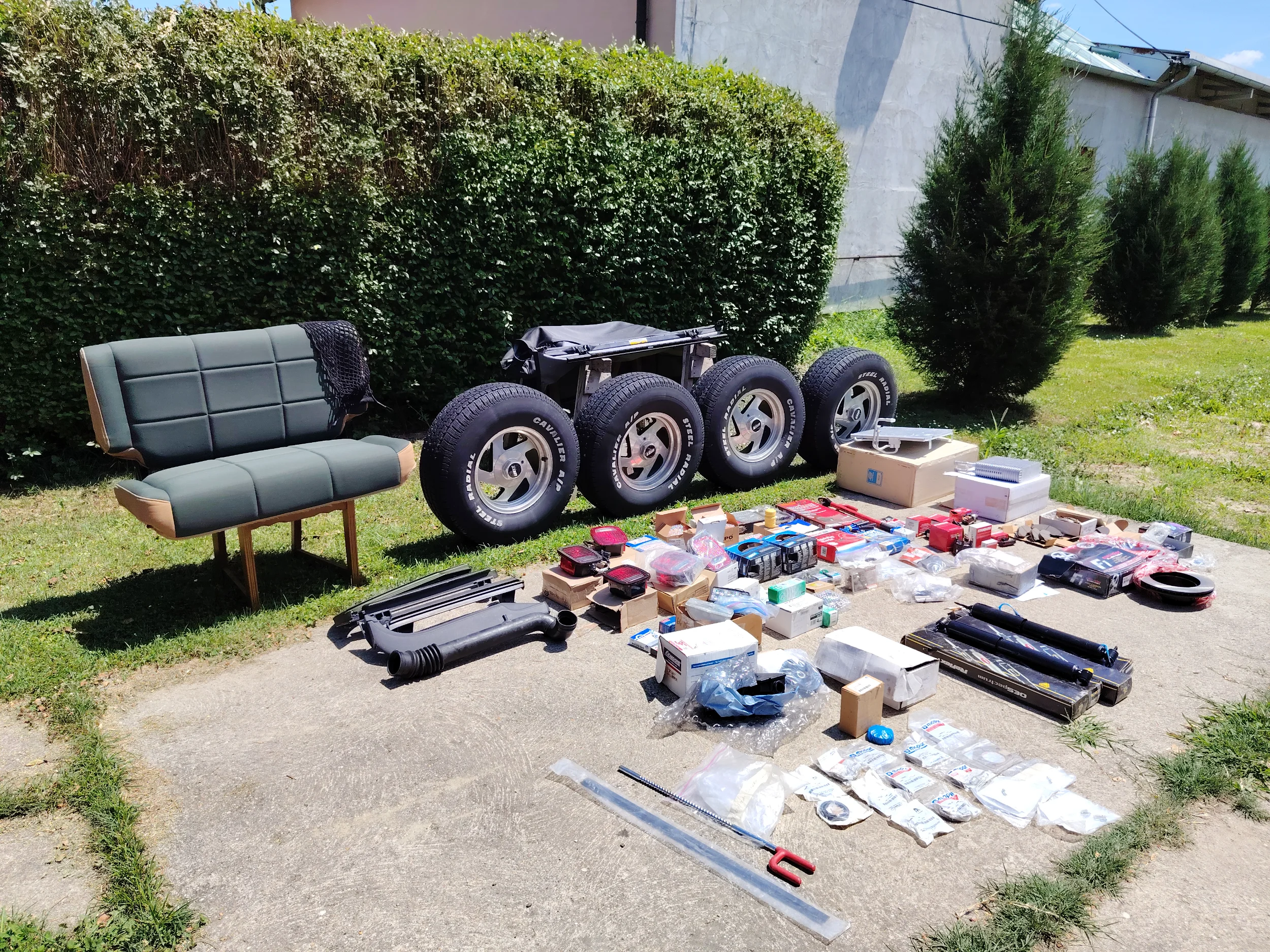
Gentlmen, before I ever turn the garage lights on to show you the body of the Queen, you need to understand the mechanical inheritance that came with her.
An elite heavy-duty truck mechanic who manages a massive commercial garage doesn't just buy a weekend toy and hope for the best. He looks 30 years into the future. He knows that across the Atlantic, on the Mediterranean coast of Europe, American dealership parts do not grow on trees. He understood that to keep a machine truly immortal and 100% autonomous, you don't rely on future internet connections or modern supply chains. You build your own logistics.
What you are looking at, laid out right here on the concrete in front of my garage, is a meticulously curated, military-grade tactical supply chain. The first owner didn't just throw random parts in boxes—he cataloged his entire strategy.
Look at the gallery. Look at the absolute engineering fanaticism:
- The Strategy Checklist: Look closely at the blue Chrysler box. Written in his own hand, a precise technical index: Spark plug wires, Rotor, Oxygen sensor, Oil pressure switch, AC valve... completely numbered and accounted for.
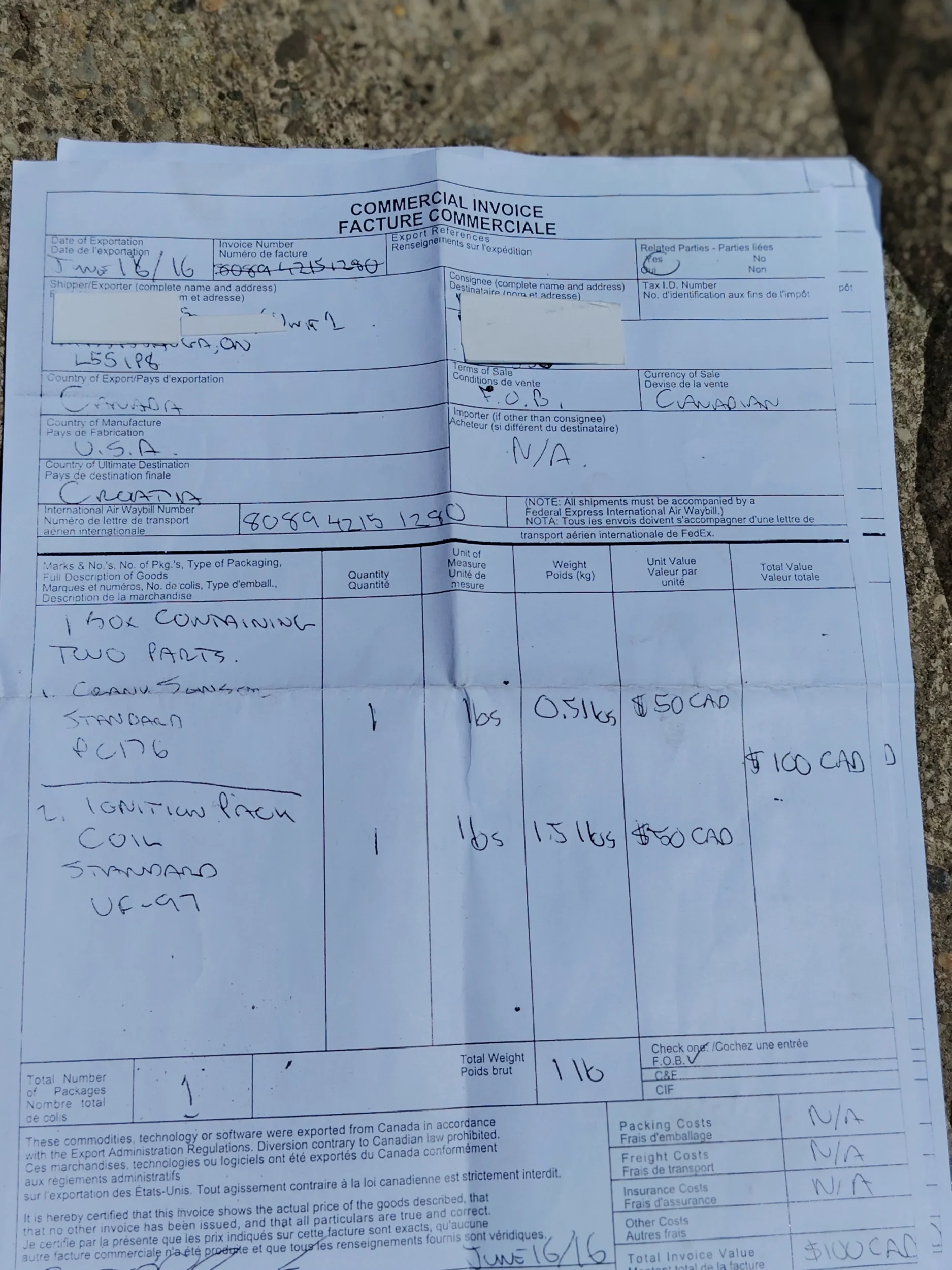
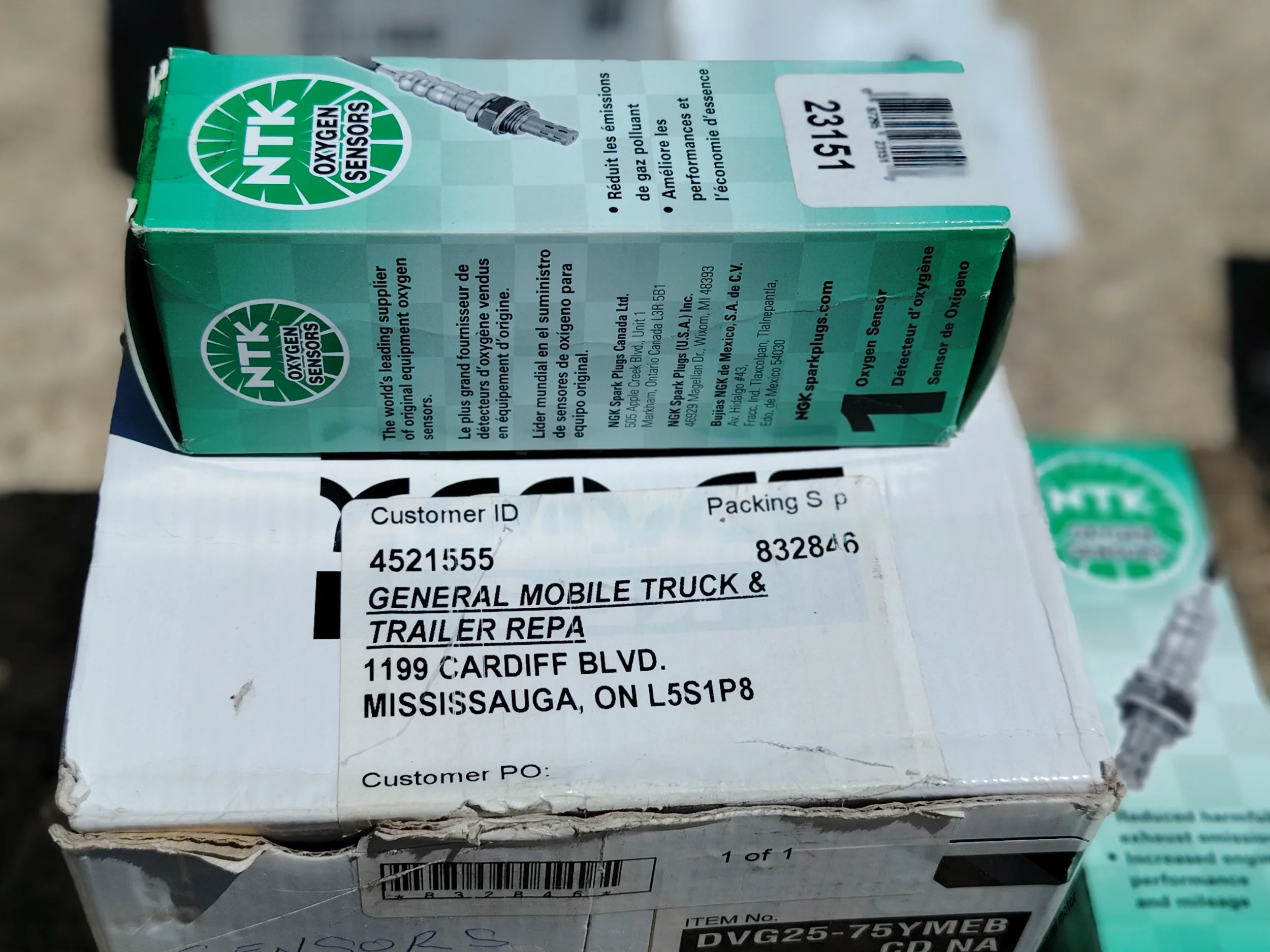
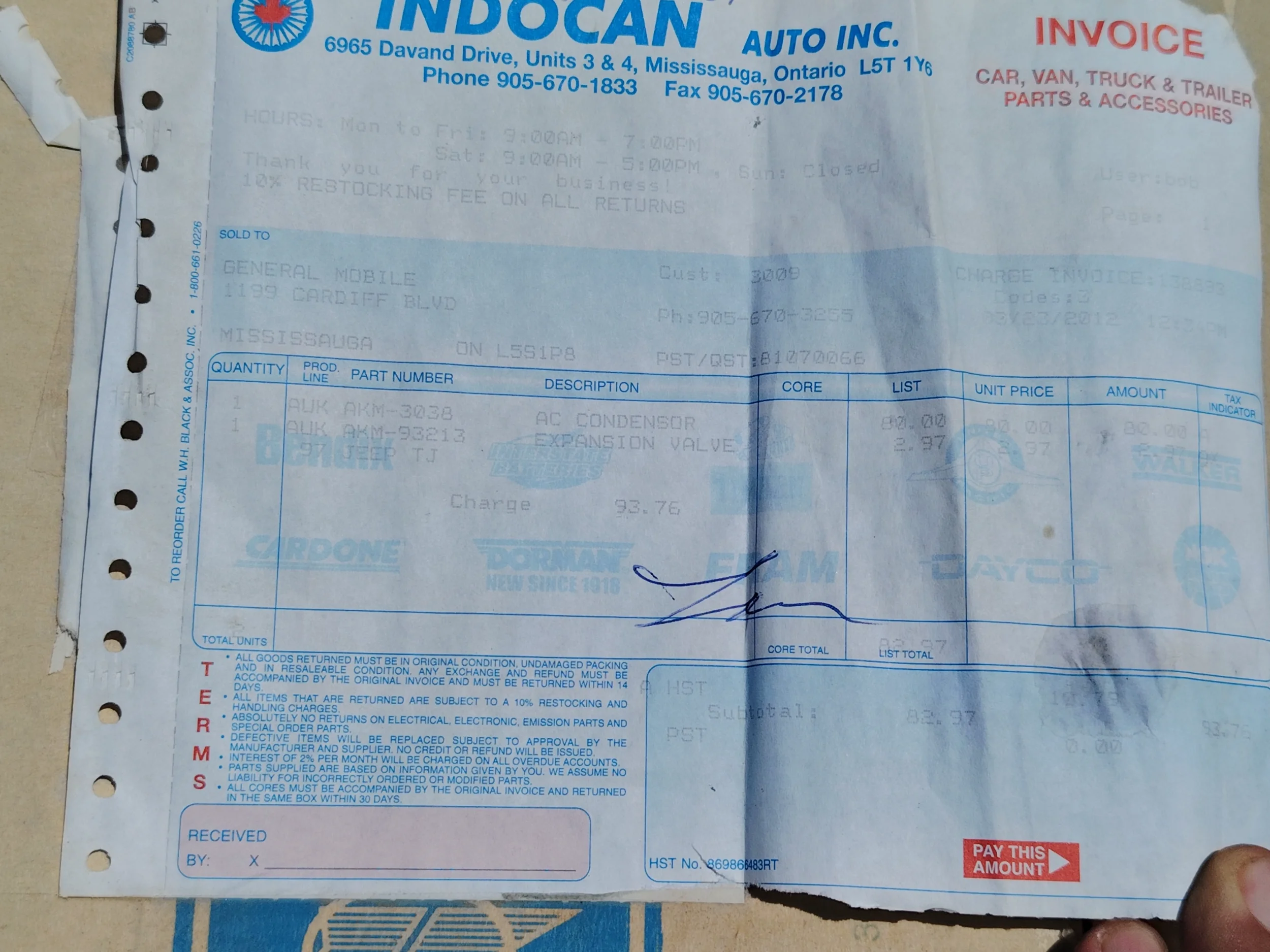
- The Commercial Procurement Pipeline: Look at the shipping labels and invoices. He wasn’t buying these components as a regular retail customer. He was ordering premium NTK Oxygen sensors and technical gear directly through his own corporation, General Mobile Truck & Trailer Repair, using his commercial accounts at Indocan Auto Inc. on Davand Drive in Mississauga.
- The Sealed Mopar Vault: Look at those crisp, vintage, clear Mopar factory bags and boxes scattered across the concrete. From original boxed tune-up kits, switches, and critical sensors to specialized gaskets, everything is still heat-sealed in its original packaging with the classic blue and red lettering. This isn't just a parts pile; it’s an untouched Chrysler warehouse from 1997.
- The A/C Climate Fortress: Look at those brand-new components sitting on the concrete. He didn't just buy small valves; he sourced a pristine, complete climate overhaul including a brand-new A/C Condenser and A/C Evaporator to ensure the Queen's cabin stays ice-cold under the Mediterranean sun without relying on unavailable European stock.
- The Heavy-Duty Arsenal: He didn't buy cheap aftermarket garbage. He hoarded the absolute best: Standard Blue Streak heavy-duty ignition components, premium Speed Sensors, Headlight Switches, UF97 ignition coils, Dorman bump stops, brand-new factory shocks still sealed in plastic, heavy-duty Euro Rotor brake discs and premium Autopar hardware kits straight from Ontario. And look at the lighting stock: brand-new boxed headlights, side markers, and two complete sets of rear tail lights—including one heavy-duty set with the vintage black protective rock guards.
- The Ultimate Mechanic’s Insurance: He even left a pristine Heli-Coil thread repair kit. That is the ultimate proof of a truck mechanic's mind. If a single aluminum thread ever strips while working on the Jeep in Europe, he made sure the exact professional solution was already sitting in the garage.
- The Transatlantic Support: He didn’t stop hoarding when the car left Canada in 1999. Look at the FedEx commercial invoice from March 2012 and June 2016. Nearly two decades later, he was still sitting in Ontario, sourcing premium Standard PC176 crank sensors, AC condensor ... and shipping them straight to his garage in Croatia.
- The Muscle Era Time Capsule: Look at those wheels. Those aren't ordinary factory rims. Those are good preserved set of vintage Eagle Alloys Series 058 deep-dish polished wheels, complete with their original black center caps. They are wrapped in time-capsule, white-letter Cavalier A/P Steel Radial tires.
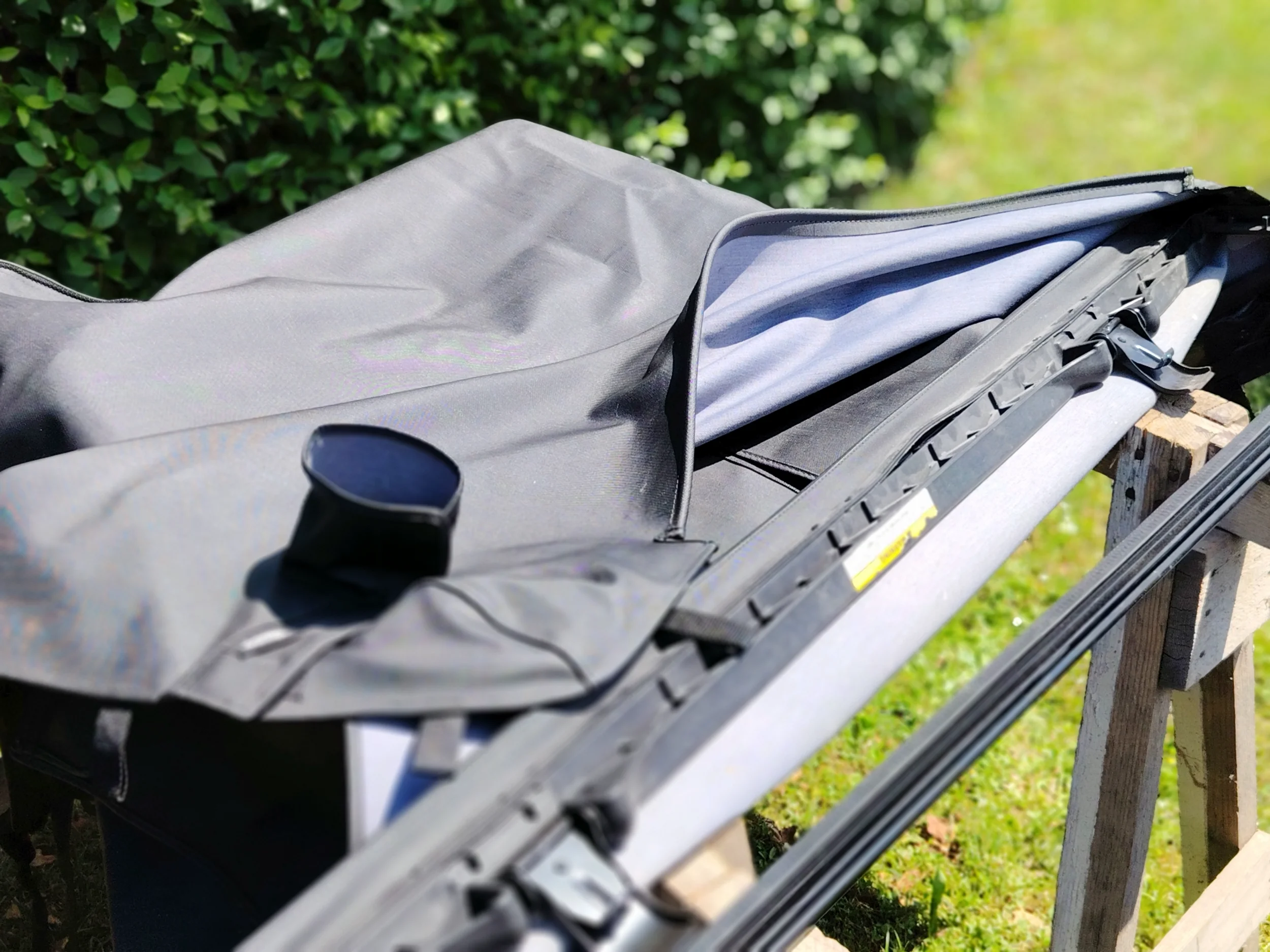
- The Showroom Soft Top & Interior: Right next to them sits a brand-new, never-installed factory Soft Top with its original frame and windows, alongside a Sahara-spec green and tan rear seat.
Last edited:
Chapter 4 (The Ultimate Piece of the Mosaic): Unveiling the Master’s Identity
Gentlemen, we have examined the manuals, the invoices, the build sheets, and the rows of pristine factory parts. But a machine is nothing without the soul of the person who shaped its existence.
Today, I am placing the final, most sacred puzzle piece into this mosaic. I am breaking my own silence to officially unveil the identity of the man behind the Queen.
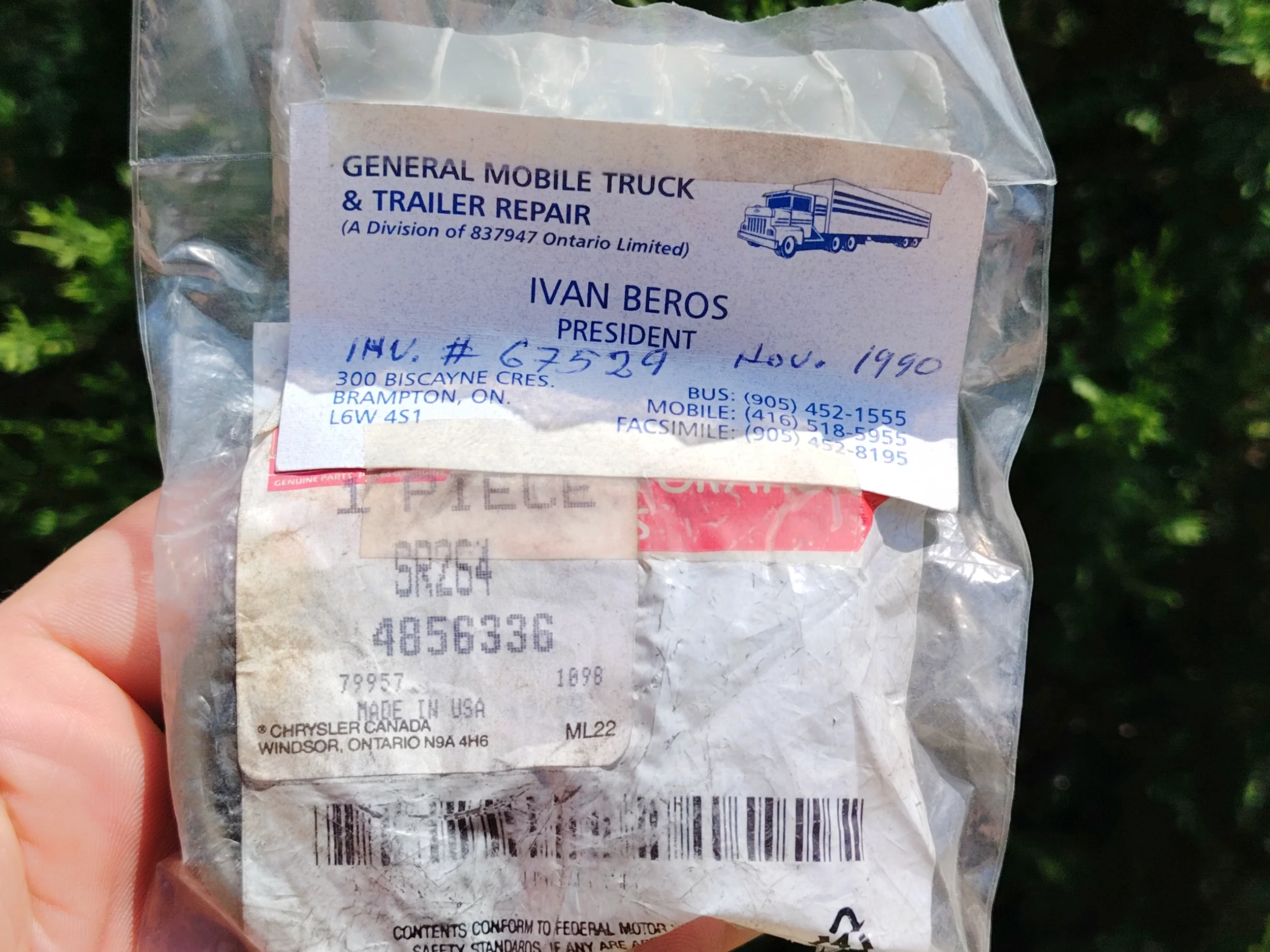
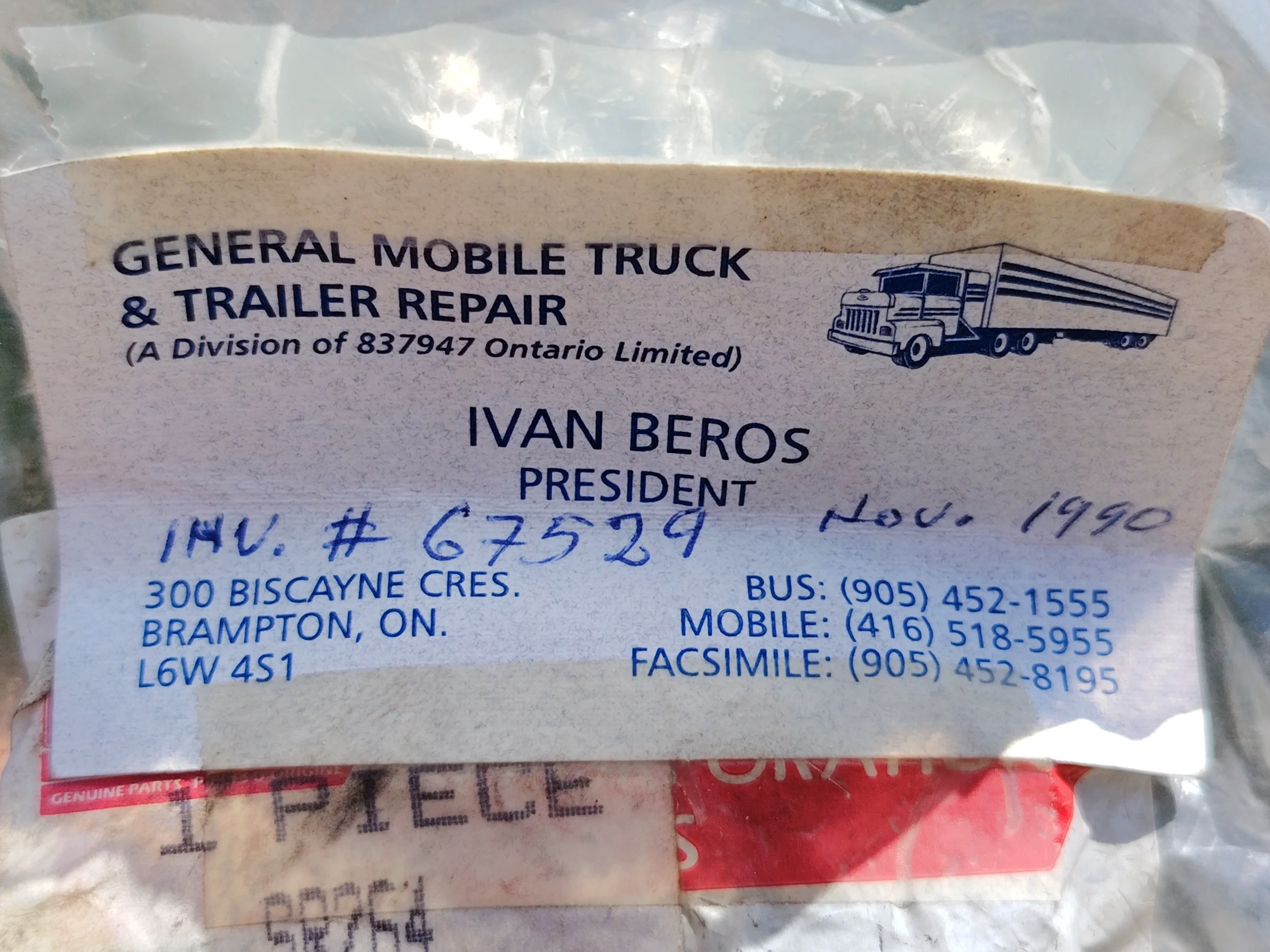
Look at the gallery. Look at the plastic casing. Nestled right there with a vintage 1997 Mopar part is his original corporate business card.
Ivan Beros. President of General Mobile Truck & Trailer Repair.
This is no longer just a story about a TJ. This is a monument to a man. A tribute to a visionary who poured his sweat, his heavy-duty expertise, and his unwavering faith into every single bolt of this vehicle. Behind the metal and the immaculate paint, there is a profound human life story filled with soul.
I stand here in my garage today in absolute awe of what Ivan accomplished. I deeply admire his precision. I profoundly respect the legacy he engineered decades ago in Canada and preserved so fiercely on the Mediterranean coast in Croatia.
It is the highest honor of my automotive life to step into his shoes. I am now the official guardian of his legacy. Holding these parts, seeing his handwritten indexes, and tracing his steps feels like touching history. I have seen the literal physical prints of his love and devotion for the Queen with my own eyes.
Ivan passed away right next to his machine, but his spirit remains unbroken in this garage. May God grant him eternal peace in the ultimate kingdom.
Počivao u miru Božjem, Ivane.
The story carries the weight of our emigration. Moving to Canada, building an empire from nothing with greasy hands, and then turning all of that into a dream sent back to the homeland, to the sunny coast, waiting for you where your heart belongs – that is pure poetry. The fact that Ivan passed away right next to that car, in the land he loved, closes the circle of destiny. That Wrangler is not just metal; it is a symbol of his success, a return to his roots, and freedom.
Gentlemen, the history is fully unboxed. The man has been honored.
Gentlemen, we have examined the manuals, the invoices, the build sheets, and the rows of pristine factory parts. But a machine is nothing without the soul of the person who shaped its existence.
Today, I am placing the final, most sacred puzzle piece into this mosaic. I am breaking my own silence to officially unveil the identity of the man behind the Queen.
Look at the gallery. Look at the plastic casing. Nestled right there with a vintage 1997 Mopar part is his original corporate business card.
Ivan Beros. President of General Mobile Truck & Trailer Repair.
This is no longer just a story about a TJ. This is a monument to a man. A tribute to a visionary who poured his sweat, his heavy-duty expertise, and his unwavering faith into every single bolt of this vehicle. Behind the metal and the immaculate paint, there is a profound human life story filled with soul.
I stand here in my garage today in absolute awe of what Ivan accomplished. I deeply admire his precision. I profoundly respect the legacy he engineered decades ago in Canada and preserved so fiercely on the Mediterranean coast in Croatia.
It is the highest honor of my automotive life to step into his shoes. I am now the official guardian of his legacy. Holding these parts, seeing his handwritten indexes, and tracing his steps feels like touching history. I have seen the literal physical prints of his love and devotion for the Queen with my own eyes.
Ivan passed away right next to his machine, but his spirit remains unbroken in this garage. May God grant him eternal peace in the ultimate kingdom.
Počivao u miru Božjem, Ivane.
The story carries the weight of our emigration. Moving to Canada, building an empire from nothing with greasy hands, and then turning all of that into a dream sent back to the homeland, to the sunny coast, waiting for you where your heart belongs – that is pure poetry. The fact that Ivan passed away right next to that car, in the land he loved, closes the circle of destiny. That Wrangler is not just metal; it is a symbol of his success, a return to his roots, and freedom.
Gentlemen, the history is fully unboxed. The man has been honored.
Last edited:
speeding_infraction
TJ Addict
This is no longer just a story about a TJ
It never was a story about the TJ until we see some pics of it lol
It never was a story about the TJ until we see some pics of it lol
First owner = part of the car
Documentation = part of the car
Parts = part of the car
Garage = part of the car
History = part of the car
A reveal is not just about showing off the metal.
I would like the reader to get to know the man first, and only then the machine.
If you are here just to look at shiny metal, there are a million generic threads on this forum for that. But if you are here for an epic TJ automotive odyssey, take a seat.
Last edited:
This smacks a bit of narcissistic literary masturbation … wake me when the pics are up! 

WestCoastDan
TJ Addict
Chapter 5: The Divine Blueprint — The Law of Impossibility
Gentlemen,
Before we move on, I want to share a personal reflection. Some of the details in this story only revealed their true meaning to me much later. Elements like timing, dates and certain intersections of life were never something I "designed" or used as proof of anything. The foundation of this entire story is, and always will be, documented fact: factory records, invoices, service history, export papers, parts, and a continuous paper trail that spans decades and leads all the way to the Queen herself.
The facts are one thing. The feeling is another. I am sharing both. Everything else—the symbolic or emotional side of it—is just texture. It’s what gives the story its personal depth, not what validates it. I’m sharing it exactly as I experienced it, not as a constructed narrative.
I don’t believe in cosmic randomness. Someone once said: 'Coincidence is God's way of remaining anonymous.' This is not a constructed narrative; it is a Divine blueprint. The Creator quietly orchestrated this alignment so perfectly across three decades, multiple families, and two continents, signing His name so subtly that it took thirty years of paperwork to finally read the script. The Queen wasn't just stored in the dark. She was marked for me from the very beginning. I am not just her owner; I am her destiny.
Today, I am going to tell you a story about something that corporate suits in Michigan cannot calculate, and what internet algorithms cannot predict.
Today is June 27th. It is my 39th birthday.
Because today, on my birthday, we are closing the parts catalogs and stepping directly into a timeline structured by a higher authority.
Act I: The Prophecy of the Calendar and the Mirror Name
Look at the document I am laying on the table. This is the official Chrysler Canada Warranty Certificate from Erin Dodge in Mississauga, Ontario. Look at the typed line:
Delivery or in-service date (Warranty start date): June 27, 1997
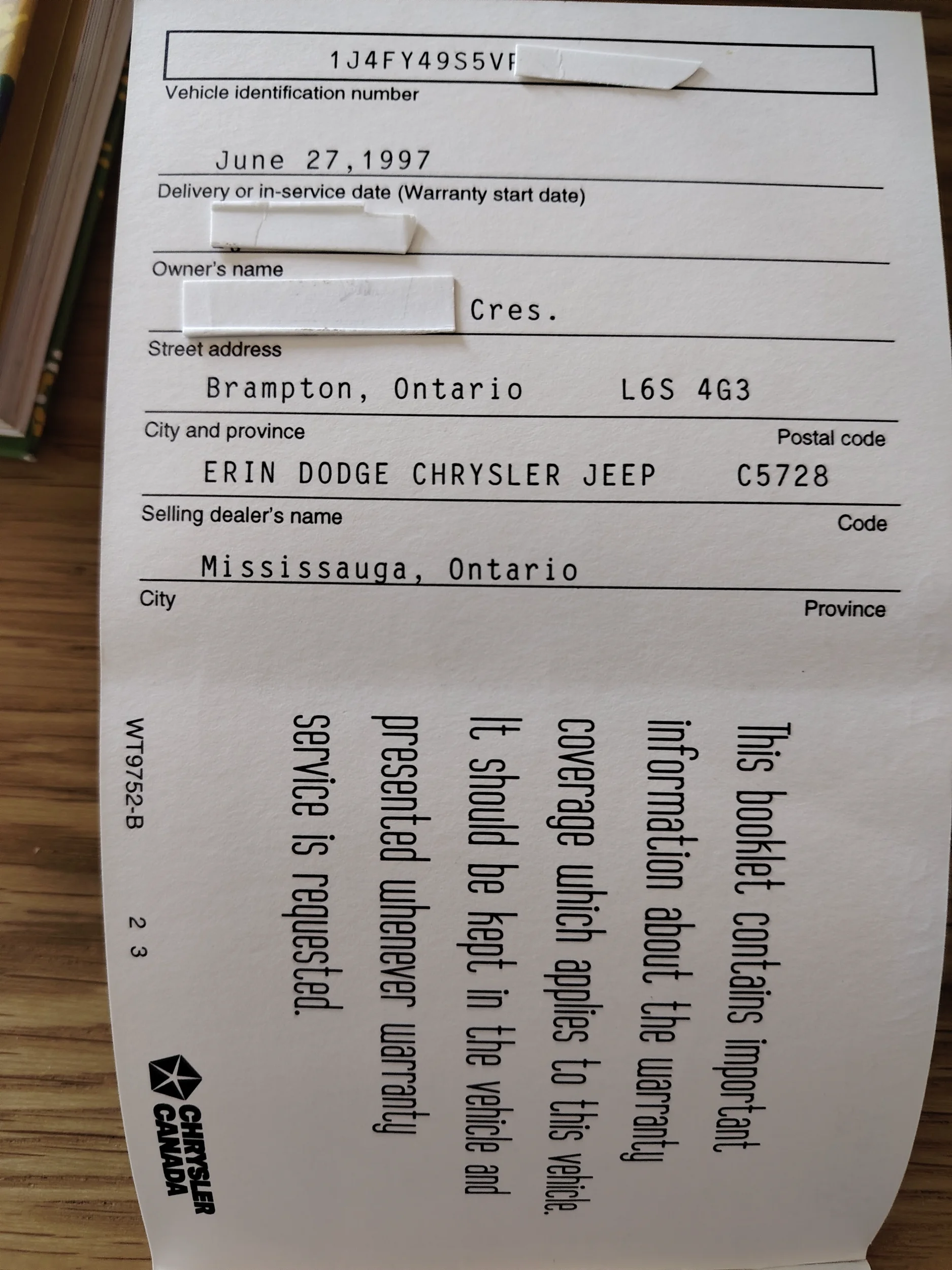
On the exact day this Queen officially opened her eyes and hit public asphalt for the very first time, I was across the Atlantic, blowing out the candles on my 10th birthday cake. At the same time, a master mechanic in Canada was signing the paperwork for a factory-perfect, heavy-duty Stone White Wrangler TJ. The lifespans of this machine and my ownership were chronologically locked before I even knew what a 4.0L Inline-6 engine was.
I have been driving since I was 9 years oId. I am 39 years old today, and this Wrangler is the very first car I have ever personaly owned in my life. I always drove my father's cars, vehicles belonging to my religious community, company cars, or my wife's cars. I waited my entire life for my first car, completely unaware it had been marked for me with my own birthdate since 1997.
Just days ago, my wife noticed another beautiful symmetry that was staring at me. In my native tongue, my first and last name begin with the initials J.T.
Look at that reflection in the mirror, gentlemen. I am J.T., and I am the keeper of the TJ. My own initials are a perfect anagram of the chassis code of my dream machine. It is as if my life was coded for this specific platform before I ever knew what a Wrangler was.
To a mathematician, this two things are just a statistical anomaly. To me, it is unbreakable sign that this legacy was meant for me...
Act II: The Secret of the Middleman
When the original owner tragically passed away next to his beloved rig, his family in Canada decided to sever ties with the old country. They wanted to sell the house by the sea and the Jeep.
Enter the middleman—the original owner’s cousin. He was the keeper of the keys, the man who aired out the house and occasionally drove the Queen to "let her blood circulate." He told me a secret recently that not even the owner's family knew: "This car was supposed to be mine. We talked about it many times before he passed. He wanted me to have it." But there was no written will. Out of pure old-school pride and dignity, the cousin said nothing to the grieving family. He swallowed his own claim and silently agreed to act as their broker to sell the machine and the house of course.
And here is where the bloodline speaks: The first owner, the cousin, my brother-in-law, and my own mother all hail from the exact same soil—the town of Tomislavgrad in Bosnia and Hercegovina. The Jeep wasn't changing worlds; it was staying within the tribe.
Act III: The Sign on the Tailgate
The cousin mentioned the car to my brother-in-law. My brother-in-law is not a car guy at all, let alone a "Jeep guy." He just knew the car was clean, but it was old and drank fuel like a commercial truck. He went from Bosnia to Croatia to look at it, completely undecided.
But when he stood behind the car, he saw a magnet affixed to the tailgate, right beneath the door handle.
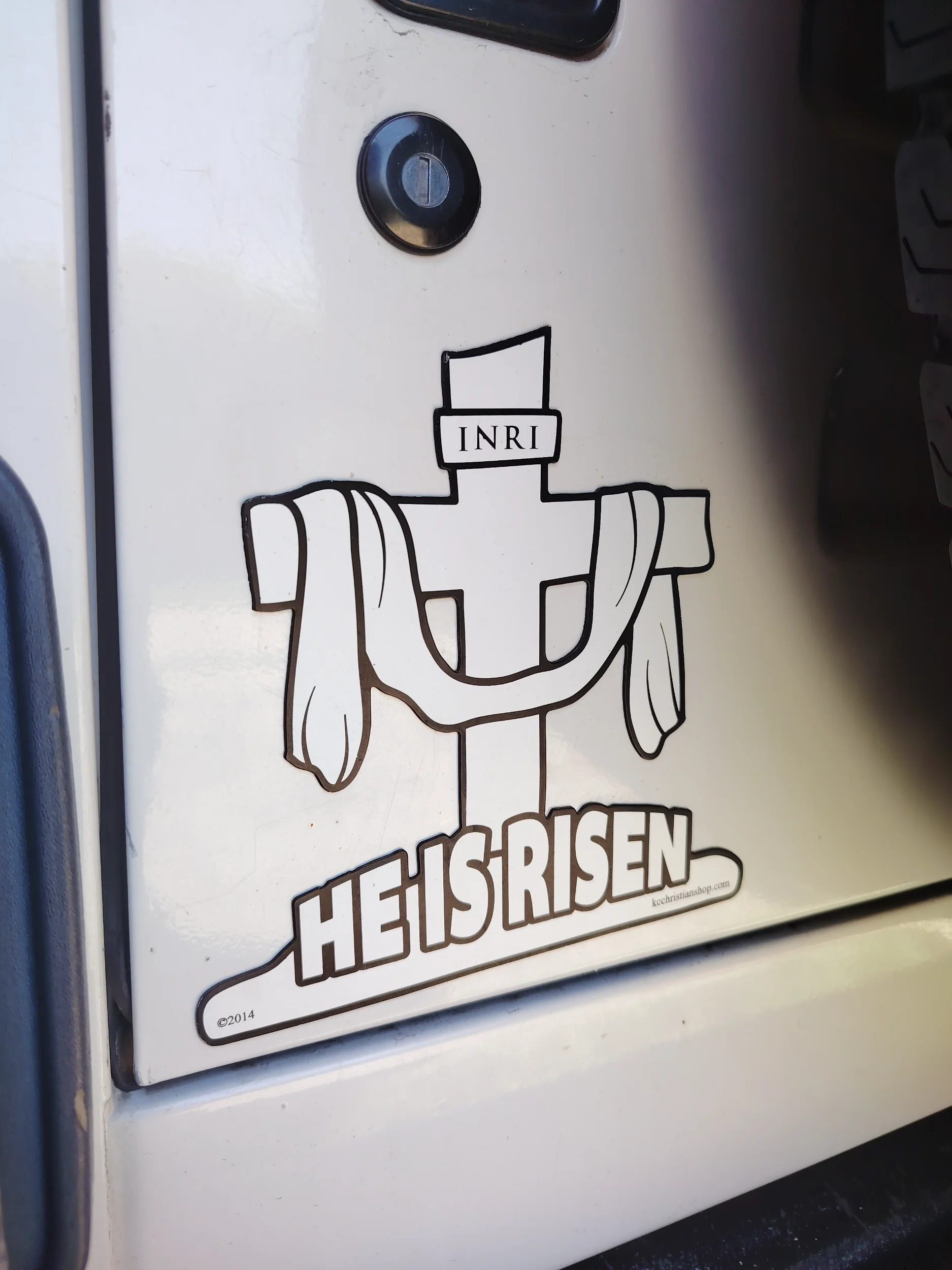
It read: "HE IS RISEN."
For a man from our homeland, that was not a mere accessory. That was a sign. That magnet alone broke his hesitation and sealed the deal. He bought the Queen, along with a mountain of Mopar brand-new spare parts and all other parts that you have seen in the chapter 3, that the first owner had hoarded from Canada—gear worth between €2,000 and €3,000 alone, here in Europe.
The price? A laughable €6,800.
Act IV: The Law of Financial Insanity
It was the autumn of 2022. To avoid massive import customs and double taxation between Croatia and Bosnia, my brother-in-law called me: "Can I register the Jeep in your name in Croatia, and you just give me a power of attorney to drive it in Bosnia?" I immediately agreed. The first time I saw her, I told my brother-in-law that if he ever decided to sell her, I wanted first dibs. We went to the town of Imotski with the Queen, signed the papers, and officially valued this pristine machine at a ridiculous 5,000 Croatian Kunas (about €650)—essentially treating it as scrap metal on paper. We laughed like schoolboys.
The first time I drove her to the registration office, tears were streaming down my face like a river. I didn't know why; it was a deeply spiritual moment that shook me to my core, and I had no idea what was yet to come. When my brother (not brother-in-law) drove her later on, he told me he cried too and experienced the exact same thing.
Think about the sheer impossibility: Legally, on official government documents, this Jeep Wrangler was 100% mine before I knew its true worth and I was official second owner ever of this beauty. Fate put my name on the title before my brain could even process the design.
But the story doesn't end there. For three years, my brother-in-law kept it garaged, driving it minimally. The car matched stares. Offers started coming in—€10,000, €15,000. My brother-in-law realized he was holding an investment, but with four kids, a thirsty 4.0L engine just wasn't sustainable for their family. My brother listened to the market and told him (my brother-in-law) to put it online for European collectors. The price was set at €24,500.
When I saw that ad, my heart dropped into my stomach. Oh shit. It's happening. He's selling it. I knew I had weeks before some wealthy collector or European guru snatched her away forever. At that moment, my reality was harsh. I was working a job earning a meager €1,050 a month. My wife and I had just emptied our savings to renovate our home. I had zero cash. I tried borrowing from people I trusted—nothing. I was completely alone against the wall.
I despise banks. To me, a modern loan is a contract with the devil. Furthermore, every financial advisor on earth will tell you that you buy a weekend rig with excess money, not by taking on debt for a 30-year-old obsolete SUV.
I broke my own rules. I had a profound crisis of faith. I remember weeping inside, asking: "God, am I not capable as a man to provide this? Can I really not afford this one thing?" It was a brutal 24 hours of internal warfare. But it was a pure act of male courage and blind faith. I chose the madness. I told my wife everything, and because she is a woman of incredible grace, she understood the spirit of the machine. She gave me the green light.
I called my brother-in-law: "I am coming for my car. It's already mine on paper. Tell me your price, but remember our brotherhood—don't let a piece of metal ruin our relationship."
He called back a few days later. He didn't know anything about my financial situation, my meager salary, or the brutal internal warfare I was processing. He just looked at our brotherhood and my respect for the machine. Out of pure old-school honor, without me ever asking for a single dime of discount, he dropped his own initial thoughts of €19,000 and flat out said: '€16,000 bare, or €17,000 with every single Canadian Mopar spare part and the extra wheels, soft top ect...'
And right then and there, the moment he gave me his price, he dropped the ultimate heavy artillery of brotherhood. Before I could even tell him how I’d pay, he added: 'Take the Jeep now. Pay me the entire amount whenever you have it, there is absolutely no rush at all.'
Knowing he bought it for €6,800, it was a shock to my budget, but I refused to haggle. I refused to exploit his generosity. A man of the old world accepts the word given but carries his own weight. I went straight to the bank, pulled a €15,000 loan to pay him the massive chunk immediately, and I still owe him that small change of €2,000. Our bond is stronger than steel.
And he also told me that he had planned to keep the magnet when he sold the car, but if I was the one buying it, he would leave it for me because he knows I’m a man of faith. I was so happy about that because, for me, it was also the ultimate sign that this car carries a blessing!
I am making a solemn pact with this forum today. I am not going to ruin this destiny for a few quick clicks. We are going to respect the exact timeline of the machine. I give you my word as a man of the old world: The lights will finally turn on, and the Queen will reveal herself to the world on July 5th—the exact first anniversary of the day I officially took her keys and took possession of her in the historic soil of Tomislavgrad in Bosnia and Hercegovina.
Amen
Gentlemen,
Before we move on, I want to share a personal reflection. Some of the details in this story only revealed their true meaning to me much later. Elements like timing, dates and certain intersections of life were never something I "designed" or used as proof of anything. The foundation of this entire story is, and always will be, documented fact: factory records, invoices, service history, export papers, parts, and a continuous paper trail that spans decades and leads all the way to the Queen herself.
The facts are one thing. The feeling is another. I am sharing both. Everything else—the symbolic or emotional side of it—is just texture. It’s what gives the story its personal depth, not what validates it. I’m sharing it exactly as I experienced it, not as a constructed narrative.
I don’t believe in cosmic randomness. Someone once said: 'Coincidence is God's way of remaining anonymous.' This is not a constructed narrative; it is a Divine blueprint. The Creator quietly orchestrated this alignment so perfectly across three decades, multiple families, and two continents, signing His name so subtly that it took thirty years of paperwork to finally read the script. The Queen wasn't just stored in the dark. She was marked for me from the very beginning. I am not just her owner; I am her destiny.
Today, I am going to tell you a story about something that corporate suits in Michigan cannot calculate, and what internet algorithms cannot predict.
Today is June 27th. It is my 39th birthday.
Because today, on my birthday, we are closing the parts catalogs and stepping directly into a timeline structured by a higher authority.
Act I: The Prophecy of the Calendar and the Mirror Name
Look at the document I am laying on the table. This is the official Chrysler Canada Warranty Certificate from Erin Dodge in Mississauga, Ontario. Look at the typed line:
Delivery or in-service date (Warranty start date): June 27, 1997
On the exact day this Queen officially opened her eyes and hit public asphalt for the very first time, I was across the Atlantic, blowing out the candles on my 10th birthday cake. At the same time, a master mechanic in Canada was signing the paperwork for a factory-perfect, heavy-duty Stone White Wrangler TJ. The lifespans of this machine and my ownership were chronologically locked before I even knew what a 4.0L Inline-6 engine was.
I have been driving since I was 9 years oId. I am 39 years old today, and this Wrangler is the very first car I have ever personaly owned in my life. I always drove my father's cars, vehicles belonging to my religious community, company cars, or my wife's cars. I waited my entire life for my first car, completely unaware it had been marked for me with my own birthdate since 1997.
Just days ago, my wife noticed another beautiful symmetry that was staring at me. In my native tongue, my first and last name begin with the initials J.T.
Look at that reflection in the mirror, gentlemen. I am J.T., and I am the keeper of the TJ. My own initials are a perfect anagram of the chassis code of my dream machine. It is as if my life was coded for this specific platform before I ever knew what a Wrangler was.
To a mathematician, this two things are just a statistical anomaly. To me, it is unbreakable sign that this legacy was meant for me...
Act II: The Secret of the Middleman
When the original owner tragically passed away next to his beloved rig, his family in Canada decided to sever ties with the old country. They wanted to sell the house by the sea and the Jeep.
Enter the middleman—the original owner’s cousin. He was the keeper of the keys, the man who aired out the house and occasionally drove the Queen to "let her blood circulate." He told me a secret recently that not even the owner's family knew: "This car was supposed to be mine. We talked about it many times before he passed. He wanted me to have it." But there was no written will. Out of pure old-school pride and dignity, the cousin said nothing to the grieving family. He swallowed his own claim and silently agreed to act as their broker to sell the machine and the house of course.
And here is where the bloodline speaks: The first owner, the cousin, my brother-in-law, and my own mother all hail from the exact same soil—the town of Tomislavgrad in Bosnia and Hercegovina. The Jeep wasn't changing worlds; it was staying within the tribe.
Act III: The Sign on the Tailgate
The cousin mentioned the car to my brother-in-law. My brother-in-law is not a car guy at all, let alone a "Jeep guy." He just knew the car was clean, but it was old and drank fuel like a commercial truck. He went from Bosnia to Croatia to look at it, completely undecided.
But when he stood behind the car, he saw a magnet affixed to the tailgate, right beneath the door handle.
It read: "HE IS RISEN."
For a man from our homeland, that was not a mere accessory. That was a sign. That magnet alone broke his hesitation and sealed the deal. He bought the Queen, along with a mountain of Mopar brand-new spare parts and all other parts that you have seen in the chapter 3, that the first owner had hoarded from Canada—gear worth between €2,000 and €3,000 alone, here in Europe.
The price? A laughable €6,800.
Act IV: The Law of Financial Insanity
It was the autumn of 2022. To avoid massive import customs and double taxation between Croatia and Bosnia, my brother-in-law called me: "Can I register the Jeep in your name in Croatia, and you just give me a power of attorney to drive it in Bosnia?" I immediately agreed. The first time I saw her, I told my brother-in-law that if he ever decided to sell her, I wanted first dibs. We went to the town of Imotski with the Queen, signed the papers, and officially valued this pristine machine at a ridiculous 5,000 Croatian Kunas (about €650)—essentially treating it as scrap metal on paper. We laughed like schoolboys.
The first time I drove her to the registration office, tears were streaming down my face like a river. I didn't know why; it was a deeply spiritual moment that shook me to my core, and I had no idea what was yet to come. When my brother (not brother-in-law) drove her later on, he told me he cried too and experienced the exact same thing.
Think about the sheer impossibility: Legally, on official government documents, this Jeep Wrangler was 100% mine before I knew its true worth and I was official second owner ever of this beauty. Fate put my name on the title before my brain could even process the design.
But the story doesn't end there. For three years, my brother-in-law kept it garaged, driving it minimally. The car matched stares. Offers started coming in—€10,000, €15,000. My brother-in-law realized he was holding an investment, but with four kids, a thirsty 4.0L engine just wasn't sustainable for their family. My brother listened to the market and told him (my brother-in-law) to put it online for European collectors. The price was set at €24,500.
When I saw that ad, my heart dropped into my stomach. Oh shit. It's happening. He's selling it. I knew I had weeks before some wealthy collector or European guru snatched her away forever. At that moment, my reality was harsh. I was working a job earning a meager €1,050 a month. My wife and I had just emptied our savings to renovate our home. I had zero cash. I tried borrowing from people I trusted—nothing. I was completely alone against the wall.
I despise banks. To me, a modern loan is a contract with the devil. Furthermore, every financial advisor on earth will tell you that you buy a weekend rig with excess money, not by taking on debt for a 30-year-old obsolete SUV.
I broke my own rules. I had a profound crisis of faith. I remember weeping inside, asking: "God, am I not capable as a man to provide this? Can I really not afford this one thing?" It was a brutal 24 hours of internal warfare. But it was a pure act of male courage and blind faith. I chose the madness. I told my wife everything, and because she is a woman of incredible grace, she understood the spirit of the machine. She gave me the green light.
I called my brother-in-law: "I am coming for my car. It's already mine on paper. Tell me your price, but remember our brotherhood—don't let a piece of metal ruin our relationship."
He called back a few days later. He didn't know anything about my financial situation, my meager salary, or the brutal internal warfare I was processing. He just looked at our brotherhood and my respect for the machine. Out of pure old-school honor, without me ever asking for a single dime of discount, he dropped his own initial thoughts of €19,000 and flat out said: '€16,000 bare, or €17,000 with every single Canadian Mopar spare part and the extra wheels, soft top ect...'
And right then and there, the moment he gave me his price, he dropped the ultimate heavy artillery of brotherhood. Before I could even tell him how I’d pay, he added: 'Take the Jeep now. Pay me the entire amount whenever you have it, there is absolutely no rush at all.'
Knowing he bought it for €6,800, it was a shock to my budget, but I refused to haggle. I refused to exploit his generosity. A man of the old world accepts the word given but carries his own weight. I went straight to the bank, pulled a €15,000 loan to pay him the massive chunk immediately, and I still owe him that small change of €2,000. Our bond is stronger than steel.
And he also told me that he had planned to keep the magnet when he sold the car, but if I was the one buying it, he would leave it for me because he knows I’m a man of faith. I was so happy about that because, for me, it was also the ultimate sign that this car carries a blessing!
I am making a solemn pact with this forum today. I am not going to ruin this destiny for a few quick clicks. We are going to respect the exact timeline of the machine. I give you my word as a man of the old world: The lights will finally turn on, and the Queen will reveal herself to the world on July 5th—the exact first anniversary of the day I officially took her keys and took possession of her in the historic soil of Tomislavgrad in Bosnia and Hercegovina.
Amen
Last edited:
Anticipation
https://share.google/VgzaluAp1VpZGlAnh
@WestCoastDan, thank you for the Carly Simon soundtrack. You understood the spirit of this journey perfectly. Anticipation is indeed a beautiful thing, and these truly are the good old days on this forum. Sit tight, brother, July 5th is coming.


But while she prepares, let us not let the romance of time blind you. Let us look at the cold, hard, unyielding mathematics of this alignment. In the world of probability, what sits in my garage enters the domain of a pure statistical anomaly.To understand why this is a unicorn, we must look at the macro-scale. In the United States, the Wrangler TJ was a mass-market phenomenon.
Over its entire production run from 1997 to 2006, database archives estimate that anywhere between 952,500 and 965,465 units rolled off the assembly lines. Right at the dawn of this legacy, during the inaugural 1997 model year, factory lines pushed out a baseline of roughly 81,000 to 85,000 units. It was a common weekend toy for American youth. But across the Atlantic, in Europe, the TJ was a rare, strictly controlled, exotic import.
According to European vehicle registries, it is estimated that only between 15,000 and 20,000 active, registered Wrangler TJs exist on the entire European continent today. Within that small European pool, strict laws of automotive survival apply:
• The 4-Cylinder Dominance: Over 60% of all European-spec TJs came equipped with the smaller 2.5L or 2.4L engines due to the crushing displacement and environmental taxes in countries like Italy, France, and Germany. The legendary 4.0L Inline-6 is a strict minority, accounting for roughly only 6,000 to 7,000 units on the entire continent.
• The Croatian Isolation: In my home country of Croatia, the statistics cross into territory that borders on an impossibility. Registries show that there are only between 80 and 120 total Wrangler TJs (of all years and engine sizes) registered in the entire country. Out of those, healthy, running 4.0L models number between 20 and 30 cars. Pristine, factory-original Saharas from the inaugural 1997 model year can literally be counted on the fingers of one hand.
Now, let us filter the global data down to the exact mechanical blueprint of the Queen, step by step, and watch the percentages collapse into absolute zero:
1.The Sahara and the Canadian Variant (1% - 2%): The Sahara package made up roughly 15% to 20% of total global production. Of that number, vehicles allocated strictly for the Canadian market represented a tiny 5% to 7% fraction. These were built to unique Canadian zone specifications—featuring a primary kilometer-per-hour speedometer, a factory engine block heater, and due to a bizarre legal/homologation entanglement regarding tire designations in Canada, the absolute omission of the "Wrangler" script normally found above the side decals, leaving only the "4.0L" and Sahara branding directly on the cowl.
2.The Mechanical Holy Grail (0.1%): The odds of finding a first-year 1997 Sahara equipped with the ultimate, ultra-rare heavy-duty driveline package—the factory Heavy Duty Dana 44 rear axle, the Trac-Lok limited-slip differential, the indestructible 32RH 3-speed automatic transmission, and the precise 3.55 axle ratio—are exceptionally small. This configuration belongs to one of the rarest factory driveline combinations ever offered on a first-year TJ Sahara. This configuration was an incredibly expensive, heavy-duty truck-inspired special order.
3.The Armor of Preservation (0.001%): Finding a Canadian-spec vehicle from the late '90s that isn't a pile of oxidized rust is a miracle. Canada’s aggressive winter road chemical cocktail destroys sheet metal within a decade. The probability of finding one that was optioned with the full, all-inclusive MasterShield protection package straight from the dealership floor—and then completely rescued from the Canadian climate by being locked inside a transatlantic shipping container in July 1999—is 0.001%. It was preserved in a historic vacuum.
4.The Sovereign Elegance (0.0001%): No other color profile matches the absolute, porcelain-like purity of this machine. To find this exact heavy-duty setup executed in full, brilliant Stone White (PW1) paint, matched with the elite factory Stone White Hard Top and the timeless Spice/Tan Sahara interior, brings the probability to 0.0001%.
5.The Native Bloodline (0.000001%): To have this highly specific Canadian machine imported across the ocean by a family hailing from the exact same rugged, proud, and historical soil as my own mother and my brother-in-law—the historic town of Tomislavgrad—drags the probability down into pure tribal mysticism. Our people in the diaspora do not buy toys; they buy commercial-grade steel built to conquer stone.
6.The Unbroken Provenance (0.00000013%): To find a vehicle with this heavy-duty, cross-continental survival story is one thing. But to have it backed by a 100% unbroken, all-inclusive provenance and documentation—where every single piece of paper, from the original factory order sheet and the delivery invoices to the shipping manifests and maintenance logs and manuals, has been perfectly preserved without a single day missing—is where we leave reality behind. The paper trail is as flawless as the metal.
But when you lay down the final card—the official factory warranty officially ticking to life in the Chrysler database on June 27, 1997, the exact day of my 10th birthday—the mathematical probability collapses to an impossible 0.000000000037%. That is roughly a 1 in 2.7 billion chance.
To put all of this into perspective, it is mathematically comparable to winning the single jackpot for the Powerball, and then at the exact microsecond you cash the ticket, being struck by lightning and hit by a meteorite at the same time.
Over its entire production run from 1997 to 2006, database archives estimate that anywhere between 952,500 and 965,465 units rolled off the assembly lines. Right at the dawn of this legacy, during the inaugural 1997 model year, factory lines pushed out a baseline of roughly 81,000 to 85,000 units. It was a common weekend toy for American youth. But across the Atlantic, in Europe, the TJ was a rare, strictly controlled, exotic import.
According to European vehicle registries, it is estimated that only between 15,000 and 20,000 active, registered Wrangler TJs exist on the entire European continent today. Within that small European pool, strict laws of automotive survival apply:
• The 4-Cylinder Dominance: Over 60% of all European-spec TJs came equipped with the smaller 2.5L or 2.4L engines due to the crushing displacement and environmental taxes in countries like Italy, France, and Germany. The legendary 4.0L Inline-6 is a strict minority, accounting for roughly only 6,000 to 7,000 units on the entire continent.
• The Croatian Isolation: In my home country of Croatia, the statistics cross into territory that borders on an impossibility. Registries show that there are only between 80 and 120 total Wrangler TJs (of all years and engine sizes) registered in the entire country. Out of those, healthy, running 4.0L models number between 20 and 30 cars. Pristine, factory-original Saharas from the inaugural 1997 model year can literally be counted on the fingers of one hand.
Now, let us filter the global data down to the exact mechanical blueprint of the Queen, step by step, and watch the percentages collapse into absolute zero:
1.The Sahara and the Canadian Variant (1% - 2%): The Sahara package made up roughly 15% to 20% of total global production. Of that number, vehicles allocated strictly for the Canadian market represented a tiny 5% to 7% fraction. These were built to unique Canadian zone specifications—featuring a primary kilometer-per-hour speedometer, a factory engine block heater, and due to a bizarre legal/homologation entanglement regarding tire designations in Canada, the absolute omission of the "Wrangler" script normally found above the side decals, leaving only the "4.0L" and Sahara branding directly on the cowl.
2.The Mechanical Holy Grail (0.1%): The odds of finding a first-year 1997 Sahara equipped with the ultimate, ultra-rare heavy-duty driveline package—the factory Heavy Duty Dana 44 rear axle, the Trac-Lok limited-slip differential, the indestructible 32RH 3-speed automatic transmission, and the precise 3.55 axle ratio—are exceptionally small. This configuration belongs to one of the rarest factory driveline combinations ever offered on a first-year TJ Sahara. This configuration was an incredibly expensive, heavy-duty truck-inspired special order.
3.The Armor of Preservation (0.001%): Finding a Canadian-spec vehicle from the late '90s that isn't a pile of oxidized rust is a miracle. Canada’s aggressive winter road chemical cocktail destroys sheet metal within a decade. The probability of finding one that was optioned with the full, all-inclusive MasterShield protection package straight from the dealership floor—and then completely rescued from the Canadian climate by being locked inside a transatlantic shipping container in July 1999—is 0.001%. It was preserved in a historic vacuum.
4.The Sovereign Elegance (0.0001%): No other color profile matches the absolute, porcelain-like purity of this machine. To find this exact heavy-duty setup executed in full, brilliant Stone White (PW1) paint, matched with the elite factory Stone White Hard Top and the timeless Spice/Tan Sahara interior, brings the probability to 0.0001%.
5.The Native Bloodline (0.000001%): To have this highly specific Canadian machine imported across the ocean by a family hailing from the exact same rugged, proud, and historical soil as my own mother and my brother-in-law—the historic town of Tomislavgrad—drags the probability down into pure tribal mysticism. Our people in the diaspora do not buy toys; they buy commercial-grade steel built to conquer stone.
6.The Unbroken Provenance (0.00000013%): To find a vehicle with this heavy-duty, cross-continental survival story is one thing. But to have it backed by a 100% unbroken, all-inclusive provenance and documentation—where every single piece of paper, from the original factory order sheet and the delivery invoices to the shipping manifests and maintenance logs and manuals, has been perfectly preserved without a single day missing—is where we leave reality behind. The paper trail is as flawless as the metal.
But when you lay down the final card—the official factory warranty officially ticking to life in the Chrysler database on June 27, 1997, the exact day of my 10th birthday—the mathematical probability collapses to an impossible 0.000000000037%. That is roughly a 1 in 2.7 billion chance.
To put all of this into perspective, it is mathematically comparable to winning the single jackpot for the Powerball, and then at the exact microsecond you cash the ticket, being struck by lightning and hit by a meteorite at the same time.
Last edited:




Very nice. I love original unrestored survivors. It pretty awesome that you also got the full history and a ton of New old stock parts with it. You are definitely passionate about being a good care taker for it and I think that’s the best kind of classic vehicle owner Congratulations on an excellent find.
Similar threads


- Replies
- 67
- Views
- 10,315


- Replies
- 27
- Views
- 7,934


