
I can’t figure out what’s going on with this home electrical/lighting issue … maybe you guys can!
I have a lighting circuit in my kitchen that includes a single switch (no dimmer) that runs 2 recessed cans in the ceiling. For 20+ years it has run incandescent R30 bulbs. In the past couple years I swapped to LED BR30s
Recently the LEDs started intermittently dimly flickering: first one, then they were fine, then the other (odd!). So I replaced one with an incandescent and they worked for the day. That night, with the switch off, the incandescent bulb burst. I found the shattered bulb glass on the floor in the morning. It didn’t explode all over far and wide; the shards just kind of fell straight down to the floor under the fixture.
More info:
- it’s been hot in the house; not our hottest, but pretty hot and muggy
- a multimeter on the switch says it’s working and voltage is between +\- 119.9 and 121.6 (is that a normal fluctuation?)
- no signs of heat in the fixtures
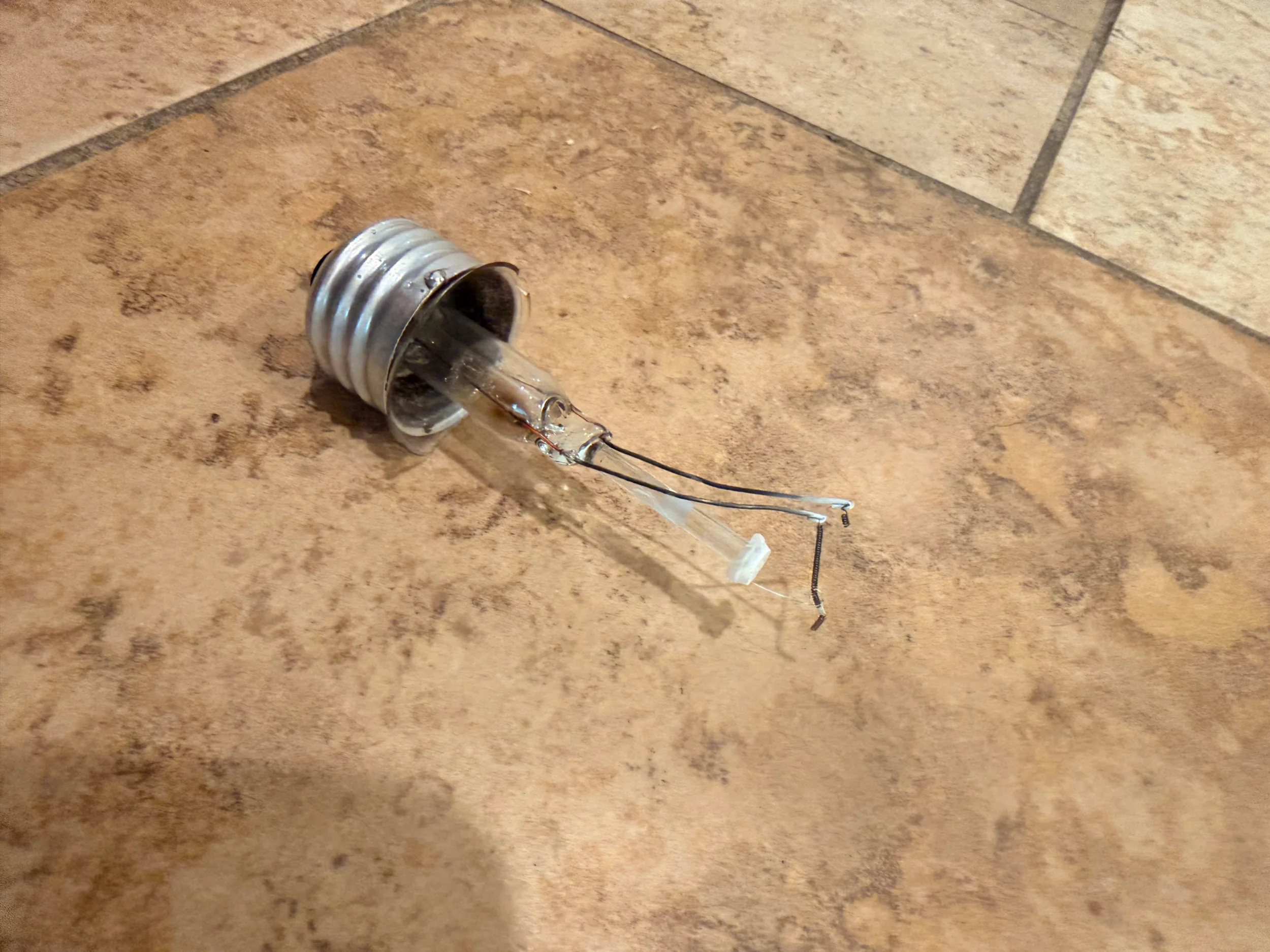
- dark streak in the bulb remnant
- the rest of the circuit is working normally
Any ideas?
I’m tempted to just replace the LED bulbs and go on with my life but it’s worrisome that this bulb burst with the switch OFF. Makes me wonder if there’s voltage leaking (voltmeter says there’s not) or maybe that thing just got wicked hot during the day and cracked at night when it cooled down? Why the LED flickering issue?
Thanks in advance for any advice! I’m trying not to burn my house down!
Here’s a pic of the bulb remnant to show the heat mark. I unscrewed this and laid it on the floor for the pic; it didn’t fall onto the floor!
I have a lighting circuit in my kitchen that includes a single switch (no dimmer) that runs 2 recessed cans in the ceiling. For 20+ years it has run incandescent R30 bulbs. In the past couple years I swapped to LED BR30s
Recently the LEDs started intermittently dimly flickering: first one, then they were fine, then the other (odd!). So I replaced one with an incandescent and they worked for the day. That night, with the switch off, the incandescent bulb burst. I found the shattered bulb glass on the floor in the morning. It didn’t explode all over far and wide; the shards just kind of fell straight down to the floor under the fixture.
More info:
- it’s been hot in the house; not our hottest, but pretty hot and muggy
- a multimeter on the switch says it’s working and voltage is between +\- 119.9 and 121.6 (is that a normal fluctuation?)
- no signs of heat in the fixtures
- dark streak in the bulb remnant
- the rest of the circuit is working normally
Any ideas?
I’m tempted to just replace the LED bulbs and go on with my life but it’s worrisome that this bulb burst with the switch OFF. Makes me wonder if there’s voltage leaking (voltmeter says there’s not) or maybe that thing just got wicked hot during the day and cracked at night when it cooled down? Why the LED flickering issue?
Thanks in advance for any advice! I’m trying not to burn my house down!
Here’s a pic of the bulb remnant to show the heat mark. I unscrewed this and laid it on the floor for the pic; it didn’t fall onto the floor!