4 High or 4 Low?

funckmaster flash

Member
Original poster
Joined
Jun 10, 2020
Messages
89
Location
New Jersey
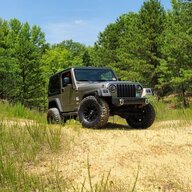
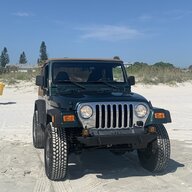
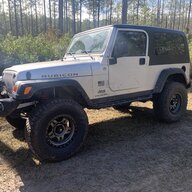
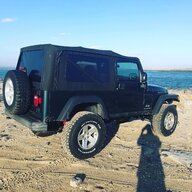
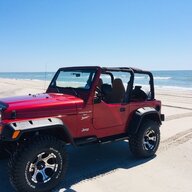
So we bought a 2005 Jeep Wrangler. We are using for going on and off the beach here in New Jersey. So yesterday was the first time we used it. So i dropped the pressure down to 16lbs put it in 4 high and just drive. I found that i maybe 4 low would have been better. Am i missing something here or should I be fine.
 
The only difference between 4 high and 4 low is the gear ratio. Meaning in 4 low your top speed will be 2.72 times slower (or maybe different depending on what transfer case you have) but you'll have that much more torque to the wheels.

And of course the biggest difference between 4 anything and 2 high is power is going to your front wheels in 4 anything.

What did you notice about driving in 4 low versus 4 high?
 
Probably need a little more information about your Jeep.
Automatic or manual transmission and what differential gear ratio you have.
IF you have an automatic you have the torque converter available to increase usable torque.
Generally on the beach... 4 HI is sufficient.
 
If you're constantly driving below about 20 mph on loose surfaces (15 mph if you have a Rubicon), 4Low is a good option.

Otherwise 4Hi is also fine at anything faster than about 10 mph. It won't hurt anything to drive it slower in 4Hi unless you start lugging the engine as you power through deep sand, obstacles, or steep inclines.

If you can keep the engine at at least 1500 RPM on flat ground or 2000 on deep sand or inclines, either range is fine. You wouldn't want to exceed about 3000 RPM for an extended period of time.

4Low is only really required when you need additional control, such as driving over obstacles like rocks, large logs, etc. or where you need extra torque, like when you get or are about to get stuck in the sand.

 
Some here will say to go to 8 or 10. I usually go to 15 and it provides a very noticeable increase in ride comfort in rough terrain but also lets me run on pavement for a while without any perceived increase in rolling resistance. Depending on your tire/wheel size much less than 8-10 you run the risk of the tire bead slipping off the wheel. Bottom line is if you felt you had sufficient traction you were good.
 
  • Like
Reactions: Steel City 06
I go go down to around 10 psi, sometimes 8.
While I run my tires at 8psi for difficult trails. 15" Procomp 69's with 35" MT/r's, I would stick to 10-12 unless you know how to re-seat a bead or carry a full-sized spare. I've haven't had an issue with mine being lower but I've seen others between 8-10psi either pop a bead or berp some air out of the tire.
 
Funny, I was just in Florida and we went offroad mostly in the sand. Guide told everyone (mostly newbies) to air down to 29. Surprisingly nobody got stuck, but it was more flat and hard packed.
I've been to Silver Lake sand dunes in Michigan and if you weren't around 10, you weren't going to make it up the tall dunes no matter what.
 
Depends on tire size, ratings and sand type. I run my local Long Island beach at 15-23 psi. I have 285/75/16 load range e. So its pretty stiff tire and don't notice much difference. I also have a Rubicon so your 2.72:1 ratio isn't too bad for sand. If you felt like it was bogging down I wouldn't be afraid to use 4L and air down some more.
 
Florida sand is often times pretty hard packed in areas where beach driving is allowed. The original NASCAR races were held on the beach in Daytona actually.

Where I live I can run at street PSI (26-28) in 2HI without getting stuck on the beach. But airing down partially to something like 16 is perfect bc it gives you more comfort but its still easy enough to drive on the road to somewhere you can air back up.
10 PSI is a very safe pressure to go to if you really need as much traction as you can get.

Also for beach driving I would recommend 4HI, in soft terrain (mud or sand) the extra torque of 4LO could cause the wheels to spin and loose traction easier. If you had issues with traction, the solution is to lower your air pressure.
 
  • Like
Reactions: Zorba
I think I will try a lower tire pressure. I thank you guys for all the help.....I am sure I will have alot more dumb questions for....please stay tunned.
 
I received an email today from Coyote Enterprises that Harry Llewellyn will be reprinting many of his articles from his many years leading offroad expeditions and teaching people the ins and outs of offroading at Southern California community colleges. This is very good news

This month's installment of "Ask the Professor" answers the question, "I’m planning a 4WD trip where there’s lots of sand. What do I do if I get stuck?"

Of particular note is the opening line of Harry's answer, which provides a starting point for determining what air pressure to run in sand:

" What I have learned through conducting more than 1.5 million injury free passenger miles worth of off-road tours is that anything above 12 PSI will get you more vertical (undesirable) than horizontal (desired) travel in tough sand."

Here is the rest, which is a simple yet ingenious method for determining the best sand air pressure for your rig and your tires:

sand.webp


"Determine how this information works for you at home in the safety of your driveway. Also note that I have only extensively tested the above for 15 inch rims. Past tours and participants have had success using the percentages shown for 16 and 17 inch rims.

The procedure is to let the air out of your tires until you are at lower, rim-percentage height. Then measure your new sand tire pressure."

https://www.coyoteents.com/ask-the-professor/
 
which beach are you on? I've been running on Brigantine and 12 PSI and 4H has been perfect