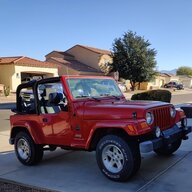
Finally changed to "high mileage" oil

Pennzoil high mileage with the red label is conventional. That's what I started using. First oil change stopped a rms leak about 75%. Second oil change and she doesn't leak a drop anymore.

Pennzoil High Mileage Conventional 10W-30 Motor Oil for Vehicles Over 75K Miles (1-Quart, Case of 6) https://www.amazon.com/dp/B006A49BWI/?tag=wranglerorg-20

View attachment 416999
Pennzoil HM is a blend, right from Pennzoils website
C341D557-AF7D-4964-A581-57781DAD6A7A.webp
 
Pennzoil HM is a blend, right from Pennzoils website
View attachment 417005

It's not a synthetic blend as far as the oil goes. It has seal conditioner and stop leak additives. Nothing to the base stock of the oil tho such as regular synthetic blend and full synthetic oils. That's different oil altogether. It's getting to be semantics with the labeling of "blend".
 
Pennzoil HM is a blend, right from Pennzoils website
View attachment 417005

Well..hahahaha https://www.walmart.com/ip/Pennzoil...6PDnn5NPcHDpDMvU8khoC2ecQAvD_BwE&gclsrc=aw.ds

Pennzoil High Mileage SAE 10W-30 Motor Oil is engineered for cars that have accumulated more than 75,000 miles, particularly those that are experiencing oil leaks and oil burn off. Engines with higher mileage tend to experience more wear than new engines. As your car ages, leaks may develop and cause higher oil consumption and burn off which is why your engine might be needing frequent top-offs. Severe oil consumption and oil burn off may also cause other issues, leaving deposits on the internal parts of your engine. This could be due to dry or cracked seals.
Pennzoil High Mileage motor oil is enhanced with an outstanding combination of special conditioning seal agents and additives to help stop leaks from aging seals and reduce the oil consumption that is typical of older and worn engines.
  • Conventional High Mileage 10W-30 engine oil specially formulated for new or late model SUVs, light vans and trucks, and passenger cars
  • Recommended for vehicles with over 75,000 miles
  • Helps prevent sludge and other damaging deposits
  • Contains seal conditioning agents for dry or cracked engine seals to help reduce leaks and oil consumption
  • Provides proven wear protection for engine parts
  • Meets or exceeds the following OEM requirements: FCA MS-6395
  • Meets or exceeds the requirements of the following industry specifications: API SP and all previous categories; ILSAC GF-6A
  • For a full listing of equipment approvals and recommendations, please consult your local Shell Technical Helpdesk

 
  • Like
Reactions: mikespine
Well..hahahaha https://www.walmart.com/ip/Pennzoil...6PDnn5NPcHDpDMvU8khoC2ecQAvD_BwE&gclsrc=aw.ds

Pennzoil High Mileage SAE 10W-30 Motor Oil is engineered for cars that have accumulated more than 75,000 miles, particularly those that are experiencing oil leaks and oil burn off. Engines with higher mileage tend to experience more wear than new engines. As your car ages, leaks may develop and cause higher oil consumption and burn off which is why your engine might be needing frequent top-offs. Severe oil consumption and oil burn off may also cause other issues, leaving deposits on the internal parts of your engine. This could be due to dry or cracked seals.
Pennzoil High Mileage motor oil is enhanced with an outstanding combination of special conditioning seal agents and additives to help stop leaks from aging seals and reduce the oil consumption that is typical of older and worn engines.
  • Conventional High Mileage 10W-30 engine oil specially formulated for new or late model SUVs, light vans and trucks, and passenger cars
  • Recommended for vehicles with over 75,000 miles
  • Helps prevent sludge and other damaging deposits
  • Contains seal conditioning agents for dry or cracked engine seals to help reduce leaks and oil consumption
  • Provides proven wear protection for engine parts
  • Meets or exceeds the following OEM requirements: FCA MS-6395
  • Meets or exceeds the requirements of the following industry specifications: API SP and all previous categories; ILSAC GF-6A
  • For a full listing of equipment approvals and recommendations, please consult your local Shell Technical Helpdesk


So, Walmart says it is Conventional and Pennzoil says it is a Synthetic Blend. :unsure:
 
we talked about this in another thread, but I believe Pennzoils 10w30 and 10w40 is still conventional, while the other blends (5w20, and 5w30) are blends. If you buy a 5w20/5w30 bottle it will say synthetic blend, while the 10w30 or 10w40 bottle does not. Even the PDS sheets say blend for the 5'sand nothing on the 10's
 
At this point, I wouldn't trust any text on a seller's webpage (OhReally :p , Walmart, Amazon) because they may not update their webpage accurately (or at all). Even the manufacturer's web pages are unclear. If it doesn't say "Conventional" right on the bottle you have in your hand, it probably isn't.

 
So, Walmart says it is Conventional and Pennzoil says it is a Synthetic Blend. :unsure:
Personally I’m taking Pennzoils answer
we talked about this in another thread, but I believe Pennzoils 10w30 and 10w40 is still conventional, while the other blends (5w20, and 5w30) are blends. If you buy a 5w20/5w30 bottle it will say synthetic blend, while the 10w30 or 10w40 bottle does not. Even the PDS sheets say blend for the 5'sand nothing on the 10's
4DC4535A-5BEC-4177-B835-8B2DD8753520.webp

It's not a synthetic blend as far as the oil goes. It has seal conditioner and stop leak additives. Nothing to the base stock of the oil tho such as regular synthetic blend and full synthetic oils. That's different oil altogether. It's getting to be semantics with the labeling of "blend".
I’ve no idea about oil base stocks and whatnot but if that’s true that’d be really cool.

I might have to give Pennzoil an email and see if I can get a definite answer, though I have a feeling they’ll just read me the bottle.
 
At this point, I wouldn't trust any text on a seller's webpage (OhReally :p , Walmart, Amazon) because they may not update their webpage accurately (or at all). Even the manufacturer's web pages are unclear. If it doesn't say "Conventional" right on the bottle you have in your hand, it probably isn't.

My take is that if it doesn't say Synthetic or Synthetic Blend on the bottle, it's likely Conventional. Other than the Super Tech that @Boogieman posted, I'm not sure I've seen a bottle labeled Conventional. Are there other examples where the bottle states it is Conventional?
 
My take is that if it doesn't say Synthetic or Synthetic Blend on the bottle, it's likely Conventional. Other than the Super Tech that @Boogieman posted, I'm not sure I've seen a bottle labeled Conventional. Are there other examples where the bottle states it is Conventional?

Castrol GTX (NOT the Ultra-Clean which is a blend)
I guess it doesn’t say directly on the bottle but it is listed as a conventional on Castrols site.
 
Castrol GTX (NOT the Ultra-Clean which is a blend)
I guess it doesn’t say directly on the bottle but it is listed as a conventional on Castrols site.

That's my point....I think if the bottle doesn't say anything, it is likely conventional.
 
  • Like
Reactions: mikespine
My point, above, was that if it doesn't say something specific on the bottle, you know nothing. If you specifically want conventional oil in your TJ, are you going to guess at the contents of the bottle, or are you going to verify?
 
My point, above, was that if it doesn't say something specific on the bottle, you know nothing. If you specifically want conventional oil in your TJ, are you going to guess at the contents of the bottle, or are you going to verify?

But how do you verify if conventional oil doesn't say it's conventional on the label? Every example of conventional that's been shown, the label is blank (other than Super Tech). But, I guess we've beat this horse way past it's death!
 
  • Like
Reactions: James9100