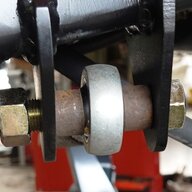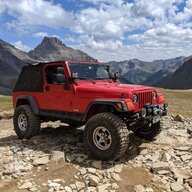
Modifying Currie control arms to double adjustable

If you thread your own bars I would put some flats on them as well. That is the one shortcoming of the Savvy arms in my opinion.
I did that when I rebuilt these arms originally... Well on the uppers. They are double adjustable. Blaine told me why they don't have flats and how to work around it, but I still find them useful.
 
  • Like
Reactions: Jezza
Sorry, I said one to two is different than zero to one. Probably wasn't clear and it don't matter. Thanks for at least responding.
 
Sorry, I said one to two is different than zero to one. Probably wasn't clear and it don't matter. Thanks for at least responding.
But it's really not... Threading a hole is about as basic as it comes. You want to get fancy and start doing variable helix, or multi axis thread whirling, sure, but running a straight walled 2B thread should be pretty easy for anyone who's considering doing it on a production basis.

Trying to do it in your garage with a Chinese bench top lathe? Ok, maybe.
 
Sorry, I said one to two is different than zero to one. Probably wasn't clear and it don't matter. Thanks for at least responding.
Next fucking time you respond to me without a quote lands you on the ignore list. Now you know how to get what you want.
 
  • Haha
Reactions: D M
I did that when I rebuilt these arms originally... Well on the uppers. They are double adjustable. Blaine told me why they don't have flats and how to work around it, but I still find them useful.

In what way? Just holding the body stationary while you tighten the jam nuts? That's the only thing I can come up with that flats would help with, since I only adjust them by hand. And if I do the jam nuts right, I usually don't even have to hold it still.
 
In what way? Just holding the body stationary while you tighten the jam nuts? That's the only thing I can come up with that flats would help with, since I only adjust them by hand. And if I do the jam nuts right, I usually don't even have to hold it still.
Get the threads muddy and let the clay suck the oil out of the anti seize so it turns into a sticky mess. Having a wrench flat is really nice, because mine don't always turn by hand easily.
 
  • Like
Reactions: Irun
Get the threads muddy and let the clay suck the oil out of the anti seize so it turns into a sticky mess. Having a wrench flat is really nice, because mine don't always turn by hand easily.

OK, I can see that. Still haven't wheeled outside Colorado where the mud is mostly just brown water.

I'm not sure what I'd do in that case though...other than relearn how to use DA arms. Being able to turn by hand is my go to method of making sure there's no binding.
 
  • Like
Reactions: Tob
Takes a fair bit of horsepower to run a 1" tap in for steel.
Yes it would. Guess I wasn't clear enough, spin it a few turns by hand with the tailstock center in to get it started straight, then finish it off by hand. If you wanted to power tap there would be no need for a center.
 
Chatter, deflection, all caused by the same circumstance and only solved one way.
Multiple ways to solve each of those actually. Deflection isn't much of a concern for this problem, as it will deflect the same amount at the beginning of the threads as it does the end, possibly even more considering the stickout is greater at the start, but not a lot of tool pressure for threading ops.

Plenty of ways to deal with chatter, sfm, number of passes, infeed angles and techniques, anti-vibe bars, steady rest, high pressure coolants, holding a piece of wood through the door against the workpiece, etc.
 
I hate threading on the lathe. I would probably thread mill them just to avoid it.
 
Get the threads muddy and let the clay suck the oil out of the anti seize so it turns into a sticky mess. Having a wrench flat is really nice, because mine don't always turn by hand easily.
I wheel in a mix of trails and soil, with a significant amount of clay. In spite of the fact that I disassemble each double adjustable control arm and apply liberal amounts of anti-seize, when I go back to do maintenance, there is surprisingly little left. Until this conversation about clay came up, I was wondering why that was the case. Mystery solved!
 
  • Like
Reactions: Mike_H
OK, I can see that. Still haven't wheeled outside Colorado where the mud is mostly just brown water.

I'm not sure what I'd do in that case though...other than relearn how to use DA arms. Being able to turn by hand is my go to method of making sure there's no binding.
I move the bolts. If they spin freely, the arm isn't binding.
 
  • Like
Reactions: Tob and Okcpuckfan
I was thinking more along the lines of tightening the jam nuts. I'm sure it can be done simply with a pipe wrench or something once they have been dragged over a few rocks and the finish is gone, but it's difficult to hold them and not burr them all up when they are shiny.
 
I was thinking more along the lines of tightening the jam nuts. I'm sure it can be done simply with a pipe wrench or something once they have been dragged over a few rocks and the finish is gone, but it's difficult to hold them and not burr them all up when they are shiny.
That actually is pretty easy to do. They both spin the same way, so you bias the joints that way, then snug one side down, work the other side, and go back and forth. It doesn't take much to keep that tube from spinning.
 
@Mike_H, at what point will it be cheaper to sell the SA and buy some DA? If you have to buy the tap? If you booger one up?
 
I move the bolts. If they spin freely, the arm isn't binding.
fair enough. I guess I'm just used to my adjustments being about 8:1 after-the-fact pinion angle adjustments with bolts already torqued vs initial setup. 😒
 
That actually is pretty easy to do. They both spin the same way, so you bias the joints that way, then snug one side down, work the other side, and go back and forth. It doesn't take much to keep that tube from spinning.
Ultimately that's what I ended up doing. I did have a few that wanted to rotate as I tightened them.
 
@Mike_H, at what point will it be cheaper to sell the SA and buy some DA? If you have to buy the tap? If you booger one up?
I thought I laid that out in the first post...I figure I could sell em for 7-800 dollars. New ones are about 1300 but the time they are shipped, so that's a 5-600 dollar cost differential. I can buy the housings and jam nuts for less than 200, taxes and shipping included. A tap, if needed, is about 65 bucks. I won't bugger one up. It's not difficult to do what I'm proposing