I had the exact same problem with my NV3550.
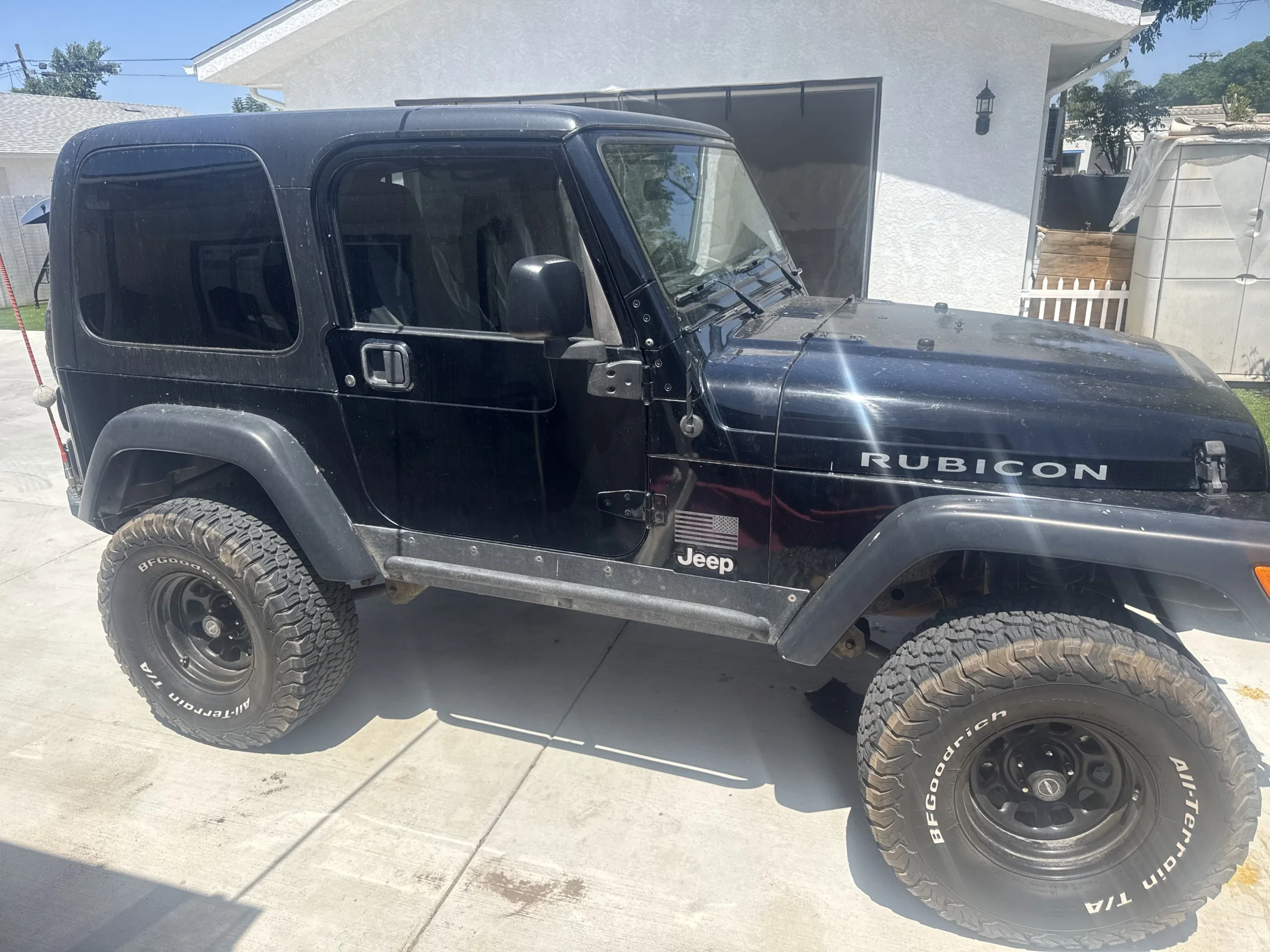
I’ve owned my 2001 Wrangler since new and always used Mopar-spec fluid. Over many years, the shifting gradually became stiffer and stiffer until I practically had to yank it into gear — especially when cold and particularly coming out of 3rd gear.
Once the Jeep warmed up, it would improve somewhat.
Like many people, I tried several things based on forum recommendations:
- Switched to Red Line MTL
- Did a kerosene flush
- Followed the common “rear wheels off the ground, run through gears at idle” procedure
Those things helped a little, but I was FINALLY able to get the transmission shifting smoothly again a few months ago. Along the way I discovered a few interesting things.
(Some of the below is my personal opinion/theory, so take it for what it’s worth.)
Observations
1) The “box of rocks” NV3550 noise
Since the Jeep was new, the transmission always made the familiar “box of rocks” rattling sound while idling in neutral.
I brought it to the dealer early on and was told this was normal NV3550 behavior. Every other Jeep I rode in with an NV3550 seemed to sound the same, so I accepted it as a quirk of the transmission.
2) I could never get the full 2.1 qt capacity into the transmission
Every fluid change, I drained it normally and refilled through the fill plug until fluid ran back out.
But I was NEVER able to get the full stated 2.1 qt capacity into the transmission.
I assumed some old oil simply remained trapped in the case after draining.
3) I think the shift rails/fork bushings were gummed up
This video basically describes what I think was happening in my transmission:
View: https://youtu.be/a80xPwmqBv4?si=Yc52z3AbUfumq_8t
My theory is that the shift fork bushings and/or shift rail supports had become coated with varnish and grit over time, causing the rails to drag.
I also found Chrysler TSB 21-003-01 (REV A), which discusses high shift effort related to the detent plunger.
What I Actually Did
Step 1 — Removed the shifter and detent components
I:
- Drained the transmission
- Removed the transmission access panel
- Removed the shift tower
- Removed the detent plug, spring, and plunger
Interestingly, with the detent plunger removed, the shifter was STILL very stiff.
The only difference was the shifter no longer had the “snick-snick” detent feel between gears.
So personally, I don’t think the detent plunger was my primary issue.
Step 2 — Aggressive kerosene flushing
I poured an entire gallon of kerosene into the transmission through the shift tower opening.
Yes — a gallon. Nearly double the transmission capacity.
My goal was to get the internals completely flooded and splashing aggressively.
I then:
- Put the transfer case in neutral
- Started the Jeep
- Ran the transmission in 4th and 5th gear at ~2500 RPM for about an hour
Every few minutes I worked the shifter through all gears repeatedly.
Afterward I drained the kerosene.
The first drain came out light brown.
I repeated this exact process two more times.
By the third flush:
- The kerosene drained nearly clear
- The shifting had started improving noticeably
Step 3 — Cleaned the shift rail area
After the second flush, I sprayed carb/choke cleaner into:
- the detent bore
- the shift rail area
- the front rail support area
While doing this, I repeatedly worked the shifter back and forth.
My goal was to dissolve as much varnish and sludge as possible from the shift rail supports.
Step 4 — Drying the transmission
After the final kerosene flush, I:
- Used strips of shop towel through the drain hole to soak up residual kerosene
- Used a heat gun on LOW to blow warm air through the transmission for about an hour
Probably overkill, but I wanted as little kerosene remaining as possible.
Step 5 — Refilled with Red Line MTL
I initially filled through the fill plug with Red Line MTL.
Even then, I STILL could not get the full 2 quarts in before fluid ran out the fill hole.
I ran the transmission again for about 30 minutes through the gears.
At this point:
- shifting was dramatically smoother
- BUT the familiar neutral rattle was still present
Step 6 — Final refill from the TOP
I then:
- Drained the fluid one final time
- Reinstalled the detent parts using moly grease per the TSB
- Measured EXACTLY 2.1 quarts of Red Line MTL
- Filled the transmission THROUGH THE SHIFT TOWER OPENING instead of the fill plug
This ensured the full factory fluid capacity was actually in the transmission.
Results
Immediately afterward:
- The shifter felt almost like new again
- Cold shifting improved massively
- The stiffness was basically gone
- AND the “box of rocks” neutral rattle completely disappeared
That last part shocked me.
My Personal Theory
I suspect the NV3550 may have a design quirk where filling through the side fill plug does not actually allow the full 2.1 qt capacity to be reached.
If true, that could mean many NV3550s have unknowingly operated slightly low on fluid for years.
I think the combination of:
- slightly low fluid level
- age
- varnish buildup
may contribute to the stiff shifting these transmissions develop over time.
Time will tell if the issue returns, but from now on I will only fill mine through the shift tower opening using the full measured capacity.
Was all of this overkill? Probably.
But after years of progressively worsening shifting and trying multiple fixes that only partially worked, this was the first thing that truly solved it for me.