Planned 3" lift: which Rancho shocks, 2.5" or 3.5"?

Farmergreg

The work will set you free
Original poster
Supporting Member
Ride of the Month Winner
Joined
Mar 25, 2018
Messages
3,650
Location
WC Indiana
I wanted to take advantage of the Rancho promo that ends in July to add to the build pile.
Planned spring lift is 3" as I'm doing a low pro tummy tuck. 5000X are available in 2.5" or 3.5" lift.
Looking for recs from the forum please.
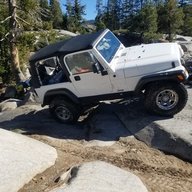
 
tough to say until you cycle your suspension to see what the limiter will be. If your tires rub the inner fender wells at full stuff, then you need to add more bumpstop, in which case you may be able to run the longer shock for more droop.
 
I wanted to take advantage of the Rancho promo that ends in July to add to the build pile.
Planned spring lift is 3" as I'm doing a low pro tummy tuck. 5000X are available in 2.5" or 3.5" lift.
Looking for recs from the forum please.
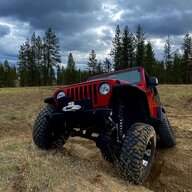
I think @jjvw said somewhere that he thinks the Rancho 5000X are a little long for their advertised lift recommendation. And often you see them advertised for 2-3" and 3-4" or other times you see 2.5" and 4". FWIW, hopefully jjvw will chime in on this topic. For my 2.5"OME, with 3" up front and 2.5" in rear, I run the one's advertised as 2-3" or 2.5" and I think they work well.
 
  • Like
Reactions: KCsTJ
I think @jjvw said somewhere that he thinks the Rancho 5000X are a little long for their advertised lift recommendation. And often you see them advertised for 2-3" and 3-4" or other times you see 2.5" and 4". FWIW, hopefully jjvw will chime in on this topic. For my 2.5"OME, with 3" up front and 2.5" in rear, I run the one's advertised as 2-3" or 2.5" and I think they work well.
Rancho seems to run long across the board. Also, any shock length recommendations do not take into consideration the presence of a body lift or tire size, both which change the minimum required amount of front bump stop extension. No manufacturer or supplier can know how your combination of parts have changed your Jeep. And any informed guesses are conservative, at best. Meaning there is too much bump stop extension and a loss of travel.

The bottom line is that if the goal is to have all of your modifications compliment each other, then you need to understand how the pieces in the system interact with each other. This means knowing how and where to measure.
 
We can use my Jeep both as an example of how you can't always trust the recommended shock lengths and how you can do better than simply follow recommendations.

I am running Rancho RS55255 RS5000X up front. 15.69" compressed, 10.73" travel. They recommend this for a 2.5" lift. I'm not saying this is right or wrong. I just don't want to think it through that much in order to figure out an end result. :)

Yet I am using it on mine with a 4" spring lift, 1.25" body lift, 33" tires, 1.375" front bump stop extension and a raised upper mount. This is giving me a nice 6.5" of up, 4" down and nearly all of the available shock travel without unseating the springs. This an example of how measuring, fine tuning and putting all the parts into phase with each other will allow you to make the most of what you have available.
 
Last edited:
  • Like
Reactions: StG58
It's going to be a winter shop project, I'm in the gathering parts stage.
Sounds like I should wait until the suspension is cycled to figure it out.
 
It's going to be a winter shop project, I'm in the gathering parts stage.
Sounds like I should wait until the suspension is cycled to figure it out.
My suggestion is to determine your minimum amounts of bump stop extension for the front and rear, meaning cycle the suspension without shocks/jounces installed and with the tires on. Then measure the space between the shock mounts both fully compressed and fully extended. Your ideal shock lengths will be near those measurements with the travel split about 50/50 from normal ride height. If needed, add more bump stop extension to protect the shocks.

More often than not, the front bump stop extension is to keep the tires out of the steel fenders and rear bump stop extension is to protect the shocks from over compressing.

It's a puzzle with moving parts, but it isn't too difficult to solve once you begin to see how the pieces move together.
 
My suggestion is to determine your minimum amounts of bump stop extension for the front and rear, meaning cycle the suspension without shocks/jounces installed and with the tires on. Then measure the space between the shock mounts both fully compressed and fully extended. Your ideal shock lengths will be near those measurements with the travel split about 50/50 from normal ride height. If needed, add more bump stop extension to protect the shocks.

More often than not, the front bump stop extension is to keep the tires out of the steel fenders and rear bump stop extension is to protect the shocks from over compressing.

It's a puzzle with moving parts, but it isn't too difficult to solve once you begin to see how the pieces move together.

I'm soaking in all this good advice!

I have a 1.25" body lift planned and will be running the 31" tires for another year at least then go to 33's which would change bump stops and possibly the shock length.
 
  • Like
Reactions: JMT
I'm soaking in all this good advice!

I have a 1.25" body lift planned and will be running the 31" tires for another year at least then go to 33's which would change bump stops and possibly the shock length.

You are seeing it. Everything effects everything else, sometimes. :)

The body lift will reduce the minimum required bump stop. A larger tire will increase the minimum required bump stop. This mostly applies to the front factory fenders. The rear wheel opening is larger, which means the rear compressed shocks are almost always the first limit to up travel.

The bump stops need to be extended in order to prevent the first limiting thing from crashing into the other thing.
 
Last edited: