Question for battery gurus

Moab

TJ Expert
Original poster
Supporting Member
Joined
Dec 15, 2018
Messages
3,255
Location
Bohol, Phillipines/El Segundo, California
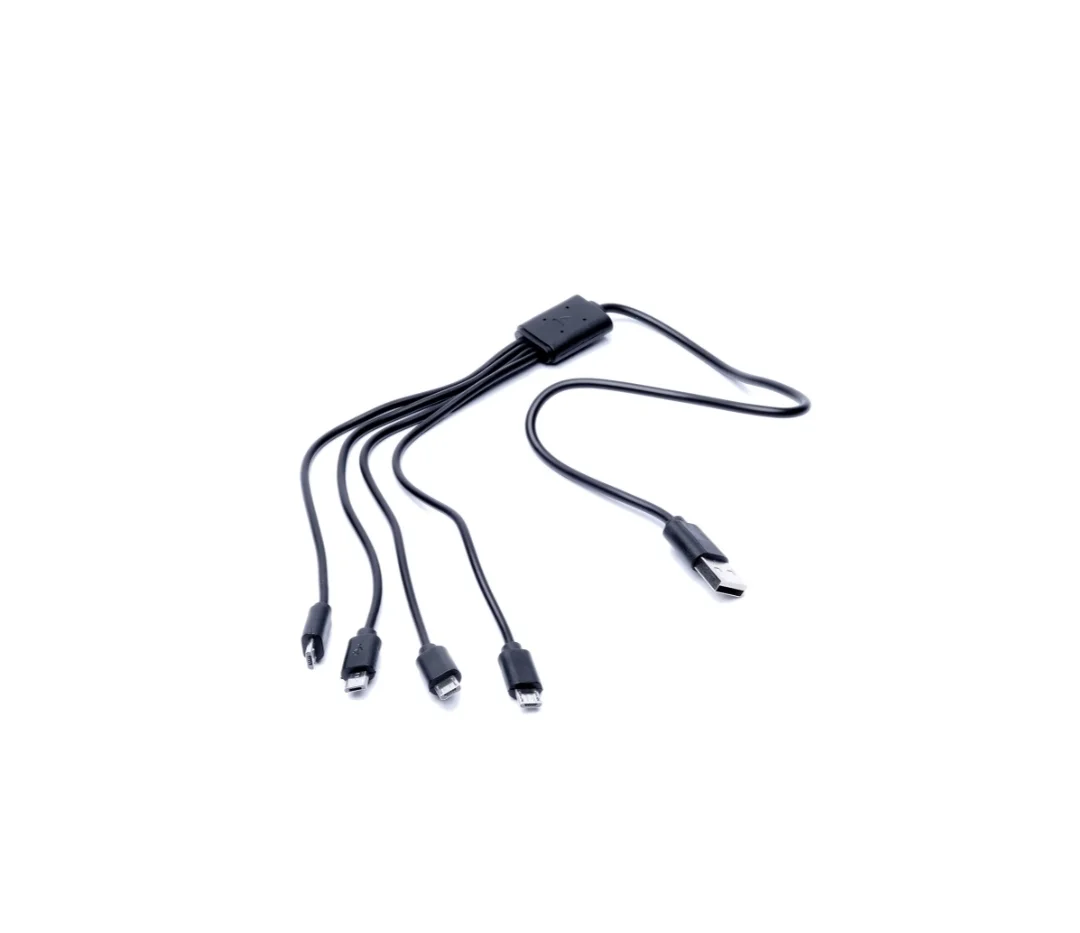
I want to use this:

Screenshot_20220413-062716_Amazon Shopping.webp


With this:

Screenshot_20220413-061001_Chrome.webp


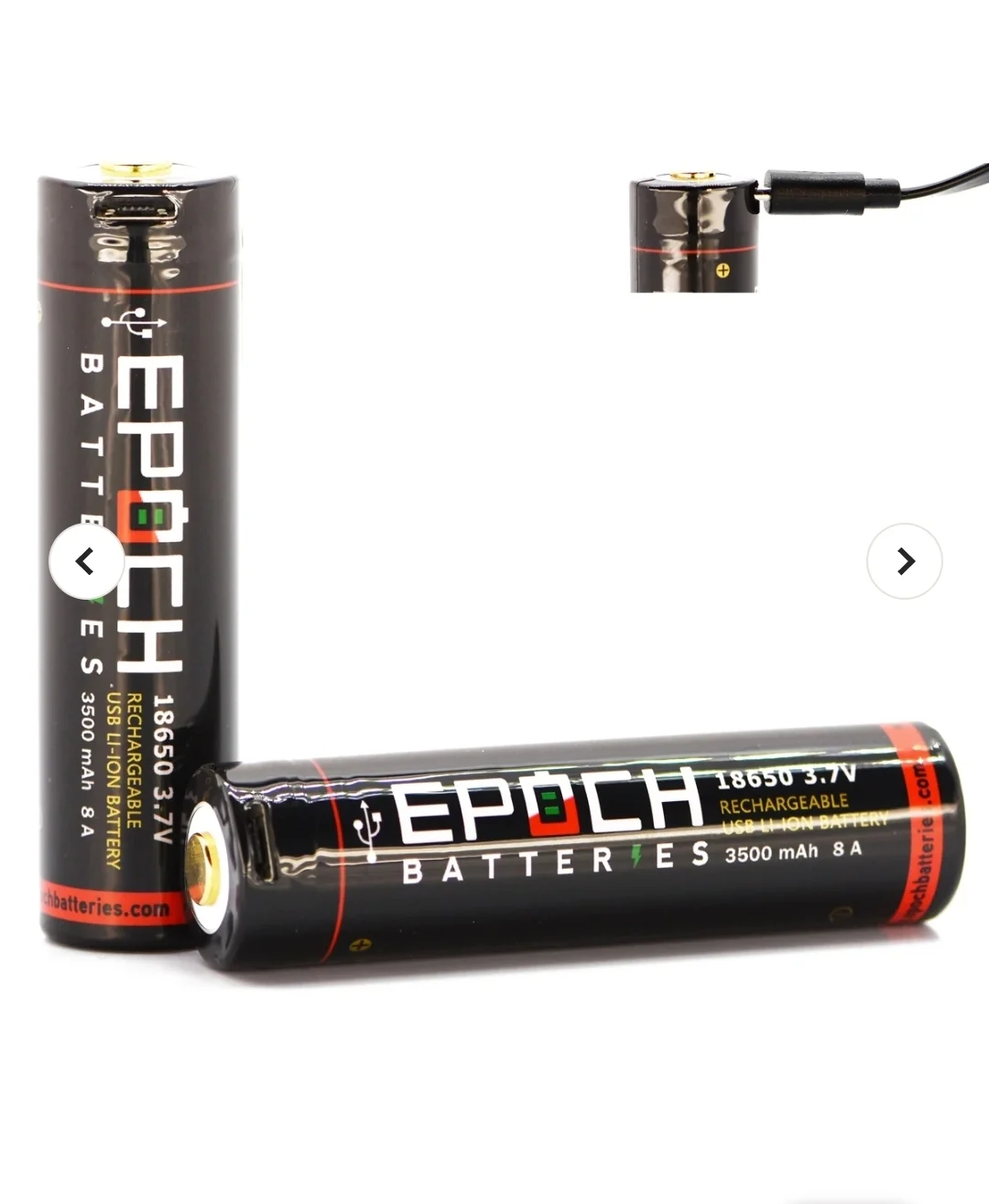
To power 4 of these:

Screenshot_20220413-061106_Chrome.webp


I know that cable is only usb 2.0. Which I think slows my charge time.

Will these batteries charge any slower when charging four of them vs charging one at a time? What about if I only charged two at a time? I can of course find a single cable that is 3.0. Would charging them one at a time with a usb 3.0 cable be fastest?

I'm considering my options for hiking/bugging out. I used to try to keep all my devices (flashlights, headlamps, weapon lights, radios etc.) AA type batteries. Alkaline and rechargeable. So that i only had to carry one battery charger. And i could use alkalines if thats all i could find. And AAs are easy to find.

But nowadays most weapon lights and flashlights run off of these larger 18650 batteries. So i was forced into carrying two chargers. One for my AAs and one for my 18650s. But then i discovered these usb port 18650s. That dont need a charger. Just a usb cable.

What are the drawbacks to these usb port rechargeable batteries if any? Is my thinking sound here about chargers?

I'll still have to carry my AA charger. As some of my devices take AAs and AAAs. The AA charger does both. But it also has a usb charging out port. So it acts like a power bank itself too. Its Goalzero product. And very small. Whereas the 18650 charger is pretty bulky.

Thanks for any help.

 
@suicideking is kinda right. While 18650 cells are pretty bulletproof, lipo and tend to overheat and catch fire. That's what's in the booster pack.

With respect to your specific question each usb port on the booster pack is probably limited to 2.1A or around that, no matter how many times you split it up the total will still just be the rated output of one port. Those little usb things draw about 0.5A so you can charge four on a 2.1A usb port and not catch anything on fire.

I think getting high quality 18650s is money better spent but I see why you'd go the direction you are asking about. I just wouldn't want the extra cost and all the extra circuit boards sitting around. You might look into a modern hobby charger. You can get ultra light cell holders and chargers that can do everything that are a fraction of the size of a regular AA/AAA charger. They also take a wide variety of input voltages, you could easily use one on a solar array. You have a modular solution that isn't tied to one battery type. XT60s are what I use for connectors, gold plated and cost almost nothing. I even have all my 12V accessories in the Jeep wired with them. Just another option to consider.
 
@suicideking is kinda right. While 18650 cells are pretty bulletproof, lipo and tend to overheat and catch fire. That's what's in the booster pack.

With respect to your specific question each usb port on the booster pack is probably limited to 2.1A or around that, no matter how many times you split it up the total will still just be the rated output of one port. Those little usb things draw about 0.5A so you can charge four on a 2.1A usb port and not catch anything on fire.

I think getting high quality 18650s is money better spent but I see why you'd go the direction you are asking about. I just wouldn't want the extra cost and all the extra circuit boards sitting around. You might look into a modern hobby charger. You can get ultra light cell holders and chargers that can do everything that are a fraction of the size of a regular AA/AAA charger. They also take a wide variety of input voltages, you could easily use one on a solar array. You have a modular solution that isn't tied to one battery type. XT60s are what I use for connectors, gold plated and cost almost nothing. I even have all my 12V accessories in the Jeep wired with them. Just another option to consider.
Thank you so much, pagrey. I really appreciate your time.

I'm really not as stupid as I sound here. Lol. I promise. I know a little bit about dc power. I've worked on dc powered gps trackers. And run rc helicopters. But most of my experience was before lithium ion was big on the market. So a few of the terms are confusing me. Much of my experience is with nimh batteries.

Basically what I'm trying to do is come up with the lightest weight and smallest size charging method for my AA, AAA and 18650 batteries. To carry backpacking.

I've limited myself to AA/AAA nimh batteries in the past. As the devices that take them would also take alkaline as well. And they are the most common battery to try to replace on the road. I've been using a small 10w(?) solar panel to charge AA and AAA batteries in this battery charger:

https://www.goalzero.com/shop/backpacking-hiking/guide-10-plus-power-bank/
(This battery charger is quite small. And has usb power out. So I could technically charge the 18650 batteries with it. If they had the charger built in and the usb power in port. But it sounds like you don't trust those. I do want to build a safe system.)

Most modern flashlights and weapons lights use 18650s. So I've started incorporating those in. As you can't get away with just using AAs anymore. So I have two Fenix weapon lights that double as handhelds. Which is hard to find. As most weapon lights go for high power and short battery life. So I'm kind of stuck with these:

https://www.fenixlighting.com/product/pd35-tactical-edition-fenix-flashlight/
You stated:

"While 18650 cells are pretty bulletproof, lipo and tend to overheat and catch fire. That's what's in the booster pack."

I think by "lipo" you mean the lithium ion batteries? And by "booster pack" you mean the battery bank i posted? And that I shouldn't be using either?

And...

"I just wouldn't want the extra cost and all the extra circuit boards sitting around."

Would these batteries be better? ( I think your talking about the other batteries being to cheap(?) Or do you mean I shouldn't use the batteries with usb power ports at all?

https://www.batteryjunction.com/streamlight-usb-18650-2pk.html
My next question was how do you connect that charger to batteries? And is that something i would only hook directly to my solar panels? Or does this have to be hooked up to a wall outlet? That one has me stumped. My apologies.

Also...

"You can get ultra light cell holders and chargers that can do everything that are a fraction of the size of a regular AA/AAA charger."

Can you give me a link?

Sorry to sound so dense. But thats why i posted pictures above. Lol. If i can see it via links - in pics. Its easier for me to understand.
 
I'm really not as stupid as I sound here. Lol. I promise. I know a little bit about dc power
I know, I've read your posts, wouldn't have commented if I didn't think it was something you could tackle.

I think 18650 raw cells are better, more raw current capacity and generally more robust without the extra circuit board. Opps I dropped it in the water and it's still fine, I need to short it out and start a fire and still use it in my scope, done. That kind of thing. The usb ones are fine for simple plug and play but as far as utility and serviceability there's allot of little circuits in there for just a simple battery.

The cell holders are like the ones at All Electronics. The way I'd do it you have a DC source, at home a 12V supply, with a vehicle the accessory port, with a solar cell the power output. Then you connect that to the charger, a hobby grade device, there are a ton out there. The one I linked to is an inexpensive one that works. Then you connect that to a battery or series of batteries. If you do multiple you probably need balance plugs. There's soldering involved if you want to do multiples. It's not over the top but if you learn it you will be miles ahead.

One upside to my suggestion, say you have that usb 3500mAh 18650, it take 7 hours to charge at 500mAh usb. Charge it with a hobby grade charger and you can do up to 3-4 amps and be done in an hour depending on the cells specs, less if you are in a hurry. It gives you the option to really use your batteries and understand how they work.

It sounds complicated, once you get it you'll see why I'm suggesting it. Again, nothing wrong with what you were getting at originally if you don't want to go down this particular rabbit hole. I enjoy this stuff so it's not so bad for me.