I like the idea. Just trying to find a more convenient mounting location.Not with the door closed there's a little junk basket on the door panel that takes all that room up.

You are using an out of date browser. It may not display this or other websites correctly.
You should upgrade or use an alternative browser.
You should upgrade or use an alternative browser.

TJ Cutting / Steering Brakes
- Thread starter B00mb00m
- Start date


NO, unless you want to buy him a crate of backing plates since he will break the anchor pin off every time he does a front dig and locks down one side in the rear.I really admire your approach but beyond the realm of what I'd be doing... I'm sure you thought of this but independent E-brake control?
BTW- on the ball valve thingy. What I had in mind is you close the ball valve to one side before you push down on the pedal. That way you can modulate the pressure to the side you need to hold. 
B00mb00m
The Church of Cutting Brakes of Atlas-Front Digs
Original poster
Supporting Member
Ride of the Month Winner
Ahhhh glad I didnt try it! Already replaced the backing plate once this year.NO, unless you want to buy him a crate of backing plates since he will break the anchor pin off every time he does a front dig and locks down one side in the rear.
B00mb00m
The Church of Cutting Brakes of Atlas-Front Digs
Original poster
Supporting Member
Ride of the Month Winner
That is a freaking GREAT idea!!! Cool that I already bought two sets of handles.BTW- on the ball valve thingy. What I had in mind is you close the ball valve to one side before you push down on the pedal. That way you can modulate the pressure to the side you need to hold.
for a minute i thought it was to feather the E brake on 1 side.
but y'all are talkin about interrupting the line so only only 1 wheel receives pressure from the sys, when engaged?
hmmm.
but y'all are talkin about interrupting the line so only only 1 wheel receives pressure from the sys, when engaged?
hmmm.
Takes 3 valves. 1- front circuit to stop from applying front brakes. The other 2 go on each rear line. Ideally they would be electric solenoid valves, simple easy install that way.for a minute i thought it was to feather the E brake on 1 side.
but y'all are talkin about interrupting the line so only only 1 wheel receives pressure from the sys, when engaged?
hmmm.
Line locks or roll control valves need to be investigated. They are designed to hold pressure after you push the brake pedal down to stop the rig from moving on the start line for drag racing. I can't get clear in my head if they need to be mounted backwards.
made me look.Takes 3 valves. 1- front circuit to stop from applying front brakes. The other 2 go on each rear line. Ideally they would be electric solenoid valves, simple easy install that way.
Line locks or roll control valves need to be investigated. They are designed to hold pressure after you push the brake pedal down to stop the rig from moving on the start line for drag racing. I can't get clear in my head if they need to be mounted backwards.
IDK, i see 1 mention of piping it backwards in a CJ on a Summit Racing product review, no real details.
is there any difference between locking pressure in a line vs a direct push from the MC. could the MC cause a blow back effect a trapped pressure wouldn't, does that even make sense?
then i see crap on Holleys info that says 60s max on the solenoids or they can cook fuses.
There are continuous duty versions. The reason I think they may have to be mounted backwards is I saw mention of some of them having a check valve that lets you apply more pressure after they are applied.made me look.
IDK, i see 1 mention of piping it backwards in a CJ on a Summit Racing product review, no real details.
is there any difference between locking pressure in a line vs a direct push from the MC. could the MC cause a blow back effect a trapped pressure wouldn't, does that even make sense?
then i see crap on Holleys info that says 60s max on the solenoids or they can cook fuses.
B00mb00m
The Church of Cutting Brakes of Atlas-Front Digs
Original poster
Supporting Member
Ride of the Month Winner
Ahhhh yes that's why no one does it, you'd have to shutoff the front brakes and the one rear you don't want to use.Takes 3 valves. 1- front circuit to stop from applying front brakes. The other 2 go on each rear line. Ideally they would be electric solenoid valves, simple easy install that way.
Line locks or roll control valves need to be investigated. They are designed to hold pressure after you push the brake pedal down to stop the rig from moving on the start line for drag racing. I can't get clear in my head if they need to be mounted backwards.
I've never been where that would be an issue.Ahhhh yes that's why no one does it, you'd have to shutoff the front brakes and the one rear you don't want to use.
never monday
TJ Addict
This makes no sense to me.Ahhhh yes that's why no one does it, you'd have to shutoff the front brakes and the one rear you don't want to use.
Unlock the rear diff, lock the pivot tire with the brake and dig around....
The open rear will help push. At least thats how it works in our soft goo around here.
B00mb00m
The Church of Cutting Brakes of Atlas-Front Digs
Original poster
Supporting Member
Ride of the Month Winner
Also true, the other wheel spinning on open diff can help but I thought most people did the front dig in fwd only? I'm not experienced in this.... Just installing atlas now.This makes no sense to me.
Unlock the rear diff, lock the pivot tire with the brake and dig around....
The open rear will help push. At least thats how it works in our soft goo around here.
B00mb00m
The Church of Cutting Brakes of Atlas-Front Digs
Original poster
Supporting Member
Ride of the Month Winner
Talking to Blaine he made some good points about push / pull. By setting up the levers in push config the seat back is in direct opposition so it's easy to push against vs a pull handle where you have to engage your abs to curl the lever against. You know how we jeepers hate excercise.
All the the two lever cutting brakes are set up where you must push the lever into the MC. So to make a push setup in the jeep I would have to put the master cylinders in front. Problem being I don't like how that looks and I want to keep my E-brake handle. Heres a pic I stole from pirate:
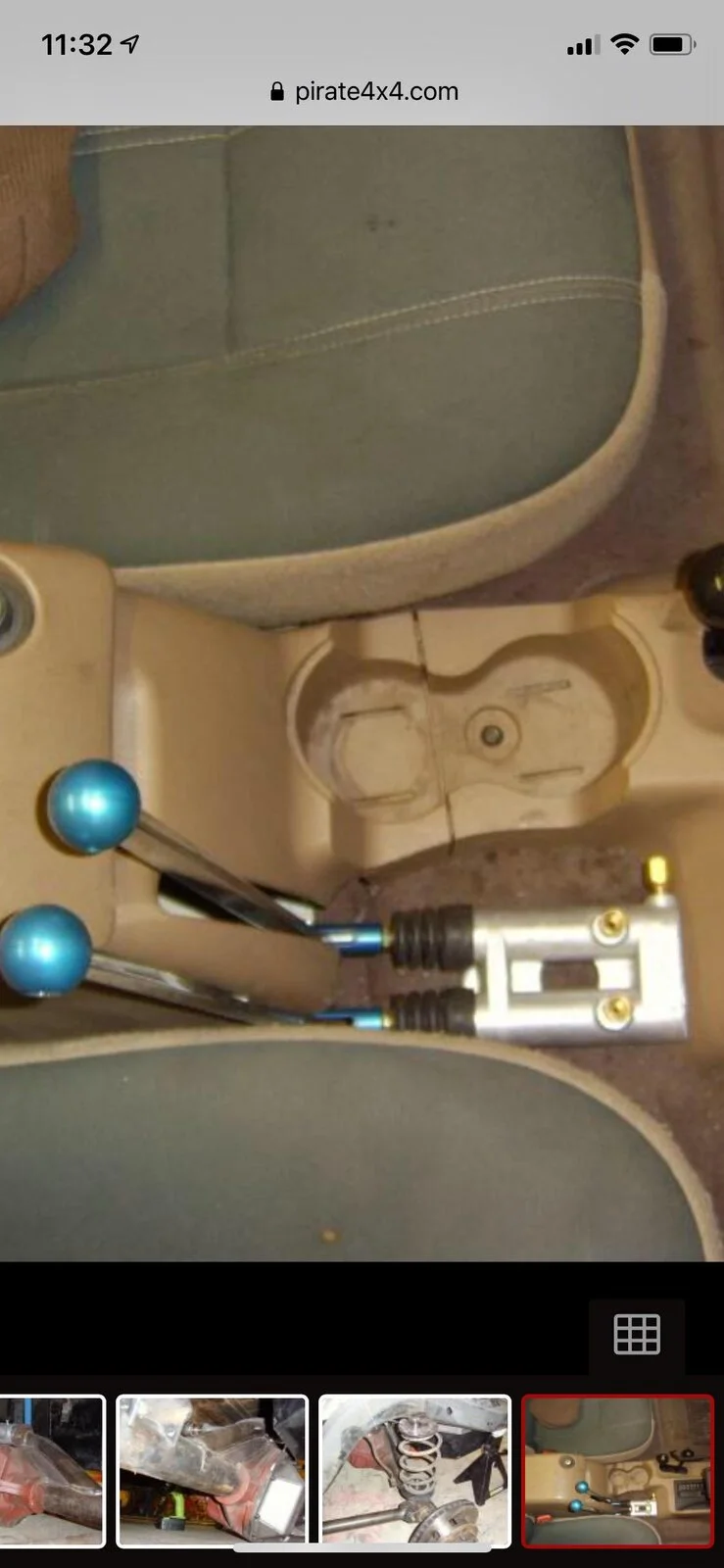
I want to put the master cylinders in the console. This will keep them hidden and also make the brake line routing much cleaner as I can punch them up from the bottom and not have to get them in front of the shifter. Heres my plan and I'm open to advice. Create a high pivot for the handle and extend the lever down to re mount below the pivot. Two advantages one, I can clock the handle at whatever angle I want to clear the console and be in a comfortable position and second I get a bit more leverage.
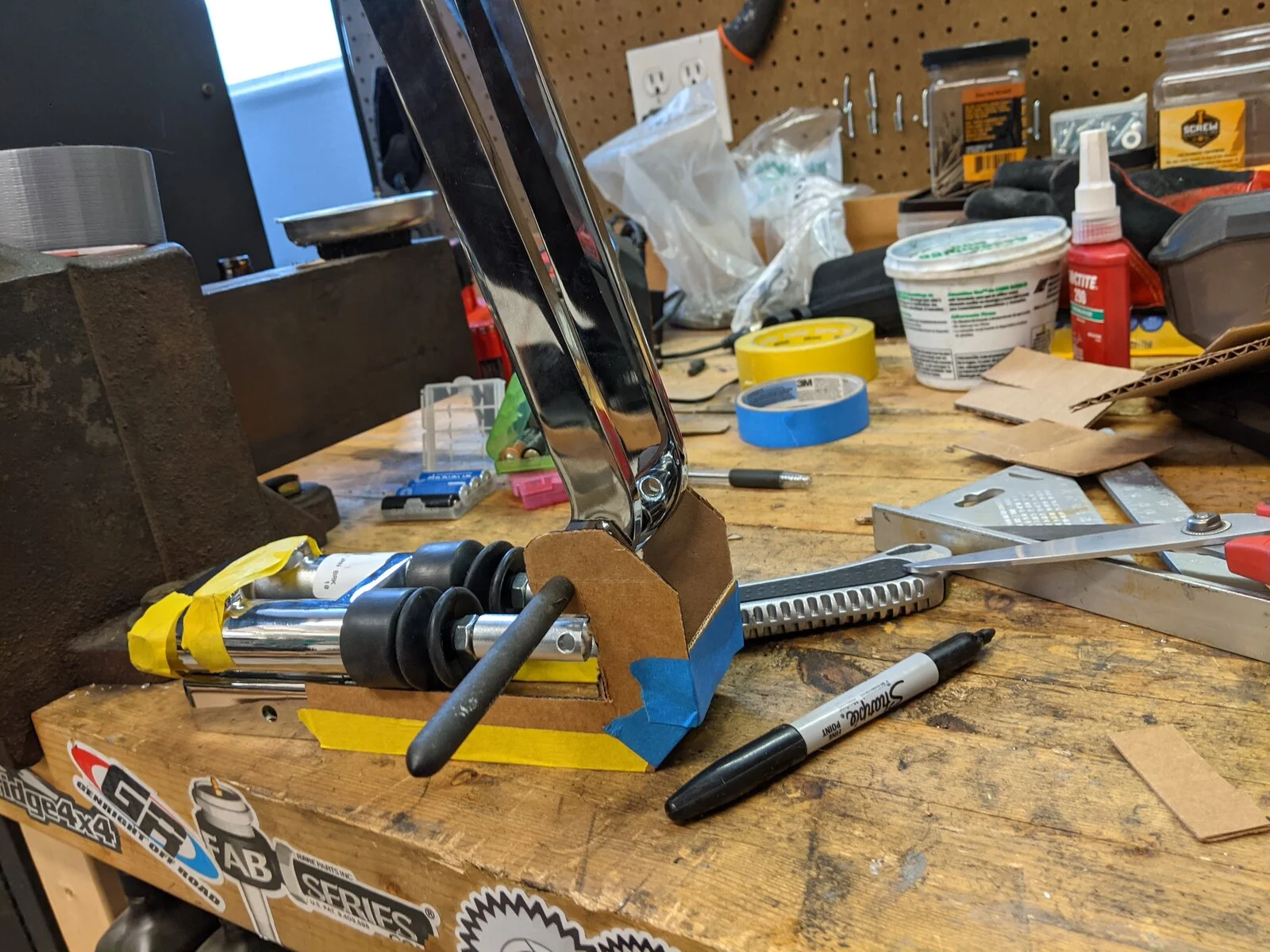
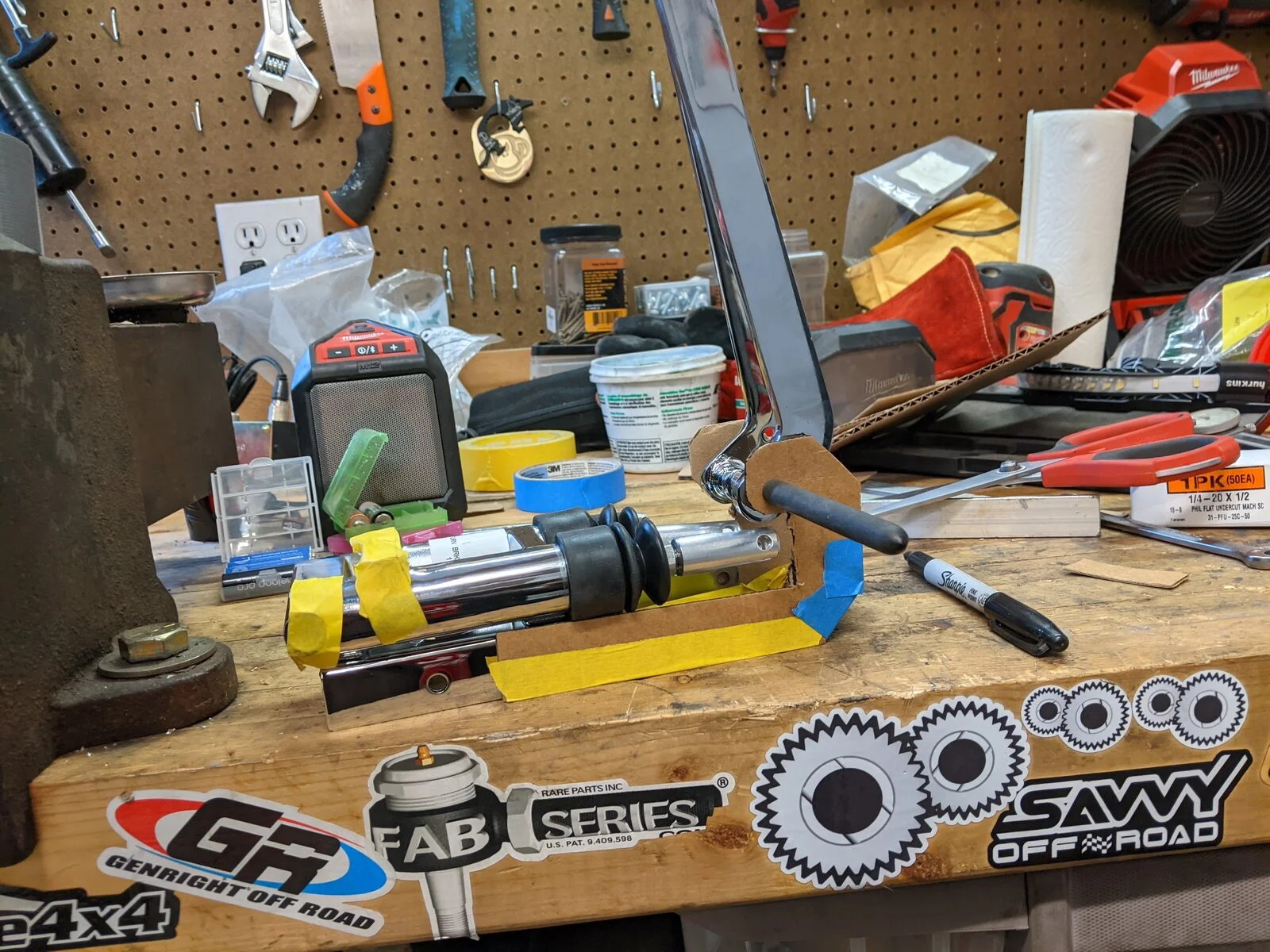
All the the two lever cutting brakes are set up where you must push the lever into the MC. So to make a push setup in the jeep I would have to put the master cylinders in front. Problem being I don't like how that looks and I want to keep my E-brake handle. Heres a pic I stole from pirate:
I want to put the master cylinders in the console. This will keep them hidden and also make the brake line routing much cleaner as I can punch them up from the bottom and not have to get them in front of the shifter. Heres my plan and I'm open to advice. Create a high pivot for the handle and extend the lever down to re mount below the pivot. Two advantages one, I can clock the handle at whatever angle I want to clear the console and be in a comfortable position and second I get a bit more leverage.
B00mb00m
The Church of Cutting Brakes of Atlas-Front Digs
Original poster
Supporting Member
Ride of the Month Winner
That's part of why I went handles also, totally on the fly. Could grab them going 80 if I wanted to lol.Sounds like you're already past the idea, but I would want to use them on the fly and not have to stop, lock up all brakes, and then release to line lock just one caliper. Seems that'd be very slow.
Similar threads

- Replies
- 16
- Views
- 1,446

- Replies
- 8
- Views
- 8,882

- Replies
- 1
- Views
- 673

- Replies
- 1
- Views
- 797


