TJ stalled in traffic

justfixedthat...

TJ Enthusiast
Original poster
Joined
Jan 20, 2020
Messages
152
Location
Texas
About two weeks ago I was going 50 MPH and my jeep bucked. I reproduced the way it felt in a parking lot by going slowly, and very quickly (without taking my foot on the gas) shifting into Neutral and back into Drive. So this made me think the Transmission had slipped. This happened one more time as I exited the freeway, and that night it started fine in a parking garage but immediately stalled as I went down the ramp - I didn't even realize it until I noticed the power steering was out. It wouldn't start for about 20 minutes but finally did, without me doing anything special to it. I later checked the ATF level; it wasn't low but I put some in just in case (although not 100% full, as Jerry has suggested). I now suspected the fuel pump. Put a new one in a week ago, lightly bucked again today while on a 30-minute drive, stalled on a side street and restarted after a few tries, then stalled again after I got all the way back home (and wouldn't restart). I could tell it was the starter so I opened it up and cleaned it, and it started right up (I have a dual remote oil filter and the hoses leak right where they connect to the block, so the starter gets oil soaked). No new codes (I've had an evap leak code for a while).

On this forum I've read:
Crank Position Sensor (per Jerry)
Throttle Position Sensor
Coil pack (bucking and stalling)
Connections (battery terminals, grounds, wiring harness)
Fuel pump
Idle Air Control
ATF needs to be 100% full (per Jerry)

And:
Turning off w/o sputtering = sensor
But:
Bad sensors throw codes

I'm trying to figure out if the oil-soaked starter, random stalling, and random bucking are separate or related issues. Presumably the starting issue can be ruled out as oil soak, but can this also cause stalling and bucking (maybe oil on grounds, sensors, etc)? Can the CPS cause intermittent stalling and bucking? Can low ATF cause stalling AND bucking?

Hope I've been clear. Thanks in advance for any advice or experience.
 
On the ground note...not really. You have a great ground connection or not. As in that connection will be extremely tight and wouldn't allow seepage of anything to come between them. That said if your contact between them is shitty then yes it's possible. Still unlikely but anything is possible.

Perhaps the pcm as well. Add that to your possibles
 
First explain this? :unsure:
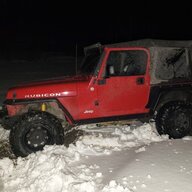
2002 Wrangler Sport
What kind of transmission is in your Wrangler? 42RLE

p.s. Have you had the alternator and battery tested?
 
On the ground note...not really. You have a great ground connection or not. As in that connection will be extremely tight and wouldn't allow seepage of anything to come between them. That said if your contact between them is shitty then yes it's possible. Still unlikely but anything is possible.

Perhaps the pcm as well. Add that to your possibles
I did get my PCM repaired about a year ago. All kinds of crazy symptoms back then. So it's not as simple as low ATF? Oil on the starter? Coilpack? I put in a pretty shitty coilpack about a year ago too.
 
Check the easy things first that don't cost anything....

The 32 pin harness connectors for oxidation and a snug fit that are attached to the PCM. Oxidized connections can cause this problem.
The wiring harness behind the valve cover that is routed behind the head stud; there are known issues where the harness wires will rub thru causing this problem.
 
Last edited:
If you have a good DVOM and test leads:
Pull the crank sensor
Hook up the meter to read ohms
Heat up the sensor with a heat gun (don't melt it)
Watch the reading and see if it increases drastically or goes open circuit as the sensor get hot
You may need to lightly tap it to get it to go open
 
By any chance did you happen to notice high idle or hunting rpm's when in neutral/park, or sitting at a stop light?
 
IF you have checked the items that I previously suggested then you want to move on to testing the CPS. There are several ways to test the CPS, but checking the reference voltage, measured voltage with engine cranking from the CPS to the PCM and the CPS ground would be the best way.
I have attached a link showing the steps for testing.

 
Check the easy things first that don't cost anything....

The 32 pin harness connectors for oxidation and a snug fit that attach to the PCM. Oxidized connections can cause this problem.
The wiring harness behind the valve cover that is routed behind the head stud; there are known issues where the harness wires will rub thru causing this problem.
I wriggled these pretty hard to get it to stall. Perhaps the heat can make a difference? About a year ago I did take the plastic covering off of the wiring harness to test individual wires - trying to track down what was causing certain injectors not to fire. Ended up fixing the PCM and replacing the coil pack. Never did re-wrap those wires. But damn this started 2 weeks ago out of NOwhere. Never bucked or stalled in the 6 years I've owned it.
 
IF you have checked the items that I previously suggested then you want to move on to testing the CPS. There are several ways to test the CPS, but checking the reference voltage, measured voltage with engine cranking from the CPS to the PCM and the CPS ground would be the best way.
I have attached a link showing the steps for testing.


I was just replying to your other post. Thanks I'll try that.
 
I had 3 stalls that happened when going from hard throttle to off throttle in the month leading to my fuel pump going out. It never did just buck on my though. Just lost go juice
 
I had 3 stalls that happened when going from hard throttle to off throttle in the month leading to my fuel pump going out. It never did just buck on my though. Just lost go juice
That's the first thing I thought of so I put in a new pump about a week ago. Could've been a bad pump?
 
If you have a good DVOM and test leads:
Pull the crank sensor
Hook up the meter to read ohms
Heat up the sensor with a heat gun (don't melt it)
Watch the reading and see if it increases drastically or goes open circuit as the sensor get hot
You may need to lightly tap it to get it to go open
um... no.
 
Had to drain the oil today and less than 2 quarts came out. The leak was worse than I thought. My gauge went out a while ago so it didn't alert me but apparently low oil pressure can cause bucking and stalling. Is that what I'm looking at?
 
um... no.
When we had a crank sensor problem at Mercedes in the early 2000s this worked like a champ until we figured out the bad part #s that were affected. And no, these rarely set a code.
When the sensor gets hot and expands, the circuit goes open. When it cools off, the circuit makes contact again.
This is more common with inductive sensors, but heat can reproduce a failure mode in other types as well.
 
Last edited:
Had to drain the oil today and less than 2 quarts came out. The leak was worse than I thought. My gauge went out a while ago so it didn't alert me but apparently low oil pressure can cause bucking and stalling. Is that what I'm looking at?
How’s the oil look? Any sparkly bits?
I don’t know the threshold on the 4.0, but if it gets too low and starves the bearings it could be starting to lock up the engine.
My sister did that to an old 318 Dodge motor. Added oil and back on the road again. That poor car....
 
Last edited: