

You are using an out of date browser. It may not display this or other websites correctly.
You should upgrade or use an alternative browser.
You should upgrade or use an alternative browser.

Modifying Currie control arms to double adjustable
- Thread starter Mike_H
- Start date

Called single point threading, though it doesn't really matter how they're cut, as long as they're in specAlso the threads were lathe cut not tapped.

I heard it was better, but I have no knowledge that it the case. As long as you have proper thread depth it should be fine either way.Called single point threading, though it doesn't really matter how they're cut, as long as they're in spec
If you are cutting your own threads in your own section then just step the beginning with a larger drill size to start the tap. You can always trim the end if you feel you've compromised the threads at the end.
Not really better in any way for this application. Better in the sense that you have more control over the threads as you make them for different fits, but taps are also available in my different under and oversizes for different fits, materials, etc. Both methods are cutting the threads, so if the pitch and minor diameters are the same, they're pretty much equal. If the threads were formed like with a roll tap they have the potential to be stronger than identical cut threads, but I have no quantifiable data for how much of a difference there is.I heard it was better, but I have no knowledge that it the case. As long as you have proper thread depth it should be fine either way.
Tapping is certainly a much faster process than single pointing most of the time.
Lots of ways to skin a cat
All of that is completely unnecessary provided you make the ID the correct size for the tap and get the tap started straight. A nice chamfer on the end .01" or so larger than the major diameter of the threads is always a nice touch.If you are cutting your own threads in your own section then just step the beginning with a larger drill size to start the tap. You can always trim the end if you feel you've compromised the threads at the end.
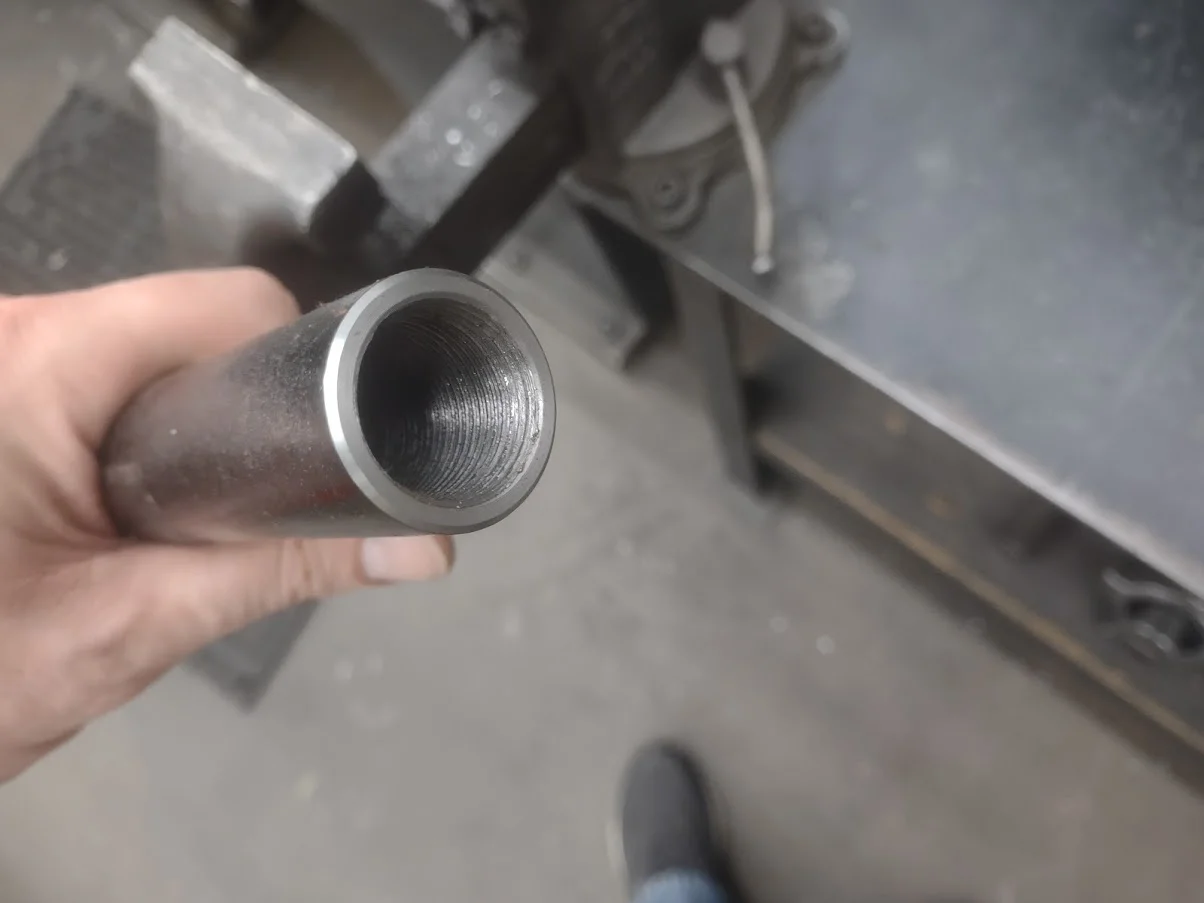
His ID on the tube looks to still be raw stock, so I'm suspicious of it being the correct size. If possible it'd probably be best to bore it to size and depth, a drill isn't going to make a very accurate hole removing that little of material and if it's on a machine with a Morse taper spindle it will have a tendency to screw into the material and pull the taper out of the spindle.
Given a choice or control over the final result, I prefer a quality tap. I've seen hundreds of tube inserts from Poly that have lots of chatter from being run single point. I don't know how they get it to do that but I'd reject every single one. They have never failed, galled, or been loose on the threaded tie rod shanks but that doesn't justify it. Only thing I can figure is they are doing them in house and don't have a real machinist doing them and they are trying to cut cost by running them too fast.Not really better in any way for this application. Better in the sense that you have more control over the threads as you make them for different fits, but taps are also available in my different under and oversizes for different fits, materials, etc. Both methods are cutting the threads, so if the pitch and minor diameters are the same, they're pretty much equal. If the threads were formed like with a roll tap they have the potential to be stronger than identical cut threads, but I have no quantifiable data for how much of a difference there is.
Tapping is certainly a much faster process than single pointing most of the time.
Lots of ways to skin a cat
There are actually quite a few tube sizes with the correct ID for a tap. Or more than you'd think in the control arm world. I've had a lot of arms made and looking for material to make sure there is a small enough ID to bore it out for a thread size shows me several times that it was already close enough.His ID on the tube looks to still be raw stock, so I'm suspicious of it being the correct size. If possible it'd probably be best to bore it to size and depth, a drill isn't going to make a very accurate hole removing that little of material and if it's on a machine with a Morse taper spindle it will have a tendency to screw into the material and pull the taper out of the spindle.

this new guy was welding rod couplers onto some angles with the welder on atomic blast, he ruined the threads inside, so they gave him a tap and a Fkin hammer drill and let him go to town for 2dys fixin it (fkin it worse). by the time the parts got to me and i extracted the bolts to install a stiffener and different length fastener b4 welding the pieces.doing them in house and don't have a real machinist doing them and they are trying to cut cost by running them too fast.
they wobbled into the holes all the way down to the last thread and the only reason they locked is because they jammed when they bottomed. i told 2 lead men and the shop supervisor about this and they all said "it'll be good enough" this is the mentality of the new generation. and quite a few are clueless but manage to kiss enough ass to be the man.
frankly i'm sick of the good enough mentality, and i'm often dogged for taking time to make things right instead of "throw the dam thing together". i have prints for a reason, they are directions not suggestions.
Kat used to manage two departments, packaging and filling at a medical test kit manufacturing company. She figured out real quick that there are two ways to advance in a company. Politics and skill at your job. She had a lot of really shit quality employees working for her that were very good at hanging out with the right group, saying the right thing in front of the right person and rarely doing anything work related correctly.this new guy was welding rod couplers onto some angles with the welder on atomic blast, he ruined the threads inside, so they gave him a tap and a Fkin hammer drill and let him go to town for 2dys fixin it (fkin it worse). by the time the parts got to me and i extracted the bolts to install a stiffener and different length fastener b4 welding the pieces.
they wobbled into the holes all the way down to the last thread and the only reason they locked is because they jammed when they bottomed. i told 2 lead men and the shop supervisor about this and they all said "it'll be good enough" this is the mentality of the new generation. and quite a few are clueless but manage to kiss enough ass to be the man.
frankly i'm sick of the good enough mentality, and i'm often dogged for taking time to make things right instead of "throw the dam thing together". i have prints for a reason, they are directions not suggestions.
None of them were the "new generation" which means that it has been going on as long as folks have been being paid by others to work.
it's seems way more prevalent now, or maybe me getting old and crotchety has more to do with it. i have run 2 dept's and been asked to take over the assembly dept now. i refused since the new shop manager thinks is ok to pound products together. "good enough ". no way in hell i'da done that and when i came up in this company you would have been walked out the door for it.Kat used to manage two departments, packaging and filling at a medical test kit manufacturing company. She figured out real quick that there are two ways to advance in a company. Politics and skill at your job. She had a lot of really shit quality employees working for her that were very good at hanging out with the right group, saying the right thing in front of the right person and rarely doing anything work related correctly.
None of them were the "new generation" which means that it has been going on as long as folks have been being paid by others to work.
i'm a dick to work for, i don't accept 1/2 ass if i'm paid to be the decision maker i don't take that lightly and shits gonna be tight and right. work is work.............. buddies is for the wkends and most don't like me because of that attitude.
anyways, i hope this works i'd like to see another option for aluminum links. but i don't think we are being gouged for them now so i hope he's got room to make it worth it.
if they did this crap at my shop they chuck that tube into the lathe, ream it if needed and run a tap into it.
Last edited:

I don't remember the exact dimensions, but its VERY close to 15/16". 15/16" is the "proper" size for a 1"-14 tap. I know very close doesn't mean much in the machining world, but without measuring them again, I want to say they measured 0.932 and 15/16 is .9375. Boring 0.0025 a side probably isn't gonna go well on my lathe. I can wait for Monday and get my new tap. If that doesn't work, I'll bore them or order some 7075 aluminum bar stock and make new ones.What size was the ID on your tubing?
Last edited:
Yeah small ID internal single pointing is just a bitch most of the time as far as chatter is concerned. The geometry of most internal threading bars already reduce the shank size you can get away with vs a boring bar. So you wind up with a .5"-.625" shank bar hanging out 3-3.5" which is now right around 6xD stickout, about the max for a normal steel bar, so you have to run it real slow to get rid of the chatter, or pony up for a carbide holder or a tuneable bar to dial out the vibrations. I would choose a tap every time for these parts.Given a choice or control over the final result, I prefer a quality tap. I've seen hundreds of tube inserts from Poly that have lots of chatter from being run single point. I don't know how they get it to do that but I'd reject every single one. They have never failed, galled, or been loose on the threaded tie rod shanks but that doesn't justify it. Only thing I can figure is they are doing them in house and don't have a real machinist doing them and they are trying to cut cost by running them too fast.
ID work can be a bit unnerving for green CNC lathe guys too, especially threading cycles. If it's not setup right or your retract amount is wrong, as soon as you hit go that bar is going full depth, retract in X then in Z and there's nothing you can do to stop it. So even more incentive to not fuck with it once it works once if you don't really care how the threads look.
7075 isn't going to tap any differently than mild steel really. You might just need some pressure to get the tap started, use the tailstock with a center to push it like I talked about earlier in the thread.I don't remember the exact dimensions, but its VERY close to 15/16". 15/16" is the "proper" size for a 1"-14 tap. I know very close doesn't mean much in the machining world, but without measuring them again, I want to say they measured 0.932 and 15/16 is .9375. Boring 0.0025 a side probably isn't gonna go well on my lathe. I can wait for Monday and get my new tap. If that doesn't work, I'll bore them or order some 7075 aluminum bar stock and make new ones.
No, but it will tap easier than the 4140 DOM that these Currie tubes seem to be. They are harder than mild steel. We were using the tailstock to push and hold the tap centered. It would pull chips like it was starting, but bind up before it really started cutting and not leave any threads. Like I said, My tap is more of a bottoming tap too. Only about three threads knocked down for starting. I have a full taper tap ordered. That should help considerably.7075 isn't going to tap any differently than mild steel really. You might just need some pressure to get the tap started, use the tailstock with a center to push it like I talked about earlier in the thread.
They guy helping me is a journeyman toolmaker too. Dude can make ANYTHING you can think of.
Your shop is what, mostly custom carbide toolmaking? Do you guys have a website or anything?No, but it will tap easier than the 4140 DOM that these Currie tubes seem to be. They are harder than mild steel. We were using the tailstock to push and hold the tap centered. It would pull chips like it was starting, but bind up before it really started cutting and not leave any threads. Like I said, My tap is more of a bottoming tap too. Only about three threads knocked down for starting. I have a full taper tap ordered. That should help considerably.
They guy helping me is a journeyman toolmaker too. Dude can make ANYTHING you can think of.
Yeah mostly specialty Carbide inserts, grooving cutters and solid carbide boring bars. We do a few VERY specialty types endmills too. We can't compete with guys like GWS on endmills, drills, taps, etc, but we have our own little niche and its pretty good business. We make our own holders too, so customers can come in for a package deal. www.spec-tool.com.Your shop is what, mostly custom carbide toolmaking? Do you guys have a website or anything?
SUCCESS!!!
My tap came early, so I ran back to the shop to get these arms done. Holy Hell...I got a workout. Running a one inch tap 3" deep is a lot of work! I used the tailstock and live center to get started straight and used a crescent wrench to turn the tap. One it started...I tried to use the lathe to spin the workpiece while I held the crescent still...Yeah, that didn't work. I just had to lock the head on the lathe and use the armstrong tap driver. I'd push it about a half inch, then back it out to clear chips and re-oil. Rinse and repeat.
Here is my first Currie double adjustable lower control arm!
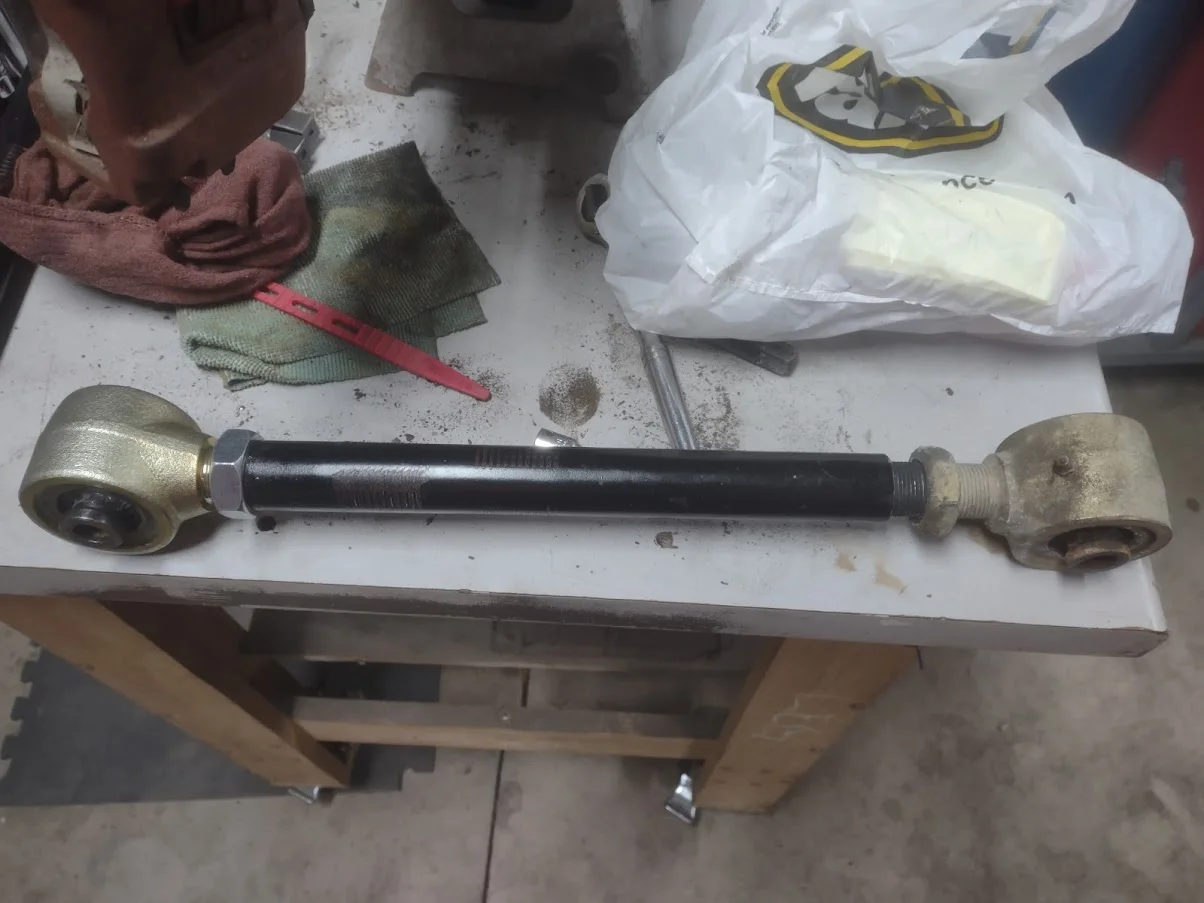
This is going to make adjustments SO much easier...well worth the 1/2 hour or so to tap Each one!
My tap came early, so I ran back to the shop to get these arms done. Holy Hell...I got a workout. Running a one inch tap 3" deep is a lot of work! I used the tailstock and live center to get started straight and used a crescent wrench to turn the tap. One it started...I tried to use the lathe to spin the workpiece while I held the crescent still...Yeah, that didn't work. I just had to lock the head on the lathe and use the armstrong tap driver. I'd push it about a half inch, then back it out to clear chips and re-oil. Rinse and repeat.
Here is my first Currie double adjustable lower control arm!
This is going to make adjustments SO much easier...well worth the 1/2 hour or so to tap Each one!
Single adjustable arms suck. I have messed with mine enough to hate them. When I installed a lift on a buddy’s Jeep we did DA arms. So nice. Final adjustments took minutes instead of hours with SA arms.
Yeah, when I was working on my front end, I started to really hate what I was doing. Made me want to say "F" it and just run with a non-optimized set-up. That's where this hairbrained idea started.Single adjustable arms suck. I have messed with mine enough to hate them. When I installed a lift on a buddy’s Jeep we did DA arms. So nice. Final adjustments took minutes instead of hours with SA arms.
Similar threads

- Replies
- 0
- Views
- 389

- Replies
- 3
- Views
- 1,294

- Replies
- 18
- Views
- 8,686

- Replies
- 1
- Views
- 504


- Replies
- 4
- Views
- 1,558
