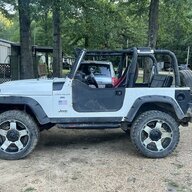
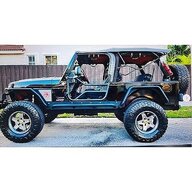
Speedometer is still fast after changing speedo gear

I'm not a rocket surgeon but according to Boogiemans chart, you have the wrong gear for 32's. The right gear for 35's. That would explain the 10% provided I am reading the chart correctly.

Doesn't matter, none of it works well until you know the tire size.
 
  • Like
Reactions: DuckNut
Go read your first post again. You said you bought the correct gear, you didn't. You thought you knew what your tire size is, you don't. That's what you're missing and you are overlooking the actual help to discover how to fix both of those things.

I In fact DO know my actual tire size. I accidentally slid to the 4.10 gear ratio line when I ordered the gear. It still doesn’t dismiss the fact that you’re a pompous asshole. Simply saying “you looked at the wrong box” wasn’t in your wheelhouse. But then again I bet a lot of things aren’t. Now as I said. Kindly fuck off and have a blessed day.
 
  • Haha
Reactions: jjvw
I'm not a rocket surgeon but according to Boogiemans chart, you have the wrong gear for 32's. The right gear for 35's. That would explain the 10% provided I am reading the chart correctly.

Sir. I did not read said chart correctly 😂. Hence why I asked “am I overlooking something” I have found in my 46 years that most of the time when something isn’t right it’s cause I have done some dumb shit 🤷🏼‍♂️
 
Sir. I did not read said chart correctly 😂. Hence why I asked “am I overlooking something” I have found in my 46 years that most of the time when something isn’t right it’s cause I have done some dumb shit 🤷🏼‍♂️

It happens to us all. I went back and looked at the chart and the 10% can be found two ways.

35 (not 32) and 4.56
32 with 4.10.

Both of those use the 37 gear and both would be off by roughly 10%

Now get your shit together and fix your screw up. :)
 
  • Haha
Reactions: Gasman1979
I In fact DO know my actual tire size. I accidentally slid to the 4.10 gear ratio line when I ordered the gear. It still doesn’t dismiss the fact that you’re a pompous asshole. Simply saying “you looked at the wrong box” wasn’t in your wheelhouse. But then again I bet a lot of things aren’t. Now as I said. Kindly fuck off and have a blessed day.

Go outside and measure the center hub height from the ground. Double the number. That is your effective tire size. And that is the tire size you care about for this endeavor. This number will be very close to the very accurate process Blaine described.

This is correct information for vehicles both older and newer than 2010 because the tires behave the same when there is a heavy vehicle squishing them down.

And this is why you do not know your tire size yet.
 
Go outside and measure the center hub height from the ground. Double the number. That is your effective tire size. And that is the tire size you care about for this endeavor. This number will be very close to the very accurate process Blaine described.

This is correct information for vehicles both older and newer than 2010 because the tires behave the same when there is a heavy vehicle squishing them down.

And this is why you do not know your tire size yet.

And like I explained to him. I already did that. But thanks for playing our game.
 
It happens to us all. I went back and looked at the chart and the 10% can be found two ways.

35 (not 32) and 4.56
32 with 4.10.

Both of those use the 37 gear and both would be off by roughly 10%

Now get your shit together and fix your screw up. :)

Yessah boss. I’m tryin my best. I’m just a dumb redneck from south Arkansas.
 
Looks like he's riding on 20's.
Probably not a lot of sidewall flex. :ROFLMAO:

Even so, he can dispense with all the mystery and guessing by performing either of the methods to find the effective tire diameter.
 
And like I explained to him. I already did that. But thanks for playing our game.

You didn’t do that, we know that because there is not a single 32” tire in the world that measures 31.8”. That is more like manufacturer bullshit in the product data for the tire. Most tires are 1-1.5” short of nominal.
 
You didn’t do that, we know that because there is not a single 32” tire in the world that measures 31.8”. That is more like manufacturer bullshit in the product data for the tire. Most tires are 1-1.5” short of nominal.

This is exactly why we know.

My brand new 35s measured tiny bit under 35" measured horizontally. When I did the rpm and speed calculations, I came up with 33.875" effective diameter. When I measured the hub height, I came up with a tiny bit less than 17".

Every tire I have calculated has ended up being at least an inch shorter effective diameter than its sidewall description.
 
  • Like
Reactions: machoheadgames
In the future, it makes more sense to do math or measure the tire properly, not follow a chart. You can infer that the charts don’t mean much because you will find looking at 3 charts from 3 different places, they all will have different tooth recommendations for the same setup as the other charts. Obviously that can’t make sense and it means the charts are all screwed up because they’re all using slightly different actual tire diameters for the common tire sizes.

I usually do math. If you are happy with the tire you have, then all you need to know is how much you’re off by (%) and how many gear teeth you have installed currently. If you’re fast by 10%, then you need 10% more teeth to slow the speed reading down. If it ever ends up where you need to round to the nearest tooth, I round down. I’d rather have the speedo slightly fast than slow.

Quick example - if you had a 33 tooth gear installed currently and your speedo read 58 while you were going 44 (GPS confirmed), then you’d be reading 38% fast (58/44 = 1.38). Need 38% more teeth to slow it down by that amount. 33 X 1.38 would be 45.57. I’d go with a 45 in that case.

 
  • Like
Reactions: Rickyd
In the future, it makes more sense to do math or measure the tire properly, not follow a chart. You can infer that the charts don’t mean much because you will find looking at 3 charts from 3 different places, they all will have different tooth recommendations for the same setup as the other charts.

.... I’d rather have the speedo slightly fast than slow.

People would be dismayed if they would compare what the speedo needle says to what the PCM displays through OBDII. The two do not match.
 
People would be dismayed if they would compare what the speedo needle says to what the PCM displays through OBDII. The two do not match.

Yeah, that is pretty typical it seems from all the vehicles I’ve owned from 2000s age until now. The speedo is typically inaccurate (fast) from the factory and is only truly accurate until a 1” larger tire is installed. That is how almost all the vehicles I’ve owned have been. Vehicles that tend to not have owners modify the tire size seem to be more accurate off the factory floor. But Jeeps clearly get larger tire treatment often and so I think they build a small buffer in there for that. Trucks too.
 
Yeah, that is pretty typical it seems from all the vehicles I’ve owned from 2000s age until now. The speedo is typically inaccurate (fast) from the factory and is only truly accurate until a 1” larger tire is installed. That is how almost all the vehicles I’ve owned have been. Vehicles that tend to not have owners modify the tire size seem to be more accurate off the factory floor. But Jeeps clearly get larger tire treatment often and so I think they build a small buffer in there for that. Trucks too.

A fun example would be the 2003 Rubicon where the speedo didn't start to become close to accurate until a 33" tire was installed, which correlates to the rumors that it was supposed to have 33s from the factory. Jeep fixed this in 2004.
 
  • Face Palm
Reactions: hear
I usually do math. If you are happy with the tire you have, then all you need to know is how much you’re off by (%) and how many gear teeth you have installed currently. If you’re fast by 10%, then you need 10% more teeth to slow the speed reading down. If it ever ends up where you need to round to the nearest tooth, I round down. I’d rather have the speedo slightly fast than slow.

Quick example - if you had a 33 tooth gear installed currently and your speedo read 58 while you were going 44 (GPS confirmed), then you’d be reading 38% fast (58/44 = 1.38). Need 38% more teeth to slow it down by that amount. 33 X 1.38 would be 45.57. I’d go with a 45 in that case.


This really is the easiest way. Gps app and a calculator.done.

Trying to figure revolutions per mile,diameter,axle ratios,charts, etc is hit or miss
 
I look at my speedometer occasionally. The last time it was officially calibrated it was dead on. Ticket for reckless driving (20+ miles over the speed limit) told me so. :unsure:
 
In the future, it makes more sense to do math or measure the tire properly, not follow a chart. You can infer that the charts don’t mean much because you will find looking at 3 charts from 3 different places, they all will have different tooth recommendations for the same setup as the other charts. Obviously that can’t make sense and it means the charts are all screwed up because they’re all using slightly different actual tire diameters for the common tire sizes.

I usually do math. If you are happy with the tire you have, then all you need to know is how much you’re off by (%) and how many gear teeth you have installed currently. If you’re fast by 10%, then you need 10% more teeth to slow the speed reading down. If it ever ends up where you need to round to the nearest tooth, I round down. I’d rather have the speedo slightly fast than slow.

Quick example - if you had a 33 tooth gear installed currently and your speedo read 58 while you were going 44 (GPS confirmed), then you’d be reading 38% fast (58/44 = 1.38). Need 38% more teeth to slow it down by that amount. 33 X 1.38 would be 45.57. I’d go with a 45 in that case.
I appreciate your extremely thorough explanation. I have dealt with very few gear driven speedos. I can use my Snap on Zeus to get actual rpm and all that jazz. I did totally screw up the chart 🤦🏼‍♂️
 
  • Like
Reactions: TheBoogieman