
You are using an out of date browser. It may not display this or other websites correctly.
You should upgrade or use an alternative browser.
You should upgrade or use an alternative browser.

Are TJs safe?
- Thread starter chrispal19
- Start date
James9100
TJ Enthusiast

Hello Gentlemen!
Today is a very sad day! I made a mistake climbing down a very treacherous trail and my Jeep paid for it. The funny thing is I was out taking pictures, just pictures and had no intention of hardcore offroading today at all. I made one wrong turn and took a really really hard trail called "look out" in Santa Clarita mountains. Approximately half way down the trail I hit a spot I realized I could not back up from. Took the chance and did it wrong! I rolled down the mountain 6 times and luckily did not fall off the cliff, so I am grateful I am alive. It ended up...
Today is a very sad day! I made a mistake climbing down a very treacherous trail and my Jeep paid for it. The funny thing is I was out taking pictures, just pictures and had no intention of hardcore offroading today at all. I made one wrong turn and took a really really hard trail called "look out" in Santa Clarita mountains. Approximately half way down the trail I hit a spot I realized I could not back up from. Took the chance and did it wrong! I rolled down the mountain 6 times and luckily did not fall off the cliff, so I am grateful I am alive. It ended up...
- Tigerman
- Replies: 128
- Forum: TJ General Discussion


Just show your parents this post. Pretty sure the guy rebuilt the TJ.
Also… is the vehicle safety rating seriously a factor in purchasing a vehicle?
Tj jeeps have a lot going for them. Brakes are good from factory. The tj has factory sway bars making them safer in curves. And the 6 cylinder engine gives great dependability. The one i have has a automatic, power steering and cruise control. I love it.
All depends on the driver behind the wheel.
Depends on how mad it makes your wife. I nearly got killed over one.
Here is an interesting thought that actually got me on the idea for a TJ in the first place.
Price out the insurance cost for a new Ford Fiesta. Manual transmission, sport package.
Now price out the insurance cost on a 20-year old jeep that costs as much used as the new Fiesta.
The Fiesta costs way more to insure. Heck, the difference is bigger than the difference in fuel cost between the two. Why? Because the people that drive them get in a lot more wrecks than people who drive TJs.
Price out the insurance cost for a new Ford Fiesta. Manual transmission, sport package.
Now price out the insurance cost on a 20-year old jeep that costs as much used as the new Fiesta.
The Fiesta costs way more to insure. Heck, the difference is bigger than the difference in fuel cost between the two. Why? Because the people that drive them get in a lot more wrecks than people who drive TJs.

KennethS
TJ Expert
All depends on the driver behind the wheel.
Absolutely. Vehicle safety is 100% dependent upon the vehicle operator. Put a moron in the top rated vehicle and there will likely be bad results. Put an excellent driver in the worst rated vehicle and there likely would never be an incident.
If you’re looking for the safest vehicle for a moron driver, you likely need one with a lot of onboard nanny controls.
Hello Gentlemen!
Today is a very sad day! I made a mistake climbing down a very treacherous trail and my Jeep paid for it. The funny thing is I was out taking pictures, just pictures and had no intention of hardcore offroading today at all. I made one wrong turn and took a really really hard trail called "look out" in Santa Clarita mountains. Approximately half way down the trail I hit a spot I realized I could not back up from. Took the chance and did it wrong! I rolled down the mountain 6 times and luckily did not fall off the cliff, so I am grateful I am alive. It ended up...
- Tigerman
- Replies: 128
- Forum: TJ General Discussion
Just show your parents this post. Pretty sure the guy rebuilt the TJ.
Also… is the vehicle safety rating seriously a factor in purchasing a vehicle?
Thank you, i appreciate it
Tj jeeps have a lot going for them. Brakes are good from factory. The tj has factory sway bars making them safer in curves. And the 6 cylinder engine gives great dependability. The one i have has a automatic, power steering and cruise control. I love it.
Thanks man
All depends on the driver behind the wheel.
Tj jeeps have a lot going for them. Brakes are good from factory. The tj has factory sway bars making them safer in curves. And the 6 cylinder engine gives great dependability. The one i have has a automatic, power steering and cruise control. I love it.
Thanks man
CasonsTJ01
New Member
Is a Jeep TJ Safe?
The Jeep Wrangler TJ can be safe, but it depends on how it’s set up and how well it’s been maintained. It’s a lightweight, short-wheelbase off-roader, so it doesn’t have the same level of safety features as modern SUVs. But if you know what you’re doing and take care of it, a TJ can be a great and reliable ride.Stock vs. Modified – What to Look For
- Stock TJ: If you find a TJ that’s still in its original condition, you’re in good shape. Jeep designed these to handle well both on and off the road, so as long as everything is working as it should, there aren’t any major safety concerns. Just check if it has ABS, because not all models came with it. If you plan to drive in rain or snow, ABS is nice to have.
- Lifted or Modified TJ: A lift kit doesn’t automatically make a TJ unsafe, but a badly installed or worn-out lift can be dangerous. If you’re looking at a lifted one, pay attention to:
- How it drives – If it wanders all over the road or feels unstable at highway speeds, something’s off.
- Death wobble – If you hit a bump and the steering starts shaking violently, that’s a sign of worn-out suspension or steering components.
- Drivetrain setup – Anything over a 2-inch lift usually needs extra work to keep the Jeep stable, like correcting the track bar, control arms, and driveshaft angles.
Rust – The TJ’s Worst Enemy
Rust can turn a Jeep TJ into a rolling safety hazard. These things rust in places you wouldn’t expect, including:- The frame (especially near the control arm mounts and rear section)
- Floor pans
- Inside the roll bars (yes, really)
- Body mounts and fenders
Can a TJ Be a Daily Driver?
Absolutely—but with some caveats. A TJ with a mild lift (2 inches and 33-inch tires) can be a great daily, but it’s still not going to drive like a modern SUV. Here’s what to keep in mind:- Crash Safety – TJs only have front airbags, no side-impact protection, and no stability control. It’s a small, high-center-of-gravity vehicle, so don’t expect it to hold up like a full-size truck in a crash.
- Handling – The short wheelbase means it’s not great for high-speed cornering or sudden maneuvers. If you drive mostly on highways, keep that in mind.
- Winter & Rain – If it doesn’t have ABS, be extra careful in bad weather. Also, soft-top Jeeps don’t have great insulation, and visibility can be worse compared to a hardtop.
Final Thoughts
The Jeep TJ is as safe as you make it. A well-maintained, stock, or mildly lifted TJ with a solid frame is a fun and capable daily driver. But a rusty, poorly lifted, or badly maintained TJ? That’s when it becomes a death trap.If you're thinking about buying one, check for rust, a solid suspension, and how it drives at highway speeds. Do that, and you'll be just fine.
Here is an interesting thought that actually got me on the idea for a TJ in the first place.
Price out the insurance cost for a new Ford Fiesta. Manual transmission, sport package.
Now price out the insurance cost on a 20-year old jeep that costs as much used as the new Fiesta.
The Fiesta costs way more to insure. Heck, the difference is bigger than the difference in fuel cost between the two. Why? Because the people that drive them get in a lot more wrecks than people who drive TJs.
Damn. Never thought about that. Thanks
Absolutely. Vehicle safety is 100% dependent upon the vehicle operator. Put a moron in the top rated vehicle and there will likely be bad results. Put an excellent driver in the worst rated vehicle and there likely would never be an incident.
If you’re looking for the safest vehicle for a moron driver, you likely need one with a lot of onboard nanny controls.
That’s true
Depends on how mad it makes your wife. I nearly got killed over one.
Just one ?

Just one ?
Weeeellllll....their have been varying degrees of strife along the way- but one she sat on the couch and cried for 2 hours. It sort of bothered me, but I knew deep down inside she was glad it was a Rubicon.
Brakes are good from factory.

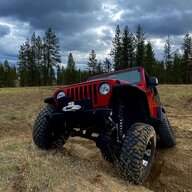
Thanks guys. Trying to convince my parents.
Some people are living on the memory of Jeep’s are unstable and roll over easily. First, that’s from the era of CJ’s. TJ’s are very stable. Second, TJ’s are not fast vehicles. 0-60 in 17 seconds
 . That doesn’t mean they can’t do 90, but it does take awhile to get there and most aren’t interested in that. Third, TJ’s are more about miles per smile. They are a really unique driving experience. I find myself enjoying driving rather than just trying to get from A to B. That means I’m paying more attention. Fourth, I find myself so in love with my Jeep that I’m more careful than in other cars. It doesn’t eliminate the other driver, but I do stay further away from other cars than I would in a beater or car I didn’t care about.
Best of luck. My TJ is the most favorite vehicle I’ve ever driven. Topless all Summer is incomparable. TJ’s are a legacy.

...Trying to convince my parents.
Good luck with that... Or you could do what I did. I told my parents if I couldn't have a Jeep, I was not going to take a condom to the Prom.

ChasUGC
TJ Enthusiast
I've had mine for 28 years. So, I would say they are pretty safe. It mainly depends on the safety of the driver. Plus, a Jeep TJ isn't going to run from the cops like a Dodge Challenger Hellcat, or a Porsche 911(The widow maker). Jeep TJ's are mainly cruising vehicles that are fun for camping and off road trips. Plus, they come stock with roll cages, that add to the safety factor. This is rare in almost all other vehicles. Lastly, you will be safer in a Jeep than in low clearance sedans during floods. Most importantly is to try to get one that is stock and unmodified. Huge lifts and suspension modifications can make them more unstable. Good luck.
Similar threads

- Replies
- 2
- Views
- 826

- Replies
- 1
- Views
- 928


- Replies
- 81
- Views
- 28,329


