

Dana 30 Front Axle refresh before installing. What to do?

Assforkr

TJ Enthusiast
Original poster
Joined
Apr 3, 2018
Messages
157
Location
Massachusetts, USA
Hey guys, going to start working on the front Dana 30 while it's still out of the car. Going to:
-Replace inner seals.
-Replace fluids
-Rotors/pads etc.

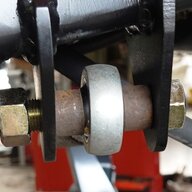
Was wondering if anyone can suggest anything else to get done prior to install. I see that some people have issues with the trackbar bracket hole wearing out and contributing to death wobble. Anyone ever weld a big fat washer onto that hole to add meat to the mount?
 
Hey guys, going to start working on the front Dana 30 while it's still out of the car. Going to:
-Replace inner seals.
-Replace fluids
-Rotors/pads etc.

Was wondering if anyone can suggest anything else to get done prior to install. I see that some people have issues with the trackbar bracket hole wearing out and contributing to death wobble. Anyone ever weld a big fat washer onto that hole to add meat to the mount?
How you gonna weld a big fat washer to the outside of the other half of the mount?
 
How you gonna weld a big fat washer to the outside of the other half of the mount?

I think the consensus is that a thick washer or a 1/4" plate cut to fit can help alleviate or prevent the wear out of the bracket. Can only do it on the front I think, no access to the back.
 
I think the consensus is that a thick washer or a 1/4" plate cut to fit can help alleviate or prevent the wear out of the bracket. Can only do it on the front I think, no access to the back.
The consensus is wrong, mistaken, and fully misunderstands how fasteners in slip critical connections work.
 
So is the consensus therefore that doing nothing is preferable to adding meat to only one side?
It helps to understand how fasteners on our rigs work. With only a few exceptions, they act as a clamp that creates friction between the faying surfaces to stabilize the joint or connection and prevent unwanted movement. This is done by stretching the bolt and placing it in tension when you tighten the nut. At no point in time are you capable of adding enough thickness to the mounts or decreasing the hole size in the parts in the joint that will survive or last when the fastener is loose for any decent length of time.

Instead of doing nothing, use a quality fastener, torque it correctly and keep it that way. Trust the science, ignore the mythology, urban legends, and old wives' tales.
