Novak Conversions Jeep Wrangler TJ radiator

Updating (backdating?) the TJ grille

I'm in love with that JL style TJ grill. Can you share the info as to who bought the mold?
I haven't asked him if he wants to be known so without doing that it's not my place to post his name. I can say that the mold went to a forum member; if he wants people to know he has the mold and/or is interested in making grille overlays from the mold available, he can reveal himself. I haven't heard that he's done anything with the mold yet.

As for the one completed example hanging on my wall, if I ever decide to part with it I will post it here first.
 
IMO, it's a CJ style TJ grill. ;)

Actually I drew inspiration from both the CJ and the JL/JT. I wanted the design to be inspired by the CJ's turn signals in the grille and the slots intersecting the headlights, and I wanted to echo the more aggressive styling of the first gen JL and JT grilles. I did a lot of design sketches, starting with the factory grille:

Factory.jpg


And ended up here:

FInalDesign.jpg


Once I had a final design with dimensions, I proceeded to make the components of the mold and the end result was exactly what I was attempting to achieve.

I designed the mold so various turn signal options could be implemented; the drawing above shows JK turn signals and the first example I molded had recesses for slightly smaller LED turn signals:

RadiatorInstalled2.jpg
 
Actually I drew inspiration from both the CJ and the JL/JT. I wanted the design to be inspired by the CJ's turn signals in the grille and the slots intersecting the headlights, and I wanted to echo the more aggressive styling of the first gen JL and JT grilles. I did a lot of design sketches, starting with the factory grille:

View attachment 519966

And ended up here:

View attachment 519967

Once I had a final design with dimensions, I proceeded to make the components of the mold and the end result was exactly what I was attempting to achieve.

I designed the mold so various turn signal options could be implemented; the drawing above shows JK turn signals and the first example I molded had recesses for slightly smaller LED turn signals:

View attachment 519968

Jeff - What software do you use for your drawings?
 
  • Like
Reactions: Wildman and Mike_H
Jeff - What software do you use for your drawings?

I've been using Microsoft Visio for my drawings for many years. Most people think of it as a business graphics program, but it's far more capable than that. I do all of my design work with it, here are a few examples:

When I was building my LJ-based "Retro Wrangler" pickup, I did all the dimensioning and frame modification design with Visio:

framedesign2.jpg


And here's something much simpler, this is part of an ammo can/battery tray design that goes inside over the rear inner fenders of an LJ, I carry and ammo can on in one on the passenger side and my auxiliary/kitchen battery in one on the driver's side:

SaddlePack.jpg


I do lots of concept images using a combination of Visio and Paint Shop Pro, this image was one of the first ones I did when designing the Safari Cab hardtop:

LJPhotoConcept.jpg


Funny thing about the image above, back when I did it I was involved in some things with Microsoft and I shared the image with them. They couldn't believe it was done in Visio and asked me to serve on their Visio Customer Advisory Council, which I did for a couple of years.

A few other concepts - this TJ photo was sent to me by someone who was considering buying a TJ Safari Cab from Gr8Tops, in the original image the TJ had a soft top. I replaced the soft top with a Visio-drawn Safari Cab...

MikeMotorbike4.jpg


And I added a Safari Cab to this Scrambler image:

DieselJeepSafari.jpg


In Visio you can draw shapes using lines and other basic elements like all other drawing programs, but a nice feature of the program is the ability to create palettes of shapes that you can drag and drop onto your drawing. In this screen shot, a palette of Jeep and Safari Cab parts is at left, those shapes can be dragged/dropped onto the drawing to quickly create a drawing of any TJ/YJ/CJ with any Safari Cab configuration. In this image I'm in the process of dragging a half door from the palette to the drawing (the mouse pointer didn't show up in the screen shot but it's over the half door):

visioshapes.jpg


And finally, I've done dozens of illustrations for magazines and since I generally get paid for those illustrations I guess that makes me a semi-professional illustrator. Here's an example, this drawing of locomotives was for a railroad magazine; they're narrow gauge locomotives on the Welsh Highland Railway in Wales:

Garratts.jpg


I suppose one of these days I'll give up Visio for a 3d CAD program, but Visio is so capable I hesitate to give it up.
 
I've been using Microsoft Visio for my drawings for many years. Most people think of it as a business graphics program, but it's far more capable than that. I do all of my design work with it, here are a few examples:

When I was building my LJ-based "Retro Wrangler" pickup, I did all the dimensioning and frame modification design with Visio:

View attachment 520088

And here's something much simpler, this is part of an ammo can/battery tray design that goes inside over the rear inner fenders of an LJ, I carry and ammo can on in one on the passenger side and my auxiliary/kitchen battery in one on the driver's side:

View attachment 520089

I do lots of concept images using a combination of Visio and Paint Shop Pro, this image was one of the first ones I did when designing the Safari Cab hardtop:

View attachment 520090

Funny thing about the image above, back when I did it I was involved in some things with Microsoft and I shared the image with them. They couldn't believe it was done in Visio and asked me to serve on their Visio Customer Advisory Council, which I did for a couple of years.

A few other concepts - this TJ photo was sent to me by someone who was considering buying a TJ Safari Cab from Gr8Tops, in the original image the TJ had a soft top. I replaced the soft top with a Visio-drawn Safari Cab...

View attachment 520091

And I added a Safari Cab to this Scrambler image:

View attachment 520092

In Visio you can draw shapes using lines and other basic elements like all other drawing programs, but a nice feature of the program is the ability to create palettes of shapes that you can drag and drop onto your drawing. In this screen shot, a palette of Jeep and Safari Cab parts is at left, those shapes can be dragged/dropped onto the drawing to quickly create a drawing of any TJ/YJ/CJ with any Safari Cab configuration. In this image I'm in the process of dragging a half door from the palette to the drawing (the mouse pointer didn't show up in the screen shot but it's over the half door):

View attachment 520093

And finally, I've done dozens of illustrations for magazines and since I generally get paid for those illustrations I guess that makes me a semi-professional illustrator. Here's an example, this drawing of locomotives was for a railroad magazine; they're narrow gauge locomotives on the Welsh Highland Railway in Wales:

View attachment 520094

I suppose one of these days I'll give up Visio for a 3d CAD program, but Visio is so capable I hesitate to give it up.

Never in a million years would I have guessed Visio! I’ve only ever used it for flow charting. Nice work!
 
  • Like
Reactions: astjp2
I only made one complete example before getting rid of the mold, it's the red one pictured in this thread. I haven't decided what to do with it, but it's bolt-in ready so maybe someday I'll install it on my Wrangler pickup but for now it's hanging on my workshop wall.


View attachment 519690

This grille will be moving with me to the new house/new state and will probably hang on the garage wall there until I either decide to install it on the pickup or get rid of it.


I like it. Do you want to get rid of it?
 
I like it. Do you want to get rid of it?

I probably won't ever install the grille on my pickup and since it's just taking up space in the storage room above my garage, I guess I'd consider offers for it.

TJGrille2.jpg


I've also got the work-in-progress mold master for an MB grille for the TJ, don't know if I'll ever get back to that one. Really not interested in doing fiberglass work anymore.

TJMBGrille.jpg


Two years ago when I was preparing to move away from upstate NY I sold and/or junked many of my molds - I sold the grille mold in question to a person on this forum. It's not my place to reveal who bought it, but he might be found if you posted somewhere on this forum. I haven't heard that he ever did anything with the mold so maybe he would let the mold go any you could have grilles make in that mold.

There are only two things I kept the full set of molds for when I moved - the CJ Grille Kit that's on my black LJ, and the fenders on my pickup. Since I still drive both of those daily, I wanted to be sure I could make replacement parts if anyone ever hit me and damaged one of the parts.

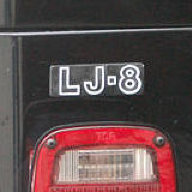
LJ-8Final5.jpg


PickupAndTrailerNewHouse.jpg


BTW Since I bought my Grenadier a year ago I don't have enough garage bays for all three Jeeps and the trailer so I've considered selling the pickup. My wife has forbidden me to sell it, but someday I'll either sell that or the JKU, really don't need so many Jeeps anymore. Also spending most of my time these days on renovations to our new-to-us 200-year-old house (pictured above) so not much time for designing and building Jeep mods anymore :(
 
that is a good looking truck and house

Thank you very much.

The truck I built in 2008, I started with an almost new LJ with about 10,000 miles on it, cut it in half, lengthened the frame, added a bed and closed the cab. The goal was to build a modern version of the classic Willys pickup. It's been a great hauler for 17 years now and it's hauled all kinds of building material and other things as we've been renovating/restoring the house.

The house was built roughly 200 years ago (we've found no records so far as to its exact build date). It's in a National Historic District and it's been added on to several times over the years, including 1925, 1950's and 1970's and each renovation removed historic charm from the house so I've spent the last two years (so far) renovating and adding historic details back in. The first thing I did was add a garage with 3 bays styled like a classic carriage house so I'd have a place out of the weather for my Jeeps and Grenadier, this photo was taken last year as we were restoring the siding on the house shortly after the garage was finished.

Because of all of the work on the house I've had almost no time to do Jeep designs and mods, other than a little design work for MORryde (cargo area slide tray) and some fabric designs for Overland Outfitters (mostly for the Ineos Grenadier). I've got about six months of home renovation left and hopefully then I'll get back to Jeep (and Grenadier) design projects.

Apologies for the off-topic deviation into the house but it explains why I haven't been very active in the Jeep world for the last two years. I am about to be a little more active, Auxbeam told me the other day they're sending me their latest switch panel to test and review, I'll post about it as soon as it arrives and I test it.


Garage112424[1].jpg
 
Thank you very much.

The truck I built in 2008, I started with an almost new LJ with about 10,000 miles on it, cut it in half, lengthened the frame, added a bed and closed the cab. The goal was to build a modern version of the classic Willys pickup. It's been a great hauler for 17 years now and it's hauled all kinds of building material and other things as we've been renovating/restoring the house.

The house was built roughly 200 years ago (we've found no records so far as to its exact build date). It's in a National Historic District and it's been added on to several times over the years, including 1925, 1950's and 1970's and each renovation removed historic charm from the house so I've spent the last two years (so far) renovating and adding historic details back in. The first thing I did was add a garage with 3 bays styled like a classic carriage house so I'd have a place out of the weather for my Jeeps and Grenadier, this photo was taken last year as we were restoring the siding on the house shortly after the garage was finished.

Because of all of the work on the house I've had almost no time to do Jeep designs and mods, other than a little design work for MORryde (cargo area slide tray) and some fabric designs for Overland Outfitters (mostly for the Ineos Grenadier). I've got about six months of home renovation left and hopefully then I'll get back to Jeep (and Grenadier) design projects.

Apologies for the off-topic deviation into the house but it explains why I haven't been very active in the Jeep world for the last two years. I am about to be a little more active, Auxbeam told me the other day they're sending me their latest switch panel to test and review, I'll post about it as soon as it arrives and I test it.


View attachment 669229

I am a huge fan of this man’s thought processes. The results speak for themselves.

One thing that he makes me realize is it is truly possible to really think- and that maybe just maybe a lot of of us really don’t think as much as we would like to think we do-

One person said most people don’t do it because it’s actually hard work-

If he ever wanted to do a thread about how he conceptualize his things and gets his mind around everything, I would probably print it and carry it around.

And I’m not trying to overstate anything I’ve been watching him for a long time and as somebody who builds things for a living, I just cannot get over how he operates.

Jeff people like you inspire me.
 
I am a huge fan of this man’s thought processes. The results speak for themselves.

One thing that he makes me realize is it is truly possible to really think- and that maybe just maybe a lot of of us really don’t think as much as we would like to think we do-

One person said most people don’t do it because it’s actually hard work-

If he ever wanted to do a thread about how he conceptualize his things and gets his mind around everything, I would probably print it and carry it around.

And I’m not trying to overstate anything I’ve been watching him for a long time and as somebody who builds things for a living, I just cannot get over how he operates.

Jeff people like you inspire me.

Thank you very much for the kind words.

I'm not sure if I have enough to say about my process to devote an entire thread to it, but I'll try to summarize what I think works for me here.

I consider myself more of a designer than a builder. Yes I build things, but everything I build is a result of a detailed and comprehensive design process. I'll give some examples....

When I decided I needed a pickup and Jeep didn't make one, I designed my own. I spent 9 months doing a complete design process before I picked up the first tool to modify the Jeep. The first step was to decide what I wanted the end result to look like, so I started with concept drawings. Since the wheelbase was to be longer than a stock TJ or LJ, I decided to start with an LJ, this is one of the early concept drawings I did:

ConceptLJ.jpg


I did numerous drawings until I decided I had the proper look, which was to do a modern version of the classic Willys pickup. Next I wanted to make sure it was going to look right in three dimensions, so I built 1/25 scale models of both my design and a Willys, starting with off-the shelf model kits and modifying both of them appropriately. I photographed both from multiple angles to make sure my design on paper translated nicely to 3d and looked like what the factory might build if they were doing a modern version of the Willys based on the Wrangler.

Models.jpg


Once I was happy with the basic design, I began designing the components, and doing detailed drawings of each components. Here are a few examples...

TailgateDesign2.jpg


There's more detailed drawings for each part...

BumperDesign.jpg


That process continued until I had designed all of the parts and modifications necessary. Once the design was done, I wrote a detailed step-by-step project plan; the overall project plan included detailed sub-plans for building each component, such as the step bumper and tailgate pictured above. Some details of the tailgate work in progress:

Details1.jpg


I followed the project plans to build all of the components until I got to the point where I had a "kit" of everything I needed to complete the truck conversion. From the beginning of the design process to the completion of the components took nine months.

Completed bed components in my workshop:

DSC_0154.JPG


Once I had all of the components built, I drove the LJ into my garage to begin the conversion and 17 days later I drove the completed (but yet unpainted) pickup out of the garage. I had a body shop do the painting but since then I've taught myself to paint and everything I've built since I've painted myself.

I wouldn't build something any other way. I'm a big believer in doing detailed concept drawings, component drawings and project plans and do them for almost everything I build. I believe that doing a complete design process ensures successful results, and breaking things down into very detailed steps and written project plans ensures that all the steps are do-able and can be done to the necessary level of quality,

ModelandReal2.jpg


JP Magazine featured the result in an issue in 2009:

JpArticle.jpg


I hope the description of this process helps someone; I'm happy to answer any questions anyone might have about the process or anything else related to how I do my work.

 
Thank you very much for the kind words.

I'm not sure if I have enough to say about my process to devote an entire thread to it, but I'll try to summarize what I think works for me here.

I consider myself more of a designer than a builder. Yes I build things, but everything I build is a result of a detailed and comprehensive design process. I'll give some examples....

When I decided I needed a pickup and Jeep didn't make one, I designed my own. I spent 9 months doing a complete design process before I picked up the first tool to modify the Jeep. The first step was to decide what I wanted the end result to look like, so I started with concept drawings. Since the wheelbase was to be longer than a stock TJ or LJ, I decided to start with an LJ, this is one of the early concept drawings I did:

View attachment 669442

I did numerous drawings until I decided I had the proper look, which was to do a modern version of the classic Willys pickup. Next I wanted to make sure it was going to look right in three dimensions, so I built 1/25 scale models of both my design and a Willys, starting with off-the shelf model kits and modifying both of them appropriately. I photographed both from multiple angles to make sure my design on paper translated nicely to 3d and looked like what the factory might build if they were doing a modern version of the Willys based on the Wrangler.

View attachment 669443

Once I was happy with the basic design, I began designing the components, and doing detailed drawings of each components. Here are a few examples...

View attachment 669445

There's more detailed drawings for each part...

View attachment 669446

That process continued until I had designed all of the parts and modifications necessary. Once the design was done, I wrote a detailed step-by-step project plan; the overall project plan included detailed sub-plans for building each component, such as the step bumper and tailgate pictured above. Some details of the tailgate work in progress:

View attachment 669447

I followed the project plans to build all of the components until I got to the point where I had a "kit" of everything I needed to complete the truck conversion. From the beginning of the design process to the completion of the components took nine months.

Completed bed components in my workshop:

View attachment 669451

Once I had all of the components built, I drove the LJ into my garage to begin the conversion and 17 days later I drove the completed (but yet unpainted) pickup out of the garage. I had a body shop do the painting but since then I've taught myself to paint and everything I've built since I've painted myself.

I wouldn't build something any other way. I'm a big believer in doing detailed concept drawings, component drawings and project plans and do them for almost everything I build. I believe that doing a complete design process ensures successful results, and breaking things down into very detailed steps and written project plans ensures that all the steps are do-able and can be done to the necessary level of quality,

View attachment 669455

JP Magazine featured the result in an issue in 2009:

View attachment 669449

I hope the description of this process helps someone; I'm happy to answer any questions anyone might have about the process or anything else related to how I do my work.


Wow! Thats impressive to say the least.
 
  • Like
Reactions: John Cooper
Thank you very much for the kind words.

I'm not sure if I have enough to say about my process to devote an entire thread to it, but I'll try to summarize what I think works for me here.

I consider myself more of a designer than a builder. Yes I build things, but everything I build is a result of a detailed and comprehensive design process. I'll give some examples....

When I decided I needed a pickup and Jeep didn't make one, I designed my own. I spent 9 months doing a complete design process before I picked up the first tool to modify the Jeep. The first step was to decide what I wanted the end result to look like, so I started with concept drawings. Since the wheelbase was to be longer than a stock TJ or LJ, I decided to start with an LJ, this is one of the early concept drawings I did:

View attachment 669442

I did numerous drawings until I decided I had the proper look, which was to do a modern version of the classic Willys pickup. Next I wanted to make sure it was going to look right in three dimensions, so I built 1/25 scale models of both my design and a Willys, starting with off-the shelf model kits and modifying both of them appropriately. I photographed both from multiple angles to make sure my design on paper translated nicely to 3d and looked like what the factory might build if they were doing a modern version of the Willys based on the Wrangler.

View attachment 669443

Once I was happy with the basic design, I began designing the components, and doing detailed drawings of each components. Here are a few examples...

View attachment 669445

There's more detailed drawings for each part...

View attachment 669446

That process continued until I had designed all of the parts and modifications necessary. Once the design was done, I wrote a detailed step-by-step project plan; the overall project plan included detailed sub-plans for building each component, such as the step bumper and tailgate pictured above. Some details of the tailgate work in progress:

View attachment 669447

I followed the project plans to build all of the components until I got to the point where I had a "kit" of everything I needed to complete the truck conversion. From the beginning of the design process to the completion of the components took nine months.

Completed bed components in my workshop:

View attachment 669451

Once I had all of the components built, I drove the LJ into my garage to begin the conversion and 17 days later I drove the completed (but yet unpainted) pickup out of the garage. I had a body shop do the painting but since then I've taught myself to paint and everything I've built since I've painted myself.

I wouldn't build something any other way. I'm a big believer in doing detailed concept drawings, component drawings and project plans and do them for almost everything I build. I believe that doing a complete design process ensures successful results, and breaking things down into very detailed steps and written project plans ensures that all the steps are do-able and can be done to the necessary level of quality,

View attachment 669455

JP Magazine featured the result in an issue in 2009:

View attachment 669449

I hope the description of this process helps someone; I'm happy to answer any questions anyone might have about the process or anything else related to how I do my work.
Very impressive!! I remember seeing the JP magazine article.
 
Thank you very much for the kind words.

I'm not sure if I have enough to say about my process to devote an entire thread to it, but I'll try to summarize what I think works for me here.

I consider myself more of a designer than a builder. Yes I build things, but everything I build is a result of a detailed and comprehensive design process. I'll give some examples....

When I decided I needed a pickup and Jeep didn't make one, I designed my own. I spent 9 months doing a complete design process before I picked up the first tool to modify the Jeep. The first step was to decide what I wanted the end result to look like, so I started with concept drawings. Since the wheelbase was to be longer than a stock TJ or LJ, I decided to start with an LJ, this is one of the early concept drawings I did:

View attachment 669442

I did numerous drawings until I decided I had the proper look, which was to do a modern version of the classic Willys pickup. Next I wanted to make sure it was going to look right in three dimensions, so I built 1/25 scale models of both my design and a Willys, starting with off-the shelf model kits and modifying both of them appropriately. I photographed both from multiple angles to make sure my design on paper translated nicely to 3d and looked like what the factory might build if they were doing a modern version of the Willys based on the Wrangler.

View attachment 669443

Once I was happy with the basic design, I began designing the components, and doing detailed drawings of each components. Here are a few examples...

View attachment 669445

There's more detailed drawings for each part...

View attachment 669446

That process continued until I had designed all of the parts and modifications necessary. Once the design was done, I wrote a detailed step-by-step project plan; the overall project plan included detailed sub-plans for building each component, such as the step bumper and tailgate pictured above. Some details of the tailgate work in progress:

View attachment 669447

I followed the project plans to build all of the components until I got to the point where I had a "kit" of everything I needed to complete the truck conversion. From the beginning of the design process to the completion of the components took nine months.

Completed bed components in my workshop:

View attachment 669451

Once I had all of the components built, I drove the LJ into my garage to begin the conversion and 17 days later I drove the completed (but yet unpainted) pickup out of the garage. I had a body shop do the painting but since then I've taught myself to paint and everything I've built since I've painted myself.

I wouldn't build something any other way. I'm a big believer in doing detailed concept drawings, component drawings and project plans and do them for almost everything I build. I believe that doing a complete design process ensures successful results, and breaking things down into very detailed steps and written project plans ensures that all the steps are do-able and can be done to the necessary level of quality,

View attachment 669455

JP Magazine featured the result in an issue in 2009:

View attachment 669449

I hope the description of this process helps someone; I'm happy to answer any questions anyone might have about the process or anything else related to how I do my work.

You know the 17 days it says a lot because basically by doing proper planning you compressed the build time astoundingly-

I feel like in the modern construction world we just skim the surface and design on the fly and work out problems that way - and I appreciate being able to do that but so deeply respect this as well.

A foreseen challenge gets better thought out.
 
  • Like
Reactions: John Cooper
You know the 17 days it says a lot because basically by doing proper planning you compressed the build time astoundingly-

I feel like in the modern construction world we just skim the surface and design on the fly and work out problems that way - and I appreciate being able to do that but so deeply respect this as well.

A foreseen challenge gets better thought out.

in the car shows I watch they always start with a Rendering. so as i dream more of building a house i have been putting together photographic ideas.

really cool that he went and made a rendering and then a model of the truck. i’m going. to take that idea when i start modifying my 55 F-100
 
  • Like
Reactions: John Cooper
in the car shows I watch they always start with a Rendering. so as i dream more of building a house i have been putting together photographic ideas.

really cool that he went and made a rendering and then a model of the truck. i’m going. to take that idea when i start modifying my 55 F-100

Yes, and we get plans in the construction world and I think really it’s the renovation side where you run into more unique challenges

And I’ll be quick to say I’ve worked with good plans and bad plans and I really really appreciate good plans. We have one female home Designer in the area and her work is so good that I am extremely hesitant to make the slightest modification because it usually bites me in the butt.
 
  • Like
Reactions: John Cooper
Novak Conversions Jeep Wrangler TJ radiator