News + current events

Also, does your career depend on the super expensive highly valued name brand school like Stanford, MIT, Harvard... or can you go to a local state school and get a good job? My professional career path didn't require a masters degree but I had several extremely difficult professional exams that I had to pass. The vast majority people in my field studied and attempted these exams while working full time for a company (which they would foot the bill for the exam, including study material) Once you finished the exams no one cared where you went to college.
 
Also, does your career depend on the super expensive highly valued name brand school like Stanford, MIT, Harvard... or can you go to a local state school and get a good job? My professional career path didn't require a masters degree but I had several extremely difficult professional exams that I had to pass. The vast majority people in my field studied and attempted these exams while working full time for a company (which they would foot the bill for the exam, including study material) Once you finished the exams no one cared where you went to college.

I would advise anyone to take their first 2 years at a community college for the associates degree. Then transfer to the 4 year school of choice....of course, neither of my kids did that.
 
I would advise anyone to take their first 2 years at a community college for the associates degree. Then transfer to the 4 year school of choice....of course, neither of my kids did that.

That is good advise, and partly what I did. I took 2-3 years after high school to work and generally be young and retarded, then when I figured out I had done enough of that, I took 3 semesters (fall, spring, summer) of transferrable classes at a local community college, which allowed me to take baby steps back into school and keep my overall cost down.
 
It was sold to me/us as something we had to do.

same, but it was never presented as some fulfilling journey of self-discovery as many in the past couple of decades have treated it. As far as I thought of it, it was no different than trade school other than it took longer to finish. My dad was an attorney and I was never interested in that; I chose engineering because it fit my skillset. I went to probably the best engineering school in the state, but it's still a public school and tuition in 2002 was still reasonable. I borrowed a little toward the end, but I graduated with only $11k in debt at some really low subsidized interest rate and had it paid off within a few years (it could have been faster, but it was lower interest than my investments so I didn't always make extra payments). I had dreams of a career in racing or at least automotive, but had no idea how to get into that with no connections so I ended up in HVACR because that's who hired me. I'm not bitter about it, I was very lucky to land with a privately owned company that seems to think I'm decent at this stuff.
 
Last edited:
I would advise anyone to take their first 2 years at a community college for the associates degree. Then transfer to the 4 year school of choice....of course, neither of my kids did that.

A lot of times credits do not transfer, in which case you have wasted your time. Is it BS? Yep! But this seems to be the case when moving between the different levels of higher education.
 
A lot of times credits do not transfer, in which case you have wasted your time. Is it BS? Yep! But this seems to be the case when moving between the different levels of higher education.

Yeah, it doesn't really work that way, but what you CAN do (and I did) is enroll at the university, get the course list for your degree and check it against what the community college offers to see what will transfer.

For most of my semesters I was taking a class or two at OKCCC alongside what I was doing at OU. Most of my Gen Ed classes and even a couple of lower division engineering classes like statics and materials were available so I took them there instead and saved a fair bit of money.
 
  • Like
Reactions: srimes
https://www.foxnews.com/media/dem-l...ng-paid-stay-home-from-work-when-menstruating

Democratic lawmakers complained in late May about employers not providing paid leave for painful menstruation cycles, calling it "economic violence."

"Forcing a worker to choose between paying her rent or losing a day's pay to recover from a grueling gynecological procedure is not a choice. It’s economic violence," Rep. Adelita Grijalva, D-Ariz., said during a press conference on May 21.

Grijalva was joined by Reps. Yassamin Ansari, D-Ariz., and Rashida Tlaib, D-Mich., who are backing Ansari's Reproductive Healthcare Leave Act, which is a part of her "H.E.R." (Healthy, Equity, Rights) Agenda.

The Reproductive Healthcare Leave Act (H.R. 8158) — the flagship bill — would provide up to 12 days of paid leave per year for reproductive health needs, including severe menstrual pain, abortions, menopause symptoms, miscarriages, biopsies, vasectomies and more. The "H.E.R." Agenda also includes studies regarding gynecological pain management and Premenstrual Dysphoric Disorder awareness.

"No one should have to choose between their paycheck and their health to be able to manage that kind of incredible pain," Tlaib said during the press conference.

Ansari, the youngest woman in Congress, ties the bill to her own period pain, telling TIME in an article published on Sunday that she once woke up the floor of her "local bodega, drenched in sweat, being dragged into an ambulance" and said she has days every month when she feels "barbed wire" inside of her.

The bill, introduced Saturday with 28 Democratic cosponsors and zero Republican sponsors, has already received backlash.

"Ladies, you can’t keep saying men can be women, but then also say that women are a special category. You’ve got to pick a lane. You’re very confusing to the rest of us." Rhode Island state Rep. Marie Hopkins, R., posted on X.

Some social media users also questioned whether the bill could more easily allow employees to discriminate against hiring women and shared concerns that despite it covering vasectomies, men wouldn't receive paid days for prostate issues and testosterone-related conditions.

Other users also questioned if the bill could force employers to pay workers for time off to recover from abortions.

The bill is endorsed by Planned Parenthood, the National Organization for Women (NOW) and the American College of Obstetricians and Gynecologists.


Well let’s have those endorsing organizations pay for that if it’s so damn important to them.
 
Yeah, it doesn't really work that way, but what you CAN do (and I did) is enroll at the university, get the course list for your degree and check it against what the community college offers to see what will transfer.

So, you're saying not all credits transfer between schools? Of course, you can get the list from 1 university and see what transfers to the other, but how many times have you heard about people thinking it would transfer and didn't? This seems to happen most often with the "free" community college, people think they are doing a good thing but mostly your just wasting time.
 
The nice thing about this country is there are lots of paths to success.

One of my most successful relatives dropped out of high school and went to work driving a dump truck. Eventually he owned one of the companies that poured concrete over a large portion of Colorado.

There is no correct path. Timing, luck and work ethic play a huge role.

However there is a clear path to failure and it's getting tied down in debt for a worthless degree that your odds of success are very small. Choose wisely.
 
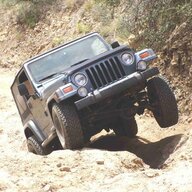
Late in the day Friday President Donald Trump issued an executive order that lifts many key off-road vehicle restrictions on federal public lands that have stood for roughly 50 years. It’s the latest in a series of policy moves that erode conservation protections for public lands.

This executive order repeals two previous executive orders designed to safeguard wildlife and habitat on public lands. The first was signed in 1972 by President Richard Nixon to protect natural resources and reduce user conflicts. It established clear guidelines for off-road vehicle regulation and enforcement on the ground, like asking agency employees to designate OHV trails and non-OHV trails, carve out exceptions of official use, and incorporate public comment.

The second was signed in 1977 by President Jimmy Carter, which allowed agency heads to shut down public off-roading wherever vehicles were causing damage to natural resources. That included when off-road vehicles “will cause or is causing considerable adverse effects on the soil, vegetation, wildlife, wildlife habitat or cultural or historic resources of particular areas or trails of the public lands.” In other words, this order simply authorized agency heads to close OHV use where it was causing clear damage.

Trump’s own executive order calls both of these long-standing executive orders “burdensome and outdated,” noting they were put in place before modern mapping technologies that can detect off-road use in sensitive areas. The White House says this is a way to improve access to public land by “removing unnecessary and counterproductive restrictions.”

Conservation groups are largely opposed to the move, while off-roading groups have welcomed the executive order as a key access win and a historic opportunity to revisit old off-road closures.

“CORVA supports responsible recreation, sound stewardship, and science-based management,” wrote the California Off-Roading Vehicle Association in an Instagram post about the “exciting news” of a potential change in federal policy. “We also believe public lands should remain accessible to the public and managed under the long-standing principle of multiple use.”

Friday’s executive order does not immediately change any riding regulations but it could open key public lands and sensitive habitat to off-road use, including National Park Service lands, which typically have greater restrictions for off-road vehicles compared to BLM and U.S. Forest Service lands. Previous estimates have noted that more than 80 percent of all off-highway vehicle and mountain bike trail opportunities in the West are on BLM and Forest Service lands.

“Taking away these two executive orders takes away the basic framework of policy in which regulating off-road vehicles on public lands was founded on,” says Jack Polentes, policy and government relations senior manager for Backcountry Hunters and Anglers.

Polentes, who previously worked for NOAA and the USFWS, also notes that this executive order yanks the rug out from under other policies that are also being considered for rescission or being rewritten, such as the Travel Management Plan with the US Forest Services or BLM Resource Management Plans legislated out through the use of the Congressional Review Act. This latest move, he says, is “just the next step that can really threaten our backcountry environments.”

It also comes on the heels of the recent repeal of the Public Lands Rule, which put conservation on the same multiple-use mandate for public lands as natural resource extraction, grazing, and other uses

https://www.outdoorlife.com/conservation/off-road-restrictions-revoked-public-land/
 
I just posted this in another thread, but it kinda fits with the above.


I completely understand the problems with the homeless situation . Our Forest Service road closers have nothing to do with the homeless issues . Our closures are environmentalist , trail abusers, illegal dumping and so forth . It effects us greatly because we have very little public lands in this part of the country .

Same thing happened in Arizona where we have a lot of public lands. A LOT roads and OHV trails in the national forests were closed over the past several years under the new Travel Management Plan.

Here's one web site with information:

https://www.azbackroads.com/land-us...-road-closures-on-public-land-will-shock-you/

"On this map, there are a total of 20,567 different roads that average 1.9 miles long and collectively consist of 39,541 miles that are closed or where motorized use is restricted to the public. Most closed roads are small side trails that provide access to camping areas, lookouts, mountain tops, historical sites, river access areas, active small-scale mineral claims, and sometimes private property."

"Additionally, this map does not include:
Tonto National Forest TMP that closed 1,853 miles of roads.
Fredonia and Arizona Strip TMP that closed 670 miles of roads."
 
  • Like
Reactions: speeding_infraction
So, you're saying not all credits transfer between schools? Of course, you can get the list from 1 university and see what transfers to the other, but how many times have you heard about people thinking it would transfer and didn't? This seems to happen most often with the "free" community college, people think they are doing a good thing but mostly your just wasting time.

The credit hours probably almost always transfer but the courses themselves may not be accepted as equivalent to courses required for your degree program. Almost everyone I knew that transferred in from other schools had at least some classes they had to retake. They probably just graduated with more credit hours than they needed or were able to apply them toward electives.

Somewhat similar from my own experience was scoring a 4 in my AP Physics test, starting me with 8 hours of physics credit, but it was only considered for physics 1 and 2 "for non science majors" so I had to take them "for engineering majors". Got the hours, but still had to take the courses again. Fortunately the AP tests still got me out of government, psychology, one semester of English comp and two semesters each of calculus and chemistry.
 
The credit hours probably almost always transfer but the courses themselves may not be accepted as equivalent to courses required for your degree program. Almost everyone I knew that transferred in from other schools had at least some classes they had to retake. They probably just graduated with more credit hours than they needed or were able to apply them toward electives.

Somewhat similar from my own experience was scoring a 4 in my AP Physics test, starting me with 8 hours of physics credit, but it was only considered for physics 1 and 2 "for non science majors" so I had to take them "for engineering majors". Got the hours, but still had to take the courses again. Fortunately the AP tests still got me out of government, psychology, one semester of English comp and two semesters each of calculus and chemistry.

I took AP classes in high school and my teacher (a PhD) recommended that I don’t test out and retake the classes in college because they’d be different for engineering.

I did test out of the English stuff but still had to make up the credits elsewhere.

I ended up taking a masters level vehicle dynamics course as an elective to cover those credits.
 
Last edited:
Sounds like a bunch of mouthy yankees took it a little father than they actually wanted to. Also, I think Matt needs to find new friends. Boys around here would have left the old man floating after that slap and the words "I'll sue you" wouldn't cross anybody's mind.
 
1780937458838.webp


https://www.cnn.com/2026/06/04/us/aaron-spencer-murder-charges-dismissed