Brake switch wiring

Michelle Sweeney

Member
Original poster
Joined
Jul 31, 2018
Messages
49
Location
FL
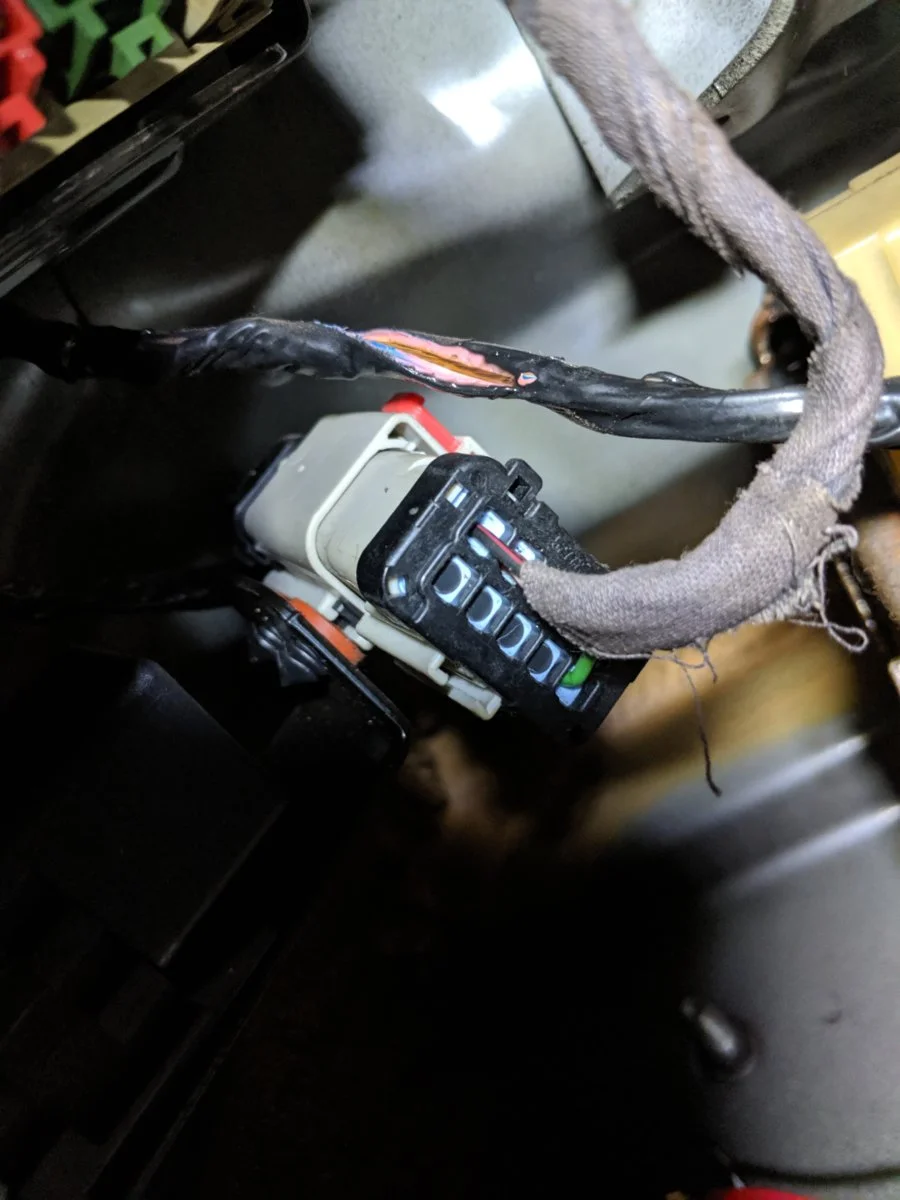
So....Stella has a problem. Brake fuse (#2) was blowing as soon as I put one in. Checked the usual stuff with the lights/bulbs, etc and it all checked out fine. Upon reading in this forum, which is amazing, I was led to check my brake switch. Viola! I find this. The wiring is toast. Well maybe not toast but its been melted off and the wire is exposed. I need some suggestions with how to fix it. Just get under there and dissect them apart and try to salvage it?

THis fuse had been a point of contention for me and Stella for awhile. I kept blowing and I kept replacing without really checking it, I just thought that with my mods maybe I had jacked up something. But now finding this, I don't know....This needs to be fixed....help me out!

So what you see in the picture is the wire that goes directly into the brake switch.
IMG_20190709_115637.webp
 
Ahh the saga continues. I started to fillet these wires apart when I noticed the connector for the brake switch is melted. It still fits into the switch....what do you guys think?

IMG_20190709_145922.webp
 
Looks like you need a new connector.

You could seek out the connector from another wiring harness, though I suspect you'll pay a lot, since you'd have to buy the entire wiring harness.

The better bet would be to count how many wires that has going into it and get an automotive grade connector with the correct amount of pins.

If you tell me how many wires it has, I can find you a good, automotive grade connector.
 
Looks like you need a new connector.

You could seek out the connector from another wiring harness, though I suspect you'll pay a lot, since you'd have to buy the entire wiring harness.

The better bet would be to count how many wires that has going into it and get an automotive grade connector with the correct amount of pins.

If you tell me how many wires it has, I can find you a good, automotive grade connector.

6 wires
 
Hey Chris, There is a switch that sits just under the brake switch that is warm even though the car is off. As Im working on this brake connector problem i noticed that this switch is warm. Its the same type of relay (switch or fuse, I dont know whats it called)...buts exactly the same one that is under the hood fuse box used for the starter. Any idea what this one is and if its related to these wires melting?
 

Use something like this:
https://www.amazon.com/dp/B07G9GRD3Y/?tag=wranglerorg-20

Hey Chris, There is a switch that sits just under the brake switch that is warm even though the car is off. As Im working on this brake connector problem i noticed that this switch is warm. Its the same type of relay (switch or fuse, I dont know whats it called)...buts exactly the same one that is under the hood fuse box used for the starter. Any idea what this one is and if its related to these wires melting?

I'd have to see a picture of it to know. It's probably normal for it to be warm immediately after you turn the vehicle off. If it's warm overnight, then I might be concerned.

I'm not sure why that plug melted. Perhaps the fuse was much too big, the circuit got overworked, and the amperage on the fuse was bigger than it needed to be, thus it melted the wiring?
 
I did have a 30amp fuse in the 20amp slot so I get that its drawing too much amperage and thus heated and melt....however, what started the original problem I don't know....

I'll see if I can get a picture of the relay switch....but right now my dash is in pieces and I've been filleting these wires apart and Ive got them down to individual wires at the bifurcation. So.....best thing I can come up with right now is that Im going to buy a dash harness off ebay and chop off that connector, re-wire it in and start fresh.

I don't know what else I can do.
 
Michelle, what's the year? The wiring section in the factory manual should have a breakdown of every connector, the wires that go through it, and diagrams of the harnesses and their terminations relative to the rest of the vehicle. The manuals are in the TJ Resources section
 
Michelle, what's the year? The wiring section in the factory manual should have a breakdown of every connector, the wires that go through it, and diagrams of the harnesses and their terminations relative to the rest of the vehicle. The manuals are in the TJ Resources section

Its a 99. That FSM is like reading greek....I can't make sense of it. I did narrow it down to the dash harness. This is the problem circuit.....or something like that...
 
This diagram here might help you identify the other component you're looking for. As for replacing that connector it definitely needs to be done, but I agree w/ Chris that an aftermarket automotive grade connector is your best bet. You could try calling a dealership with the connector info from the FSM to see if you can get the factory connector, but I haven't ever gone that route so I don't know if they still sell them or how much they are.

103418
 
Yeah Ive seen this picture before but I can't narrow down that relay switch. Its ok, one thing at a time and Im going to get this connector changed first...then I can worry about that relay.
 
Yeah, you obviously need to fix the wiring, but then also figure out why that connector melted. Seems like that's the root cause here. If you look at the diagram below you can see how the fuse that keeps popping (#2) feeds down into pin 5 of the connector. We start at the top in the fuse block at fuse 2 which is a 20 amp, follow it straight down into the brake lamp switch. It is a pink wire with a dark brown stripe (PK/DB) and it goes into pin 5 of that connector. The fuse is probably blowing because the connector is melted and exposing that wire to a ground or a neighboring wire, drawing excess amperage and popping the fuse.


103424
 
Yeah, you obviously need to fix the wiring, but then also figure out why that connector melted. Seems like that's the root cause here. If you look at the diagram below you can see how the fuse that keeps popping (#2) feeds down into pin 5 of the connector. We start at the top in the fuse block at fuse 2 which is a 20 amp, follow it straight down into the brake lamp switch. It is a pink wire with a dark brown stripe (PK/DB) and it goes into pin 5 of that connector. The fuse is probably blowing because the connector is melted and exposing that wire to a ground or a neighboring wire, drawing excess amperage and popping the fuse.


View attachment 103424

Thats crazy these diagrams have that much info!
That makes sense, but there was a 30 amp fuse in the #2 space causing too much amperage, and heat. But the 20amp original blown fuse....why....so frustrating.
 
Thats crazy these diagrams have that much info!
That makes sense, but there was a 30 amp fuse in the #2 space causing too much amperage, and heat. But the 20amp original blown fuse....why....so frustrating.

That's not how it works... The fuse doesn't cause a higher amperage draw. The fuse is like a failsafe switch, and its rating is the amperage at which it will pop. So, a circuit with a 20 amp fuse is only rated to carry a load (or draw) of 20 amps. Anything more than that can cause damage to wiring or components, so a fuse with a rating of 20 amps is installed to break open in that event, thus preventing damage. If a fuse pops as soon as it is installed then you have a problem in the circuit; most likely a short somewhere that is allowing excess amperage to be drawn. Installing a fuse with a higher rating will only allow the problem area to draw higher amperage and most likely damage wiring and/or cause other problems.

My guess here is that the grey 6 pin plug melted, pin 5 on that plug was able to short itself to a neighboring wire, thus drawing excessive amperage and popping the #2 fuse in that circuit. The root cause of that damaged connector is what you have to narrow down.
 
I ha
That's not how it works... The fuse doesn't cause a higher amperage draw. The fuse is like a failsafe switch, and its rating is the amperage at which it will pop. So, a circuit with a 20 amp fuse is only rated to carry a load (or draw) of 20 amps. Anything more than that can cause damage to wiring or components, so a fuse with a rating of 20 amps is installed to break open in that event, thus preventing damage. If a fuse pops as soon as it is installed then you have a problem in the circuit; most likely a short somewhere that is allowing excess amperage to be drawn. Installing a fuse with a higher rating will only allow the problem area to draw higher amperage and most likely damage wiring and/or cause other problems.

My guess here is that the grey 6 pin plug melted, pin 5 on that plug was able to short itself to a neighboring wire, thus drawing excessive amperage and popping the #2 fuse in that circuit. The root cause of that damaged connector is what you have to narrow down.
[/QUOTE


I had exposed wires on the 3rd brake light. The were tucked in behind the delete plate of my stick tire carrier. Would that do it?
 
That's not how it works... The fuse doesn't cause a higher amperage draw. The fuse is like a failsafe switch, and its rating is the amperage at which it will pop. So, a circuit with a 20 amp fuse is only rated to carry a load (or draw) of 20 amps. Anything more than that can cause damage to wiring or components, so a fuse with a rating of 20 amps is installed to break open in that event, thus preventing damage. If a fuse pops as soon as it is installed then you have a problem in the circuit; most likely a short somewhere that is allowing excess amperage to be drawn. Installing a fuse with a higher rating will only allow the problem area to draw higher amperage and most likely damage wiring and/or cause other problems.

My guess here is that the grey 6 pin plug melted, pin 5 on that plug was able to short itself to a neighboring wire, thus drawing excessive amperage and popping the #2 fuse in that circuit. The root cause of that damaged connector is what you have to narrow down.

The fuse does allow a higher amperage to draw. A short circuit will draw as many amps as possible... Until something blows.
 
  • Like
Reactions: qslim
The fuse does allow a higher amperage to draw. A short circuit will draw as many amps as possible... Until something blows.

That’s correct. A higher rated fuse will allow excess amperage, but only if there is a problem elsewhere in the circuit. The fuse rating itself doesn’t cause a higher draw.
 
That’s correct. A higher rated fuse will allow excess amperage, but only if there is a problem elsewhere in the circuit. The fuse rating itself doesn’t cause a higher draw.


Since this guy is blowing the fuse upon insertion its safe to assume he has a short circuit.
 
  • Like
Reactions: Alphonse53
I found bare wires on the 3rd brake light. I dont currently have a 3rd light hooked up and the ends of those connections were just chillin' and tucked behind the spare tire carrier delete plate. All metal....So Im hoping that Ive buttoned that up and that is what was causing the original problem.

Additionally, do you have a pin out for this connector? Im curious to see if those melted pins are the ones that coincide with the 3rd light.
 
I found bare wires on the 3rd brake light. I dont currently have a 3rd light hooked up and the ends of those connections were just chillin' and tucked behind the spare tire carrier delete plate. All metal....So Im hoping that Ive buttoned that up and that is what was causing the original problem.

Additionally, do you have a pin out for this connector? Im curious to see if those melted pins are the ones that coincide with the 3rd light.

Nevermind, found it in the diagram in this thread. Its from the center stop lamp and thats the one....! Hopefully I'll get that bad boy rewired and be done with this fiasco.

I love this forum!!