Any difference in 2.5 exhaust manifolds?

Tinytim14

Member
Original poster
Joined
Jan 18, 2019
Messages
27
Location
Washington
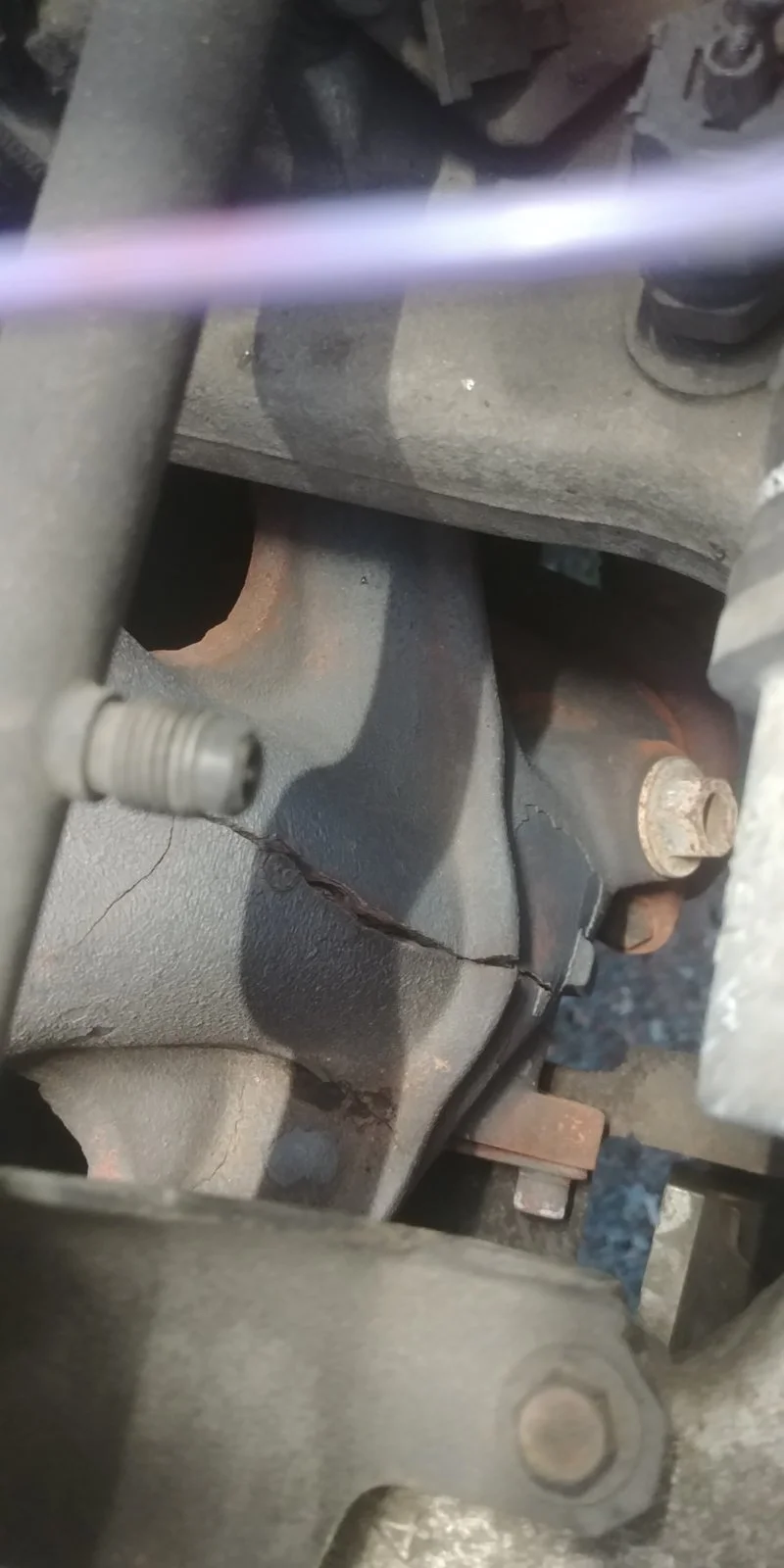
I found that I have a cracked Exhaust Manifold. What jeep doesnt so I was wanting to know if anyone could tell me if there is and difference in a 99 jeep tj 2.5L to a 2000 jeep tj 2.5L because on amazon I can on really find headers that are 97 to 99 so any help would be very helpful
20190411_190118.webp
 
So what is it? Are you replacing the manifold or considering aftermarket headers?

If you're replacing the manifold with another, it's unlikely you can find that exact version. My 2001 had that same manifold and when I ordered an OE Mopar one, the one in the box turned out to be a universal Chinese 1984-2002 version.

88297


I returned that to the dealer and ordered another Mopar OE one from Rock Auto who assured me that their pictures (showing your version) was accurate, although they refused to open a box up to check. A few days later the Rockauto Mopar box showed up and it was the same Chinese version like this. So I hacked off the carb riser and spent an hour or more grinding, measuring, and tweaking it. It's likely the same manifold you can buy jobber for half the money.

Headers - they will crack! I'd buy the Banks version directly from them for the 5 year warranty.
 
  • Like
Reactions: Tahdig_siah
Lot of issues with replacement CI exhaust manifolds. I never did find anything that would fit my 2.5 correctly. The intake and exhaust share a few bolts and all the CI manifolds have a casting that is to thick to properly tighten the intake manifold properly.

There are only a few choices out there, one is to locate a used OEM manifold or switch to tubular headers that fit the OEM pattern. Banks offers them but they are a bit pricey. I found a set of SS headers OEM pattern headers on ebay that I have been running for 4 years now, ran about $140.
 
Lot of issues with replacement CI exhaust manifolds. I never did find anything that would fit my 2.5 correctly. The intake and exhaust share a few bolts and all the CI manifolds have a casting that is to thick to properly tighten the intake manifold properly.

This is exactly the problem with these; the shared bolts and cone washers, which allow some small height differences. These rough castings are too thick. Be prepared to spend some time trimming these down (angle grinder 4-1/2" with 1/16 cutting wheel works great) and measuring to get them close. Allow for the type of gaskets you choose. Your not taking enough off to weaken them, just doing the finishing that the manufacturer should have done.
 
This is exactly the problem with these; the shared bolts and cone washers, which allow some small height differences. These rough castings are too thick. Be prepared to spend some time trimming these down (angle grinder 4-1/2" with 1/16 cutting wheel works great) and measuring to get them close. Allow for the type of gaskets you choose. Your not taking enough off to weaken them, just doing the finishing that the manufacturer should have done.

I did grind down the shared bolt casting on my first attempt to use the OEM style manifold and it lasted about 4 months before it cracked again on the main body. If I recall it was the Dorman manifold and that was enough for me.


i


i
 
Ordered cheap long tube headers we will see ill post pics once it shows up and how it fits I have to extend the o2 wires and it comes with a new mid so we will see
 
Reviving this thread to ask for any updates. Still true that there are no replacement manifolds that fit well without grinding? I don’t quite trust myself to do that well, and it sounds like it’s add a lot of time to the job.
 
Reviving this thread to ask for any updates. Still true that there are no replacement manifolds that fit well without grinding? I don’t quite trust myself to do that well, and it sounds like it’s add a lot of time to the job.
Not aware of any acceptable CI manifolds at this point other then trying to track down an original OEM.
 
  • Like
Reactions: macleanflood
Not aware of any acceptable CI manifolds at this point other then trying to track down an original OEM.

Gotcha, thanks. But, even as early as 2001, when my 1997 one cracked, it seemed that the OEMs were already known for cracking. So, why would anyone want to go with the an OEM? Or is it just that the OEMs will crack and the others will crack even faster?
 
  • Like
Reactions: Blondie70
Gotcha, thanks. But, even as early as 2001, when my 1997 one cracked, it seemed that the OEMs were already known for cracking. So, why would anyone want to go with the an OEM? Or is it just that the OEMs will crack and the others will crack even faster?
Although they do crack they were not nearly as bad as the 4.0 manifolds so if you find a used survivor and they do show up it's a pretty good bet it's gonna hold up. I've been keeping my eye open for one just in case.

The newer aftermarket ones have a blanked off O2 port (for YJ 2.5) that is a royal pain to seal off (and stay sealed) and the castings are too thick where the bolts are common to the intake manifold.
 
  • Like
Reactions: SSTJ
Reviving this thread to ask for any updates. Still true that there are no replacement manifolds that fit well without grinding? I don’t quite trust myself to do that well, and it sounds like it’s add a lot of time to the job.
Don't worry about the grinding. I did not even bother to pull out calipers. I just put the old manifold up near the new one and my son used the flap disk until the two parts were visually near the same thickness. Once close, use the intake manifold ( while still off the jeep) and put them together on a flat surface like the garage floor. Grind more if need be.

The flap disks make this very simple.

The disks cut faster than you may think, so pause every 30 seconds or so to ensure you don't remove to much material.

Nothing about this operation needs to be pretty or precise. Get close and things will still seal nicely.

You got this!
 
  • Like
Reactions: SSTJ and Blondie70
Don't worry about the grinding. I did not even bother to pull out calipers. I just put the old manifold up near the new one and my son used the flap disk until the two parts were visually near the same thickness. Once close, use the intake manifold ( while still off the jeep) and put them together on a flat surface like the garage floor. Grind more if need be.

The flap disks make this very simple.

The disks cut faster than you may think, so pause every 30 seconds or so to ensure you don't remove to much material.

Nothing about this operation needs to be pretty or precise. Get close and things will still seal nicely.

You got this!

Thanks. And, can anyone help me understand: am I grinding away corners/edges to make it able to make clean contact, or am I grinding away at the contact surface itself, trying to create a more even/flush mounting surface?

This is where a pic would be worth 1000 words!

Also, would a second gasket help with any imperfect contact surfaces?

@TJ4Jim
 
Thanks. And, can anyone help me understand: am I grinding away corners/edges to make it able to make clean contact, or am I grinding away at the contact surface itself, trying to create a more even/flush mounting surface?

This is where a pic would be worth 1000 words!

Also, would a second gasket help with any imperfect contact surfaces?

@TJ4Jim
Where both manifolds share the same mounting studs the exhaust manifold is generally too thick to get any clamping force on the intake manifold so the nut side of the cast iron flange needs to be thinner so the heavy washer on the stud can contact the intake manifold flange.
 
Where both manifolds share the same mounting studs the exhaust manifold is generally too thick to get any clamping force on the intake manifold so the nut side of the cast iron flange needs to be thinner so the heavy washer on the stud can contact the intake manifold flange.

OK, that’s a relief, so my grinding skills aren’t really determining how perfectly flush the manifolds line up, or how well they seal, etc. I’m just grinding away at the exterior of a mounting point, so that a nut can get a few more threads’ worth of grip. Yea?
 
OK, that’s a relief, so my grinding skills aren’t really determining how perfectly flush the manifolds line up, or how well they seal, etc. I’m just grinding away at the exterior of a mounting point, so that a nut can get a few more threads’ worth of grip. Yea?
It's not a matter of a few more threads, it's getting the heavy washer to clamp both manifolds as they are supposed to.


Exh Int.webp
 
It's not a matter of a few more threads, it's getting the heavy washer to clamp both manifolds as they are supposed to.


View attachment 290336

Oh! I see. Thanks for the pic. I thought you meant that the exhaust manifold went over that part of the intake manifold, and needed to be able to push in on it quite firmly. But I see now how they need to meet at an even level.

Thanks again, really helpful. It’s one of those things that of course I could see and understand for myself if I just got down there, but it’s going to be very helpful understanding this in advance.
 
  • Like
Reactions: TJ4Jim
… and I guess this is my excuse to buy an angle grinder.
 
… and I guess this is my excuse to buy an angle grinder.
Every jeeper should own an angle grinder not sure how you've made it this far without one...some guys even have 2 one for cutting and a seperate one for grinding
 
Every jeeper should own an angle grinder not sure how you've made it this far without one...some guys even have 2 one for cutting and a seperate one for grinding
Yep, I figure I'll need it for other projects too. As you can tell, I'm still new at this. You should have seen me drop the gas tank to fix a filling problem with no one else to help, and using just the factory bottle jack and two dinky stands. I did some serious yoga when putting it back in, and I think I used The Force at one point.
 
  • Haha
Reactions: Mike P.