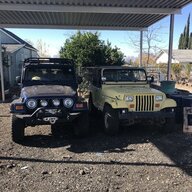
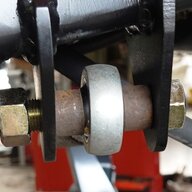
Anyone recognize this rear bumper?

Leoshorty

New Member
Original poster
Supporting Member
Joined
Jan 8, 2025
Messages
18
Location
Arkansas
This bumper was given to me and after bashing the rear hitch assembly a time or two I want to install this one. My intent is to pull my little bass boat to the campground from the house, which is less than 25 miles of easy road. Don’t worry folks, I drive easy too…

Anyway, I’m wondering about the manufacturer of this bumper, tow rating, etc, if anyone recognizes it. Thanks.
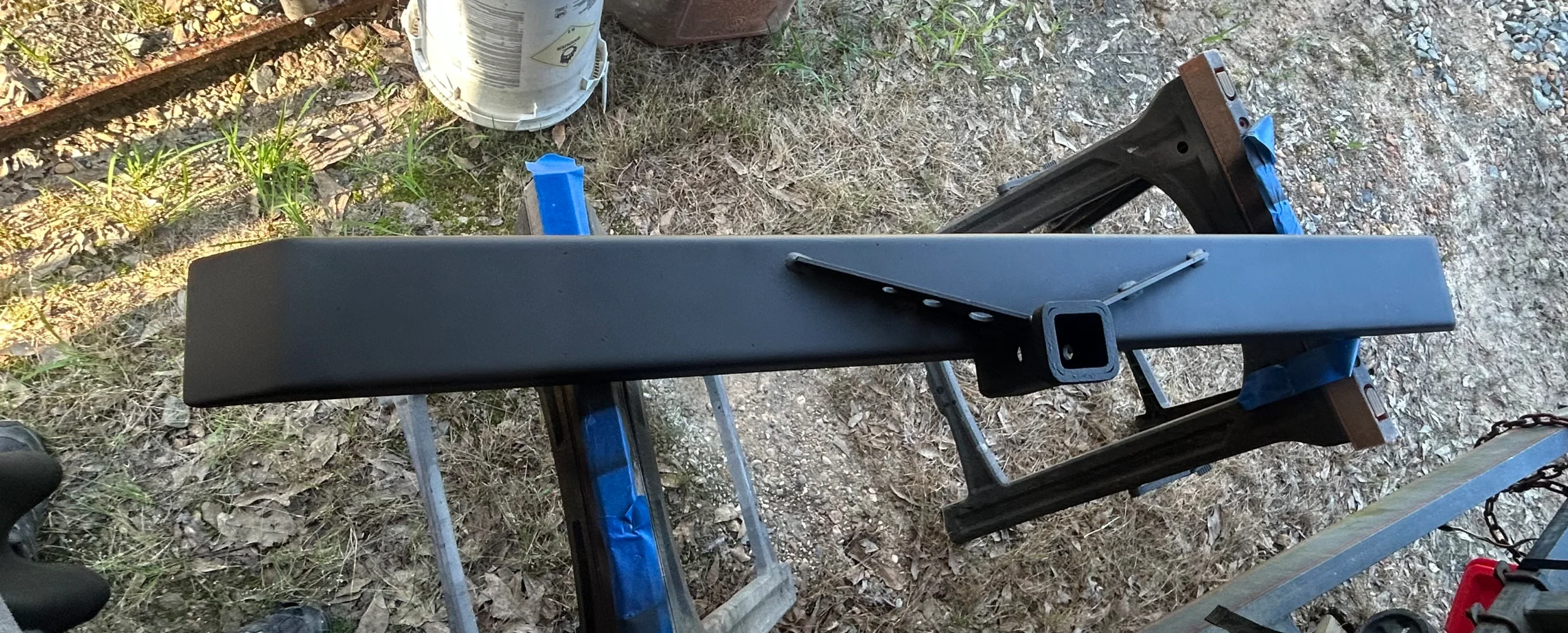
IMG_3393.webp
 
  • Wow
Reactions: TJMexico
I'm no engineer nor welder, but I would be skiddish of a construction like that. It doesn't seem to me that there is enough meat holding that receiver to the bumper. Just a couple of welds and those flanges don't seem like enough to trust any trailer to.

What I might would do - so as not to lose the bumper as you need a new one - is mount it upside down if it wouldn't interfere with the tailgate, then attach a proper frame mounted receiver under it. The bumper receiver could be used for carrying racks for stuff like bicycles, a kayak, etc., light duty stuff.

But, no, I wouldn't trust it to pull a trailer. But this is my entirely personal, unqualified opinion, so take it for what you will.

ETA: Maybe the fact that you felt compelled to ask is telling you that your gut says the same thing but you just wanted somebody to agree with you. 🤷‍♂️
 
Last edited:
How thick is the metal and depth of the flange. Those gussets may help with twisting and lateral loads but they don’t appear to help much with vertical loads. How will you attach the safety chains? It’s probably strong enough for what a TJ is rated to pull. My experience has shown me to do a quick inspection of my hitch set up every time I hook up a trailer and anytime I stop.
 
I have a dirtworx rear bumper that PO installed. Fully boxed and well made except for the powder coat which is failing miserably. Zero rust on my LJ except the powder coated bumpers. The front has been stripped and repainted. The rear is on the To Do list.

IMG_0247.webp


IMG_0241.webp


IMG_0243.webp


IMG_0246.webp
 
  • Puke
Reactions: Feralkid
  • Like
Reactions: speeding_infraction
This bumper was given to me and after bashing the rear hitch assembly a time or two I want to install this one. My intent is to pull my little bass boat to the campground from the house, which is less than 25 miles of easy road. Don’t worry folks, I drive easy too…

Anyway, I’m wondering about the manufacturer of this bumper, tow rating, etc, if anyone recognizes it. Thanks.

View attachment 692769
A few more pics of how well the receiver tube is attached to the channel and how thick the channel is would help. How it mounts to the rear crossmember wouldn't hurt either. While there is some very well intentioned advice and a bit of showing off of some other's personal favorites, the reality is it is all overkill by several orders of magnitude when it comes to what the TJ is actually rated to tow.

A 1 1/4" commercially available Class 2 is plenty and fits inside the tow ratings of the TJ quite nicely or if not, very close to doing so. From Curt-

1780832450769.webp


The main reason no one runs that hitch is because it looks adorable and doesn't fit in with our manly appearances we are trying to maintain. The same folks have zero qualms over hooking up their 10,000 lbs rated winch and using that to extract their stuck buddy on some trail. The very same winch is held to their front bumper with 4 gr.5, 3/8" bolts into non graded square nuts.

So, like I said, a few more pics of what we're dealing with are in order to see if it is as scary as everyone is saying. The welds I can see seem appropriate and the gussets are reasonably well designed for their intended purpose. If they are attached to the receiver tube in the same manner, probably not going to have a problem.
 
Out of curiosity, can you show the backside? I tend to think the same as the others - but am curious if there's something we aren't seeing.
You do some recoveries, you've been around folks who do and have. What if I told you that you could spool your winch out 50 feet or so, attach a tree saver to a suitable anchor and then attach that to the winch line with one of these soft shackles and then drag your rig across soft dirt or pavement with all 4 tires locked and skidding with zero issues?
DSC03677.webp

Your instant answer is "sure, no problem". How about now? The "big" shackle is the normal size, the 3 above are the same as the one inside it.

DSC03749.webp
 
I plan to fab some extra support plates for inside the crossmember, similar to what Smittybilt provides for their rear bumper. It’s probably more for my own peace of mind as the metal there just seems thin to my naked eye. I’m not opposed to purchasing the frame tie-ins as well.
 
I plan to fab some extra support plates for inside the crossmember, similar to what Smittybilt provides for their rear bumper. It’s probably more for my own peace of mind as the metal there just seems thin to my naked eye. I’m not opposed to purchasing the frame tie-ins as well.
Most frame tie ins are also way overkill. The ones I designed for the Savvy rear bumper were made from 1/8" without a single reported failure.
 
I have a dirtworx rear bumper that PO installed. Fully boxed and well made except for the powder coat which is failing miserably. Zero rust on my LJ except the powder coated bumpers. The front has been stripped and repainted. The rear is on the To Do list.

View attachment 692796

View attachment 692800

View attachment 692801

View attachment 692802
The bumper above is actually better from a design point because it dramatically reduces the rotational force trying to peel the top of the bumper down and outward against the frame bolts. Because the hitch is underhung instead of sticking out up higher in the bumper, it puts less rotational forces on the frame crossmember and it bolts up tight rather than living on extensions which make that worse. Shorter lever is a shorter lever.
 
Most frame tie ins are also way overkill. The ones I designed for the Savvy rear bumper were made from 1/8" without a single reported failure.

I feel like a lot of the stuff I see available is way overbuilt but that’s better than under I suppose. The frame mounted receiver that is on it would be fine except I’ve already smacked it two or three times in very light ditch crossings. I suspect this box is the culprit.
IMG_3402.webp

The main reason I was hoping someone might recognize the bumper was to see if the manufacturer had additional hardware that came with it like the aforementioned Smitty plates. This conversation took me back to my grandfather towing his lake troller behind his front wheel drive Oldsmobile with a hitch that was essentially a flat 3/8 bar bolted to a flimsy bumper.
 
Last edited:
  • Like
Reactions: Weasellee
I feel like a lot of the stuff I see available is way overbuilt but that’s better than under I suppose. The frame mounted receiver that is on it would be fine except I’ve already smacked it two or three times in very light ditch crossings. I suspect this box is the culprit.View attachment 692827
Yes, everything is way overkill and there is nothing wrong with that except it tends to confuse everyone over what is actually needed that will work versus what everyone builds and sells. Start studying recovery gear and it is no wonder anyone never knows what is strong enough. They encourage everyone to use a 3/4" overhead rated bow shackle because the WLL is roughly equivalent to the winch rating. The problem with that is the WLL is 5 x breaking or about 47,000 lbs. In truth, 99% of the winches on here can't even get close to breaking a diminutive 7/16" shackle rated under the same standards.

1780838876327.webp


Everyone uses the 3/4 and 7/8 and no one can even get close to breaking the 1/2". For reference, the above is the lower strength non alloy versions.
 
Yes, everything is way overkill and there is nothing wrong with that except it tends to confuse everyone over what is actually needed that will work versus what everyone builds and sells. Start studying recovery gear and it is no wonder anyone never knows what is strong enough. They encourage everyone to use a 3/4" overhead rated bow shackle because the WLL is roughly equivalent to the winch rating. The problem with that is the WLL is 5 x breaking or about 47,000 lbs. In truth, 99% of the winches on here can't even get close to breaking a diminutive 7/16" shackle rated under the same standards.

View attachment 692828

Everyone uses the 3/4 and 7/8 and no one can even get close to breaking the 1/2". For reference, the above is the lower strength non alloy versions.

I’m glad you posted that, that reminds me I need to do some grinding on the sharp edges of my receiver “slug” so it’s soft shackle friendly and I can skip the bow shackle altogether.
 
You do some recoveries, you've been around folks who do and have. What if I told you that you could spool your winch out 50 feet or so, attach a tree saver to a suitable anchor and then attach that to the winch line with one of these soft shackles and then drag your rig across soft dirt or pavement with all 4 tires locked and skidding with zero issues?
View attachment 692810
Your instant answer is "sure, no problem". How about now? The "big" shackle is the normal size, the 3 above are the same as the one inside it.

View attachment 692811

Before I edited my post last night I had images of my surface mounted receiver on a plate bumper, which was enough to be the winch point for a bunch of rigs in Moab last year - including our heavy friends. But I chose to avoid suggesting it to anyone else since my experience with it is a sample of one 😅.

That to say, I'm glad people like you with a much larger sample size share your experience of what's actually needed.
 
Before I edited my post last night I had images of my surface mounted receiver on a plate bumper, which was enough to be the winch point for a bunch of rigs in Moab last year - including our heavy friends. But I chose to avoid suggesting it to anyone else since my experience with it is a sample of one 😅.

That to say, I'm glad people like you with a much larger sample size share your experience of what's actually needed.
The only thing my larger sample size does is help me understand how things work a bit better.