Played around with my adjustable control arms this week and got the pinion angle pretty close to what I believe is the accepted 'tolerance' front and rear. I don't have a manual otherwise I would probably know what this tolerance actually is but from my research it goes something like this:
FRONT PINION ANGLE (Stock front drive shaft)
The general consensus seems to allow the front pinion to be parallel to the front drive shaft with a tolerance of 0 to positive 1 degree in terms of the front pinion pointing ABOVE the front drive shaft because the action/reaction of wheel torque will push the pinion back down into the 0 degree (parallel) realm.
REAR PINION ANGLE (Stock rear drive shaft without SYE or CV drive shaft)
The general consensus seems to allow the rear pinion to be parallel to the harmonic balancer ring with a tolerance of 0 to negative 1 degree in terms of the rear pinion pointing UNDER the harmonic balancer due to the same action/reaction from wheel torque pushing the rear pinion back up into the 0 degree (parallel) realm.
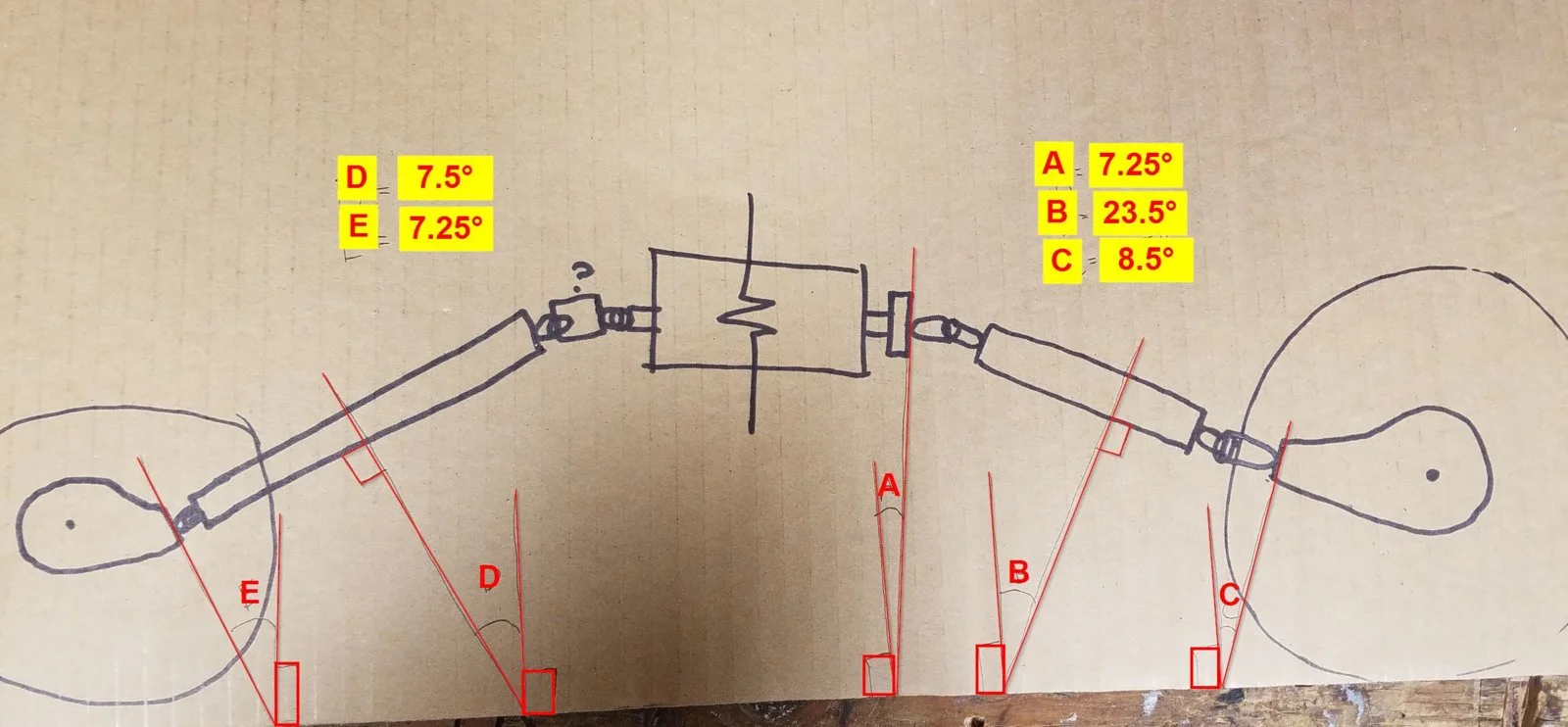
And without further ado... My numbers taken to a 1/4 degree resolution:
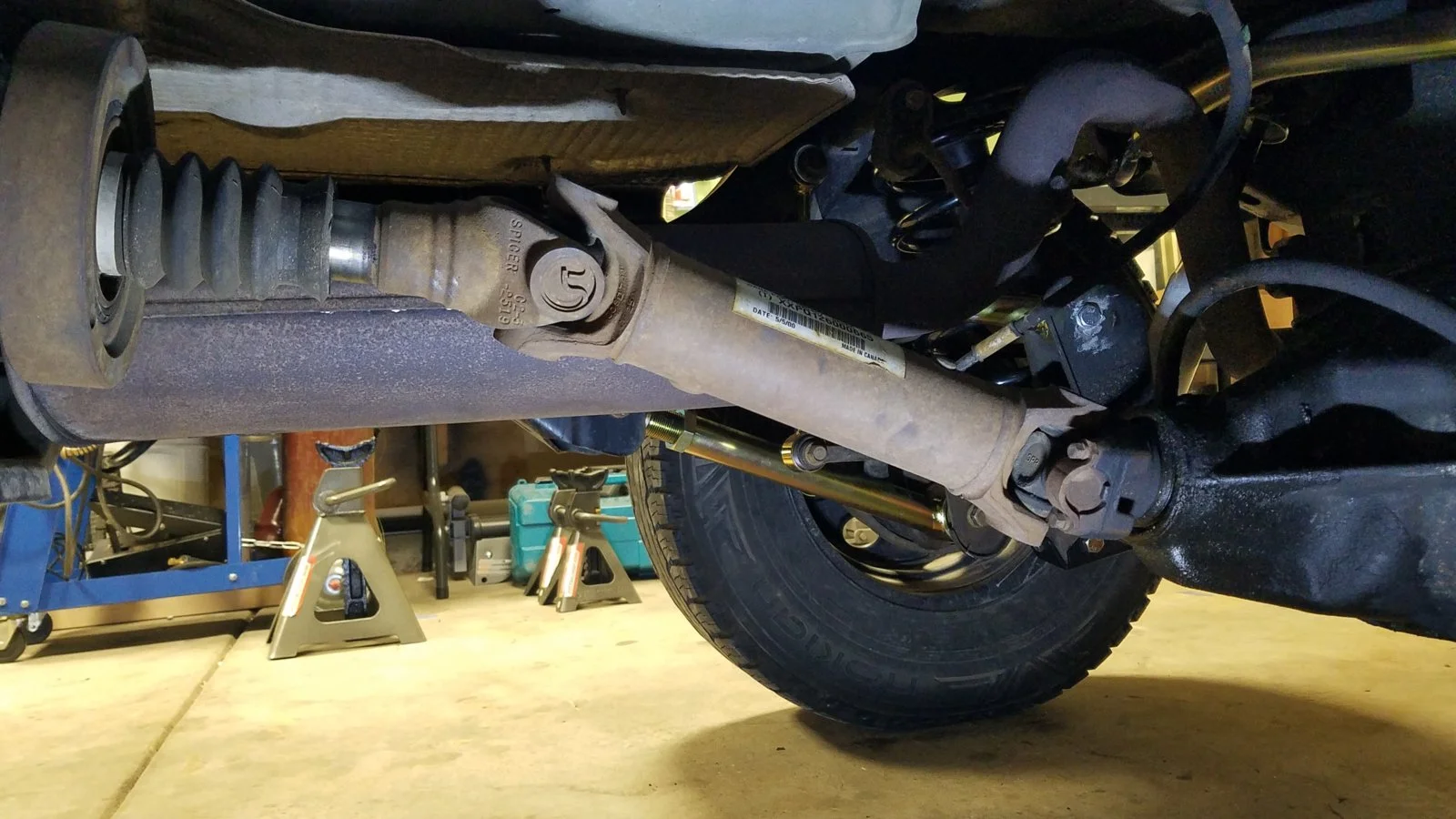
And a visual on the rear drive shaft with the vehicle resting on level ground and suspension settled into static sag point:
I'm mainly wondering if the rear drive shaft angles are okay - I've heard so many different numbers I'd just like someone with a stock driveshaft and/or experience adjusting them to weigh in. I've cycled the rear suspension to full droop and I have no bind - I have about 1/8" clearance between the yokes and the valleys of the shaft yokes - so tight... but not binding by any means. Full bump stop on either side poses no issues whatsoever in terms of binding or added friction that I can perceive with my handometer.
Thanks!
FRONT PINION ANGLE (Stock front drive shaft)
The general consensus seems to allow the front pinion to be parallel to the front drive shaft with a tolerance of 0 to positive 1 degree in terms of the front pinion pointing ABOVE the front drive shaft because the action/reaction of wheel torque will push the pinion back down into the 0 degree (parallel) realm.
REAR PINION ANGLE (Stock rear drive shaft without SYE or CV drive shaft)
The general consensus seems to allow the rear pinion to be parallel to the harmonic balancer ring with a tolerance of 0 to negative 1 degree in terms of the rear pinion pointing UNDER the harmonic balancer due to the same action/reaction from wheel torque pushing the rear pinion back up into the 0 degree (parallel) realm.
And without further ado... My numbers taken to a 1/4 degree resolution:
And a visual on the rear drive shaft with the vehicle resting on level ground and suspension settled into static sag point:
I'm mainly wondering if the rear drive shaft angles are okay - I've heard so many different numbers I'd just like someone with a stock driveshaft and/or experience adjusting them to weigh in. I've cycled the rear suspension to full droop and I have no bind - I have about 1/8" clearance between the yokes and the valleys of the shaft yokes - so tight... but not binding by any means. Full bump stop on either side poses no issues whatsoever in terms of binding or added friction that I can perceive with my handometer.
Thanks!