For a while now I have been thinking of buying a Safety Thimble, ProLink or other similar product, as the safety advantages of a closed attachment system for winching are pretty obvious. Never willing to spend much money if I can avoid it, I decided to see if I could come up with a way to use the existing thimble on my Warn synthetic rope. Since it can certainly handle the stress of a standard hook, I figured it would be fine with a bow shackle in place of the hook. I just needed to come up with a way to ensure the thimble (and my hand) could not be pulled through the fairlead.
I started with a 3" diameter polyurethane caster wheel. I wanted something that was tough but a little bit soft, so it wouldn't crack under stress. The whole caster assembly cost about $9.00 at Lowe's. I removed all the metal hardware, leaving the wheel ready for some modification.
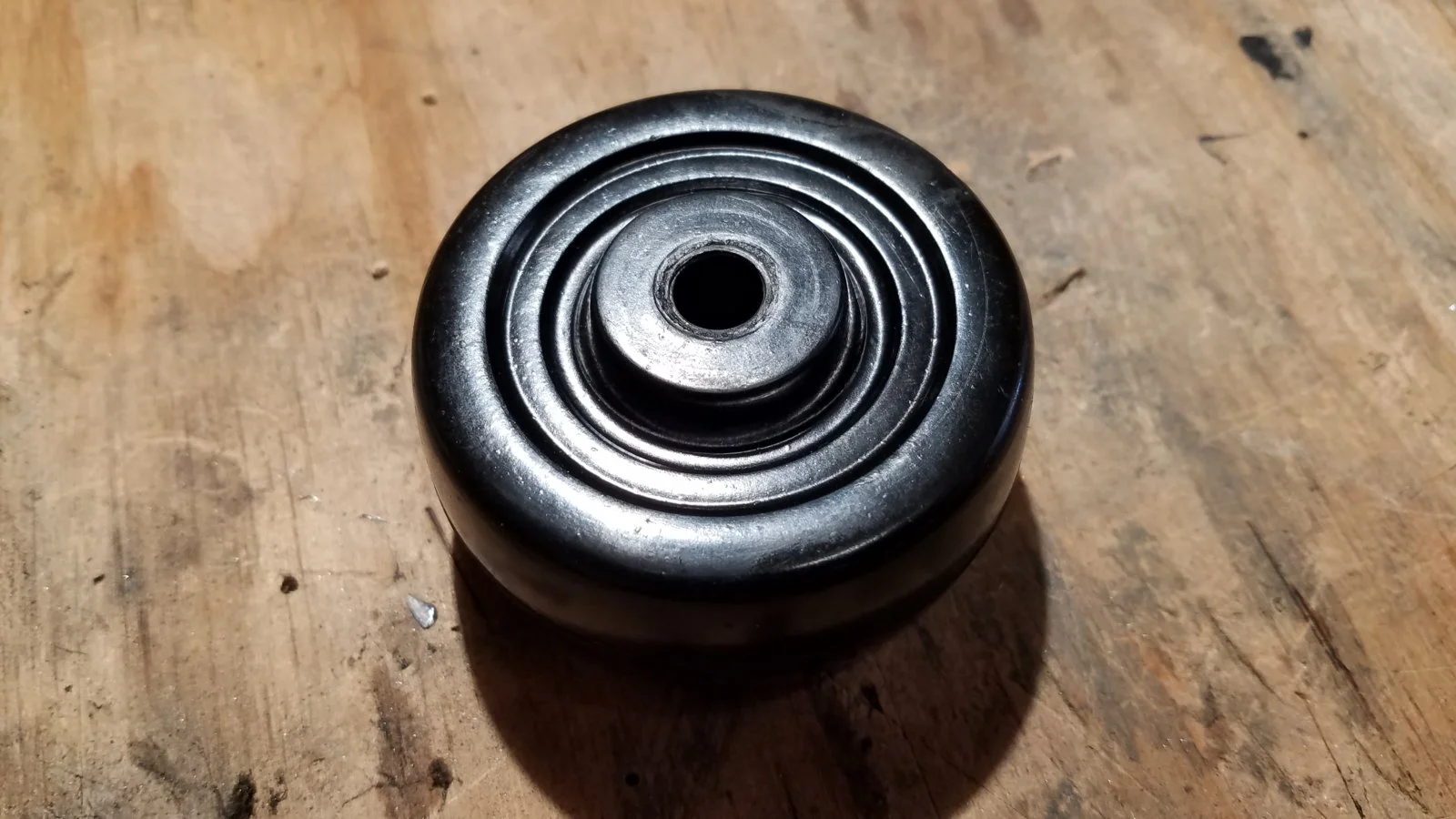
The hole for the axle was a bit small, so I drilled it out to 5/8" and opened up one side with a step drill. I wanted to be able to just thread it on the cable, but be snug enough to stay tight against the thimble, without adding too much of a stress point where the cable passed through the wheel.
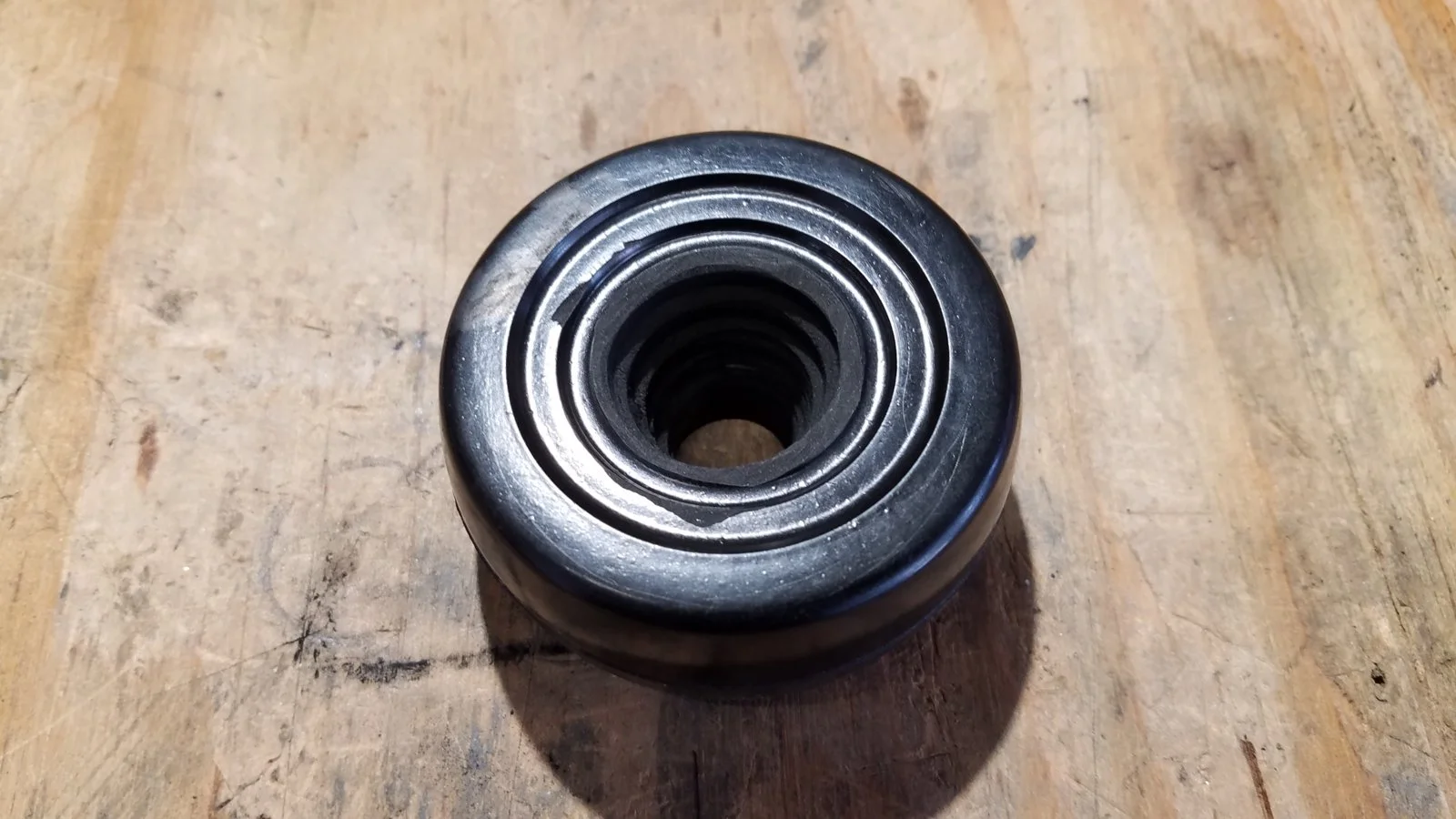
The next step was to thread the wheel onto the rope. Yes, I had to reel all 100' of rope out and remove it from the drum - gave me a good excuse to inspect the rope. Anyway, running the rope all the way out and respooling it from time to time is a good idea all on its own. I did have to go back and drill out the hole a bit more due to the heat sleeve (the red part) being thicker than the rope itself. Hey, it wouldn't be one of my projects if I didn't have to retrace my steps at least once (or twice, or...).
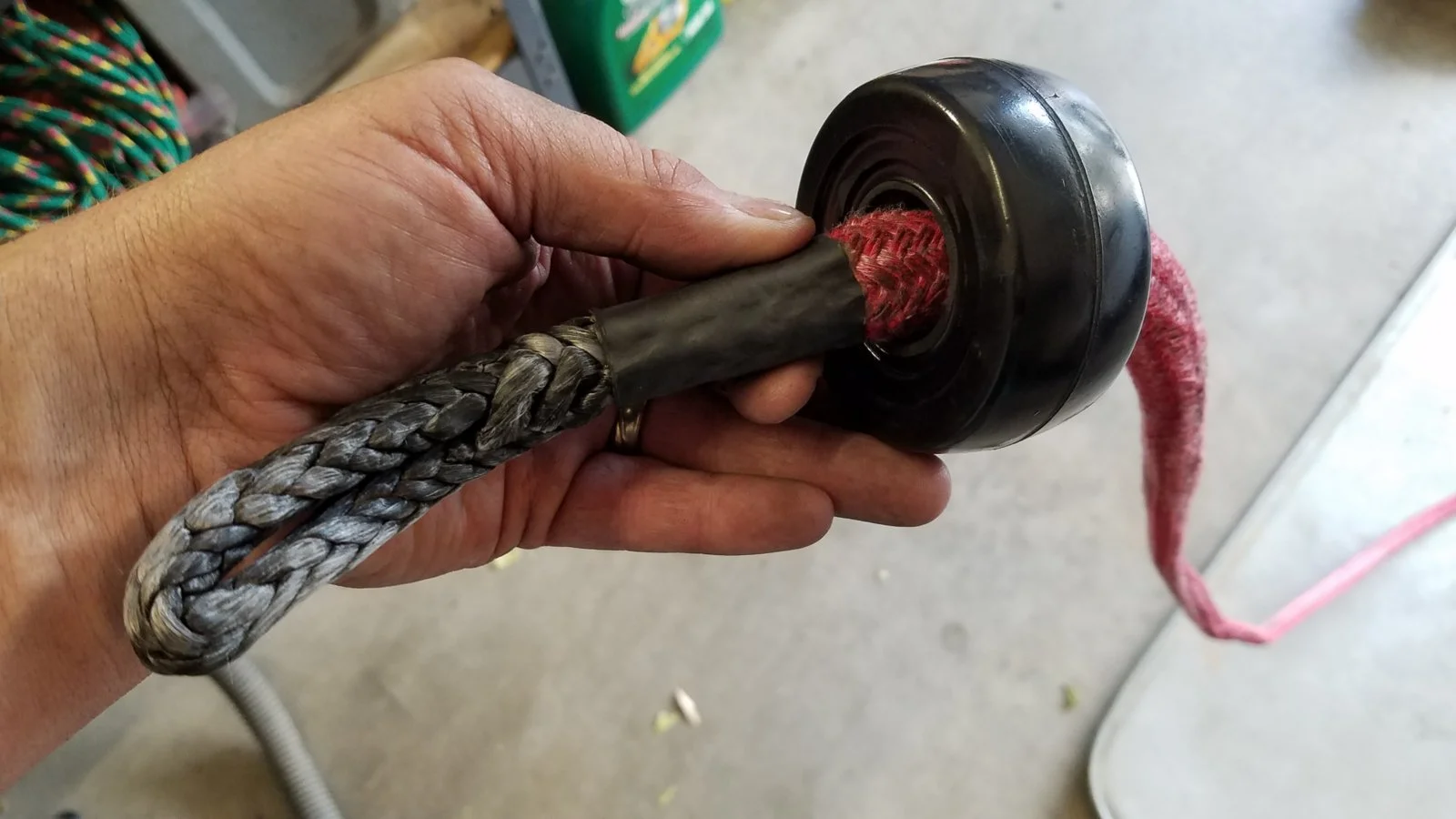
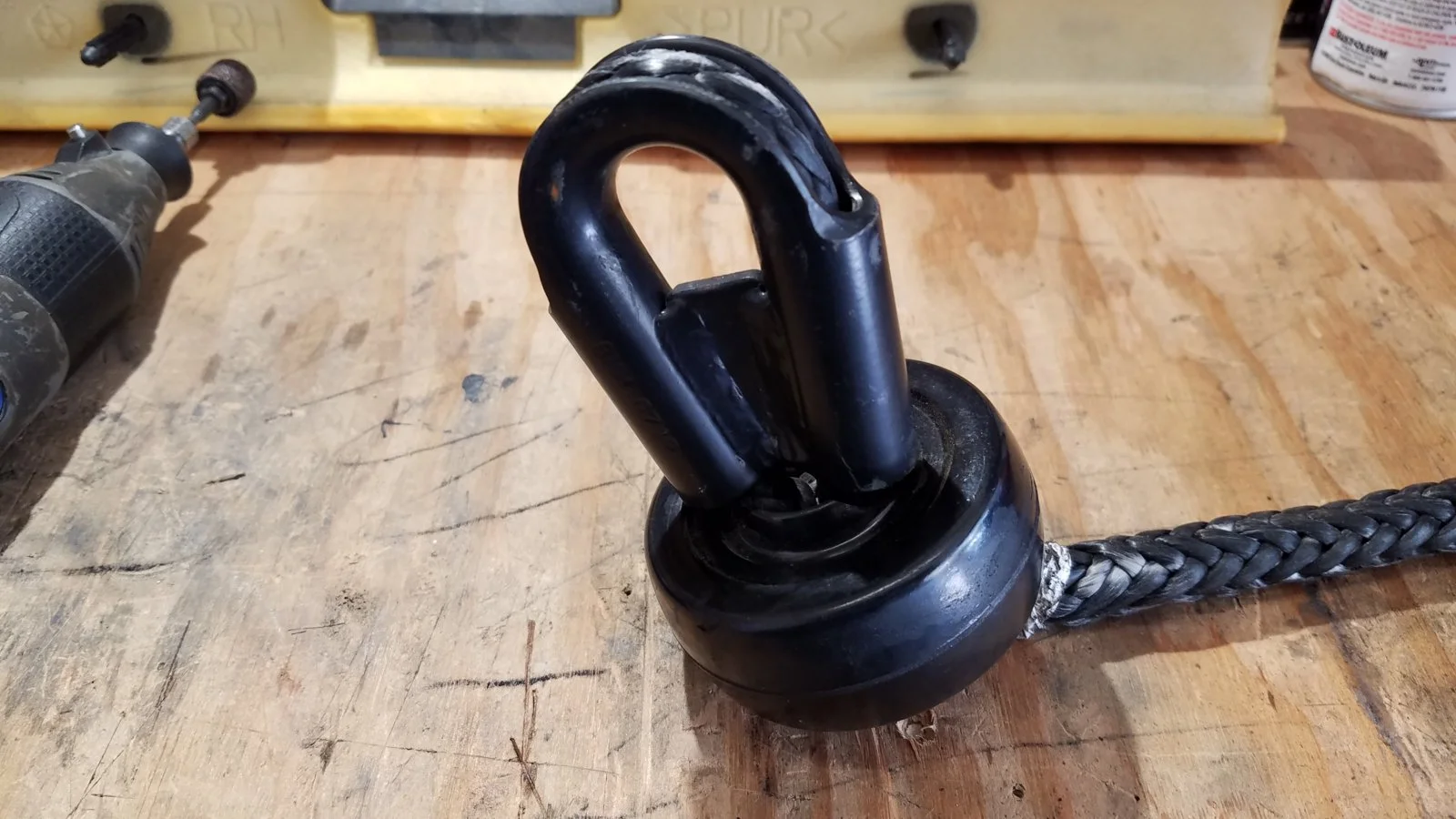
This is how the thimble/wheel combo turned out. It's a little loose in the back where the hole is wider, so I may try to find a way to fill in the gap to keep the wheel from sliding around on the rope when it is spooled out - maybe some silicone or RTV? Something durable but flexible, at least.
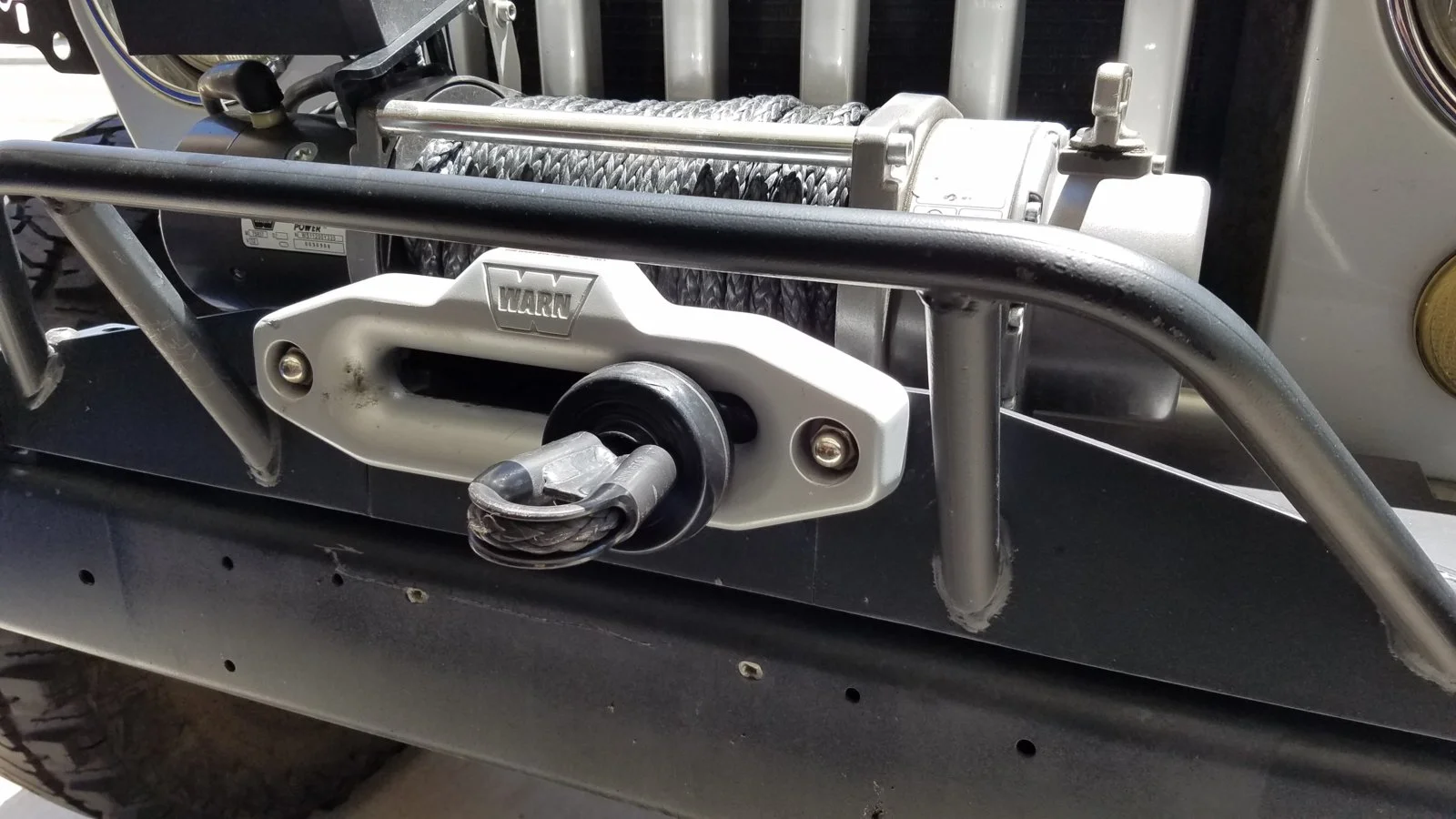
All spooled in, with the wheel snug against the fairlead. The poly has a bit of give to it, so I can keep the rope under a slight amount of tension without damaging either the thimble or the fairlead. I think it will work fine with a bow shackle threaded through the thimble.
Since safety is the main reason I did this, if anyone can think of a reason why this approach isn't a good idea I'd sure appreciate hearing from you. I'm not an engineer, so it is entirely possible that I have overlooked something significant, and I don't want this thing blowing up in my face or, even worse, have someone copy my work and have it blow up in their face. Look it over and tell me what you think. Thanks.
I started with a 3" diameter polyurethane caster wheel. I wanted something that was tough but a little bit soft, so it wouldn't crack under stress. The whole caster assembly cost about $9.00 at Lowe's. I removed all the metal hardware, leaving the wheel ready for some modification.
The hole for the axle was a bit small, so I drilled it out to 5/8" and opened up one side with a step drill. I wanted to be able to just thread it on the cable, but be snug enough to stay tight against the thimble, without adding too much of a stress point where the cable passed through the wheel.
The next step was to thread the wheel onto the rope. Yes, I had to reel all 100' of rope out and remove it from the drum - gave me a good excuse to inspect the rope. Anyway, running the rope all the way out and respooling it from time to time is a good idea all on its own. I did have to go back and drill out the hole a bit more due to the heat sleeve (the red part) being thicker than the rope itself. Hey, it wouldn't be one of my projects if I didn't have to retrace my steps at least once (or twice, or...).
This is how the thimble/wheel combo turned out. It's a little loose in the back where the hole is wider, so I may try to find a way to fill in the gap to keep the wheel from sliding around on the rope when it is spooled out - maybe some silicone or RTV? Something durable but flexible, at least.
All spooled in, with the wheel snug against the fairlead. The poly has a bit of give to it, so I can keep the rope under a slight amount of tension without damaging either the thimble or the fairlead. I think it will work fine with a bow shackle threaded through the thimble.
Since safety is the main reason I did this, if anyone can think of a reason why this approach isn't a good idea I'd sure appreciate hearing from you. I'm not an engineer, so it is entirely possible that I have overlooked something significant, and I don't want this thing blowing up in my face or, even worse, have someone copy my work and have it blow up in their face. Look it over and tell me what you think. Thanks.