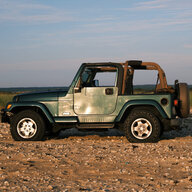
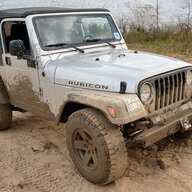
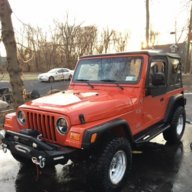
Help figuring out TJ post inspection

Camhabib

TJ Enthusiast
Original poster
Joined
Mar 30, 2019
Messages
273
Location
Boston, MA
Just got the used car inspection done on a new to me 98 Sahara by a fairly reputable Jeep only shop in my area. Picked it up for just under $5k all said and done, and while I probably should have gotten a used car inspection before purchasing, the car is already bought and paid for, and so now it’s more a matter of figuring out what to do with it at this point. I’m fairly handy with a wrench, but my experience is limited to the sports car world, which is vastly different (as I’m learning) than the TJ life, and I don’t know enough about Jeeps to really know what’s going on. The report I was given states the following issues, with my notes in red:
  1. The frame is in above average condition. No real exterior rust, minimal interior. Of the 6 skid plate bolts, only 1 spun. Wasn’t able to remove skid plate to inspect under, but was would be surprised given the condition if it needed more than an access hole cut to repair the bolt. Lower front left control arm bracket on frame was bent at some point and a new one welded on. Contacted SafeTCap manufacture an 45 minutes away and was quoted around $200 to fix bolt, $600 to fix each side of rail.
  2. Tub has 2 spots of rot, both on the floor pan, neither structural. SafeTCap manufacture quoted around $500 to repair tub rot, but if not on frame mount, not immediately essential.
  3. Engine has valve cover leak. Would rate leak as 4/10 at the moment. RMS does not appear to be leaking at all. Parts appear to be around $50 for head gasket and not terribly difficult to do.
  4. Radiator is newly installed but incorrectly done. Leaking from hose and fittings, which were not installed with any sealant. There is small amount of rust inside radiator, likely from engine neglect over its life. No idea on this one. I know rust in the radiator is usually a VERY bad sign, but he wasn't able to say if the engine was going to last 5 more days or 5 more years. Suggested I replace hoses, could tackle entire system if I wanted to (basically remove and reinstall correctly) but I'm not sure how involved of a job this is.
  5. New but low quality front and rear driveshaft with generic U-joints all around, including coming off the transfer case. Shaft and joints in good condition, but not expected to last more than a few years. Could replace, but just inclined to leave until they fail. Was told the joint coming off the transfer case isn't easy to replace.
  6. Front brakes are mix of old and generic new parts and do not function properly. Rear brakes are essentially not functioning at all. He couldn't offer a suggestion as to what was wrong, but said it would likely need new pads, rotors, and possibly new calipers as well. Looks like new rotors and pads for front run about ~$200. I know calipers can be rebuilt, but not sure how to do this, or how difficult / much it would be to have someone else. Additionally, I've never touched a drum brake before in my life and have no idea how to start with this one.
  7. All 4 balljoints are completely worn and require replacement. I know this is something that can be done myself, but I was told my car is extremely rare in that it has ABS, and it's possible I could damage one of the parts related to that and replacement of those parts would prove exceptionally difficult and expensive to source.
  8. All 4 shocks are worn and leaking and require replacement. All springs require replacement. Already planning on replacing shocks to the Ranchos recommended here, and springs look to be $300 for a set. Was under the impression that both were easily replaceable, but was told that the rear upper shock bolts may require removing the gas tank to access if they don't come out easily.
  9. All control arms are dry rotted and require replacement. Already planning on replacing, about $250 for the set all around.
  10. Track bar, damper, and tie rod at pitman arm need replacement. Looks like kits are avertible for $200-300, but no idea why these would need to be replaced. Wasn't aware these were a consumable part, or even how to go about replacing them, or which kit to go with.
  11. Vehicle requires tune up set, including new spark plugs, cables, oil, and filter. Already planning on performing. He said he wouldn't both with a transmission or diff fluid change, but would do a double carbon buildup clean, and the rest of the previously listed items.
  12. Oil pressure dips to 20 at warm idle indicating there may be damage to the cam shaft bearings. Is there any truth in this? My coolant temp stays usually right around the middle, but my oil pressure does go anywhere from 20-50 depending on temp and load. I figured the was normal, but he said a low oil temp at warm idle could mean damage.
So that's it. Transmission shifts well, engine runs smoothly, overall he said it's a "serviceable" Jeep, but going to require some serious work. I'm not looking to turn this into a show car, but I would like it to be safe, aka steer and stop well, and not have a high risk of blowing up on me 100 miles from home. While I've been able to find great write-ups on how to do almost all of this, I don't really know where the best place to get a lot of these parts from (Quadratech, eBay, etc), which brands to go with, and which ones are worth leaving up to a shop or doing myself (for example having shop replace ball joints and install new steering components since they come off anyways). I'd really appreciate any and all help or feedback on the issues.
 
Do you happen to have photos of the frame and the rust? I'd like to see what we're dealing with here, as pictures speak a thousand words.

One thing is clear, you definitely bought a project, and you're going to have to invest probably 5k or more to get it to where it should be (assuming you aren't doing the labor yourself), but I'm guessing you bought this thing knowing it was a project?

To answer some of what you said above:
  1. There are cheaper solutions than SafeTCap. I can't recall the name of the other brands, but SafeTCap is considered one of the more expensive ones. Look around for the others, as you could save some money.
  2. Sounds about right, of course it all depends on the amount of rot there is.
  3. The valve cover gasket is an easy job to do. If you do it yourself, it will be cheap.
  4. Replacing the radiator and servicing the cooling system isn't that hard, just messy, and sometimes time consuming.
  5. Leave them until they fail. No sense in replacing them if they aren't broke.
  6. The braking system is not that complicated. You'll want to completely overhaul the rear drums (which isn't hard, just time consuming), and bleed the entire system throughly, so all the old fluid is out of there. If the front brake pads / rotors look like they need to be replaced, do them as well.
  7. The ball joints don't have anything to do with the ABS, and I'm not aware of anything ABS related that is in the ay of doing them. Sounds like misinformation to me.
  8. If the vehicle has rust like you say, expect to find that the rear upper shock mount bolts will not come out easy. Soak them overnight in Kroil or Liquid Wrench, and then try to break them loose. If they don't come loose, then yes, you may have to drop the fuel tank to get better access to extract them. On rusted vehicles, they are a real pain in the but.
  9. You can get factory replacement control arms (the whole set) here for a lot less:
    https://www.amazon.com/gp/product/B01MPVWEBY/?tag=wranglerorg-20
  10. The tie rod ends need to be replaced, and the bushings on the track bar may be bad, that's what needs replacing. The pitman arm doesn't have any bushings, so nothing to replace there.
  11. Yep, a tune up would be a good idea.
  12. The oil temperature gauge on TJs is notoriously inaccurate and you shouldn't pay any attention to it whatsoever. Are you getting your reading from an aftermarket gauge, or the in-dash gauge?
 
There is nothing wrong with 20 psi at hot idle. That is completely normal. In fact, the manual states as low as 13 psi is OK for hot idle. Later TJs had a dummy gauge that basically always read 40 psi, which is why some people freak out when they see older TJ oil pressure gauges fluctuate with RPM.
 
Check this thread for a no-weld option for floor pan rust correction. Note that this is a somewhat serious case of rot that covered a fairly good size area of the pan. Smaller holes can be corrected with simple pieces of sheet metal.

Valve cover leak: I assume you meant valve cover gasket and not head gasket. That one is an entirely DIY job...just make sure you do not over-tighten the bolts and warp the cover Also, check the cover around the bolt holes to make sure someone else has not over-tightened the bolts and distorted it...it should be completely flat on the mating face. Use Fel-pro gaskets; they work better and last longer than others.

Radiator: I have never used any type of sealant on the radiator hoses on any vehicle I have owned (18+) and have had no issues as long as the hoses, clamps, and (especially) the tubes to which the hoses mated were in good condition and properly tightened. Imma ask the gang here if they have ever used a sealant on there cooling system hoses 'cause I'm curious. 🤔
If you use the screw-tighten type clamps (I generally do), just make sure you don't over-tighten them. You want it good and snug but don't want to cause the hose rubber to start squeezing through the slots in the clamp band :)

Agreed on the U-joints. Keep a close watch an them and replace when/if they go bad.

Brakes: Chris' gotcha on that one too. No really complicated stuff. Even if you have to replace the cylinders in the rear, they're not that much. Unless the system was neglected and got water in it (not wholly unlikely), your calipers should be OK or rebuildable with an inexpensive kit. If not, even they are not super expensive to replace.

Ball joints: This can be a PITA job, especially if they don't want to pop out of the knuckles, but it's not a real mental workout. I'm with Chris in that I don't see any reason why the ABS would make it a bigger chore except that you would want to make sure you don't damage the wheel speed sensor wires, since they could be in jeopardy if you let a steering knuckle stray too far from home while messing with the ball joints. The sensors themselves, considering where they are, would be much more of an issue when doing the brake overhaul than the ball joints (and, really not, even then). Get a copy of the FSM here if you don't already have it.
EDIT: Thinking more on this, the speed sensor wires could be a real problematic thing. If there are connectors that you could disconnect to allow the steering knuckles to move around or even come off completely without fear of damaging these wires, that would be best. If not, maybe trying to find some tie-down points that you could disconnect to give the wire extra room to move would be good.

Shocks and springs: Beyond Chris' excellent advise; if you were considering any kind of lift, this would be a good time to do it since pretty much any lift will include springs and shocks.

Welcome to the forum, the world of Jeeping, and the grease stains that come with it! 😛
Best of luck with your TJ!
 
Last edited:
  • Like
Reactions: 02SteelBlue
Do you happen to have photos of the frame and the rust? I'd like to see what we're dealing with here, as pictures speak a thousand words.

One thing is clear, you definitely bought a project, and you're going to have to invest probably 5k or more to get it to where it should be (assuming you aren't doing the labor yourself), but I'm guessing you bought this thing knowing it was a project?

To answer some of what you said above:
  1. There are cheaper solutions than SafeTCap. I can't recall the name of the other brands, but SafeTCap is considered one of the more expensive ones. Look around for the others, as you could save some money.
  2. Sounds about right, of course it all depends on the amount of rot there is.
  3. The valve cover gasket is an easy job to do. If you do it yourself, it will be cheap.
  4. Replacing the radiator and servicing the cooling system isn't that hard, just messy, and sometimes time consuming.
  5. Leave them until they fail. No sense in replacing them if they aren't broke.
  6. The braking system is not that complicated. You'll want to completely overhaul the rear drums (which isn't hard, just time consuming), and bleed the entire system throughly, so all the old fluid is out of there. If the front brake pads / rotors look like they need to be replaced, do them as well.
  7. The ball joints don't have anything to do with the ABS, and I'm not aware of anything ABS related that is in the ay of doing them. Sounds like misinformation to me.
  8. If the vehicle has rust like you say, expect to find that the rear upper shock mount bolts will not come out easy. Soak them overnight in Kroil or Liquid Wrench, and then try to break them loose. If they don't come loose, then yes, you may have to drop the fuel tank to get better access to extract them. On rusted vehicles, they are a real pain in the but.
  9. You can get factory replacement control arms (the whole set) here for a lot less:
    https://www.amazon.com/gp/product/B01MPVWEBY/?tag=wranglerorg-20
  10. The tie rod ends need to be replaced, and the bushings on the track bar may be bad, that's what needs replacing. The pitman arm doesn't have any bushings, so nothing to replace there.
  11. Yep, a tune up would be a good idea.
  12. The oil temperature gauge on TJs is notoriously inaccurate and you shouldn't pay any attention to it whatsoever. Are you getting your reading from an aftermarket gauge, or the in-dash gauge?
Appreciate the reply. I'll throw it up on a lift soon and grab some pictures for you. For a car thats spent a number of years in New England, the shop said it was one of the better frames he's seen. The issue he said is it looks like someone just kept it in a garage forever, so while there's not a lot of rust from salt, a lot of regular maintenance items were never addressed. I plan on doing all the work I can myself to save some money, and because I enjoy turning my own wrenches whenever possible. Some stuff like the frame is outside of my scope, but the rest I feel pretty confident in completing (having done a lot of the same jobs in other cars). I expected there to be some things that needed to be done, but I was a bit surprised the list was as extensive as it was.

He didn't elaborate too much on the risk included with the ABS system, but I believe it involved the damaging of seals and possibly something on the axel shaft assembly that was hard to replace when putting everything back together following the ball joint replacement.

The big things that concerns me was the rust in the radiator and the oil pressure, as I really don't want to put in a ton of time and money, only to have the engine fail on me next month if there are already warning signs. Is rust in the radiator on a 4.0l a 100% kiss of death or something that's a bit normal for these cars given the age? Is there any truth at all in the cam bearings and relation to oil pressure? I'm just going off the instrument cluster gauge, which doesn't appear to be frozen given that it does sweep between 20-50.
 
  • Like
Reactions: Chris
Radiator: I have never used any type of sealant on the radiator hoses on any vehicle I have owned (18+) and have had no issues as long as the hoses, clamps, and (especially) the tubes to which the hoses mated were in good condition and properly tightened. Imma ask the gang here if they have ever used a sealant on there cooling system hoses 'cause I'm curious. 🤔
If you use the screw-tighten type clamps (I generally do), just make sure you don't over-tighten them. You want it good and snug but don't want to cause the hose rubber to start squeezing through the slots in the clamp band :)

Thanks for the reply. The system is definitely leaking somewhere, as I've noticed the levels dipping down a bit. I have no idea what kind of radiator the previous owner put in, but the shop for the inspection said it was a real chop job. Is it worth just replacing the entire thing, radiator and hoses alike? He mentioned that they clamps looked overtightened, which is why they might be leaking, and that the fittings were leaking as well, likely because they didn't use anything on the threads to seal them. Again, no idea how true that is, or how to really fix that besides just replacing all hoses, clamps, and fittings, which I'm assuming isn't all that cheap.
 
Is rust in the radiator on a 4.0l a 100% kiss of death or something that's a bit normal for these cars given the age?

You said your radiator is newly installed. I figure that means it is new and not used to begin with.

The rust in the radiator is normal if the coolant wasn't changed as it aged and/or was just topped up with regular tap water. Even if it had been changed, if they didn't use distilled water, that can cause rust. That rust generally comes from the engine block and flows through the whole system including the heater core. I'd probably just flush and refill the system you have and never worry about it again unless it gave me a reason.

I'm glad to hear that you have some mechanical experience from the sports car world. I do wonder what sports cars were in that world for you. It seems like there are many various types of cars people call sports cars. I'm pretty sure the term started with British Sports cars (MG, Triumph, etc) but then took a zig-zagged growth to quarter million $$ cars I won't let myself get within 10 feet of.

Anyway, from where you've been, mechanics is mechanics, experience is experience and both will help to work on anything , even things without tires and wheels. I will say the TJ is somewhat different than a sports car but most of the difference is just the suspension and axles and what they are trying to accomplish.
 
You said your radiator is newly installed. I figure that means it is new and not used to begin with.

The rust in the radiator is normal if the coolant wasn't changed as it aged and/or was just topped up with regular tap water. Even if it had been changed, if they didn't use distilled water, that can cause rust. That rust generally comes from the engine block and flows through the whole system including the heater core. I'd probably just flush and refill the system you have and never worry about it again unless it gave me a reason.

I'm glad to hear that you have some mechanical experience from the sports car world. I do wonder what sports cars were in that world for you. It seems like there are many various types of cars people call sports cars. I'm pretty sure the term started with British Sports cars (MG, Triumph, etc) but then took a zig-zagged growth to quarter million $$ cars I won't let myself get within 10 feet of.

Anyway, from where you've been, mechanics is mechanics, experience is experience and both will help to work on anything , even things without tires and wheels. I will say the TJ is somewhat different than a sports car but most of the difference is just the suspension and axles and what they are trying to accomplish.
Is the damage limited likely to just the cooling system or is there a good chance the internals of the engine are on its way out? Radiator is new but aftermarket and likely not the best quality. Is it worth replacing it with OE along with the water pump since my understanding is that it can get damaged from rust in the system, or just focus on the hoses and getting the fittings to stop leaking and replace the pump when / if it fails?

I've had a number of German sports cars (Audi, Porsche) which make working on Jeeps a dream since you can actually fit more than a toothpick in the engine bay and don't need all sorts of specialized tools to do the most basic jobs. Lots of differences as you said in things like suspension and problem areas, but I've done timing belts and head gaskets and the like before on them, so I do have some basic know-how.
 
Is the damage limited likely to just the cooling system or is there a good chance the internals of the engine are on its way out? Radiator is new but aftermarket and likely not the best quality. Is it worth replacing it with OE along with the water pump since my understanding is that it can get damaged from rust in the system, or just focus on the hoses and getting the fittings to stop leaking and replace the pump when / if it fails?

Internal engine issues due to coolant are pretty rare. As for your aftermarket radiator, I'd still just flush and refill the system you have and never worry about it again unless it gave me a reason.

I've had a number of German sports cars (Audi, Porsche) which make working on Jeeps a dream since you can actually fit more than a toothpick in the engine bay and don't need all sorts of specialized tools to do the most basic jobs. Lots of differences as you said in things like suspension and problem areas, but I've done timing belts and head gaskets and the like before on them, so I do have some basic know-how.

That can be an interesting set of sports cars. Depending on the year they were built it could be a zig, a zag, or even a little bit of both, in the growth of the sports cars.
 
Okay guys, I think I'm going to go ahead and tackle this job. I bookmarked a bunch of tutorials and I'm going to order the parts, but I was wondering if you could look over the parts / checklist I've made and see if there's anything I'm missing (other parts I might need, other things to do, etc). I've highlighted a few things I'm not sure of in red, if anyone could help with those it would be great.

1 - Frame repair - $200-$1000
Frame repair by shop to remove and repair bolt.

2 - Tub repair - $0
Clean and prevent further rust, repair at later date.

3 - Valve cover gasket - $50
Replace both gasket and grommets with Fel-Pro (VS50458R) valve cover set.
Advised to perform plugs at the same time since removing them makes getting cover out slightly easier.

4 - Radiator leak - $20-$500
Flush distilled water and fill with HOAT coolant. Start by replacing / retightening clamps.
If leak continues to be substantial, replace hoses and remove and reinstall fittings.
Replacement with OE Mopar radiator and fittings as last resort.

6 - Front brake repair - $30-500
Start with caliper rebuild (Omix-ADA / Crown rebuild kit) and brake fluid flush.
If problem persists, replace calipers, disks, and pads (Black Magic).
If problem persists, check master cylinder and brake lines.

Rear brake repair - $200
Purchase service kit and rebuild - unsure which brand / kit.

7 - Ball joints - $100
Replace all ball joints with Spicer (706944X).
Other parts worth replacing (tie rod ends, etc) while assembly is apart?

8 - Shocks / springs - $400
Replace shocks with Rancho RS5000x.
Replace springs - unsure which brand / part, would like to keep 0-1” lift height.

9 - Control arms - $200
Replacing all control arms (Crown / Omix-ADA).
Replace bolts as needed with closest sizes (M14X2.0X110, M10x1.5x75) listed in parts service manual.

10 - Steering - $200
Replace tie rod ends - unsure brand
Replace damper with Rancho RS5000
Replace track bar - unsure replace entire bar or just bushings

11 - Tune up - $75
Replace plugs with Autolite XP985
Replace spark plug wires - unsure brand
Replace distributor cap - unsure brand
Replace oil filter / oil
Clean IAC / TB

You guys have been amazing so far, can't really thank you enough for all the feedback!
 
  • Like
Reactions: MaloStapalo
You will need a ball joint press and proper adapters, upgrade the steering to the beefier ZJ set up. there are links on this site for that.
Managed to get my hands on a SnapOn setup thankfully.

Looked up the write up for the ZJ steering. Was a little confused on what exactly is needed.

For the tie rod, it looks like you need:
Moog (ES3096L) Tie Rod End
Moog (ES2079S) Tie Rod End Adjusting Sleeve
Moog (DS1312) Tie Rod End

But for the drag drag link, it only lists one part:
Moog (DS1430) Tie Rod End

Do I need an additional ES3096L and ES2079S to complete the drag link as well? Any other parts to complete those two things?
 
1. Wow, that's one hell of a range. Guess they're covering the bases in case it turns out to be a major beeatch to get out that stuck bolt.

2. Won't be $0 when you account for supplies like wire brushes to go on your drill and/or angle grinder and paint...but still, pretty cheap.

3. Mark all of the wires for spark plug position before removing. Replace the wires ONE AT A TIME after replacing the valve cover gasket. Replace the distro rotor and cap last...swap the wires one at a time from the old cap to the new one to make sure they don't get out-of-place then install the new cap.

4. I'm thinking that the "threaded" part must be the return tube from the water pump. The threads on this should be sealed with 3 or 4 wraps of teflon thread tape.

6. Rear: Check this thread: https://wranglertjforum.com/threads/doing-rear-drum-brakes-a-must-read.1987/
and these videos: shows what you're going to do and shows you with the axle shaft removed so you can see more clearly (In this video, Matt mistakenly refers to the adjuster cable as part of the parking brake system, which it is not...hey, it's one of his earlier videos; he got better:) ).

It is well worth pulling the wheels and taking a peek at the brake parts in advance to see what you will need for the job. You can get a hardware kit that includes all the springs and clips (both sides) for less than $9 from Advance auto parts. Another $4 for the self-adjuster cable guide if it's bad but the coble's ok. They also have the adjuster cable but it looks like their listing is goobered and says it for the bleed screws...so you'll need to call and verify that. They also have the cable, adjuster, guide and other bits for less than $10 per side. Other auto parts stores like O'Reilly's will likely have the same/comparable stuff.

If you see that your cylinders are leaking, broken, or have cracked rubber ends, I'd be hard pressed to put in the effort to rebuild them with new units available with a 1 year warranty for $15 or an Omix Ada unit for $25 with a 5 year warranty.

As for brake shoes, jeez, I'd go for something with a lifetime warranty and some good reviews. The brakes on my '01 were just done before I got it and the brakes on my '06 Rubi are completely different since they are disks all around.

7. As for "other parts to replace", just go through and twist/yank on every joint to see if anything looks/feels loose. Also useful to have a helper turn the steering wheel lock to lock while you watch from underneath (be careful!) for loose and wobbly bits.

8. Springs: Since you're looking for OE height, you're probably limited to Omix Ada, Crown, and Moog. Looking at the reviews, I think I'd go for the Moogs. Also available from Advance (at least, in theory) and many on-line dealers.

10. Just replace the whole track bar...it's not that much and not worth dinking with the bushings.

11. Woof, it's been so long since I did plug wires and rotors/caps. For wires, make sure you get some high quality wires with silicone insulation and a good warranty, like these. For cap, I guess I'd go for the BWD. Same for the rotor.
Get some dielectric grease and apply some to both ends of every wire. For the spark plug end, apply some to the connector tip of the plug and on the cap end on the connector nipple of the cap. On both end, smear a little around the inside of the boot to help seal out moisture.
EDIT: Also. put a bit of anti-seize on the threads of the plugs before installing. Keeps the threads from getting crunchy and sticking. Not as critical as on aluminum heads but, def worth doing anyway.
 
Last edited:
Okay so heater core, radiator, water pump, and thermostat are all replaced with OE (except for the core which is out of stock everywhere in the country). Everything seems to be holding up nicely, no drips that I've noticed yet. Filled with Zerex G-05. Getting the dash back together for the core took 25 minutes, getting it apart took 2 hours.

Next up are the brakes. I'm going to first try to bleed the lines and check the calipers, but a friend of mine indicated that bleeding with an old ABS system is a rather difficult / involved process. Anyone have any tips for this, or perhaps a guide? Additionally, some of the lines going from the master cylinder to the ABS unit look rusted - worth replacing them, and if so, any idea where I can find them? I haven't been able to locate replacements anywhere for ABS equipped cars, for either lines going to the ABS unit or wheels.

Lastly, I just noticed a leak from the transmission. It looks like it's leaking from the around the back few bolts of the pan. Only noticed it because I've had it inside on the lift in the same spot for a while and there was a little red puddle underneath. I'm planning on changing out the gasket, filter, and fluid once I get the skid plate off (have to get a shop to do that), but was wondering if that's likely it or if it may be something more serious? Leak is pretty minimal but enough that there was a drip or two off the skid plate.

As always, you guys have been a lifesaver. Can't wait to share some before and after shots once I get everything sorted out.
 
If you don't have coolant leaks/smell after replacing everything but the heater core, I'ma thinkin' your core is fine.
Can't think of any reason why ABS brakes should be any different from other as far as bleeding the lines goes. A bit of searching did find this, which points out that the ABS modulator assembly can be an issue if air has gotten into it.
For the tranny, be aware that the skid plate IS the tranny mount and removing it will allow your tranny to drop; causing stress and/or damage to motor mounts and other components. You should always support the transmission separately when pulling the skid plate/mount. Here's a video of someone who wants to sell you a tummy tuck plate but does show the "supporting the tranny while removing the skid plate/belly pan" part.