This is a little install guide on a switch I put in several years ago. It works well so I thought I’d share the process and some thoughts on it.
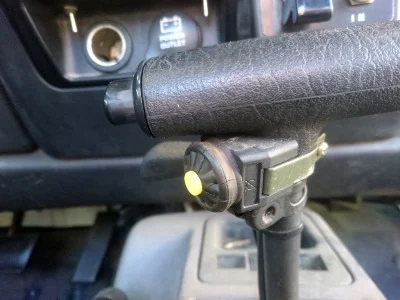
I have a hand throttle below the switch visible in the pictures, it doesn’t get in the way
Why switch at all?
The 42RLE drives much better with the overdrive disabled. It not only disables overdrive but enables a tow program that delays shifts and forces the torque converter to lockup sooner to keep transmission temperatures down. I think it also disables PMMT or partial lockup.
Why add another switch?
I switch it off every time I start the Jeep. The savings of having an ergonomic button on something you use often add up fast. The position also allows the switch to be thrown easily without looking down at the dash.
How does the switch work?
It is a momentary ground switch. That means when a single wire is pulled to ground the O/D toggles between on and off. This is great because it means you only need to splice into a single wire on the factory harness and it will not change the operation of the factory switch.
Down to business
I used a motorcycle horn or kill switch. They are waterproof, inexpensive, momentary and meant to be used by your thumb. Perfect for the job. You can find them online for under $10.
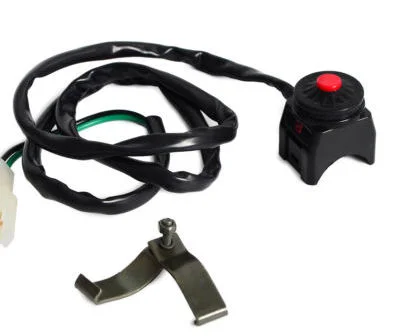
Ebay is a good place to find these
I mounted the switch on the t-handle collar so it can be pressed by your thumb without moving your hand from the shift lever. It took a bit of bending of the mount brackets to make it work. Depending on the exact switch you buy you might have to work at this a bit to make it fit. I spent a bit of time getting the screw the correct length and everything to sit flush. I also rounded the back of the switch slightly so it matched the curve on the handle collar a bit better.
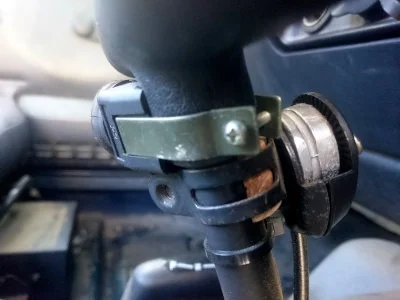
The button sits at the bottom of the t-handle, the hand throttle is just below
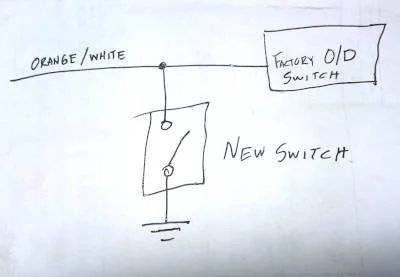
The wiring change is just about as simple as it gets
One of the wires from the button is attached to the factory O/D button signal wire. On a 2004 it is the orange wire with the white stripe or the second wire in from the drivers side on the switch. I used a Scotchlok wire tap so damage to the factory harness would be minimal.
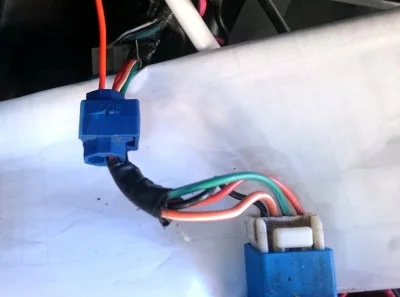
The other wire is just connected to any ground point. I chose a mounting bolt near the shifter. Be careful when running wires through the plastic plates at the base of the shifter. They slide underneath each other and if you drill through them they can lock together. You have to slot the lower holes if it binds. Just test gently after you route the wires to make sure it operates smoothly. Be sure you have enough slack to get all the way back to the first gear position.
Downsides
You can feel the mounting bracket on the opposite side depending on how you grab the shift lever. I got used to it in no time but some people might not like it.
After several years I noticed the cheap chinese switch has started to deteriorate. I didn’t even notice until I took pictures for this.
Your friends will ask if you have nitrous.
Conclusion
It might seem like a simple and fairly useless change adding a switch so close to the factory switch but for me it was worth the effort. I would do it on any 42RLE that I drove regularly. It has become second nature to use the new switch. Every time I click the factory switch I realize how inconvenient it is, even today.
I have a hand throttle below the switch visible in the pictures, it doesn’t get in the way
Why switch at all?
The 42RLE drives much better with the overdrive disabled. It not only disables overdrive but enables a tow program that delays shifts and forces the torque converter to lockup sooner to keep transmission temperatures down. I think it also disables PMMT or partial lockup.
Why add another switch?
I switch it off every time I start the Jeep. The savings of having an ergonomic button on something you use often add up fast. The position also allows the switch to be thrown easily without looking down at the dash.
How does the switch work?
It is a momentary ground switch. That means when a single wire is pulled to ground the O/D toggles between on and off. This is great because it means you only need to splice into a single wire on the factory harness and it will not change the operation of the factory switch.
Down to business
I used a motorcycle horn or kill switch. They are waterproof, inexpensive, momentary and meant to be used by your thumb. Perfect for the job. You can find them online for under $10.
Ebay is a good place to find these
I mounted the switch on the t-handle collar so it can be pressed by your thumb without moving your hand from the shift lever. It took a bit of bending of the mount brackets to make it work. Depending on the exact switch you buy you might have to work at this a bit to make it fit. I spent a bit of time getting the screw the correct length and everything to sit flush. I also rounded the back of the switch slightly so it matched the curve on the handle collar a bit better.
The button sits at the bottom of the t-handle, the hand throttle is just below
The wiring change is just about as simple as it gets
One of the wires from the button is attached to the factory O/D button signal wire. On a 2004 it is the orange wire with the white stripe or the second wire in from the drivers side on the switch. I used a Scotchlok wire tap so damage to the factory harness would be minimal.
The other wire is just connected to any ground point. I chose a mounting bolt near the shifter. Be careful when running wires through the plastic plates at the base of the shifter. They slide underneath each other and if you drill through them they can lock together. You have to slot the lower holes if it binds. Just test gently after you route the wires to make sure it operates smoothly. Be sure you have enough slack to get all the way back to the first gear position.
Downsides
You can feel the mounting bracket on the opposite side depending on how you grab the shift lever. I got used to it in no time but some people might not like it.
After several years I noticed the cheap chinese switch has started to deteriorate. I didn’t even notice until I took pictures for this.
Your friends will ask if you have nitrous.
Conclusion
It might seem like a simple and fairly useless change adding a switch so close to the factory switch but for me it was worth the effort. I would do it on any 42RLE that I drove regularly. It has become second nature to use the new switch. Every time I click the factory switch I realize how inconvenient it is, even today.