I don't care if they're Copper, Platinum, Iridium, Plutonian, or Unobtainum. Check your plugs.
A little history. I've owned my '03 Rubi for over a decade now. Bought it with 39k miles on it. She's sitting at 77k miles (weekend toy).
I have kept the engine completely stock. I'm OCD about oil changes and maintaining complete documentation (just to give you some background).
I live in the valley here in AZ. We've had some absolute SCORCHERS this summer. I'm talking 115* - 117* days. My Jeep typically doesn't stretch its legs too much when it's that hot, but since my daily has been in the shop, I figured it was a good time to get the oil flowing.
That's When The Symptoms Started:
Under heavy thermal load (I'm talking 45 minutes of stop-and-go, 115*+, fan fully locked up, AC on the second or third setting), I started to notice what felt like a lean stumble on tip-in around 1000 RPM. I'm talking barely feathering the throttle. If you sneeze, you'd miss it. I thought I was going crazy at first, but couldn't stop thinking about. A new problem to solve! Adventure abound!
At first, I thought the fuel rail was saturated beyond its thermal threshold. Seems reasonable given the 2000+ TSB on vapor lock, I just haven't experienced it while driving. However, the TSB did make mention of it occurring while driving:
I also noticed a drop in fuel economy (could have been benign due to my driving conditions at heat). Considering the mention of stop-and-go exacerbating the issue, I figured I'd start my hunt there.
The Triage Began:
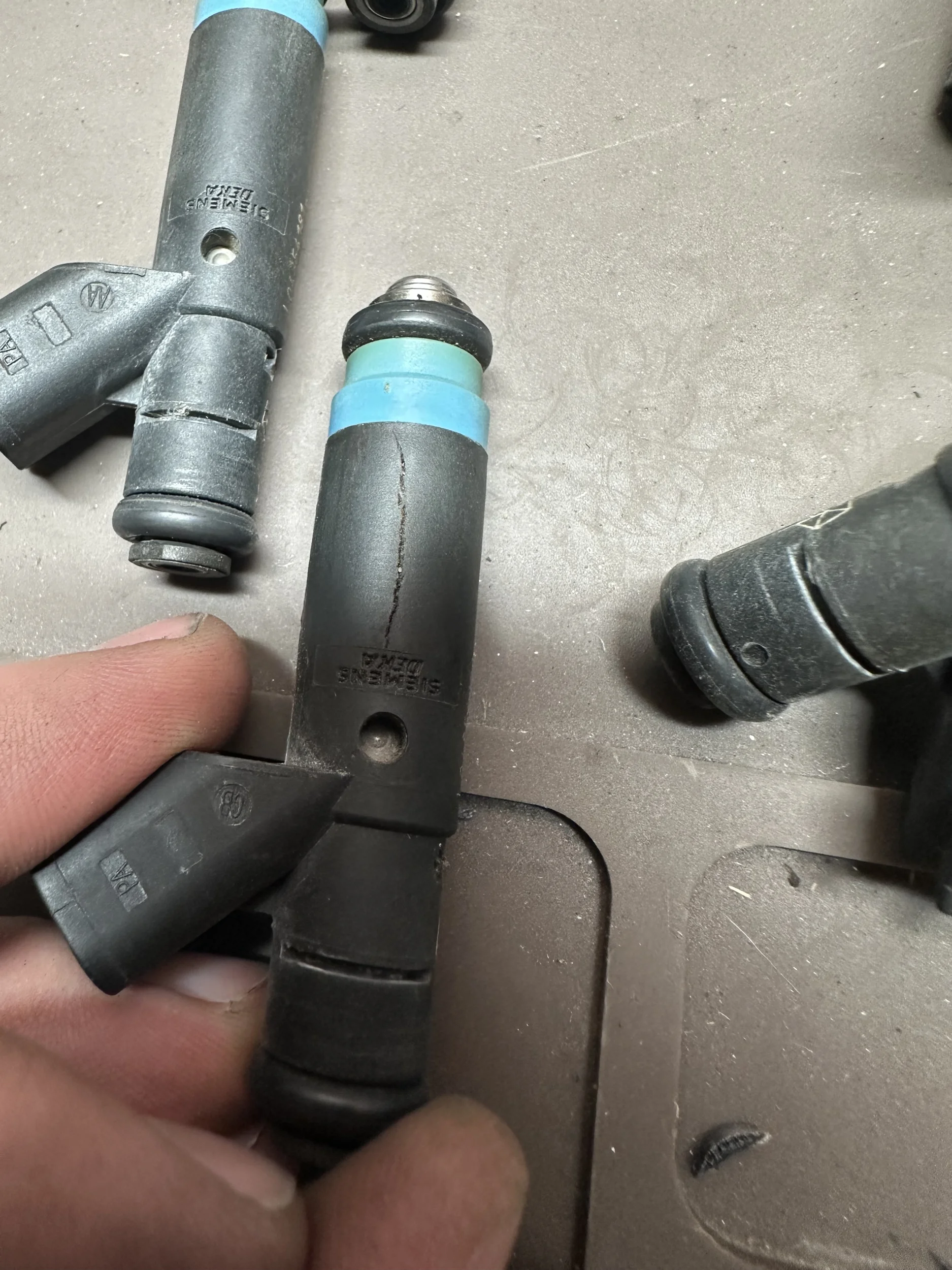
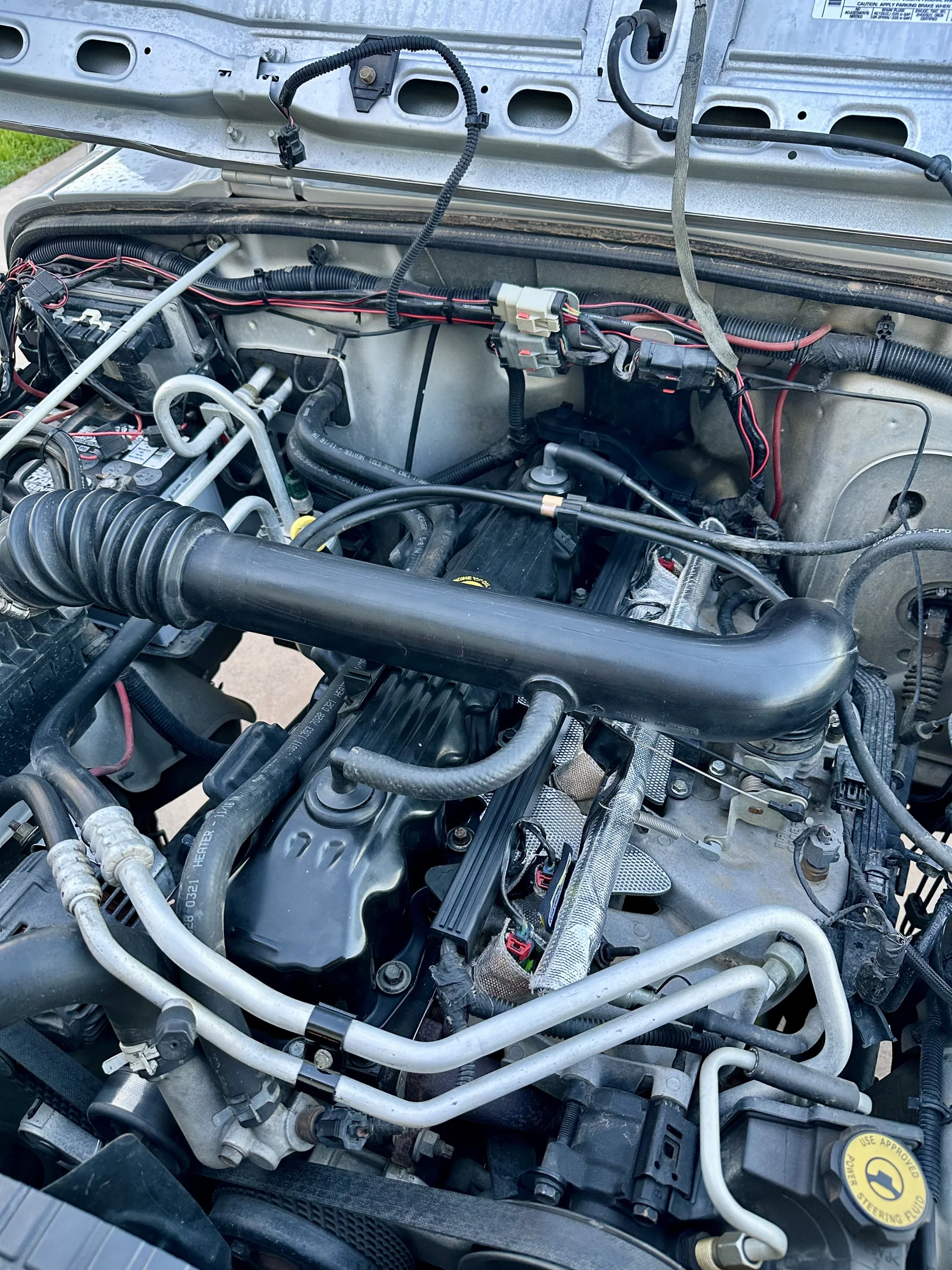
I started with a visual inspection of the fuel injectors. I noticed many of the injector sleeves had started cracking (extremely common problem with the factory injectors). Also found a valve cover leak, so I decided to knock all of that out in a night including wrapping the rails and injectors with the DEI heat wrap. I used the K-Suspension 4 hole injectors which I was very happy with. Sidebar: you don't get any additional power or MPG from that "upgrade." Anything perceived is simply a placebo (but that's not what I was after).
After install, the Jeep certainly felt smoother and the issue minimized, but the condition still existed under heavy thermal load.
I pulled out my scan tool and started running logs. With the advent of agentic AI (circa 2023), it makes reading those logs and keeping track of changes EXTREMELY simple without having to sift through thousands of events. I highly recommend trying it if you haven't. While heat soak of the fuel rail was still my number one suspicion, ignition started creeping up on my radar.
Where I Landed:
My next step was to hook up a fuel pressure gauge along with grabbing temp readings from the fuel line and rail. While I was laying in bed running the plan through my head, the thought occurred to me - you might be overhandling...let's check the spark plugs before we get too crazy here.
Sparkplugs you say?! No way...they're Platinum tipped APP985's. I visually confirmed that when I bought the rig 10 years ago. I should be good for another 15k-25k miles before I have to think about that. That's what the internet told me.
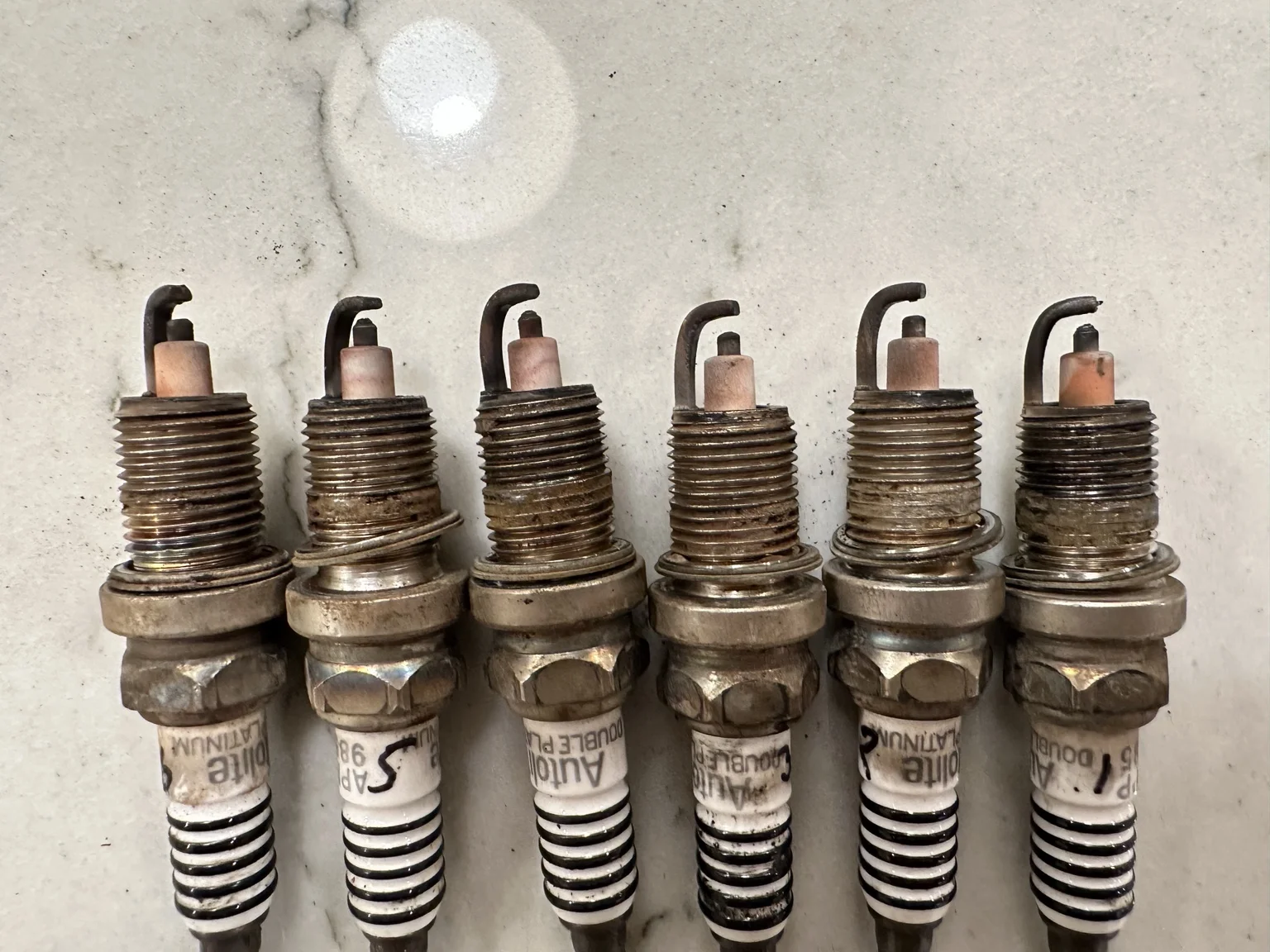
Either way, I pulled the plugs, and you're gonna laugh at what I found:
Cylinder 1 = .040
Cylinder 2 = .054
Cylinder 3 = .062
Cylinder 4 = .042
Cylinder 5 = .032* (WTF happened here?!)
Cylinder 6 = .058
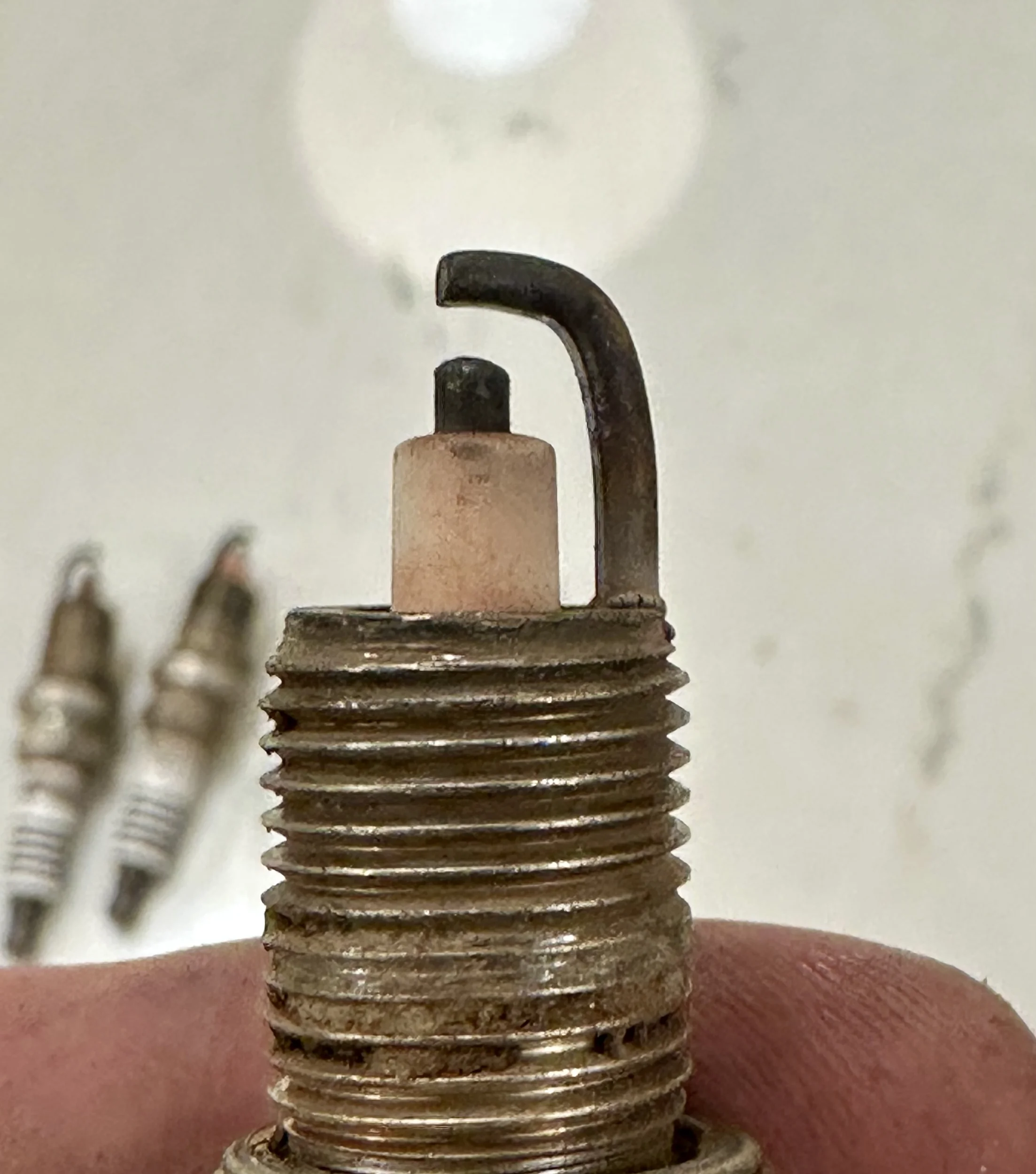
ONE IMPORTANT NOTE: The distributorless ignition systems (2000+) use a waste-spark ignition system. The polarity of the cylinders determines where the spark plug wears. It's normal to have asymmetric electrode wear on those engines as a result, but these ranges are all over the place.
I'm assuming Cylinder #5 was incorrectly gapped from the get-go. Either that, or upon installation, the electrode was bumped on the engine block. Very possible me of 10 years prior did that in my evening maintenance stumper.
Regardless of the anomalies, half of my plugs were worn FAR beyond spec. Assuming the PO slapped these suckers in at the factory 30k service interval, they're only 46k miles old. At the absolute most, they would be 77k miles old (the current mileage of my engine). Regardless, well below the echo-chambered "100k miles".
Bottom Line:
Having Iridium or Platinum spark plugs does not offload spark plug inspection at prudent intervals. It's still a good practice to check them at regular intervals.
I replaced them with a fresh set of APP985's all perfectly gapped at .040. THIS SOLVED MY PROBLEM.
Conclusion:
A ~.060 spark gap is roughly 50% larger than the factory spec'ed .040. Under heavy thermal conditions, your electrical and ignition systems are already taxed. Trying to produce enough power to span the 50% larger gap can cause some anomalies and stumbling under micro-events (like feathering the peddle). New plugs fixed me right up!
For your viewing pleasure, some pictures. Notice the coloration and burn patterns of the plugs are pretty consistent. I do not believe this is indicative of a larger issue. More-so just expired plugs that were most likely not gapped or installed with care. I have kept 10 years of MPG logs (did I mention I was OCD). I average 13.6 MPG mixed driving. With the plugs in the condition they were, that dropped to 11.5-12.5 MPG. I'm now back to what I expected.
A little history. I've owned my '03 Rubi for over a decade now. Bought it with 39k miles on it. She's sitting at 77k miles (weekend toy).
I have kept the engine completely stock. I'm OCD about oil changes and maintaining complete documentation (just to give you some background).
I live in the valley here in AZ. We've had some absolute SCORCHERS this summer. I'm talking 115* - 117* days. My Jeep typically doesn't stretch its legs too much when it's that hot, but since my daily has been in the shop, I figured it was a good time to get the oil flowing.
That's When The Symptoms Started:
Under heavy thermal load (I'm talking 45 minutes of stop-and-go, 115*+, fan fully locked up, AC on the second or third setting), I started to notice what felt like a lean stumble on tip-in around 1000 RPM. I'm talking barely feathering the throttle. If you sneeze, you'd miss it. I thought I was going crazy at first, but couldn't stop thinking about. A new problem to solve! Adventure abound!
At first, I thought the fuel rail was saturated beyond its thermal threshold. Seems reasonable given the 2000+ TSB on vapor lock, I just haven't experienced it while driving. However, the TSB did make mention of it occurring while driving:
Customers may describe a 20 to 30 second rough idle following the restart of a heat soaked engine. This condition may be most noticeable when the engine is restarted following a prior 10 to 20 minute heat soak in hot ambient conditions of approximately 32°C (90°F) or higher. This condition may be consistent with short city stop-and-go driving trips and can be aggravated by the use of fuel with a high ethanol content
I also noticed a drop in fuel economy (could have been benign due to my driving conditions at heat). Considering the mention of stop-and-go exacerbating the issue, I figured I'd start my hunt there.
The Triage Began:
I started with a visual inspection of the fuel injectors. I noticed many of the injector sleeves had started cracking (extremely common problem with the factory injectors). Also found a valve cover leak, so I decided to knock all of that out in a night including wrapping the rails and injectors with the DEI heat wrap. I used the K-Suspension 4 hole injectors which I was very happy with. Sidebar: you don't get any additional power or MPG from that "upgrade." Anything perceived is simply a placebo (but that's not what I was after).
After install, the Jeep certainly felt smoother and the issue minimized, but the condition still existed under heavy thermal load.
I pulled out my scan tool and started running logs. With the advent of agentic AI (circa 2023), it makes reading those logs and keeping track of changes EXTREMELY simple without having to sift through thousands of events. I highly recommend trying it if you haven't. While heat soak of the fuel rail was still my number one suspicion, ignition started creeping up on my radar.
Where I Landed:
My next step was to hook up a fuel pressure gauge along with grabbing temp readings from the fuel line and rail. While I was laying in bed running the plan through my head, the thought occurred to me - you might be overhandling...let's check the spark plugs before we get too crazy here.
Sparkplugs you say?! No way...they're Platinum tipped APP985's. I visually confirmed that when I bought the rig 10 years ago. I should be good for another 15k-25k miles before I have to think about that. That's what the internet told me.
Either way, I pulled the plugs, and you're gonna laugh at what I found:
Cylinder 1 = .040
Cylinder 2 = .054
Cylinder 3 = .062
Cylinder 4 = .042
Cylinder 5 = .032* (WTF happened here?!)
Cylinder 6 = .058
ONE IMPORTANT NOTE: The distributorless ignition systems (2000+) use a waste-spark ignition system. The polarity of the cylinders determines where the spark plug wears. It's normal to have asymmetric electrode wear on those engines as a result, but these ranges are all over the place.
I'm assuming Cylinder #5 was incorrectly gapped from the get-go. Either that, or upon installation, the electrode was bumped on the engine block. Very possible me of 10 years prior did that in my evening maintenance stumper.
Regardless of the anomalies, half of my plugs were worn FAR beyond spec. Assuming the PO slapped these suckers in at the factory 30k service interval, they're only 46k miles old. At the absolute most, they would be 77k miles old (the current mileage of my engine). Regardless, well below the echo-chambered "100k miles".
Bottom Line:
Having Iridium or Platinum spark plugs does not offload spark plug inspection at prudent intervals. It's still a good practice to check them at regular intervals.
I replaced them with a fresh set of APP985's all perfectly gapped at .040. THIS SOLVED MY PROBLEM.
Conclusion:
A ~.060 spark gap is roughly 50% larger than the factory spec'ed .040. Under heavy thermal conditions, your electrical and ignition systems are already taxed. Trying to produce enough power to span the 50% larger gap can cause some anomalies and stumbling under micro-events (like feathering the peddle). New plugs fixed me right up!
For your viewing pleasure, some pictures. Notice the coloration and burn patterns of the plugs are pretty consistent. I do not believe this is indicative of a larger issue. More-so just expired plugs that were most likely not gapped or installed with care. I have kept 10 years of MPG logs (did I mention I was OCD). I average 13.6 MPG mixed driving. With the plugs in the condition they were, that dropped to 11.5-12.5 MPG. I'm now back to what I expected.
Last edited: