Revolution Axle Assembly Question

Weasellee

Jeep idiot
Original poster
Supporting Member
Joined
Jan 19, 2021
Messages
2,362
Location
PV, New York
Currently assembling/installing a set of Rev discovery series rear shafts

These have the threaded wheel studs.

Without calling Revolution tomorrow the question is;

Wheel stud torque spec?

Should I loctite these studs?

Thanks all

B
🇺🇸
IMG_7890.webp
 
Currently assembling/installing a set of Rev discovery series rear shafts

These have the threaded wheel studs.

Without calling Revolution tomorrow the question is;

Wheel stud torque spec?

Should I loctite these studs?

Thanks all

B
🇺🇸View attachment 612098

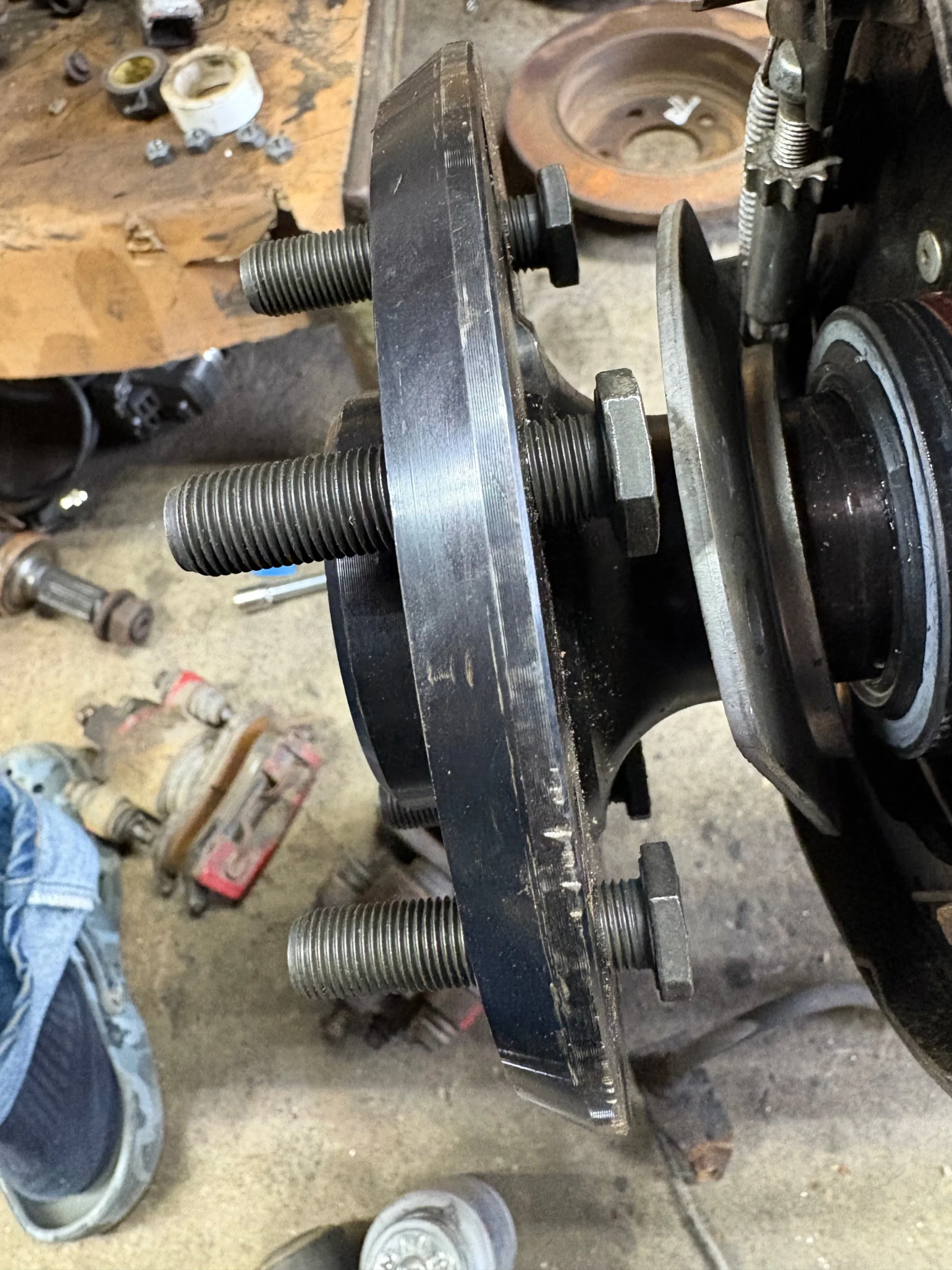
Torque to 100. Use Red 271 or 272, for the threads that engage the flange. Absolutely check one by impacting it in first and then removing it. You want to made dead sure that the chamfer at the head side of the flange is not making contact with the small radius where the head meets the shank thread and the last partially complete thread. The faying surface (shallow ring on the bottom side of the bolt head) must make contact solidly with the face of the flange around the hole. If it doesn't, then you are tightening against that partial thread. Over time, that will work in and loosen the lugnut torque value. It also allows a bit of dirt in the threads to foul them and you can screw the stud inward but you can't see it so you take off and wad up your brake parts and make a big mess of things.
 
u want to made dead sure that the chamfer at the head side of the flange is not making contact with the small radius where the head meets the shank thread and the last partially complete thread. The faying surface (shallow ring on the bottom side of the bolt head) must make contact solidly with the face of the flange around the hole.

But how will I know where it lies? When torqued in it looks to setting in tight but not flush
 
But how will I know where it lies? When torqued in it looks to setting in tight but not flush

You know by the witness mark at the small radius. If the threads have a good size chamfer, you'll know. They will not look perfectly flush because the faying surface is slightly raised above the hex as you can see in the pic.