You essentially just contradicted yourselfNo. The Savvy mid arm requires a body lift to fit under the tub.
so yes,no ? Maybe so

It's always blurred lines around here it seems when it comes to this type of stuff lol


You essentially just contradicted yourselfNo. The Savvy mid arm requires a body lift to fit under the tub.

You essentially just contradicted yourself
so yes,no ? Maybe so
It's always blurred lines around here it seems when it comes to this type of stuff lol
Yep,starting with my axial scx10 crawler,It's helped me quite a bit,I exaggerate some of my ideas and see what happensIf you are going to design and fabricate a suspension, then you are going to need to get better at seeing how different things interact with each other.
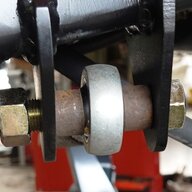
The reason the lines are blurry is due to the insistence that numbers somehow magically make shit work and that is rarely the case. I started playing with the mounts from other companies building my own triangulated upper rear 4 link and found them lacking in the things I was after so I started modifying them until I got them to work pretty good without excessive modifications to the rest of the rig. I didn't care what the numbers were and still don't because the numbers don't mean shit if the rig doesn't climb very well and isn't very stable. I also knew from playing with a few of the calculators to build a few suspensions based on "theoretical" COG locations and "theoretical" AS values that it is really difficult to try and get the links to go where someone's "ideal" values place them.It's always blurred lines around here it seems when it comes to this type of stuff lol
So reading what you said,You don't even measure COG? And from my understanding you essentially just make it work and if it performs good leave it alone? And vice versa if it doesn't work rightFYI- The COG reference you gave me is BS until verified and if it is BS, then so is the rest of it.
FYI2- I have a pretty good buddy who is a wizard at building desert race suspensions for "trophy truck" style vehicles in 2 and 4WD. He also owns a very unique crawler/race TJ that he has built the suspension on. When we first talked about it, I related the issues with getting that last bit of performance was unlikely due to having to channel the tub heavily for the uppers. He said he was aware and had no issue doing it because his was not as recreational as others might be.
I didn't say I didn't find the COG, I said if you haven't done the work to find it, then you are just guessing. Play with the calculator and see what minor changes to the COG location do to the numbers.So reading what you said,You don't even measure COG? And from my understanding you essentially just make it work and if it performs good leave it alone? And vice versa if it doesn't work right
I would not ever do that to him.And what's your buddies name ? I'd like to see pics of his race jeep ! Because he sounds like he's building his jeep to where I'd want to be,except I'd be at a much lower caliber as of now. But I'm looking at tacking something that may or may not involve cutting my tub...
So where exactly would you recommend to measure from for COG. ?I didn't say I didn't find the COG, I said if you haven't done the work to find it, then you are just guessing. Play with the calculator and see what minor changes to the COG location do to the numbers.
So where exactly would you recommend to measure from for COG. ?
https://longacreracing.com/blogs/te...-q9gMAxJeAUgWvOICmCu_3UrodMKbZznIatbEDJo8bNge
Daless2 did a similar version on a forum decades ago and I don't feel like hunting for it but the above is similar.
... And from my understanding you essentially just make it work and if it performs good leave it alone? And vice versa if it doesn't work right
...
I'm aware of that,Good shocks are in that equation too,good brakes,some good drivetrain etc.A very large chunk of what you are missing is that the midarm is not a single point solution that will turn your Jeep into an unstoppable monster. The mid arm is just one part of a larger, broader system that can work together to make your Jeep an unstoppable monster.
So enlighten me as to the current group think involving drag race suspension. When my buddies raced, the common build philosophy was low resistance down travel tuning on the front shocks and low resistance up on the rear shocks in an attempt to create front lift, rear squat to generate high amounts of weight transfer onto the rear axle.I'm aware of that,Good shocks are in that equation too,good brakes,some good drivetrain etc.
And another thing for me is that I'd like to keep the jeep as light as I can too
So enlighten me as to the current group think involving drag race suspension. When my buddies raced, the common build philosophy was low resistance down travel tuning on the front shocks and low resistance up on the rear shocks in an attempt to create front lift, rear squat to generate high amounts of weight transfer onto the rear axle.
How do they try to do it now?
I was expecting that the tuning and experience would have changed like the suspension on the bouncers has changed. It wasn't too terribly long ago where they valved their shocks so high on compression that they'd run up a hill climb and there was about 2" of shock travel used.Sometimes you have to put the motor in the back, but a body lift is always required........
That's one way to do it and it's commonSo enlighten me as to the current group think involving drag race suspension. When my buddies raced, the common build philosophy was low resistance down travel tuning on the front shocks and low resistance up on the rear shocks in an attempt to create front lift, rear squat to generate high amounts of weight transfer onto the rear axle.
How do they try to do it now?
You ever watched a rig try to climb an obstacle and the rear axle starts hopping? A lot of the time what you are seeing is high AS and what happens is the axle moves forward, pushes the rear of the rig up until the tires break traction and then the axle slips back from the weight of the rig flattening the arm angle back out. It repeats that quickly and then we get to see that as hopping. I suspected you would bring the high AS into it and I've not played with enough fucked up suspension to see if that can be mitigated or tuned out with other things like shocks. I also suspect that your high AS racers are doing other things along with that to maintain traction.That's one way to do it and it's common
From what ive seen when I went to the strip in my jeep (for shits&gigs) I've seen guys that run big amounts of antisquat,So when they launch their cars they don't really squat much when launching! And as the car goes down the track the rear end of the car is about 6 inches off the ground,So the ass end is up,front end stays down.
However yes,There is cars that also use that style of suspension you mentioned too! Longtravel front with low rebound and a soft compression on the rear end so that it'll squat,But not too soft on the back because if the coilover or shock gets fully Compressed it could cause the wheels to spin because so it's no longer applying any true pressure to the tires
I can't explain it all to well,But I learned and understood some new things ! Mainly learned the most on cars that were running crazy antisquat
I get what you mean,That oscillation of it repeatedly loosing&gaining traction is a result of high AS leading to annoying wheel hopYou ever watched a rig try to climb an obstacle and the rear axle starts hopping? A lot of the time what you are seeing is high AS and what happens is the axle moves forward, pushes the rear of the rig up until the tires break traction and then the axle slips back from the weight of the rig flattening the arm angle back out. It repeats that quickly and then we get to see that as hopping. I suspected you would bring the high AS into it and I've not played with enough fucked up suspension to see if that can be mitigated or tuned out with other things like shocks. I also suspect that your high AS racers are doing other things along with that to maintain traction.
Noted,Thank youThe point of all that mess? I'd strongly encourage you to not try and build something and try to make it do everything. What you typically wind up with is something that does nothing very well and a whole bunch of things very poorly.
I get what you mean,That oscillation of it repeatedly loosing&gaining traction is a result of high AS leading to annoying wheel hop
But yeah they're doing more than what I Mentioned but that was the main dish that helps them alot!
Noted,Thank you
I was expecting that the tuning and experience would have changed like the suspension on the bouncers has changed. It wasn't too terribly long ago where they valved their shocks so high on compression that they'd run up a hill climb and there was about 2" of shock travel used.





