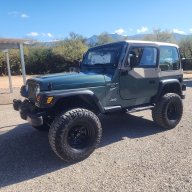
Got a 98 with 144800 miles. She's a little wanderer and squishy. Could it be control arm bushings or something else?
Thanks.
Thanks.


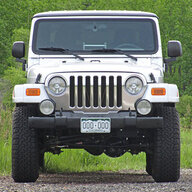
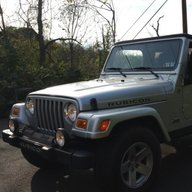
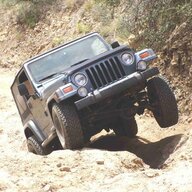
Stock tire size 36#'s air, tight steering. I'm stumped.
Control arm bushings. Ball joints. Steering joints. Steering box. Shocks. Track bar joints. Tired tires. Wrong pressure in tires. I've probably missed something.
Tires say 38#
Tire pressure is probably not the issue here. Higher pressures lead to a harsher ride and magnify slop on the steering or suspension but don't directly cause any issues. If anything the higher pressures help reduce steering slop.
I run 35x12.5 and keep my tires around 42-45 PSI to get the lower rolling resistance and more precise steering.
That said there is a substantial portion of this forum that will argue for significantly lower tire pressures.

I run 35x12.5 and keep my tires around 42-45 PSI to get the lower rolling resistance and more precise steering.

I got new wheels and the tire shop inflated my 35” tires to 40+ psi. The jeep was riding like shit. I knew by just reversing off the lot the tires had too much air. I aired them down to 26 psi much better and even wear across the tire. If I would have stayed at 40+ the center of the tire would have warn down quicker.
I got new wheels and the tire shop inflated my tires to 40+ psi. The jeep was riding like shit. I knew by just reversing off the lot the tires had too much air. I aired them down to 26 psi much better and even wear across the tire. If I would have stayed at 40+ the center of the tire would have warn down quicker.

Doesn’t matter what the tire says. If you are running stock tire size then you need to go by the PSI listed on the door jamb. Any size tire above stock size will take less tire pressure.

The door jamb doesn't know what tire is on the vehicle. Tire pressure should be according to the pressure listed on the tire sidewall.
The tire does not know what vehicle it is used on. The tire pressure should be what gets you a consistent contact patch and provides a ride that is close, or better than stock.


The tire side wall doesn’t know how much your Jeep weighs
You set the tire at a designated pressure and run a chalk test. When the chalk is removed evenly across the width of the tire you found the optimal tire pressure.How do you know youre getting a "consistent contact patch"? Someone letting you know as they drive beside you you?
True, do you know what your jeep weighs? Hit the scales on your jeep for true weight? Jeeps are light, and the big arsed tires we put on them are more than capable of handling any weight a Jeep can handle. Pressures matter, but they're not the big boogeyman some feel they are. I've found, in my off-roading pursuits over the years in jeeps, trucks, rails, and dualsports/MX bikes that its the wheelbase lengths in conjunction with tire type, surface conditions, and vehicle type that effect ride the most. But tire pressure discussions are very similiar to crankcase oil types and manufacturer discussions. There is no set, homogenous, overall agreement.





