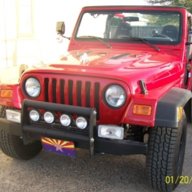
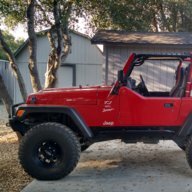
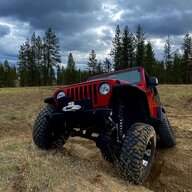
Try not to laugh too hard

Mostly rhetorical but it never hurts to know what the folks that build winches think is appropriate and it certainly isn't 4/0.

Due to cost. Look at any gauge/amp chart and see what's recommended. You can buy 10 gauge jumper cables too,do they work, eventually sure, but not as effective as they ones made with heavier gauge.

At that length 2 GA is good for roughly 120amps,not good for the winch motor or a heavy pull. 4/0 is certainly appropriate and correct.
 
Last edited:
  • Like
Reactions: 05 Blue Unlimited
Wire-Sizing-Chart-915x1024.webp
 
Due to cost. Look at any gauge/amp chart and see what's recommended. You can buy 10 gauge jumper cables too,do they work, eventually sure, but not as effective as they ones made with heavier gauge.

At that length 2 GA is good for roughly 120amps,not good for the winch motor or a heavy pull. 4/0 is certainly appropriate and correct.
It isn't due to cost, they sell it as a stand alone kit and if 4/0 was needed, it would be in the kit or there would be a 4/0 kit available. Since this is spec'd and sold by Warn for their winches, I wouldn't quite put it in the same category as 10 gauge jumper cables.

For the sake of discussion though, how many rear winches have you installed and used? I've done several, always used 2 gauge welding or marine cable and we have never had an issue, not one.
 
It isn't due to cost, they sell it as a stand alone kit and if 4/0 was needed, it would be in the kit or there would be a 4/0 kit available. Since this is spec'd and sold by Warn for their winches, I wouldn't quite put it in the same category as 10 gauge jumper cables.

For the sake of discussion though, how many rear winches have you installed and used? I've done several, always used 2 gauge welding or marine cable and we have never had an issue, not one.

I don't have a dog in this hunt but I am not sure the issue is if you could do so but if you should. At 25' you will drop roughly 20% in voltage using a 2 ga cable just to impedance. That you have had no issues isn't the point nor is it that Warn for whatever reason chooses to kit that. The issue is what is the proper ga size for that lenght to draw the load required.
 
I don't have a dog in this hunt but I am not sure the issue is if you could do so but if you should. At 25' you will drop roughly 20% in voltage using a 2 ga cable just to impedance. That you have had no issues isn't the point nor is it that Warn for whatever reason chooses to kit that. The issue is what is the proper ga size for that lenght to draw the load required.
I doubt that too many of us have our winches mounted 25' from our vehicles.:confused:
 
I don't have a dog in this hunt but I am not sure the issue is if you could do so but if you should. At 25' you will drop roughly 20% in voltage using a 2 ga cable just to impedance. That you have had no issues isn't the point nor is it that Warn for whatever reason chooses to kit that. The issue is what is the proper ga size for that lenght to draw the load required.
Well, you kinda do have a dog in this hunt since you were one of the first to start recommending wire size versus length. This is another of those things where practical application overrides theory. I can read a wire gauge chart as well as the next guy and so can Warn. That and the length in a TJ is closer to 15 feet of wire needed than 25.

I've give you a tidbit to mull over whilst you ponder why we can get by with 2 gauge. Do you know why Warn and most other winch companies use 9800 lb. breaking strength cable on a winch that is rated at 9500 lbs. of pulling power?
 
It isn't due to cost, they sell it as a stand alone kit and if 4/0 was needed, it would be in the kit or there would be a 4/0 kit available. Since this is spec'd and sold by Warn for their winches, I wouldn't quite put it in the same category as 10 gauge jumper cables.

For the sake of discussion though, how many rear winches have you installed and used? I've done several, always used 2 gauge welding or marine cable and we have never had an issue, not one.

I'm sure no one, especially me, can explain to a man of your experience and knowledge but facts are facts.

2ga wire will supply about 10.1v and safely 120 amps at the 15 or so feet we are talking about. That's enough for the ocassional light pull with no problems. A heavy long duration pull is going to be an issue, you or I may never have that need but if you want to do things by the book,it is what it is, no matter how many you have installed without issue. As great as you are, even you cannot change Ohms Law.


I have simply stated fact, and you have your opinion. I am not saying your way won't work,it obviously does, in most situations.
 
I'm sure no one, especially me, can explain to a man of your experience and knowledge but facts are facts.

2ga wire will supply about 10.1v and safely 120 amps at the 15 or so feet we are talking about. That's enough for the ocassional light pull with no problems. A heavy long duration pull is going to be an issue, you or I may never have that need but if you want to do things by the book,it is what it is, no matter how many you have installed without issue. As great as you are, even you cannot change Ohms Law.


I have simply stated fact, and you have your opinion. I am not saying your way won't work,it obviously does, in most situations.
I'm not trying to change Ohm's Law. The reason that practical application works is for the same reason that they get by with using a line with a breaking strength so close to the max rated capacity of the winch. You will almost never see a 400 amp draw and your winch will never be able to achieve it's rated capacity with a single line pull.

What is even harder to wrap your head around is when the amp draw is the highest. They show the highest amp draw at the rated winch capacity. It can not pull at the rated capacity unless it is on the first layer of line which coincidentally is when the winch has leverage most in it's favor. Contemplate that for a moment.
 
What is even harder to wrap your head around is when the amp draw is the highest. They show the highest amp draw at the rated winch capacity. It can not pull at the rated capacity unless it is on the first layer of line which coincidentally is when the winch has leverage most in it's favor. Contemplate that for a moment.

Rated capacity isn't what dictates amp draw, load does. 3rd wrap at 7k has same amp load as 1st wrap at 9k.

Look, I agree 400amp won't be a continuous draw, but should be a consideration.

You seem to reference Warn alot so according to their specs up to a 2500k pull is very doable with 2ga. 175amp rating. As I have been stating light pulls (1/3 of winch rating).

Over that and you are overloading the circuit.

Want practical application proof, test your installs. Run close to max pull or stall and check wire temp, if (when) they get warm or hot the current is to much for them.

Now my only point was this.....

The motor will run slower and have less power. The wire acts as a resistance in series with the motor. Ohm's law states that voltage equals current times resistance. So the smaller the wire the higher its resistance and the more voltage it will drop for a given current. Because the wire resistance is in series with the motor any voltage it drops as current flows through it is subtracted from the motor's input voltage. i.e., the motor runs slower because it has a lower input voltage. The heat you feel in the wire is dissipated power that never reaches the motor.

All that is less usable pull combined with as you said the wraps on the drum and now your 9k winch is effectively a 5k winch. Does it work? Well in practical application yes since most needs for a winch are not much more than a couple guys could probably push.

Is it right or safe? I guess, if you never find yourself in a position to need a long 9k pull.

To each their own, but if I'm going where I need a winch front and rear I'm probably alone and pretty far out so I would probably spend the extra coin on my rig to make it as capable as possible. To cut corners and save 200 bucks just seems silly.

Just kind of ironic because it seems I have read your posts about you designing parts for a certain type of Jeep owner but 4/0 wire is a problem for you. I mean I could see you taking issue if 6ga was suggested, but you seem to know best.