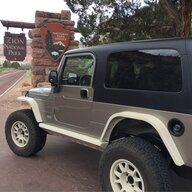
Somewhere around here is a video showing a tight turn with front locked vs rear locked. You get a LOT tighter turn with just the front locked.
From the ARB manual. I don't know how useful this information is...
From the ARB manual. I don't know how useful this information is...
Off Road Use Level,
High Traction Surfaces - As long as all wheels can stay in contact with a high traction surface, locking a differential is not necessary and could place undue load on your drive train. Cornering on high traction terrain with your differential locked (especially the front) is never recommended as it creates high torque load across your axle shafts and CVs. In these cases it is preferable to leave your Air Lockers unlocked until the need for them arises.
Level, Low Traction Terrain - Heavy traction loss can affect overall vehicle control with open or unlocked differentials, as traction is randomly transferred from side to side across the axle. Off road driving control will be greatly enhanced through mud, snow, water, loose gravel and other forms of low traction surfaces when one or both Air Lockers are engaged. Gentle throttle, smooth methodical steering and constant momentum will keep the vehicle moving steadily where you point it.
Uneven Terrain – Rock crawling, ditch crossing and other highly challenging forms of off road driving can render it impossible to keep four wheels on the ground. Locking your Air Locker(s) can often be your only alternative to a winch or a tow. Plan your path across such obstacles so you don’t compromise your vehicle’s centre of gravity and roll over. Use low range and idle throttle where possible and proceed slowly.
Uphill – Try to align the vehicle straight up the incline and keep the rear Air Locker engaged to maintain a constant push. Maintain a very light approach to throttle use (aim for zero wheel spin). Use of the front Air Locker in this situation is greatly dependent on the nature of the terrain and mostly dependent on ‘feel’.
Downhill – Again, as with all hill driving, straight down the hill is preferable to descend at an angle. Always use engine braking, if possible, over foot braking. Engage the rear Air Locker once you start moving.
Off Camber – When traversing an incline sideways on a surface with low or unpredictable traction (a situation best avoided if possible), leave both Air Lockers disengaged. Having both wheels driven together may promote slipping in this situation, where an unlocked axle should allow each wheel to find its deepest traction point. Limiting your throttle to a low range idle and not braking unless necessary will help your tyres bite into a loose surface.
Sand/Beach – It is important to remember that sand/beach driving offers very little traction, and spinning any wheel is a good way to dig a hole that you won’t get out of. You will also discover that some deep, loose sand conditions will require momentum in order to stay moving. You won’t often get a second chance at a run – lock the hubs, gear down just far enough that you know you won’t need to gear lower if you start to sink, and keep both Air Lockers engaged for the whole time.
Snow – In the snow your vehicle can easily lose traction, understeering into gradual corners, oversteering out of tight corners, and often spinning wheels rather than moving at all. Engaging your Air Locker will help you get rolling through the trouble spots. Some operators prefer to leave them engaged while driving in snow, but remember: engaging your Air Locker will change the way your steering behaves, especially when using a front Air Locker. Take it slow at first and give yourself time to get used to it before you try anything too challenging.
Performance/Motorsport - Locked or unlocked, motorsport champions the world over run Air Lockers, but few would agree on exactly how and when to engage your Air Lockers. The best solution is to get some running time in and see for yourself what seems to be the most effective strategy for your particular vehicle and driving style.
High Traction Surfaces - As long as all wheels can stay in contact with a high traction surface, locking a differential is not necessary and could place undue load on your drive train. Cornering on high traction terrain with your differential locked (especially the front) is never recommended as it creates high torque load across your axle shafts and CVs. In these cases it is preferable to leave your Air Lockers unlocked until the need for them arises.
Level, Low Traction Terrain - Heavy traction loss can affect overall vehicle control with open or unlocked differentials, as traction is randomly transferred from side to side across the axle. Off road driving control will be greatly enhanced through mud, snow, water, loose gravel and other forms of low traction surfaces when one or both Air Lockers are engaged. Gentle throttle, smooth methodical steering and constant momentum will keep the vehicle moving steadily where you point it.
Uneven Terrain – Rock crawling, ditch crossing and other highly challenging forms of off road driving can render it impossible to keep four wheels on the ground. Locking your Air Locker(s) can often be your only alternative to a winch or a tow. Plan your path across such obstacles so you don’t compromise your vehicle’s centre of gravity and roll over. Use low range and idle throttle where possible and proceed slowly.
Uphill – Try to align the vehicle straight up the incline and keep the rear Air Locker engaged to maintain a constant push. Maintain a very light approach to throttle use (aim for zero wheel spin). Use of the front Air Locker in this situation is greatly dependent on the nature of the terrain and mostly dependent on ‘feel’.
Downhill – Again, as with all hill driving, straight down the hill is preferable to descend at an angle. Always use engine braking, if possible, over foot braking. Engage the rear Air Locker once you start moving.
Off Camber – When traversing an incline sideways on a surface with low or unpredictable traction (a situation best avoided if possible), leave both Air Lockers disengaged. Having both wheels driven together may promote slipping in this situation, where an unlocked axle should allow each wheel to find its deepest traction point. Limiting your throttle to a low range idle and not braking unless necessary will help your tyres bite into a loose surface.
Sand/Beach – It is important to remember that sand/beach driving offers very little traction, and spinning any wheel is a good way to dig a hole that you won’t get out of. You will also discover that some deep, loose sand conditions will require momentum in order to stay moving. You won’t often get a second chance at a run – lock the hubs, gear down just far enough that you know you won’t need to gear lower if you start to sink, and keep both Air Lockers engaged for the whole time.
Snow – In the snow your vehicle can easily lose traction, understeering into gradual corners, oversteering out of tight corners, and often spinning wheels rather than moving at all. Engaging your Air Locker will help you get rolling through the trouble spots. Some operators prefer to leave them engaged while driving in snow, but remember: engaging your Air Locker will change the way your steering behaves, especially when using a front Air Locker. Take it slow at first and give yourself time to get used to it before you try anything too challenging.
Performance/Motorsport - Locked or unlocked, motorsport champions the world over run Air Lockers, but few would agree on exactly how and when to engage your Air Lockers. The best solution is to get some running time in and see for yourself what seems to be the most effective strategy for your particular vehicle and driving style.