
You are using an out of date browser. It may not display this or other websites correctly.
You should upgrade or use an alternative browser.
You should upgrade or use an alternative browser.

Black Hard Top Color Restoration
- Thread starter Moliver11
- Start date

It still looks great, then again I garage my TJ so it doesn’t get full sun exposure all day.Anyone contest to how long this lasts
Jacobjburt
New Member
Thanks I’ll give it a tryIt still looks great, then again I garage my TJ so it doesn’t get full sun exposure all day.
Jacobjburt
New Member
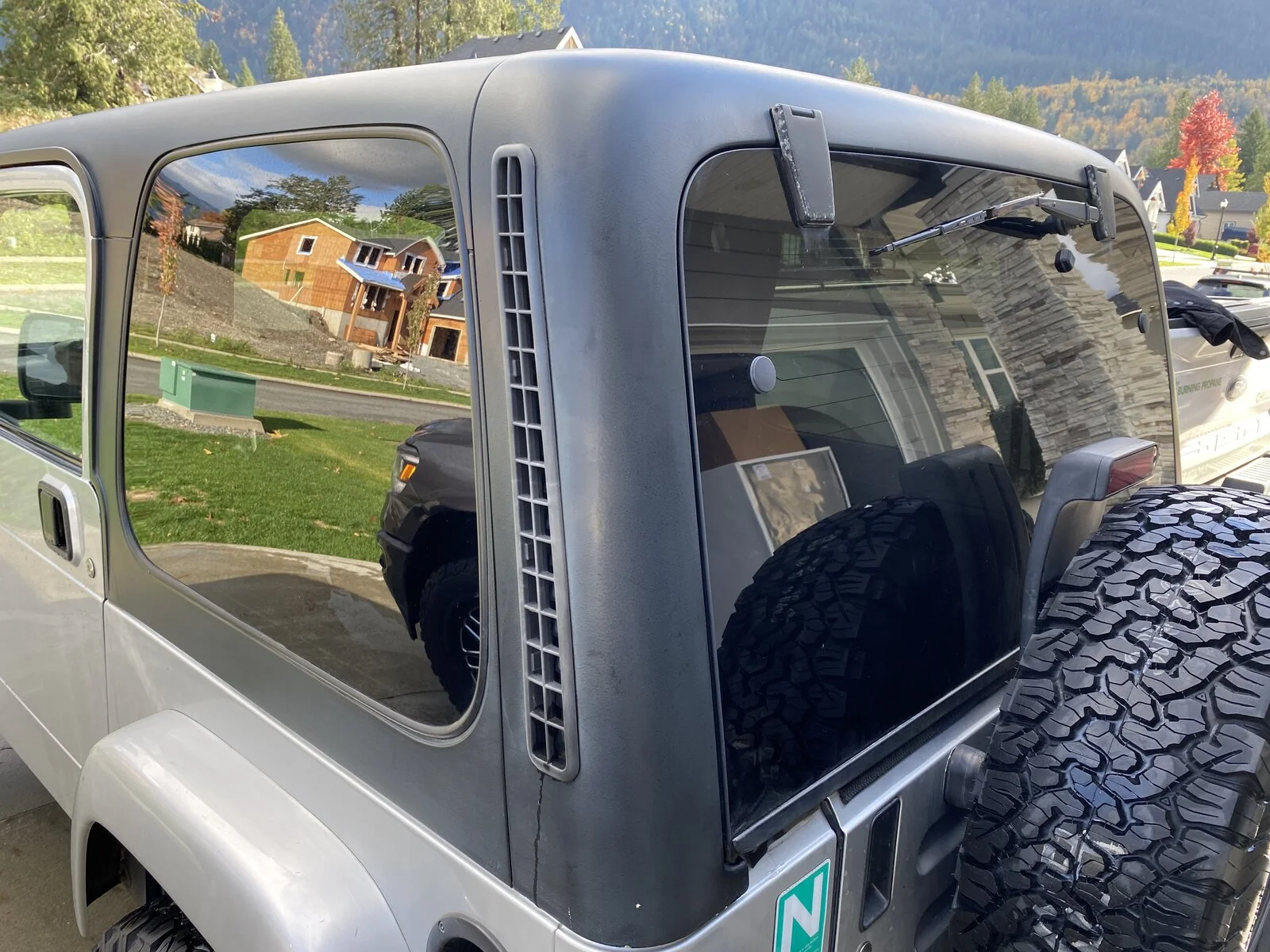
I also gave this a try, because the hardtop I bought was a bit faded. Eventually I want to go over and paint the whole thing with SEM paint if I can get my hands on some . but for 10$ And about 30 minutes worth of work I’m happy. I used 4 magic erasers total.
Jacobjburt
New Member
Also a while ago I used some rv silicone to hold my vent in place and I accidentally got a bit on the hardtop. The magic eraser took it right off.I also gave this a try, because the hardtop I bought was a bit faded. Eventually I want to go over and paint the whole thing with SEM paint if I can get my hands on some . but for 10$ And about 30 minutes worth of work I’m happy. I used 4 magic erasers total.
View attachment 287259
View attachment 287260
Looks really good. The next step of a ceramic spray really helped keep it fresh looking. Nice workI also gave this a try, because the hardtop I bought was a bit faded. Eventually I want to go over and paint the whole thing with SEM paint if I can get my hands on some . but for 10$ And about 30 minutes worth of work I’m happy. I used 4 magic erasers total.
View attachment 287259
View attachment 287260

James9100
TJ Enthusiast
@Moliver11 @Jacobjburt @tkarbs
Thanks for these pics. Can any of you share how much black appeared on your Magic Erasers in the process? I'm trying this out on a tan hard top, and after my first (gentle) pass, I see color coming off on the eraser, but no noticeable result. I can certainly try another pass, but want to be sure I'm not just removing all the paint.
Thanks for these pics. Can any of you share how much black appeared on your Magic Erasers in the process? I'm trying this out on a tan hard top, and after my first (gentle) pass, I see color coming off on the eraser, but no noticeable result. I can certainly try another pass, but want to be sure I'm not just removing all the paint.
@Moliver11 @Jacobjburt @tkarbs
Thanks for these pics. Can any of you share how much black appeared on your Magic Erasers in the process? I'm trying this out on a tan hard top, and after my first (gentle) pass, I see color coming off on the eraser, but no noticeable result. I can certainly try another pass, but want to be sure I'm not just removing all the paint.
I don’t recall how much black transferred to the magic eraser, I do remember it took a few passes. My hard top was oxidized pretty good, the magic eraser was noticeable in bringing back the color. I don’t recall feeling like the paint was getting too thin.

Anyone ever tried an oxidation remover product after using magic erasers?
I didn't use Magic Eraser....I just used Meguiar's Marine Oxidation Remover. It worked great and the top still looks great a year later.
My hard top has been sitting in my driveway for months looking like crap, think I'm going to pick up some magic erasers and show it some TLC. Thanks for the write up!
ya me too monsoons are starting so I'll have to put the top back on,crap I like run-in round with the dew rag on{safari top}

I have a lot of work to do on my hard top. A friend leant me his professional polishing equipment. I want desperately to throw a magic eraser on there, but I don’t know how.
You'll have to use elbow grease for the Magic Eraser. Give it a good cleaning and then apply Flood Penetrol. You'll be VERY pleased with the results.I have a lot of work to do on my hard top. A friend leant me his professional polishing equipment. I want desperately to throw a magic eraser on there, but I don’t know how.
James9100
TJ Enthusiast
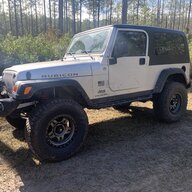
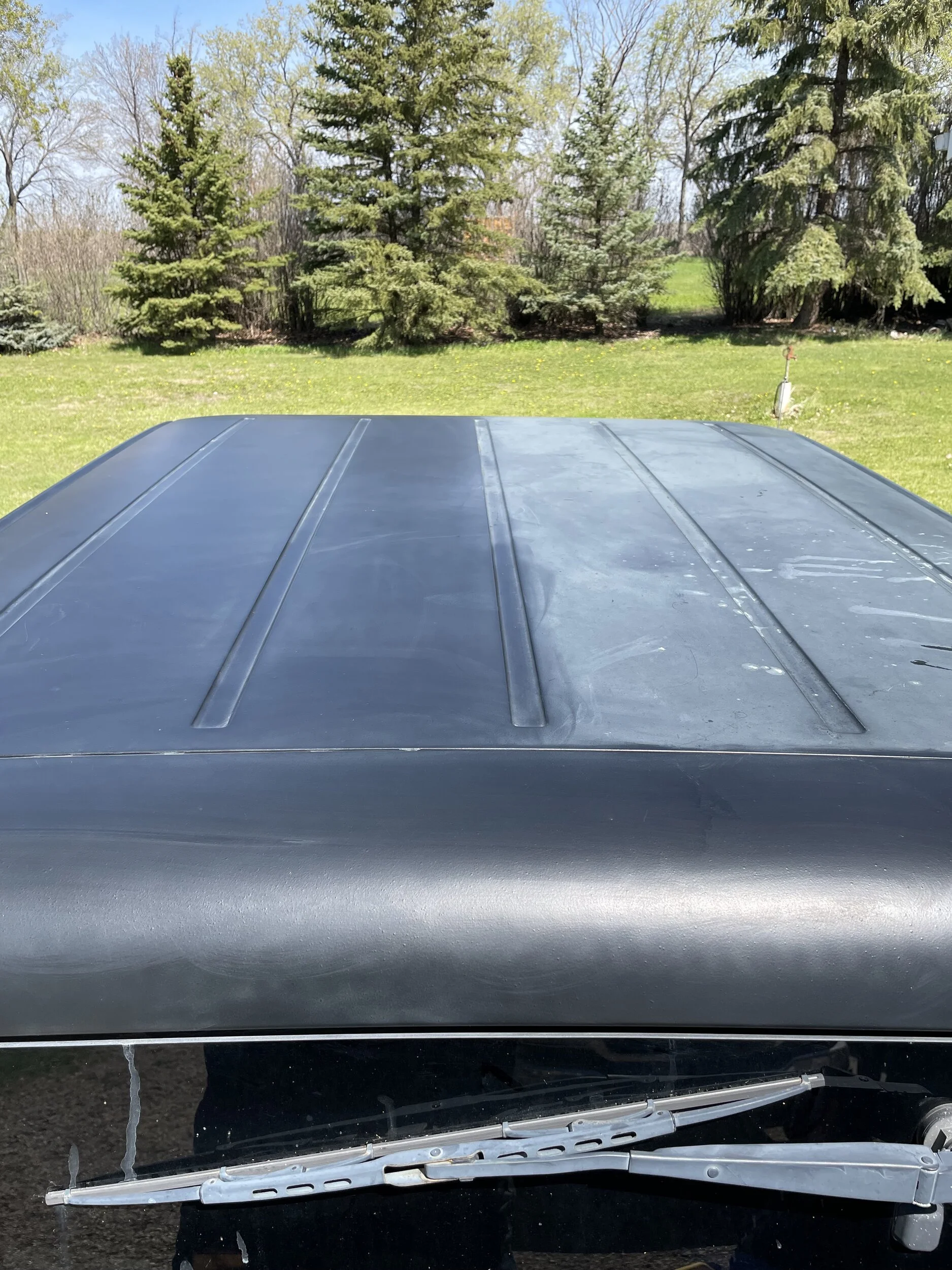
I used magic eraser on mine in May 2022, worked amazing and still looks good. Just a bit of water and start scrubbing.

jakesilvester
New Member
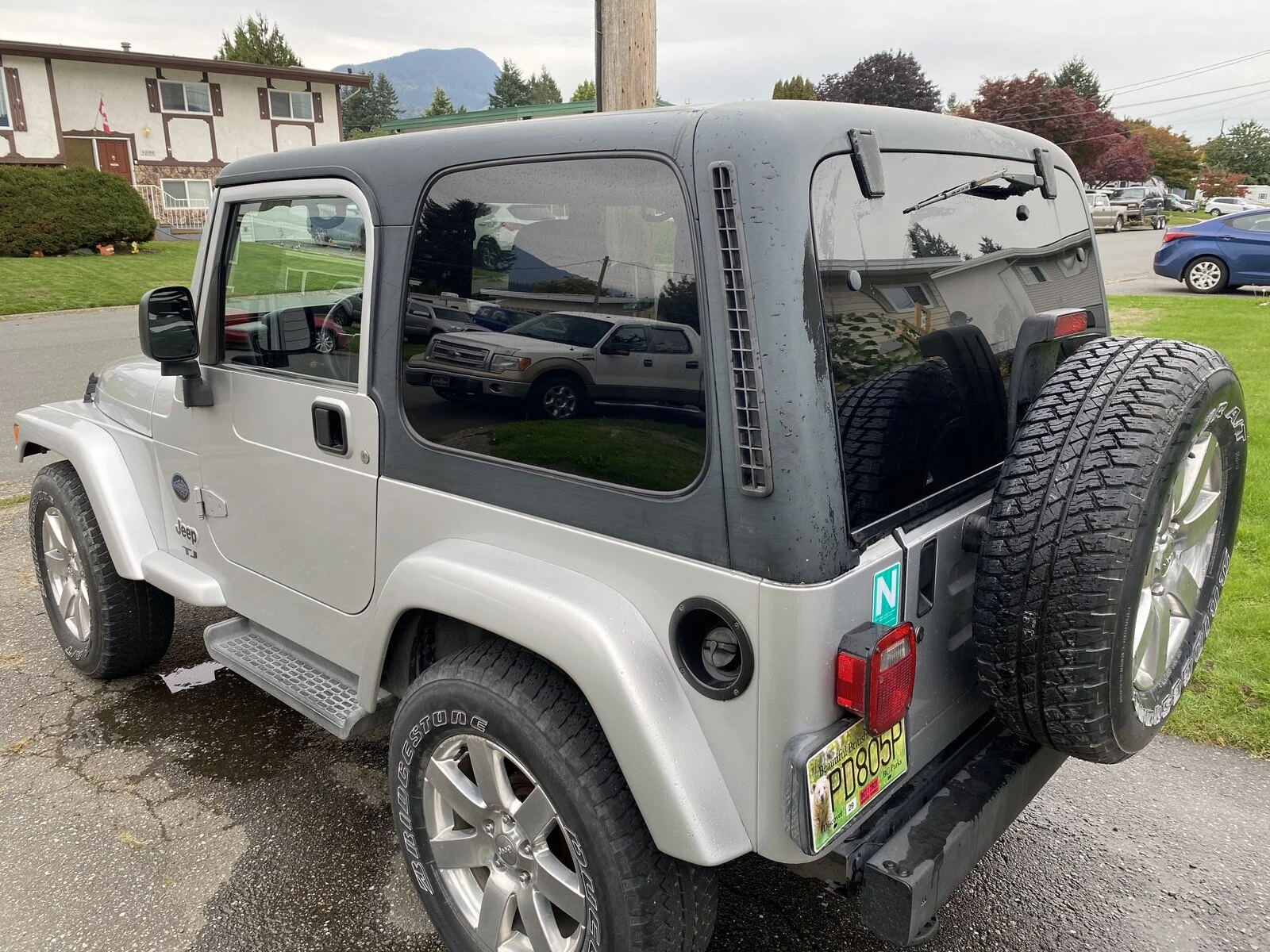
This past weekend I decided to try and restore the black color to our 2003 TJ that we purchased a few months ago. Like many TJ hard tops the paint was oxidizing and in need of some work. I read through the forum on multiple ways others cleaned and brought back color. Thanks to all that have contributed to this forum, so many great ideas and a wealth of knowledge. Hopefully this post will assist others to clean and restore their hard top's color.
Before going down the path of a re-paint, I decided to try using a Magic Eraser with warm water. The Magic Eraser did a great job of cleaning and removing 70-80% of the oxidation. Not knowing what the Magic Eraser would do to the pain, I started on a small area using light pressure and then increased in size. I could see the change immediately after making the first pass. With a little more confidence I increased pressure to the Magic Eraser and went over the entire top. After rinsing I was amazed how much better the hard top looked.
The Magic Eraser cleaning job took less than 30 minutes. While it did an incredible job removing most of the oxidation, I decided to bust out the orbital buffer along with Meguiar's Ultimate Compound and Ultimate Polish. Yep, I extended a 30 min job into a 2 hour full-on hard top clean and buff. Meguiar's Ultimate Compound took off another layer of oxidation and did a great job of cleaning the surface. The last step, Meguiar's Ultimate Polish not only cleaned any remaining surface oxidation, it brightened the surface and brought back most of the black color.
Total time for the hard top was around 2 hours from wash, Magic Eraser, Ultimate Compound, and Ultimate Polish. I couldn't be more satisfied with the results and decided to go over the entire Jeep with the Ultimate Compound followed by the Ultimate Polish. All surfaces are now clean, prepped, and read for an application of a ceramic wax spray.
Wanting to protect the work I did on the hard top and all painted surfaces, I spent some time researching many different waxes. I'm amazed how far the wax industry has evolved. Yesterday I purchased Turtle Wax 53409 Hybrid Solutions Ceramic Spray Coating and will go over the entire Jeep, including the hard top, when the product arrives. I probably spent more time researching spray waxes than it will take to apply lol.
The next several posts contain pictures showing the "before" any work was performed to the hard top followed by each step mentioned above. I'm separating pics to show the difference on the top, side and rear corner using the Magic Eraser, compound, and polish.
I just did this to my faded and oxygenated hard top this week and I have to say wonderful instructions on how to restore it. I am really happy how mine turned out, this is specifically really good to do for someone from the UK as its really hard to get the Penetrol which is recommended in a lot of posts for restoring the TJ hard top. See the before and afters video below!


tamnosbig
New Member
I haven't read this entire thread, and I haven't restored a hardtop. So take this with a grain of salt. This may have been discussed before. But my suggestion is know the chemical make up of the materials before researching restoration methods. And the type of paint involved.
This isn't to say any of the methods above are wrong. This is just my experience spending a shit ton of time attempting various restoration projects. Only to find out they didn't work at all. Or didn't last long enough to make them worth the effort. Or that I should jumped to the restoration method that even though was more expensive and time consuming - was the only one that provided long term enough results to make it worthwhile.
So this is just a suggestion:
I have restored the plastic flares and trim plastics multiple times with various products and techniques, wasting a lot of time, energy, and money in the process.
If I had to do it all over again, my first move would be doing deeper research to identify the exact chemical compounds and materials used in the original parts. Jeep plastics aren't standard; they seem built for trail abuse, but don't hold up as well to intense UV exposure. And sometimes don't work at all with many products that work wonders in every other vehicle plastic out there. Products that work wonders on other vehicles often fail much faster on a Jeep. Or just don't take.
Before diving into trial-and-error, a wise move might be figuring out which other industries use those same chemicals and materials—maybe even reaching out to a 3M engineer. Those guys are a huge information source and will talk at length to anybody.
AND THEN check marine, RV, and heavy-truck forums. Or other industries using the exact same materials. (Just like Jeep flares, the hard top and it's paint might be a very different product.) Boaters, camper owners, and professional restorers deal with harsh sun exposure constantly, and they’ve likely already perfected long-term solutions for similar plastic or fiberglass compounds. And know exactly not just what works. But also how long each solution lasts. And whether that's worth the time and effort avoiding a repaint.
My issue with most plastic restoration methods (and again I'm not talking about hard tops. Just restoration projects in general) wasn't that they didn't work initially, but that they didn't last—something you only realize months down the road. In high-sun climates, UV degradation is an ongoing battle (I’ve even rigged a tarp across my carport just to keep the afternoon sun off my trim. Because I know sun damage is probably the biggest maintenance issue facing our Jeeps. And how time consuming it can be. I'll do anything to avoid it in the future! ).
).
The results posted above look amazing, and a 2-hour buff job is definitely easier than a full repaint.
But based on my past experience with temporary treatments, taking the time up front to research the exact material science—or deciding if a full repaint makes more sense for your climate—can save you a lot of repeated effort and disappointment a year down the line.
To recap:
Do we know what exact chemical compounds were used in the hard top? (For instance - Jeep plastics are a completely different plastic than other vehicles. Forever Black has worked and lasted for years on my GM vehicles. It failed to even take on properly prepped Jeep flares. Not to mention the other numerous flare solutions that are definitely half assed and rarely last.)
Do we know the chemical make up of the paint? Is there a better one?
Have we identified any other industries using these?
Have we researched those industries long term solutions? And done a cost to benefit ratio analysis?
In simpler terms, is it worth it or should I just jump to a repaint? And save myself countless hours, money and time - I could have put into a repaint or longer term solution?
This isn't to say any of the above solutions are wrong. I just think you might be better off starting from zero, figuring out what exactly your dealing with and what other industries you might get help from, and identifying the long term effects of each solution - each ones cost and time versus it's long term results - before you try anything.
What I'm saying is - identify all your choices first. Before choosing one. At least then you're informed. And know how much effort and long term affect your going to have - compared to the other solutions.
I spent months going from one plastic restoration solution to the next. Convinced the latest one was the solution. Had I taken my time and compared all of them? I wish I had just skipped to repaint. Ultimately that was the final solution.
This isn't to say any of the methods above are wrong. This is just my experience spending a shit ton of time attempting various restoration projects. Only to find out they didn't work at all. Or didn't last long enough to make them worth the effort. Or that I should jumped to the restoration method that even though was more expensive and time consuming - was the only one that provided long term enough results to make it worthwhile.
So this is just a suggestion:
I have restored the plastic flares and trim plastics multiple times with various products and techniques, wasting a lot of time, energy, and money in the process.
If I had to do it all over again, my first move would be doing deeper research to identify the exact chemical compounds and materials used in the original parts. Jeep plastics aren't standard; they seem built for trail abuse, but don't hold up as well to intense UV exposure. And sometimes don't work at all with many products that work wonders in every other vehicle plastic out there. Products that work wonders on other vehicles often fail much faster on a Jeep. Or just don't take.
Before diving into trial-and-error, a wise move might be figuring out which other industries use those same chemicals and materials—maybe even reaching out to a 3M engineer. Those guys are a huge information source and will talk at length to anybody.
AND THEN check marine, RV, and heavy-truck forums. Or other industries using the exact same materials. (Just like Jeep flares, the hard top and it's paint might be a very different product.) Boaters, camper owners, and professional restorers deal with harsh sun exposure constantly, and they’ve likely already perfected long-term solutions for similar plastic or fiberglass compounds. And know exactly not just what works. But also how long each solution lasts. And whether that's worth the time and effort avoiding a repaint.
My issue with most plastic restoration methods (and again I'm not talking about hard tops. Just restoration projects in general) wasn't that they didn't work initially, but that they didn't last—something you only realize months down the road. In high-sun climates, UV degradation is an ongoing battle (I’ve even rigged a tarp across my carport just to keep the afternoon sun off my trim. Because I know sun damage is probably the biggest maintenance issue facing our Jeeps. And how time consuming it can be. I'll do anything to avoid it in the future!
).The results posted above look amazing, and a 2-hour buff job is definitely easier than a full repaint.
But based on my past experience with temporary treatments, taking the time up front to research the exact material science—or deciding if a full repaint makes more sense for your climate—can save you a lot of repeated effort and disappointment a year down the line.
To recap:
Do we know what exact chemical compounds were used in the hard top? (For instance - Jeep plastics are a completely different plastic than other vehicles. Forever Black has worked and lasted for years on my GM vehicles. It failed to even take on properly prepped Jeep flares. Not to mention the other numerous flare solutions that are definitely half assed and rarely last.)
Do we know the chemical make up of the paint? Is there a better one?
Have we identified any other industries using these?
Have we researched those industries long term solutions? And done a cost to benefit ratio analysis?
In simpler terms, is it worth it or should I just jump to a repaint? And save myself countless hours, money and time - I could have put into a repaint or longer term solution?
This isn't to say any of the above solutions are wrong. I just think you might be better off starting from zero, figuring out what exactly your dealing with and what other industries you might get help from, and identifying the long term effects of each solution - each ones cost and time versus it's long term results - before you try anything.
What I'm saying is - identify all your choices first. Before choosing one. At least then you're informed. And know how much effort and long term affect your going to have - compared to the other solutions.
I spent months going from one plastic restoration solution to the next. Convinced the latest one was the solution. Had I taken my time and compared all of them? I wish I had just skipped to repaint. Ultimately that was the final solution.
Last edited:
Similar threads

- Replies
- 2
- Views
- 567

- Replies
- 1
- Views
- 623

- Replies
- 4
- Views
- 2,608

- Replies
- 11
- Views
- 4,321


