Wheel diameter and airing down

No.343

Member
Original poster
Supporting Member
Joined
Jun 8, 2019
Messages
68
Location
Moore, Ok
I'm just curious about off road performance. Can you folks tell if one wheel diameter is better than the other for off roading? The only advantage that i can think of is being able to install bigger brake rotors.

I use the ARB tire deflator and two of the tires take a lot longer to deflate than the other two tires. Any ideas?
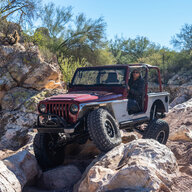
 
Depends on the tire size for the wheels but I think most folks run 15 X 8s for 33s and prefer more tire wall as opposed to wheel diameter.
 
  • Like
Reactions: JMT and TJ Starting
I've been wondering about wheel size recently since I hope to move away from my current 16" wheels.

Which is more important, wheel size/side wall or the tire design? How much difference is there between a 35" Goodyear MTR mounted on a 15" or 17" wheel?
 
Suggesting lower profile tires are better off road is just about the same as suggesting higher psi is better.

Not necessarily. More like there are diminishing returns beyond a certain sidewall height.
 
  • Like
Reactions: Stevemack
I respectfully disagree. If you can't find the exact size or load rating I get it. If you choose a bigger rim just because, you are suffering on the trail.
 
Not necessarily. More like there are diminishing returns beyond a certain sidewall height.
Where’s that limit? Plus we have to figure in what’s available. Larger tire diameter usually comes with higher load rating making the tire less supple. The other end of the spectrum is the sidewall is too thin. Thus, a 15x8 C load rating with some kind of armor in the sidewalk, Kevlar or armor tek. 17’s have very few offerings. 17’s abundant and tempting, especially at 37’s but possibly at 35’s
 
Some quick and dirty math...

(33-15)/2=9" sidewall
(33-17)/2=8" sidewall

(35-15)/2=10" sidewall
(35-17)/2=9" sidewall

Are the JK guys running 35/37s wishing for 15" wheels?

Mine has 16" wheels on 33s, which ought to result in a 8.5" sidewall. But realistically less in the real world. Regardless, airing down and the amount of sidewall is most certainly not a area that is lacking in my observations, even with my allegedly stiff LR-E tires. The tire design itself definitely is, though.
 
Last edited:
I'll add that I have been having this very same discussion elsewhere. While my instincts want to lean towards the smaller wheel, I also have my doubts as to how important it really is compared to other considerations.

Having measured my little Jeep next to other TJs and JKs with aired down 35s and 37s, I also know that there are also a lot of moving variables that make singular comparisons difficult to quantify.
 
Last edited:
Which is more important, wheel size/side wall or the tire design?

What's most important, with regards to 35s, is being able to fit the Vanco BMB 17" big brake kit.

How much difference is there between a 35" Goodyear MTR mounted on a 15" or 17" wheel?

According to the Brake Wizard, not enough to matter and the MT/R in 17" wheel variety is still available in load range C. I made the mistake of going with a 15" wheel for my MT/R 35s.
 
The "rule" I've always been told is Tim size should not be more than half tire size. IE: no more than a 16" rim for 32's, no more than 17" rim for 34's, etc. But I think the Forum Police will allow a bit of wiggle room. The sidewall actually acts as part of the suspension system. Less sidewall can make any suspension act firmer. Thus low profile tires for sports cars.
 
So, there are no claims of better traction, smoother ride or any other desirable traits that one wheel diameter provides better than the other?
 
Suggesting lower profile tires are better off road is just about the same as suggesting higher psi is better.

Not necessarily. More like there are diminishing returns beyond a certain sidewall height.

"Not necessarily" is true but let's keep in mind that sidewall height works in both directions.
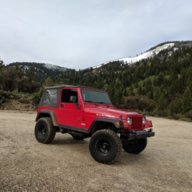
P8040102.webp
 
OP, if you're going from a 15 to a 20 inch wheel, I would say yes. Mainly sidewall flex or lack of.
As far as airing down times, it could be that 2 valve cores are shorter than the other 2.
And are we talking seconds or minutes.
In my case, it would be the amount of time that I am kneeling down to deflate the last 2 tires.
 
I don't think I would want 17" wheels on 33" tires but I don't think I would hate them on 35" tires. I am a fan of the smaller wheel look on our Jeeps though. Big wheels look a little out of place to me, but because of tire offerings I wouldn't want to go 16".

On the other hand if you want beadlocks that limits you to mostly 17" wheels if you want a variety to choose from.
 
Ya, switching to Ravine wheels and 31" MT/R tires you'll not only get a C rated tire but a tiny bit larger and about 11 lbs less per wheel/tire.

Not to mention a new set will cost over $100 less.
 
Last edited:
  • Like
Reactions: rasband
OP, if you're going from a 15 to a 20 inch wheel, I would say yes. Mainly sidewall flex or lack of.
As far as airing down times, it could be that 2 valve cores are shorter than the other 2.
And are we talking seconds or minutes.
In my case, it would be the amount of time that I am kneeling down to deflate the last 2 tires.
The only change I would consider is going from a 15" to a 17" that way I could standardize with the other Jeep and trailer. I'm thinking its not worth the trouble.
We are talking minutes of difference between the time it takes to air down those two tires.
 
I went from a15x8, 35" to a 17x8, 37" tires. I mainly wanted the extra 1" in rear diff. clearance.
Other Jeep and trailer?
Do you know if there has been any kind slime or other self-sealant in your tires?