CB Antenna Help

Jewinters

MidGA Wrangler
Original poster
Supporting Member
Joined
Apr 8, 2020
Messages
22
Location
Warner Robins GA
I have searched and read what I could find but am stumped. I can not get my SWR below 3.0 on 1 or 40 matter of fact they are practically the same no matter how I adjust the Antenna.

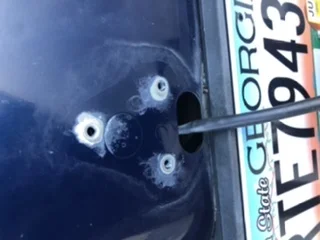
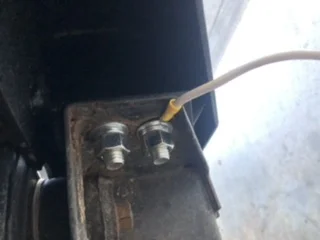
I have attached some pictures of my grounding points and have even added a extra ground wire with no change. Obviously I am missing something important.

Any help is greatly appreciated.

33A0CC64-5063-479F-A19D-865AEE5E2E06.webp


E988A589-ED8B-44C5-BD1D-988439086C20.webp


99238F08-E189-4CC7-808F-A9FAB390736C.webp


10B34ADB-2164-4A9C-83C6-873656F66093.webp


8D2838C9-FB40-4BE0-B7AB-C06EBE9242B4.webp


C7B80F97-6CC3-4C5A-B505-E8CFCB17DEDF.webp
 
We need photos of the rest - stud mount, location of Delrin washer, SO-239 coupler, etc.

It does not appear that the bracket for the antenna mount is the source of your issue.

This illustration shows the way that 3/8" stud mounts should be assembled. [Top Row: Using standard coax with SO-239/PL-259 connectors (L), using ring terminals (C), using a Firestik "FireRing" (R).]

K4.K4A.K4R-assy.gif


http://www.firestik.com/Tech_Docs/Stud_Smarts.htm
See also: http://www.firestik.com/Tech_Docs/Cb&swr-18pg.pdf
 
Last edited:
If you are using it for trail communication you might try to find somebody to test it with. Very often it will work just fine. Tracking down SWR is great if you are trying to talk a few states away with skip but for your buddy 1000ft away it is likely a waste of time. I'm not saying ignore it, just it is much easier to do a quick test with a friend and then you'll know you can ignore it.

Modern CBs are simply not damaged by this sort of thing, worst case you'll get some strange voice or echos and even that is rare. Here is a great really technical discussion about it.

https://www.arrl.org/files/file/Technology/tis/info/pdf/q1106037.pdf

I hope it shows that all you are really doing is minimizing line loss and for local CB talk it just don't matter.
 
  • Like
Reactions: Blondie70
SWR is more important than some may think even though a high SWR no longer causes damage to most modern CBs like it used to. A high SWR means the antenna is reflecting power back at the transmitter which means the antenna is not transmitting as much signal as it could/can/should be.

With the vinyl tip cover off the tip of the antenna, how low are you able to get the SWR? I know the SWR goes back up when you put the vinyl tip cover back on but there's a way around that. You tune the antenna a bit to the correct side of minimum SWR so that when you put the vinyl tip cover it brings the SWR back down. If the SWR instead goes up when installing the tip cover, tune to the other side of minimum SWR and then install the tip cover. There's a bit of trial-and-error required but eventually you can get the SWR down to its lowest level with the tip cover in place.
 
  • Like
Reactions: Zorba
SWR is more important than some may think even though a high SWR is no longer the big issue, damage-wise, that it used to be with CBs. A high SWR means the antenna is reflecting power back at the transmitter which means the antenna is not transmitting as much signal as it could/can/should be.

With the vinyl tip cover off the tip of the antenna, how low are you able to get the SWR? I know the SWR goes back up when you put the vinyl tip cover back on but there's a way around that. You tune the antenna a bit to the correct side of minimum SWR so that when you put the vinyl tip cover it brings the SWR down. If the SWR instead goes up when installing the tip cover, tune to the other side of minimum SWR and then install the tip cover. There's a bit of trial-and-error required but eventually you can get the SWR down to its lowest level with the tip cover in place.
What he said. I didn't know about the vinyl tip trick (thank you!), but 3:1 SWR is atrocious in my book.
 
SWR is more important than some may think even though a high SWR is no longer the big issue, damage-wise, that it used to be with CBs. A high SWR means the antenna is reflecting power back at the transmitter which means the antenna is not transmitting as much signal as it could/can/should be.

With the vinyl tip cover off the tip of the antenna, how low are you able to get the SWR? I know the SWR goes back up when you put the vinyl tip cover back on but there's a way around that. You tune the antenna a bit to the correct side of minimum SWR so that when you put the vinyl tip cover it brings the SWR down. If the SWR instead goes up when installing the tip cover, tune to the other side of minimum SWR and then install the tip cover. There's a bit of trial-and-error required but eventually you can get the SWR down to its lowest level with the tip cover in place.


Jerry, It doesn’t seem to change at all with or without the cover on it. I can adjust it all the way up or down and the SWR reading seems to stay just the same on channel 1 and 40.

To check on the location and height I moved the mount to the front of the Jeep mounted near the bottom of the windshield pillar and used my grounding wire to hook the bracket to the grounding strap that grounds the hood to the body. Hooked everything else back up and checked the SWR and from what I could tell it was the Same as when it was mounted in the back at the taillight.
 
I suspect that proximity to the roll bar may be the problem.
Mine is mounted at the same location without problem, it has a good low SWR.

Jerry, It doesn’t seem to change at all with or without the cover on it. I can adjust it all the way up or down and the SWR reading seems to stay just the same on channel 1 and 40.

To check on the location and height I moved the mount to the front of the Jeep mounted near the bottom of the windshield pillar and used my grounding wire to hook the bracket to the grounding strap that grounds the hood to the body. Hooked everything else back up and checked the SWR and from what I could tell it was the Same as when it was mounted in the back at the taillight.
Forget channels 1 and 40, what is the SWR on ch 20 which is at the mid-point of the CB band? When I'm tuning an antenna I check and tune it on ch 20. When the SWR is at its minimum lowest SWR on 20 then it's also as good as it will be on ch's 1 and 40.
 
  • Like
Reactions: Blondie70 and Zorba
SWR is more important than some may think even though a high SWR no longer causes damage to most modern CBs like it used to. A high SWR means the antenna is reflecting power back at the transmitter which means the antenna is not transmitting as much signal as it could/can/should be.
As the document I linked to clearly says most of the energy is transmitted with exception of the loss in the cable. The signal simply bounces back and forth between the antenna and the transmitter a few times. It doesn't just go back to the transmitter and stop there. This happens at the speed of light so it often doesn't make much difference in radiated power at the antenna with short cables. We aren't running cable to an antenna array a hundred feet away. That's why I try to tell people just to test, it doesn't matter.
 
  • Like
Reactions: Blondie70
As the document I linked to clearly says most of the energy is transmitted with exception of the loss in the cable. The signal simply bounces back and forth between the antenna and the transmitter a few times. It doesn't just go back to the transmitter and stop there. This happens at the speed of light so it often doesn't make much difference in radiated power at the antenna with short cables. We aren't running cable to an antenna array a hundred feet away. That's why I try to tell people just to test, it doesn't matter.
We'll just have to agree to disagree on the importance of SWR. Not to mention the lower the power of the transmitter the more important the antenna transmit as much of that power as possible which means antenna tune is especially important. Been in the transmitter and receiver game since the early 60's when I built my first transmitter and antennas. And claiming you can ignore your SWR if your buddy can hear you is just plain wrong in my opinion. Not many would claim it can be ignored and no one who knows much about antennas and transmitters would.
 
  • Love
Reactions: Zorba
We'll just have to agree to disagree on the importance of SWR. Not to mention the lower the power of the transmitter the more important the antenna transmit as much of that power as possible which means antenna tune is especially important. Been in the transmitter and receiver game since the early 60's when I built my first transmitter and antennas. And claiming you can ignore it if your buddy can hear you is just plain wrong in my opinion. Not many would claim it can be ignored and no one who knows much about antennas and transmitters would.
Jerry when tuning are you talking about shortening the coax or something else?
 
Jerry when tuning are you talking about shortening the coax or something else?
No, changing the coax length won't change the tune or anything else significant on the type of antenna we use on our Jeeps. What is being adjusted is the length of the antenna, most commonly done by a screw on the top of the antenna. Some antennas have a wire you pull out from the top of the antenna and cut until you get it tuned but that's not easy, plus you can't easily fix it if you cut too much wire off.

This is Firestik's tunable antenna tip without the vinyl tip cover on.

Capture.webp
 
No, changing the coax length won't change the tune or anything else significant on the type of antenna we use on our Jeeps. What is being adjusted is the length of the antenna, most commonly done by a screw on the top of the antenna. Some antennas have a wire you pull out from the top of the antenna and cut until you get it tuned but that's not easy, plus you can't easily fix it if you cut too much wire off.

This is Firestik's tunable antenna tip without the vinyl tip cover on.

View attachment 156191
Gotcha. It has been decades since I had my CB. Times have changed. I have never heard of Firestick.
 
  • Like
Reactions: Jerry Bransford
My late father always ran the 8 foot-ish stainless steel whip on his trucks - any experiences with them on Jeeps?
 
With all due respect to Mr. Walraven, he is not right about the power just bouncing back and forth until all of it is radiated. Most transmitters will have a 50 Ohm output impedance (or close to it) and a signal reflected from the antenna will largely be absorbed by the transmitter. All other things remaining the same, a 3:1 VSWR will result in 1.25 dB power loss and about 13% reduction in line of sight range.
 
  • Like
Reactions: Blondie70 and Zorba