Are TJ tubs double walled?

Jeep Joe

Member
Original poster
Joined
Mar 6, 2019
Messages
53
Location
WI
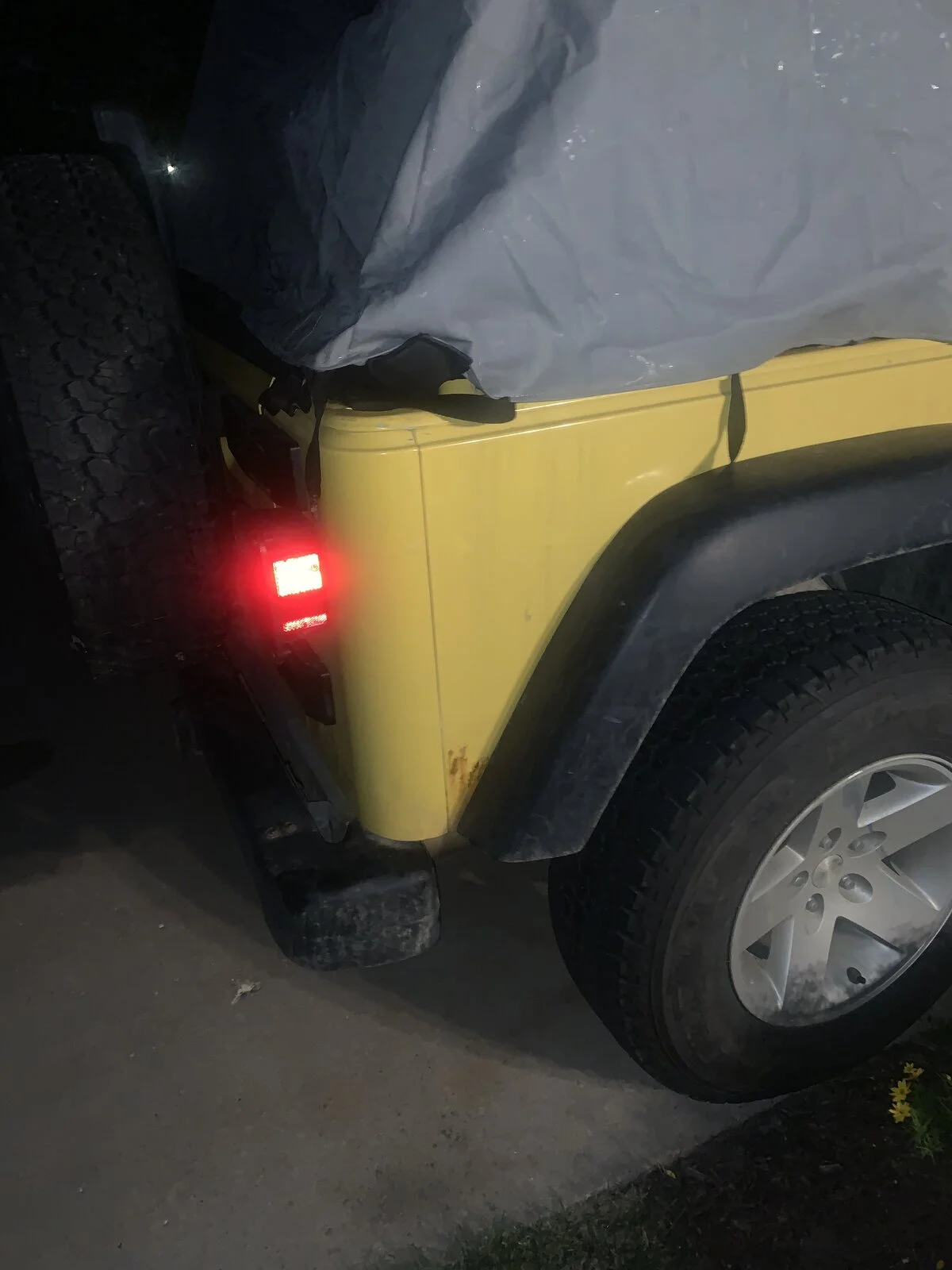
Hey guys. A rust spot on my tj rubicon has appeared since last winter and has grown since then. It’s in the back passenger quarter panel. I pull back the arch cover, reach my hand behind the rust area and feel the metal is squeaky clean back there. I assume this is because the tub is double walled as it seems the rust is eating it’s way out from the inside, but I would be ecstatic to learn it’s single walled and I can grind it off without welding a new plate in.

what do you guys think, do I need to weld a new steel plate in back there?

(PS. Sorry for the grimy Jeep, just came back from the badlands off-road park and haven’t had a chance to clean it.)
37C532D8-04E4-46F7-A329-FF5E395C6923.webp


917DC4CB-DAF9-490F-B4B0-FC1C18BBB173.webp
 
No, they are not double walled like the JKs are.

That rust simple hasn’t made it through to the other side…yet.
I already have the factory paint and clear, and my father is an automotive paint salesman so he knows how to paint and has the equipment. With that said. I could remove the fender flare and grind off the rust and repaint right? Thanks for your quick and accurate response Chris!
 
  • Like
Reactions: Jerry Bransford
I already have the factory paint and clear, and my father is an automotive paint salesman so he knows how to paint and has the equipment. With that said. I could remove the fender flare and grind off the rust and repaint right? Thanks for your quick and accurate response Chris!
You will need to start removing paint to see how far the rust extends. You may be putting in a patch panel
 
I already have the factory paint and clear, and my father is an automotive paint salesman so he knows how to paint and has the equipment. With that said. I could remove the fender flare and grind off the rust and repaint right? Thanks for your quick and accurate response Chris!
Theoretically, yes.

You will just have to see how deep the rust goes and hopefully it doesn’t require patching of the tub.
 
  • Like
Reactions: Jeep Joe
The rust in those areas is generally the result of two metals coming together. In your case you have bracing to strengthen the corners and brackets in there that hold parts of the emissions system. Road salt, sand, mud, etc. collects and starts to eat metal from the inside out. The same happens to our Jeeps on the front fenders, rockers, frames and more.

At this point it's best to get the rear tires off the ground, by putting the rear frame on 6 ton jack stands, assuming no lift, and do the following:
- Remove the tires
- Remove inner plastic fender liners
- Inspect, treat/repair and metal, before it gets worse

This is pretty easy to do on the drivers side, because all that is in the way is the gas tank filler tube. The passenger side is a different story. On late model TJs and LJs, the factory moved the emissions charcoal canister and other emissions related parts in the corner you show rusting. Removing it means detaching it from the brackets. This may prove difficult, because the bolts holding it in are likely rusted as well and may break when trying to remove them. It's nothing that can't be fixed, but does make more work for you.

To reiterate, step one is inspect and stop the rust from getting worse. Step two is assess what may need to be replaced.
 
  • Like
Reactions: Jeep Joe and JMT
JK tubs are double walled??
Yes, I discovered that when installing rocker guards on a JK for a friend right after the JKs came out. What a frigging nightmare for me that turned out to be. Not just from the double-wall which made it a PITA but also from the fact the rocker guards weren't bent 100% correctly.
 
  • Like
Reactions: hear and Chris
Yes, I discovered that when installing rocker guards on a JK for a friend right after the JKs came out. What a frigging nightmare for me that turned out to be. Not just from the double-wall which made it a PITA but also from the fact the rocker guards weren't bent 100% correctly.
I’m sure this has something to do with why JK’s are much quieter on the road.