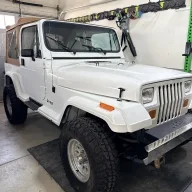
How Do the Long-Time TJ Owners Clean Their Engine Bays?

SquareFace

New Member
Original poster
Supporting Member
Joined
Feb 22, 2026
Messages
17
Location
Illinois
TJ Forum Family,

I’ve spent the last couple days reading through older engine bay cleaning threads and came away more overwhelmed than when I started.

I’ve seen recommendations ranging from:
  • Microfiber and soapy water only
  • Simple Green / Simple Green Pro HD
  • Gunk engine degreaser
  • Zep Citrus
  • Coin-op car wash
  • Garden hose only
  • Pressure washer
  • Steam cleaning
  • Leave the engine running while washing
  • Never leave the engine running while washing
I’ve also come across plenty of threads where people ended up chasing CELs, EVAP codes, distributor issues, TPS/MAP problems, loose hoses, and other weird gremlins immediately after cleaning the engine bay.

I have an older Jeep that’s new to me and I’d like the engine bay to look as close to factory fresh as reasonably possible without creating problems where none currently exist.

From what I’ve gathered, most people seem to agree on a few things:
  • Start with a cool engine.
  • Protect sensitive components.
  • Let the cleaner do most of the work.
  • Use brushes where needed.
  • Avoid excessive pressure around electrical components.
  • Dry everything afterward.

Where the opinions seem to split is on how aggressive to be with water and what products to use.

If your goal was:
  • Safest method
  • Lowest risk of damaging anything
  • Best overall results
  • Reasonable amount of effort
What would you do?

Specifically:
  • What cleaner are you using?
  • What components are you covering?
  • How do you cover them?
  • Garden hose or pressure washer?
  • Brushes or just rinse?
  • Leaf blower afterward?
  • Any dressing/protectant, or leave everything natural?
If you were starting with a dirty but otherwise healthy engine bay, what exact process would you use?

I’m not looking for the fastest way or the cheapest way. Just the method you’d trust on your own Jeep.
 
  • Like
Reactions: Woodrow
TJ Forum Family,

I’ve spent the last couple days reading through older engine bay cleaning threads and came away more overwhelmed than when I started.

I’ve seen recommendations ranging from:
  • Microfiber and soapy water only
  • Simple Green / Simple Green Pro HD
  • Gunk engine degreaser
  • Zep Citrus
  • Coin-op car wash
  • Garden hose only
  • Pressure washer
  • Steam cleaning
  • Leave the engine running while washing
  • Never leave the engine running while washing
I’ve also come across plenty of threads where people ended up chasing CELs, EVAP codes, distributor issues, TPS/MAP problems, loose hoses, and other weird gremlins immediately after cleaning the engine bay.

I have an older Jeep that’s new to me and I’d like the engine bay to look as close to factory fresh as reasonably possible without creating problems where none currently exist.

From what I’ve gathered, most people seem to agree on a few things:
  • Start with a cool engine.
  • Protect sensitive components.
  • Let the cleaner do most of the work.
  • Use brushes where needed.
  • Avoid excessive pressure around electrical components.
  • Dry everything afterward.

Where the opinions seem to split is on how aggressive to be with water and what products to use.

If your goal was:
  • Safest method
  • Lowest risk of damaging anything
  • Best overall results
  • Reasonable amount of effort
What would you do?

Specifically:
  • What cleaner are you using?
  • What components are you covering?
  • How do you cover them?
  • Garden hose or pressure washer?
  • Brushes or just rinse?
  • Leaf blower afterward?
  • Any dressing/protectant, or leave everything natural?
If you were starting with a dirty but otherwise healthy engine bay, what exact process would you use?

I’m not looking for the fastest way or the cheapest way. Just the method you’d trust on your own Jeep.

OK. You’re going to get a lot of opinions here, but I’m just going to tell you what I do, attach some pics & let you be the judge. I’ve done essentially the same thing for 55+ years & it works for me.
Cover the air box inlet on a TJ with plastic & secure it so it doesn’t fly off. I don’t cover anything else, but I try not to spray water direct on electrical components. Incidentally, that’s has never been a problem.
ALWAYS do this when the engine is cold to avoid thermal shock which could lead to cracking. Mist the entire engine bay with full strength Simple Green or whatever you have. Don’t forget the underside of the hood.
Allow 20 or 30 minutes for the product to soak in & work its magic.
Rinse completely with a fine low pressure mist from a garden hose. Never use a pressure washer.
Look things over & spot clean any remaining areas that are still dirty with the product, a rag or a brush & repeat the entire process if necessary.
After rinsing I always remove the cover on the air intake & start the engine mostly to be sure that it WILL start although I’ve never had one fail to start.
Let the engine run or drive if a bit to bring it up to operating temperature. This will facilitate drying the area.
At this point I will usually let it dry overnight & once again spot clean anything that is still dirty.
When I’m satisfied that everything is clean I will mist the area with Formula 303 Aerospace Protectant & just let it dry overnight or you could wipe it if you feel the need.
Remember to wash & wax the underside of your hood. ‘Really! It’s worth it.
Let us know how this works out for you & please post some pics.

IMG_8160.webp


IMG_8159.webp
 
Say what? Clean the engine bay? Why?

My only recommendation is unplug the under hood light before doing any cleaning as spraying water on the hot bulb will cause it to shatter.

I know this due to hosing down underhood every couple of years. well, that's exaggerating. I've done it maybe three times in 24 years.
 
Last edited:
I start with a cold engine, cover the air intake, alternator and PCM with plastic grocery bags, then spray on degreaser liberally (I use Spray 9, but there are plenty of good options). Let it soak for a while, then rinse with fine spray out of the hose; as mentioned above, no pressure washer. When done, I drive around the block a couple times to aid the drying process.
 
I'll wipe some stuff down if I have something apart. I replaced my valve cover gasket a couple years ago so I cleaned it, as well as the airbox, etc, while off the vehicle. That's it. It's not a show car.
 
TJ Forum Family,

I’ve spent the last couple days reading through older engine bay cleaning threads and came away more overwhelmed than when I started.

I’ve seen recommendations ranging from:
  • Microfiber and soapy water only
  • Simple Green / Simple Green Pro HD
  • Gunk engine degreaser
  • Zep Citrus
  • Coin-op car wash
  • Garden hose only
  • Pressure washer
  • Steam cleaning
  • Leave the engine running while washing
  • Never leave the engine running while washing
I’ve also come across plenty of threads where people ended up chasing CELs, EVAP codes, distributor issues, TPS/MAP problems, loose hoses, and other weird gremlins immediately after cleaning the engine bay.

I have an older Jeep that’s new to me and I’d like the engine bay to look as close to factory fresh as reasonably possible without creating problems where none currently exist.

From what I’ve gathered, most people seem to agree on a few things:
  • Start with a cool engine.
  • Protect sensitive components.
  • Let the cleaner do most of the work.
  • Use brushes where needed.
  • Avoid excessive pressure around electrical components.
  • Dry everything afterward.

Where the opinions seem to split is on how aggressive to be with water and what products to use.

If your goal was:
  • Safest method
  • Lowest risk of damaging anything
  • Best overall results
  • Reasonable amount of effort
What would you do?

Specifically:
  • What cleaner are you using?
  • What components are you covering?
  • How do you cover them?
  • Garden hose or pressure washer?
  • Brushes or just rinse?
  • Leaf blower afterward?
  • Any dressing/protectant, or leave everything natural?
If you were starting with a dirty but otherwise healthy engine bay, what exact process would you use?

I’m not looking for the fastest way or the cheapest way. Just the method you’d trust on your own Jeep.
A clean engine and undercarriage is easier to work on (and makes me happy). I use soap and a small sponge and low pressure water to pre soak and rinse with care to protect electronics, electrical and gaskets. That doesn't mean they don't get wet. Just not blasted. Then drive it to air dry.
1781822959571.webp

OK. You’re going to get a lot of opinions here, but I’m just going to tell you what I do, attach some pics & let you be the judge. I’ve done essentially the same thing for 55+ years & it works for me.
Cover the air box inlet on a TJ with plastic & secure it so it doesn’t fly off. I don’t cover anything else, but I try not to spray water direct on electrical components. Incidentally, that’s has never been a problem.
ALWAYS do this when the engine is cold to avoid thermal shock which could lead to cracking. Mist the entire engine bay with full strength Simple Green or whatever you have. Don’t forget the underside of the hood.
Allow 20 or 30 minutes for the product to soak in & work its magic.
Rinse completely with a fine low pressure mist from a garden hose. Never use a pressure washer.
Look things over & spot clean any remaining areas that are still dirty with the product, a rag or a brush & repeat the entire process if necessary.
After rinsing I always remove the cover on the air intake & start the engine mostly to be sure that it WILL start although I’ve never had one fail to start.
Let the engine run or drive if a bit to bring it up to operating temperature. This will facilitate drying the area.
At this point I will usually let it dry overnight & once again spot clean anything that is still dirty.
When I’m satisfied that everything is clean I will mist the area with Formula 303 Aerospace Protectant & just let it dry overnight or you could wipe it if you feel the need.
Remember to wash & wax the underside of your hood. ‘Really! It’s worth it.
Let us know how this works out for you & please post some pics.

View attachment 694866

View attachment 694867
This guy ^^^ is doing a nice job. Don't listen to all the other slobs :ROFLMAO:
 
I am a firm believer s100 is the best auto/powersports cleaner out there. Purple power, super clean, simple green, etc. are good, but can damage surfaces or coatings (especially anodizing).

I always stuff a rag in the airbox horn and spray s100 on a cold engine bay. Rinse off with a garden hose and avoid concentrated water at the pcm/alternator.

1781876417685.webp
 
  • Like
Reactions: Woodrow
First off, thank you to everyone who took the time to respond. This is exactly why I love this forum.

A few of the replies made me laugh, a few reminded me that some of you apparently consider dirt part of the factory rust-prevention system, but a lot of you took the time to explain your process, post photos, share decades of experience, and explain the reasoning behind it. I genuinely appreciate that.

I’ve spent the last few days reading through older TJ Forum threads on engine bay cleaning as well as some detailing and mechanic resources outside the forum. What surprised me is that there seems to be far more agreement than disagreement.

The biggest takeaway for me is that water itself doesn’t appear to be the enemy. These Jeeps drive in rain, mud, puddles, and creek crossings. The bigger concern seems to be excessive pressure, harsh chemicals, and forcing water into places it doesn’t belong.

The other thing I noticed is that while many people report using pressure washers successfully for decades, most of the stories involving codes, MAP/TPS issues, loose hoses, and other gremlins seem to show up after people get more aggressive with pressure, chemicals, or both.

One comment from an older thread really stuck with me: “How do you drive in the rain?”

Fair point!

After reading all of this, I think my approach is going to be:
  • Cold engine only.
  • Cover the air intake.
  • Cover the alternator.
  • Cover the fuse box/PDC area.
  • Use a mild cleaner/degreaser and let the product do the work.
  • Agitate with brushes and microfiber rather than relying on pressure.
  • Rinse with a gentle garden hose mist.
  • Blow out excess water afterward.
  • Start it and take it for a drive to get everything up to temperature and dry.
  • Come back the next day for any spot cleaning.
  • Light application of 303 on plastics and rubber if needed.
In other words:

Cleaner + brushes + low pressure + patience.

Not:

Pressure washer + strong chemicals

Could I probably get away with being more aggressive? Probably. Plenty of people here have.

But this Jeep is new to me, everything currently works, and my goal is a clean engine bay and not a troubleshooting session afterward.

The other thing I’ve learned from this thread is that there are a lot of different ways to get a good result. Some of the cleanest engine bays posted here came from people using Simple Green, some used Gunk, some used Zep, some used s100, some used almost nothing but soap, water, and elbow grease.

So for now I’m leaning toward the lower-risk approach and letting chemistry and brushes do most of the work.

I’ll let the thread continue to develop because there is a lot of good information here. Once I finally get around to it, I’ll post before and after pictures so everyone can either congratulate me or tell me I should have just left the dirt alone.

Thanks again, everyone. The collective experience on this forum is pretty incredible.