
You are using an out of date browser. It may not display this or other websites correctly.
You should upgrade or use an alternative browser.
You should upgrade or use an alternative browser.

Oil pressure problems
- Thread starter wildtj
- Start date


IF you have no bad apparent oil leaks; it is either a bad oil pressure sending unit (as posted above) or possibly a piggy backed engine bearing.
Definitely get or borrow a ln oil pressure test gauge from your local auto parts store... it's a 1/8" npt fitting. Unscrew the sensor... it's just above the oil filter and screw in the gauge. Best to prop it up or tape it someplace you can see it while driving.
-Mac
-Mac
Definitely get or borrow a ln oil pressure test gauge from your local auto parts store... it's a 1/8" npt fitting. Unscrew the sensor... it's just above the oil filter and screw in the gauge. Best to prop it up or tape it someplace you can see it while driving.
-Mac
IF you have no bad apparent oil leaks; it is either a bad oil pressure sending unit (as posted above) or possibly a piggy backed engine bearing.
IF you have no bad apparent oil leaks; it is either a bad oil pressure sending unit (as posted above) or possibly a piggy backed engine bearing.
Thank you for the replies I wanna start off by saying that I replaced the oil pressure sending about 4 months ago I had oil coming out of the sender unit. Haven't seen any new leaks besides ofc the rear main seal being a very very very slow leak. I will be looking into trying a pressure gauge to make sure if it is the sender. Last time when the sender was bad it would go from 70 down to 5 and was very jumpy, this time it just drops after 1500 rpm and stays low.
Just because the part is new it still could be the problem. The junk “Chinese” parts that is being sold for replacement parts are not very dependable.
Just because the part is new it still could be the problem. The junk “Chinese” parts that is being sold for replacement parts are not very dependable.
That's what I'm thinking right now I wish their was some actually good quality stuff out there!!!
That's what I'm thinking right now I wish their was some actually good quality stuff out there!!!
Several years ago after purchasing my ‘01 TJ I started a spare parts cabinet for the important electronics parts and the parts you don’t want to settle for anything other than OEM.
The parts cabinet has most of the parts I need and occasionally I find additional parts to add to the spares.
I went through four before I finally found a Mopar.
-Mac
Alright I will be looking into that as soon as possible
Several years ago after purchasing my ‘01 TJ I started a spare parts cabinet for the important electronics parts and the parts you don’t want to settle for anything other than OEM.
The parts cabinet has most of the parts I need and occasionally I find additional parts to add to the spares.
That's probably how I will be soon since it's a 97
I'll add my slightly different experience. I had the typical "check gauge + oil pressure to 0" issue. I replaced the sender, same problem. Replaced the pump, oil pressure has been fantastic ever since. In hindsight, I should've checked with a mechanical pressure gauge, but I guess I got lucky that I didn't end up just throwing parts at it.
Daughter's 97 has the exact same symptoms, I need to put my money where my mouth is and test that pressure.
Daughter's 97 has the exact same symptoms, I need to put my money where my mouth is and test that pressure.
If you're in there changing an oil pump you might as well do the rear main...that'll give you a good look at the condition of the bearings and it's a great time to document the size. That and it's really easy to roll main bearings in and replace the rod bearings. Plastigauge and a decent torque wrench and a little time. Also get a finger on the timing chain and decide if you need to go after it.
-Mac
-Mac
If you're in there changing an oil pump you might as well do the rear main...that'll give you a good look at the condition of the bearings and it's a great time to document the size. That and it's really easy to roll main bearings in and replace the rod bearings. Plastigauge and a decent torque wrench and a little time. Also get a finger on the timing chain and decide if you need to go after it.
-Mac
Do we have a writeup on that? Daughter's has 240k on the clock, so bearings could be worn, especially if that oil pressure actually has been low.
This was the cause of my poor oil pressure.
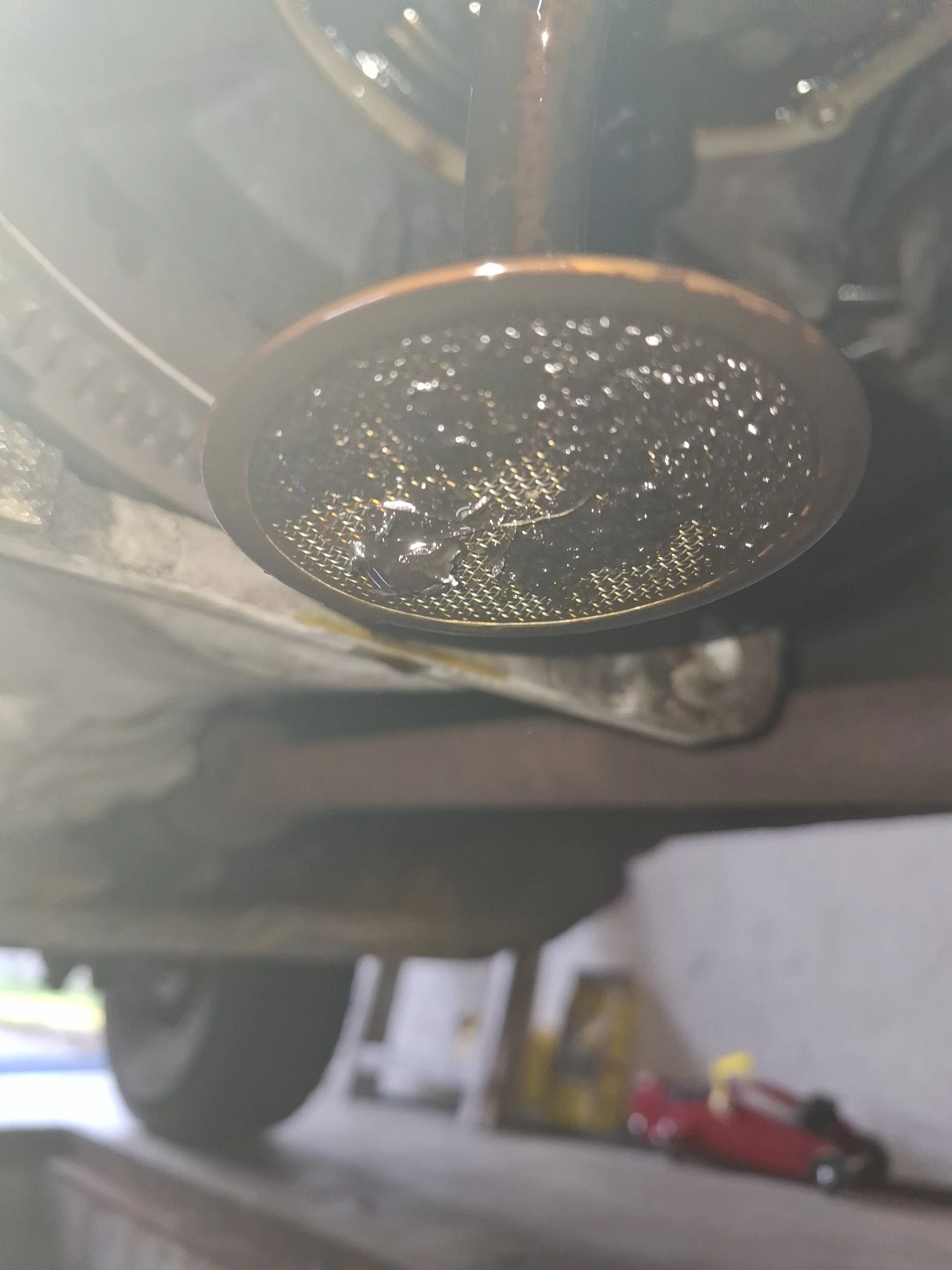
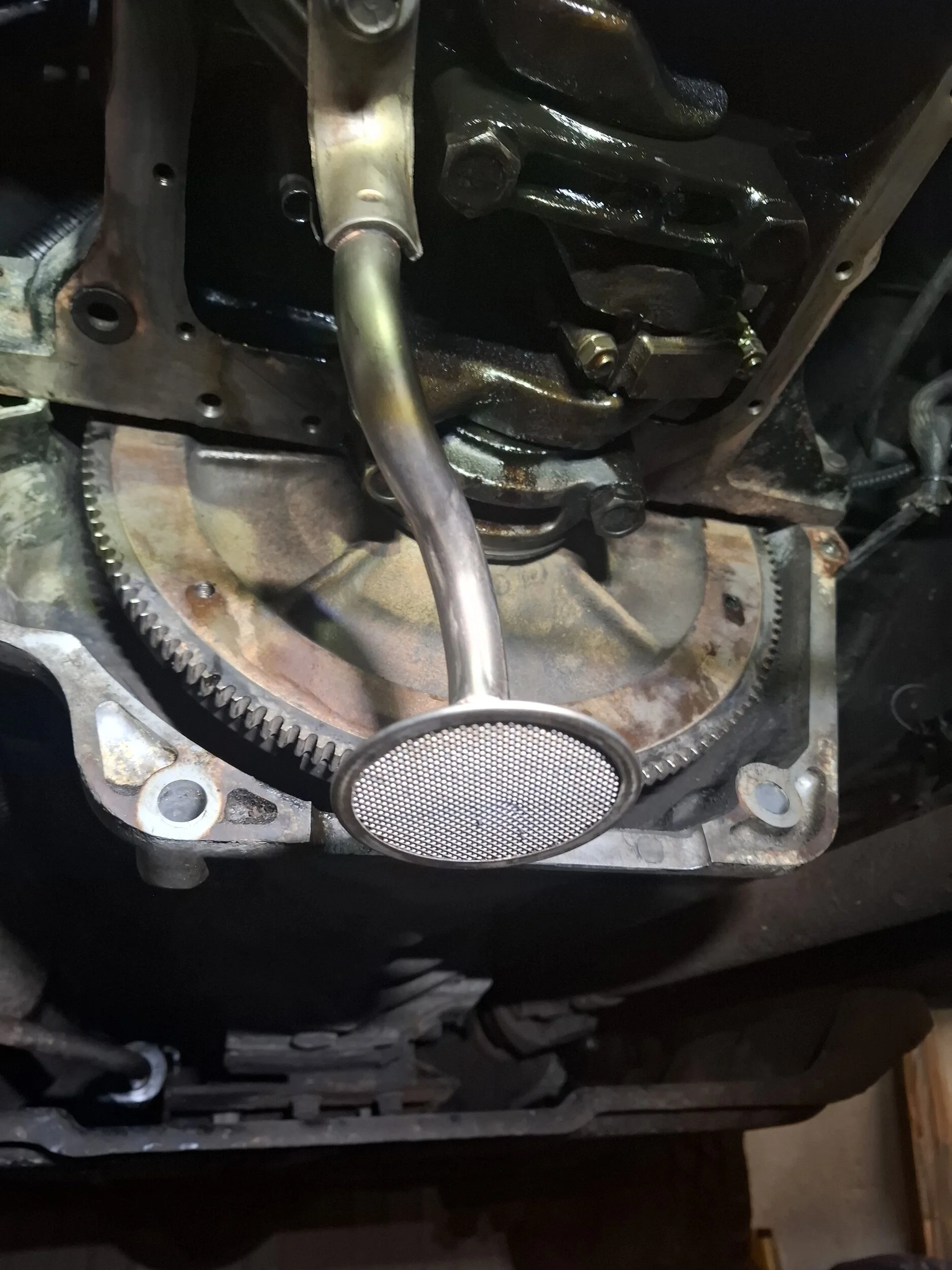
The oil pump has also been replaced and the oil pressure is good again.
The oil pump has also been replaced and the oil pressure is good again.

I can't tell you, it was like encrusted, no metal. I couldn't find any metal in the oil pan either,
just oil sludge.
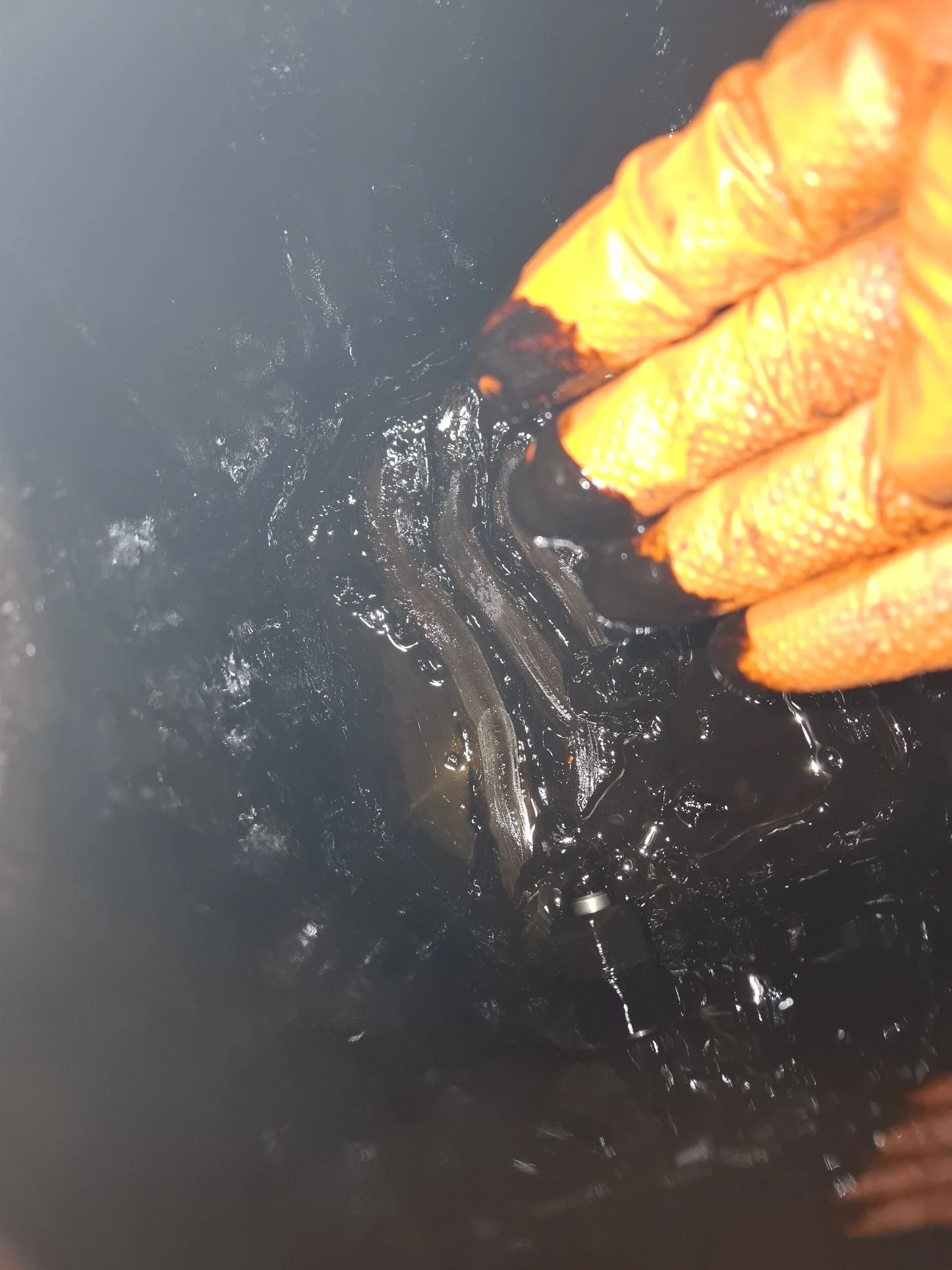
I changed the oil regularly.
Two years ago the cylinder head was removed and new hydraulic tappets installed.
I suspect that the front cylinder head screw is not sealed to seal the water channel.
just oil sludge.
I changed the oil regularly.
Two years ago the cylinder head was removed and new hydraulic tappets installed.
I suspect that the front cylinder head screw is not sealed to seal the water channel.

If you end up replacing the pump, and if you have higher mileage, go with the high volume Melling pump. It has a higher volume per rotation than stock (by about 15-20% if I recall correctly) which helps maintain pressure even with worn bearings.
It has the same relief/bypass valve PSI, so you won't overpressure anything. (At absolute worst, you'd be wasting a tiny bit of fuel to pump extra fluid through the bypass.)
Much more effective at protecting the engine than running higher viscosity oil, and also doesn't have nearly as much impact on fuel economy as higher viscosity oil.
It has the same relief/bypass valve PSI, so you won't overpressure anything. (At absolute worst, you'd be wasting a tiny bit of fuel to pump extra fluid through the bypass.)
Much more effective at protecting the engine than running higher viscosity oil, and also doesn't have nearly as much impact on fuel economy as higher viscosity oil.
If you end up replacing the pump, and if you have higher mileage, go with the high volume Melling pump. It has a higher volume per rotation than stock (by about 15-20% if I recall correctly) which helps maintain pressure even with worn bearings.
It has the same relief/bypass valve PSI, so you won't overpressure anything. (At absolute worst, you'd be wasting a tiny bit of fuel to pump extra fluid through the bypass.)
Much more effective at protecting the engine than running higher viscosity oil, and also doesn't have nearly as much impact on fuel economy as higher viscosity oil.
Can you send me the one I would need for a 97 TJ, the oil sending unit. I've been looking around haven't been able to find one
Similar threads
- Replies
- 7
- Views
- 1,296
- Replies
- 2
- Views
- 1,983


- Replies
- 7
- Views
- 1,280


