Finally (maybe), I am also designing/printing a plate that will mount to the screw holes on the side of the console that held the subwoofer that I will attach my GMRS radio to.



Ran across people talking about this organizer system on another site. May be useful to some. He even mentions that he's making stuff for his Horrible Freight tool chest.



ABS GF filament

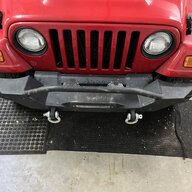
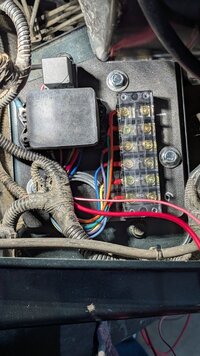
Needed to mount a fuse and distribution block for some electrical expansion and decided to print a plate that would fit on the unused spot on the drivers side against the firewall (this may be a spot used for the clutch stuff on manuals? I don't know). I used PAHT-CF so it should be plenty strong and hold up to the under hood temperatures.
1st print did not go well.....I printed it flat and it warped big time causing the print head to grab the print ad drag it off the bed.
View attachment 585320
2nd time I printed it on edge and it came out really nice. Installed heat set inserts to mount the buss bar and fuse block, and factory threads in the metal plate to mount it down.
View attachment 585321
The nozzle seems fine., I have done several other prints with it, but I do keep a couple spare on hand.
The real bummer was the cost of the filament and I only had one spool of it. I was printing real slow with the PAHT-CF to try to avoid warping and after about 10 hours of printing that looked great I went to bed. Woke up to that mess. The adhesion was awesome, but it warped so bad it pulled the print plate off the magnetic bed.
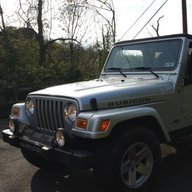
The nozzle seems fine., I have done several other prints with it, but I do keep a couple spare on hand.
The real bummer was the cost of the filament and I only had one spool of it. I was printing real slow with the PAHT-CF to try to avoid warping and after about 10 hours of printing that looked great I went to bed. Woke up to that mess. The adhesion was awesome, but it warped so bad it pulled the print plate off the magnetic bed.
Crank the chamber temperature. Even if you have to use the part cooling fan a lot more, higher chamber heat makes the part warp a lot less. Cranking the bed temperature helps too, but less so for tall parts.
The goal is to keep as much of the part close to its glass transition temperature for as long as possible, without going so close as to generate significant elephant's foot. This allows the part to anneal while it prints, so you don't get appreciable tension at the top of the part.

My Bambu Labs A1 arrives tomorrow. I used an Ender 3 Pro for several years, did a lot of tweaking, and I've been without a printer for another few years. I'm excited to be able to print useful stuff again.
I've only ever used PLA and PETG. Anything I couldn't use PLA for (due to heat/UV, mostly) I printed in PETG. It's all I've ever needed.I've recently been messing with the engineering materials (PA6-CF, PA6-GF25, PPS-CF10) and all I can say is..........wow.
Now... I'm not going to get an enclosure, probably, so other than that... why would I not be able to use these? Need a hardened nozzle (giggity)?ABS, ASA, PC, PA, PET, Carbon/Glass Fiber Reinforced Polymer
I've only ever used PLA and PETG. Anything I couldn't use PLA for (due to heat/UV, mostly) I printed in PETG. It's all I've ever needed.
I'm sure I'll learn as I go, but these filaments are, "not recommended" in the A1:
Now... I'm not going to get an enclosure, probably, so other than that... why would I not be able to use these? Need a hardened nozzle (giggity)?
Interesting. Well... maybe I won't discount it just yet. Looks like there are lots of aftermarket enclosures available.I heat mine to 50-60°C, and if the electronics and belts could stand it, 70-90°C on some.
Interesting. Well... maybe I won't discount it just yet. Looks like there are lots of aftermarket enclosures available.
OK, I'm adequately impressed. My printer arrived a day early. I got it set up, didn't update any firmware, and connected to it as "LAN only." Blocked it from accessing the Internet at my router.
Sidebar: When we decided to move back to Maine from FL, I bought the steel wheels and winter tires for my daily driver. I printed up the hub caps and plugs, Plasti-dipped the wheels, put them all together and drove up. On that drive and over the 4-1/2 winters since, I've only lost one plug. They're pressure-fit, and I don't know where I lost it. True to form, my dumb ass printed only the exact number I needed, and not even one extra.
So, I got the printer all ready to go, and brought up the old STL for the wheel plug. I threw it in the software and hit start. 20 minutes later, I'm holding a plug that fits perfectly. Unfortunately, the only filament I have on hand is the five or so meters of white PLA that came with the printer... so that's what I used. But... wow. Easy. It required no calibration other than the printer did on its own during setup. Awesome.
View attachment 587628