I thought this was a pretty good discussion of steel vs aluminum armor.
https://rockchucksummit.com/aluminum-vs-steel-skid-plates-and-armor/
https://rockchucksummit.com/aluminum-vs-steel-skid-plates-and-armor/



If I was near I might take the Rokmen armor off your hands.I agree, it was an article that was worth reading. I've decided to use exclusively Savvy armor on mine, which as you know is aluminum.
Let's put it this way... if those guys down in Johnson Valley (which is arguably some of the toughest wheeling on the planet) are using Savvy aluminum armor and not having any major issues, then I think that speaks for itself.
It's lighter, it doesn't rust like steel, and it has a number of other advantages. I really see no reason not to use aluminum armor... as long as it's the right type of aluminum for the job.
I ditched everything on my TJ that I could and replaced it with the Savvy aluminum... including the Rokmen armor.
After reading I wondered whether the higher steel numbers of steel were necessary for what we do with our Jeeps, or if the AL is sufficientI thought this was a pretty good discussion of steel vs aluminum armor.
https://rockchucksummit.com/aluminum-vs-steel-skid-plates-and-armor/
I'm guessing that the answer is "it depends ". For what I do and where I wheel (and what I wheel) some aluminum seems to make sense. It's like the aluminum winch plate I've spec'd out. Saves weight where I need it most, and it's plenty strong for the application. Same with the skid plate. Shaves a couple of inches and a few pounds where it'll do the most good. I don't crash rocks, so it should work fine.After reading I wondered whether the higher steel numbers of steel were necessary for what we do with our Jeeps, or if the AL is sufficient

Did you also replace your Rokmen gas tank skid? If so, did you sell the GS skid?I ditched everything on my TJ that I could and replaced it with the Savvy aluminum... including the Rokmen armor.
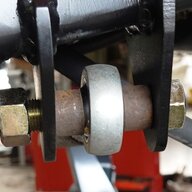
Folks that don't understand armor and aluminum always point out that fallacy. It isn't true in the least and I've posted these pictures enough times over the years that one would think by now it would have become common knowledge.Steel will slide where aluminium will gouge and dig in. As for weight, at equal thickness aluminium is lighter but to equal the strength of steel aluminium must be thicker. Depends on your goal but I'd always use a high strength steel for skids and bumpers unless I really wanted, needed to save weight. But with a 4.0L weight is likely not a big factor.
The stock TJ belly skid is actually very well designed for the amount of material used and the stiffness and resistance to bending the design generates. The aftermarket will never do anything as strong with that small amount of weight.How much steel is enough? I'd have to throw calipers on the stock TJ shovel, but it looks like formed 10 or 12 gauge. The shape probably gives some stiffness, but it's not that stout in the grand scheme of things.
It does make you wonder...how much is enough for your use? And we all have different environments we deal with.
Which winch plate? What material?I'm guessing that the answer is "it depends ". For what I do and where I wheel (and what I wheel) some aluminum seems to make sense. It's like the aluminum winch plate I've spec'd out. Saves weight where I need it most, and it's plenty strong for the application. Same with the skid plate. Shaves a couple of inches and a few pounds where it'll do the most good. I don't crash rocks, so it should work fine.
Exactly the point I was driving at with post #6. Strong enough for our rigs under punishing use is the issue. Can we get stronger material? Sure. But at what cost and for what purpose?Which winch plate? What material?
Generally though, you are correct and the wrong question is asked which is which is stronger? Steel is always stronger. The correct question is whether or not aluminum is strong enough and the answer is when it is done right, yes it is.
Exactly the point I was driving at with post #6. Strong enough for our rigs under punishing use is the issue. Can we get stronger material? Sure. But at what cost and for what purpose?
The article strangely kept saying that to get Aluminum as strong (general term for whether shear forces or hardness or whatever is in view) as Steel the thickness of the Aluminum would wipe out any clearance gains. Maybe if you're trying to get it as strong as Steel in all departments. But if you're trying to accomplish what is sufficient, it's not necessary to make it that thick and the clearance loss is so minimal that with the weight savings it is virtually nil and certainly easier to handle for the average DIY garage
Did you also replace your Rokmen gas tank skid? If so, did you sell the GS skid?


How much steel is enough? I'd have to throw calipers on the stock TJ shovel, but it looks like formed 10 or 12 gauge. The shape probably gives some stiffness, but it's not that stout in the grand scheme of things.
It does make you wonder...how much is enough for your use? And we all have different environments we deal with.

I am going to start by saying that aluminum skids are NOT a bad product. But they do corrode. Not even close to as fast as steel. Water is the enemy of aluminum. If you live in a dry climate they are great. Attached is a video of the types of corrosion that can be found. As a aircraft avionics then a sheetmetal guy for the past 10 years i have seen most all types. Keep in mind most planes i work on are 30-50 years old.
Again aluminum is not a bad product.